Module 4: Venous insufficiency
 Call Kai
 Learn
 Practice Test
 Spaced Repetition
 Match
 Flashcards
 Knowt Play
1/28

There's no tags or description
Looks like no tags are added yet.
29 Terms
what are the differences between the venous system vs arterial?
is a low pressure system, thinner, smaller amounts of smooth muscles and less connective tissue support, also have valves and relies on pumps (respiratory pump and the calf muscle pump)
what do the valves do?
prevent retrograde blood flow, thereby preventing increased venous backpressure (venous hypertension)
what is the etiology of venous insufficiency?
sustained venous hypertension
common causes:
vein dysfunction
calf muscle pump failure
combination of both
what is the most commonly involved vein in VI?
isolated greater saphenous vein incompentence
what is most VI caused by?
reflux or venous hypertension may occur due to obstruction to venous outflow (stenosis or thrombosis). tissue damage and skin breakdown is hypoxia due to venous hypertension
what are teh risk factors to VI ulcers?
vein dysfunction (incompetent superficial and perforating veins)
valve damage
calf muscle pump failure
trauma
previous VI ulcer (recurrence as high as 81%)
advanced age
obesity
DM
what might be some reasons for calf muscle pump failure?
calf weakness/paralysis
decreased dorsiflexion
prolonged standing (not walking)
incompetent valves
when does venous hypertension occur?
when bicupsid valves fail to close
what might valve damage be caused by?
thrombosis or clot, distended vessel diameter, varicose veins
what are the PT tests and measures for DVT?
gold standard is a venogram (but is expensive, invasive, and uses potential allergen dye),
ultrasonagraphy (very specific and sensitive)
homan’s sign (this is unreliable and insufficient tho)
clinical assessment guideline for DVT (well’s criteria)
what are the PT tests and measures for VI?
ABI
trendelenburg test to ID vein incompetence
doppler ultrasound
venous filling time
what is the homer’s sign?
is a clinical test for deep vein thrombosis (DVT), where pain is elicited in the calf upon dorsiflexion of the foot. However, it is considered unreliable and insufficient for accurately diagnosing DVT.
what is the 5 PT method?
pain '
position
presentation
periwound
pulses
temperature
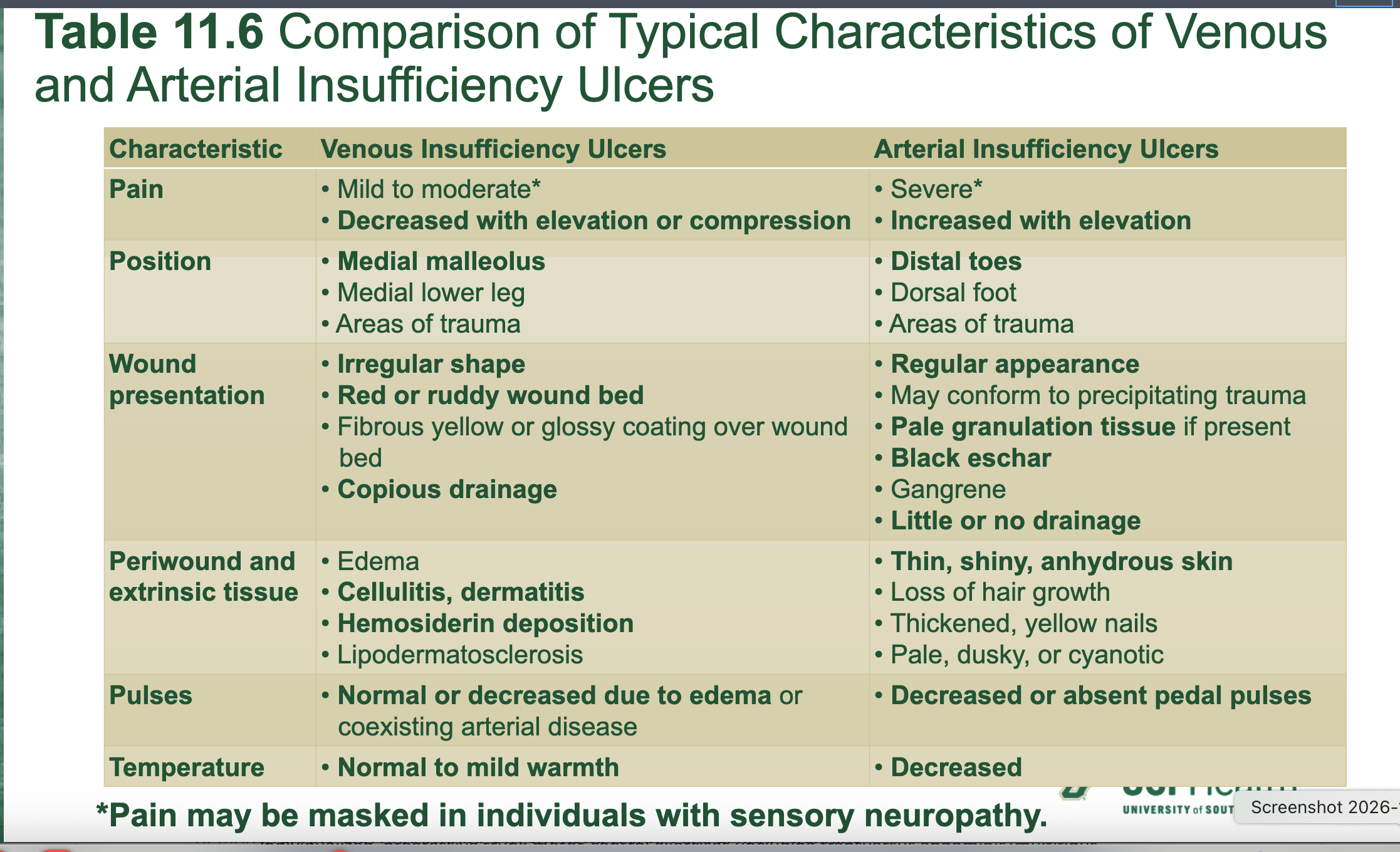
compare venous and arterial insufficiency ulcers
see image
what is hemosiderin deposition/staining
the accumulation of hemosiderin, an iron-storage complex, in tissues, typically resulting from chronic venous insufficiency. It often manifests as brownish staining on the skin, particularly in the lower extremities.

what is shown in the image?
hemosiderin deposition/staining
what is the average healing time for full thickness venous ulcers?
8 weeks average (5-7 fro smaller, 10-16 for larger ulcers)
wounds that do not show signs of healing within what amount of time require referral?
4 weeks
how does compression help?
30-60% of pts treated with compression will heal within 3 months
what are precautions for procedural interventions of AI?
concomitant arterial disease
allergic reactions and sensitization
inappropriate whirlpool use
why is whirlpool use not indicated in venous insuffiency?
exacerabtes venous insufficiency and slow venous ulcer healing due to
dependent positioning
warm temp encourages superficial vein dilation and edema
add moisture to already highly exudating VI wound
when should you request for further medical testing?
pts scoring 3 or more on DVT clinical prediction guidelines
wounds that fail to progress
wound culture and sensitivity is suspected infection
bone scans/x-ray is exposed capsule or bone
wounds that do not present with typical Vi ulcer characteristics
what does local wound care look like with pts with VI?
protect surrounding skin
address wound bed
enhance venous return
edu pt/caregivers
when should compression therapy not be used?
when there is significant arterial insufficiency
what are paste bandages?
non-elastic compression bandages, are gauze cloth roll bandage impregnated with zinc oxides, calamine, glycerin, and gelatin. hardens into semi-rigid support, stays on for up to 1 week, used on ambulatory patients. disadvantages include the smell, pt can’t shower, and clinical must apply and remove
what are short stretch compression wraps?
have elastic and non elastic qualities that have low resting pressure and little distensibility, can be used with ambulatory and non-ambulatory patients. disadvantages are that they are prone to slippage, causing frequent wrapping, and patients must be trained in technique
what are multilayer compression bandage systems?
A type of bandaging that uses multiple layers to provide graduated compression to the lower extremities (incorportabte short stretch compression bandages). These systems help improve venous return and can be effective for treating venous ulcers. the inner layer absorbs excess wound drainage and provides padding, the middle layer absorbs drainage, the outer layer provides increased compression. are reusable, can accommodate unusually shaped limbs, and stays in place better and maintains compression longer than short stretch alone
what are compression garments used for?
used for long term management, help maintain edema reduction and control venous hypertension
requires circumferential and limb length measurements
off-the-shelf and custom garments
knee-high usually preferred
wear garments at all times except while sleeping and bathing (replace every 3-6 months)
what therapeutic exercise can be used for AI?
range of motion and strengthening exercise (target ankle plantar flexors, gastrocnemius soleus stretching exercises), aerobic exercise, gait and mobility training (positive influence on calf muscle and respiratory pumps, weight loss, and blood sugar control)