DIV Lab Practical 2 Review
 Call Kai
 Learn
 Practice Test
 Spaced Repetition
 Match
 Flashcards
 Knowt Play
1/43

There's no tags or description
Looks like no tags are added yet.
44 Terms
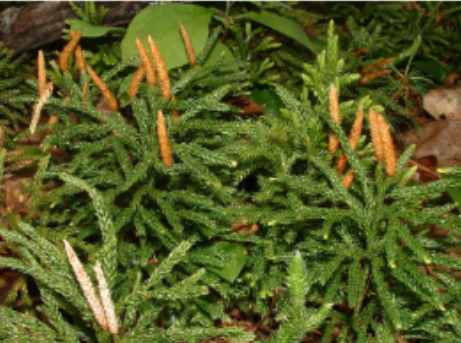
Identify the reproductive structure of this species.
Yellow-brown cone-like spikes

Where are the sori produced on this fern species?
Spores are produced on 2 to 7 pairs of modified fertile leaflets located in the middle section of the fronds
Bryophytes
-Non-vascular plants
-Mosses, liverworts, hornworts
-Lack vascular tissue
-Use rhizoids to anchor themselves and absorb water
-Gametophyte is dominant
-Reproduce via spores
Tracheophytes
-Vascular plants
-Clubmosses, horsetails, conifers, angiosperms
-Well-developed vascular system
-True roots, stems, leaves
-Sporophyte is dominant
-Reproduce via spores or seeds
-Lignin provides support

Leafy liverworts
-Distinct stem with flat leaves
-Arranged in 2 distinct rows
-Leaves are single-celled and lack a midrib
-Mini moss
-Reproductive structures are hard to spot

Thallose liverworts
-Flat body with no true stem
-No leaves
-Flat green sheets
Mosses
-Upright stems
-Distinct midrib
-Multicellular
-Spore stalks (seta) are longer and thinner
Liverworts
-Flat, ribbon-like, ribbon-like, or rows
-Lack midrib(costa)
-Single-celled
-Shorter, stouter stalks


four classes of mosses
Sphagnopsida, Andreaeopsida, Polytrichopsida, Bryopsida
Acrocarpous
Turf and Cushion
Pleurocarpous
Mat, Weft, Dendroid
Moss Forms from xeric to hydric
Cushion, Turf, Mats, Weft, Dendroid
Alternation of Generations
A reproductive cycle in which haploid (n) phase
(gametophyte) produces gametes that fuse into pairs to form a zygote then
germinate, producing a diploid (2n) phase (sporophyte); spores produced by
meiotic division from the sporophyte give rise to new gametophytes,
completing the cycle
Costa
“Midrib” of a moss leaf
Gametophyte
Haploid (n), gamete producing generation or phase in plants
whose life cycle includes alternation of generations
Gemma Cup
Cup-like structure in some mosses and liverworts that produces gemmae
Gemma
An outgrowth of the thallus that serves as a vegetative
(asexual) propagule in some liverworts, mosses and club mosses; can develop
into a new plant
Monoicous
Plants, almost exclusively of bryophytes, with gametophytes that produce both sperm and egg on the same gametophytes by mitosis so that the
gametes are genetically identical to the parent (see dioecous)
Protonema
Algal-like filamentous growth that is the earliest stage of a
bryophyte life cycle formed after spore germination; usually gives rise to the leafy gametophyte
Poikilohydric
External, ambient environment controls the state of hydration
Ramet
An individual in a population of genetically identical
individuals
Rhizoids
root-hair-like structures in liverworts, mosses, and some
vascular plants, which occur on free-living gametophytes
Sporophyte
Spore-producing, diploid (2n) phase in a life cycle
characterized by alternation of generations
Thallus
Plant body without differentiation into roots, stems, or
leaves; When fungi and algae were considered to be plants, the term distinguished their simple construction, and that of certain gametophytes, from the elaborate gametophytes of the bryophytes and the more familiar bodies of plant sporophytes
Tracheophyte
A vascular plant
Vascular
Plant tissues or regions consisting of or giving rise to
conducting tissue, e.g. xylem, phloem, and vascular cambium
Xeric
A very dry habitat
Mesic
a very moist habitat
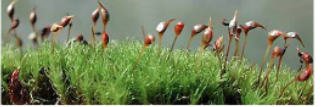
Acrocarpous

Pleurocarpous

Sphagnopsida
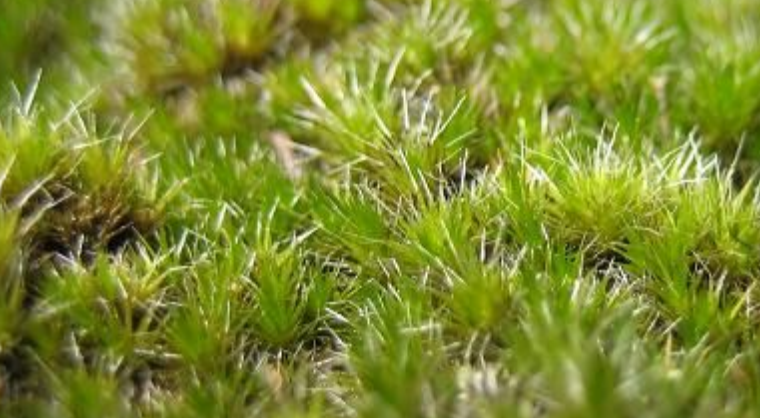
Andreaopsida

Polytrichopsida
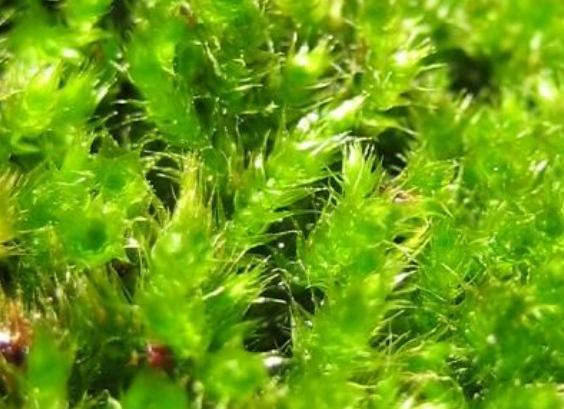
Bryopsida

Turf/Mat

Dendroid
characteristics of Lycopodiophyta
-Vascular systems
-Microphylls
-dominant sporophyte
-Reproduction via spores
Spore-producing structures are called sporangia and are grouped into strobili