Psychology 2 Exam
 Call Kai
 Learn
 Practice Test
 Spaced Repetition
 Match
 Flashcards
 Knowt Play
1/91

There's no tags or description
Looks like no tags are added yet.
92 Terms
Learning
change in behavior because of experience
Memory
acquire/store/retrieve knowledge
Types of Learning
Non-associative
Associative
Social
Associative
learning relationship between 2 stimuli/events
classical conditioning
stimulus in environment elicits behavior & association
reflexive
Social
instruction/observational
Conditional response/stimulus
response TO stimulus
training to react to a ring/tone
Dwight altoid example
Extinction
Weakening of conditioned response (CR) in absence of unconditioned stimulus (UCS)
Spontaneous Recovery
reappearance of extinguished conditioned response after time delay
Generalization
produce CR to a stimulus that is SIMILAR to original CS
Discrimination
learning to distinguish between stimuli that are similar to original CS
Applications of Classical Conditions
conditioned food aversions
avoid food w/ certain attributes after SINGLE ill experience
Introspection
reflect on experience
structuralism
functionalism
Operant Conditioning
consequences of behavior
reward/punish, behavior increases/decreases
B.F Skinner: Radical Behaviorism
most powerful influence on behavior is consequence/reinforcement

Reinforcement
intentional consequence to action that STRENGTHEN action/behavior

Punishment
consequence WEAKENS behavior
Positive Reinforcement
pleasant stimulus, increases probability again
Negative Reinforcement
removal of unpleasant stimulus to increase probability
Positive Punishment
add unpleasant stimulus to decrease behavior
Negative Punishment
removal of pleasant stimulus to decrease behavior
Reinforcement Schedules
continuous
shaping
Continuous Reinforcement
every instance reinforce
Shaping Reinforcement
steps of behavior lead up to what you want
— produces fast learning but quick extinction
Partial/Intermittent Reinforcement
some instances in behavior, not all
new learning is slower but harder to extinguish
ratio/internal, fixed/variable
ex: tantrums likely to reoccur if they get what they want
Ratio Number of Required Behavior
fixed: after certain #, receive reward
variable: unpredictable # gets reward
Interval, Time-Based
fixed: getting reward per hour
variable: unpredictable amount of time
Punishment
must be REASONABLE, unpleasant, and immediate
reinforce desire
Classical
BEFORE behavior (CS, UCS)
narrow in focus
reflexive behavior
Operant
AFTER behavior
consequence and repetition
ANY behavior, more applications
John Garcia Studies
biological preparedness
Evolutionary History
some learning easier than others
natural connection w/ tasting something new and getting nauseous
Biological Preparedness
animals are genetically prepared to learn specific fears
may not be automatic, but easily learned
Cognitive Maps
mental image/representation used to navigate familiar environment
Latent Learning
learning occurs w/o reinforcement or indication that learning took place
Insight Learning
problem solving occurs by suddenly perceiving new forms/relationships
Cognitive & Behavioral Explanations
complementary
Social Observational Learning
new responses after watching others behavior (modeling)
Vicarious Reinforcement/Punishment
consequences of behavior w/o experiencing consequences themselves
Fragile Power of Memory
Franco Maynani / William O.
intrusive recollections
Memory
information processing system, encode/store/receive info & experience
introspective/retrospective
reconstruct past
Explicit Memory
conscious awareness
Implicit Memory
not aware, procedural memory, about HOW we do things
(motor/cognitive)
Memory, 3 Basic Functions
encoding
storage
retrieval
Encoding
register experience/info in the mind
Retrieval
locating/recovering info
not easily accessible
Recall
pulling out info
Recognition
like MCQ, easier than recalling exact
Relearning
retention retained after learning information, retention intervals
Relearning Savings
not as long as initial memorization
Savings Curve
forgetting curve
measure amount remembered
How Do We Form Memories?
sensory
short-term
long-term
Short-Term
working memory, (20-40 secs)
unrehearsed is lost
Long-Term
some info lost overtime
Central Executive
holding onto words, meanings, any formulas, searching for answer
7 (+/-2) max capacity for memory
info stored for 20 seconds, rehearsal needs longer
Sensory Memory
all senses have
iconic (visual)
echoic (auditory)
Working Memory
recently perceived events for less than a minute
Maintenance Rehearsal
information repeated or reviewed to keep it from fading while in working memory
Chunking
organizing pieces of information into smaller number of meaningful units
Long-Term Memory
stored in different formats
Effortful Processing
rehearsal in which info is actively reviewed & related to info already in long-term memory (LTM)
cannot happen w/o attention
Levels of Processing Theory
info that is more throughly connected to meaningful terms in LTM will be better remembered
form associations
Implicit Memory
no conscious awareness
Priming
enhanced identification of objects/words
activation (outside conscious awareness) of associations that predispose our perception/memory/behavior response
Procedural Memory
motor skills

Cerebellum
implicit/classical condition
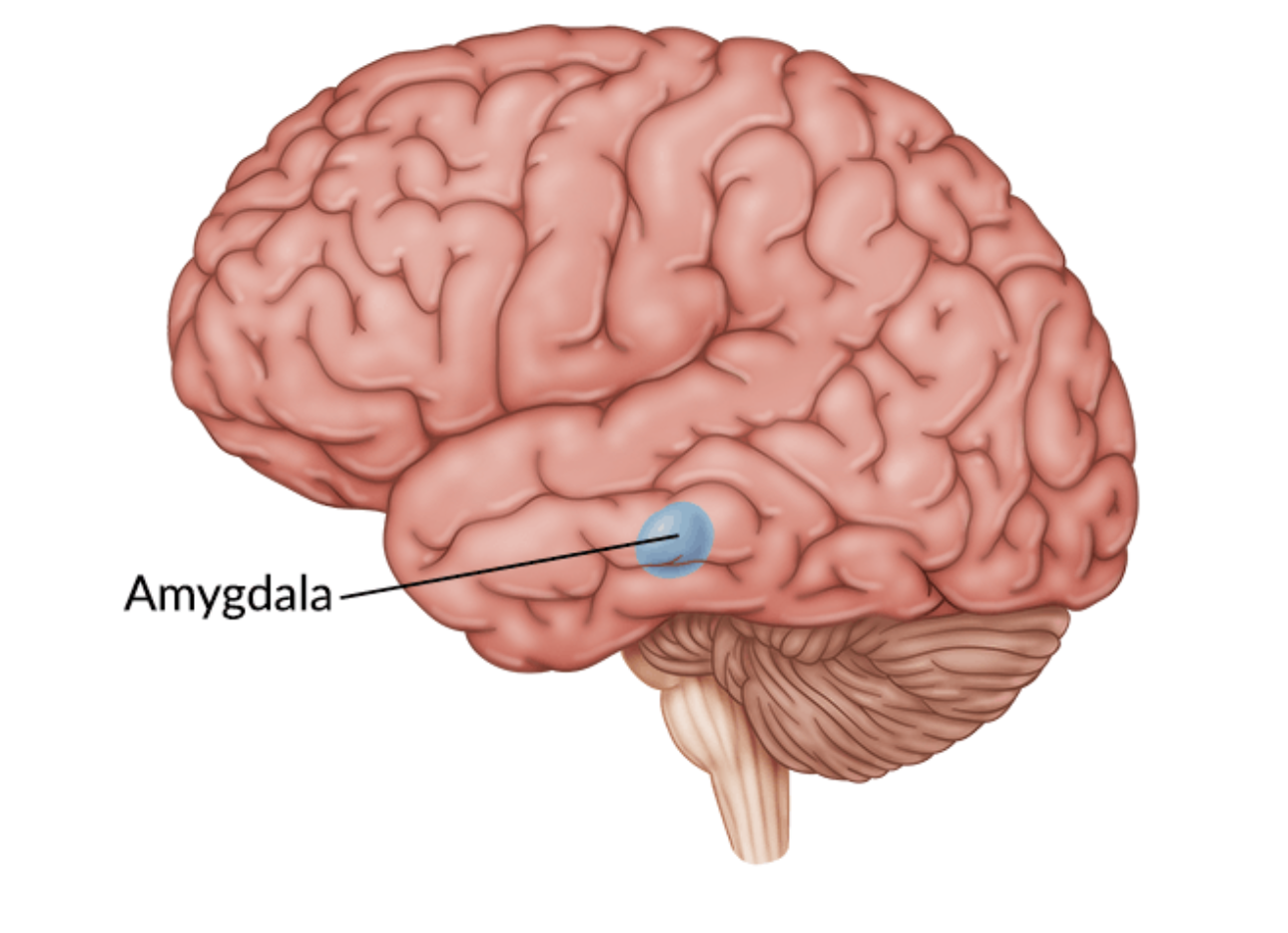
Amygdala
emotion processing

Basal Ganglia
procedural
Sematic Memory
EXPLICIT
general knowledge
Episodic Memory
EXPLICIT
personally experienced events

Frontal & Hippocampus
EXPLICIT
longterm
Consolidation
neural storage of long-term memory
sleep is important
1) NREM 2
temporary flash drive of memory forms during sleep spindles—transferring memories
2) NREM 3
replay and consolidation of long-term explicit memories
3) REM
memory consolidation & integration of new LT explicit memories w/ older & general knowledge
Storage Errors
“decay” of memory overtime
Retrieval Errors
blocking
retrograde amnesia
motivated forgetting & directed forgetting
interference
Source Amnesia
umbrella term, errors of reality monitoring (really happened v imagined)
Source Monitoring
determine source of an event/memory from what actually occurred
Reality Monitoring
attempt to distinguish between memories for events that actually occurred v. memory of imagined
Imagined Inflation
imagining an event “inflated” our confidence that it actually happened
Source Monitoring
determine source of event, including reality monitoring
Source Amnesia
memory exists, can’t recall origin
Misinformation/Disinformation
exposing ppl to misleading post-event info
Source Misattribution
memory for experienced event is retrieved but associated w/wrong time, place, person
Donald Thomson SA
Judgement & Decision Making
heuristic & analytic
Heuristics
natural (implicit unconscious) but consequential
Availibility Heuristic
cognitive shortcuts, simplify processing
estimating likelihood of an event by how easily it comes to mind
easy to over/underestimate
ex: are there more dogs or pigs on leashes?
Representative Heuristic
judging likelihood of some instance by extent to which is matched a prototype (or stereotype) stored in memory
judging something by how “representative” it is of a given catagory
ex: gamblers fallacy
important to expose yourself to diff groups of ppl
Framing
the way choices are presented to sway judgements
info can be presented in more than 1 way
loss aversion: feel losses more than comparable gain
Nudges (Framing Effect)
framing choices that encourage ppl to make beneficial decisions
opt in v opt out
Anchoring & Adjusting
under uncertainty (price/value), default to an anchor as a benchmark or initial estimate
if we feel anchor isn’t accurate as estimate, we adjust our estimated in the direction we think appropriate (higher/lower)
anchor has more influence than we realize
“Tipflation”
Confirmation Bias
seek & prefer info that is consistent w/what we believe & avoid contradictory evidence
mental shortcut for gathering & interpreting info
evaluating evidence takes time
narrows scopes of our thoughts