Dental Prophylaxis + Equipment
 Call Kai
 Learn
Learn Practice Test
 Spaced Repetition
 Match
Match Flashcards
 Knowt Play
1/86

There's no tags or description
Looks like no tags are added yet.
Name | Mastery | Learn | Test | Matching | Spaced | Call with Kai | Chat |
|---|
No analytics yet
Send a link to your students to track their progress
87 Terms
What is the most common oral disease?
Periodontal disease
What is a common process Periodontal disease can cause?
Common infectious process in body, it can spread to other organ systems like cardiovascular + respiratory systems
What causes periodontal disease?
Plaque build up
What is plaque made up of?
Bacteria component + mucopolysaccharides
What is the process of plaque build up?
plaque adheres to the tooth + initiates inflammatory process in gingival tissue
causes gingivitis
Can periodontal disease be in different stages in different areas in the mouth?
Yes, it can be in different stages in different areas in the mouth
What is the supragingival area?
area above gum line

What is considered “reversible gingivitis”?
Bacteria located above gum line
How does periodontal disease progress?
plaque build up, periodontal pockets enlarge, bacteria work up into deeper structures
What are the 3 primary goals for periodontal disease treatment?
Control bacteria growth
Minimizing pocket depth
Maintaining healthy attached gingiva
What are 5 severe implications of untreated periodontal disease?
Halitosis (bad breath)
unpleasant appearance of teeth
tooth loss
loss of appetite / weight loss
affects liver, kidneys + heart (less common: lungs + nervous system)
What is gingival sulcus?
space between tooth + free gingiva

What is tartar?
hardened plaque build up
What does tartar begin to do to the tooth if not removed?
It begins to break down the tooth
What is normal gingival sulcus depth for dogs?
2-3 mm
What is normal gingival sulcus depth for cats?
0.5 - 1 mm
Stage 1 Periodontal Disease
Starts with mild gingivitis
edema + redness
slight increase in sulcus depth from swollen gingival margins
subsides when edema is gone
can be reverse with therapy
Stage 2 Periodontal Disease
Caused by no intervention from stage 1
periodontitis
subsequent attachment loss
increase pocket depth
Bone loss
25% attachment loss
What is gingival sulcus depth for dogs with Stage 2 PD?
5 mm
What is gingival sulcus depth for cats with Stage 2 PD?
1 mm
Stage 3 Periodontal Disease
increased plaque build up
becomes tartar
Halitosis may begin at this stage
What is gingival sulcus depth for dogs with Stage 3 PD?
up to 9 mm
What is gingival sulcus depth for cats with Stage 3 PD?
1.5 mm
Stage 4 Periodontal Disease
severe periodontitis
gingivitis present
halitosis detected by clients
reluctance to eat due to pain
over 50% attachment loss
teeth become mobile
What is gingival sulcus depth for dogs with Stage 4 PD?
> 9 mm
What is gingival sulcus depth for cats with Stage 4 PD?
> 1.5 mm
Are all pets at risk for periodontal disease?
yes all pets are at risk but several factors can increase it
What increases periodontal disease?
no home care
smaller breeds + pure breed cats
supernumerary or missing teeth
diet
What is prophylaxis?
process in which teeth are cleaned
Why do we practice dental prophylaxis?
prevents/protects the teeth from disease
removes plaque/tartar/bacteria/minerals
reduces health risks (gingivitis, decaying tooth/bone + periodontal disease)
What is required to perform dental prophylaxis?
anesthesia
warming devices
keep patient dry as possible
place IVC
Pain management
Local anesthesia block is critical
Is it ethical to perform dental prophylaxis with only sedation?
NO, not ethical, sedation is not effective for this procedure
What will warrant splitting into 2 dental appointments?
Time to perform prophylaxis
patient condition
geriatric patients
heart murmurs
kidney patients
etc.
Body temperature can affect what on the patient?
Body temperature can affect the body’s response to anesthesia
make sure to provide adequate warming equipment
Is it okay to leave a patient wet from the procedure?
no, keep patient as dry as possible
Why do we place IVC?
in case of emergencies
quick venous access
fluid therapy
medication administration
What are the steps for dental cleaning?
Examine mouth both when patient is awake/under anesthesia
ultrasonic scaling of teeth to remove plaque/tartar
hand scaling for tough tartar that ultrasonic scale won’t remove
subgingival curette to get under gingiva to remover tartar/bacteria
Diluted chlorhex rinse in mouth to kill bacteria
probe/explore teeth
take radiographs (preventative/diagnostic)
perform extractions if needed
polish teeth
apply sealant
chart + record treatment
What is needed for dental prophylaxis set up?
prep anesthesia monitoring / ready to use
lay out dental equipment
sterile dental equipment between patients
What is in a dental pack?
hand scaler
dental probe/explorer
dental mirror
subgingival curette
hand scaler
different size elevators
calculus removers
gauze pads
thumb forceps
iris scissors
needle drivers
What equipment is needed for prophylaxis?
absorbable sutures
gauze/cotton tipped applicators/tongue depressor
prophy paste / prophy head
fluoride gel or foam
Diluted chlorhex rinse
Oravet or Sanos sealant
Photos for before/after
Dental probe
Dental chart
What is absorbable suture used for?
for gingival flaps
extractions
What is gauze/cotton tipped applicators used for?
holding tongue for intubation
drying mouth
cleaning socket
What is the contact time for fluoride gel/foam?
1-4 min
What PPE must you wear for dental cleanings?
goggles
gloves
mask
face shields
long sleeves
radiographic PPE for x-rays
How does the ultrasonic scaler work?
It uses vibrations from scaler to remove tartar or calculus
What does improper use of the ultrasonic scaler cause?
excessive heat even with adequate water flow
Tooth damage
What part of the ultrasonic scaler can damage the enamel?
Using the tip or point of scaler on tooth. DO NOT USE
How do you use an ultrasonic scaler?
use side of the tip
Sweeping motion of the tooth
What must you adjust to avoid injury to the patient?
adjust water and power
Should you touch the ultrasonic scaler?
no it will cause harm

Describe Scaler
removes supragingival hard deposits
Can be used 1-2 mm below gingival
Two cutting edges come together into a point
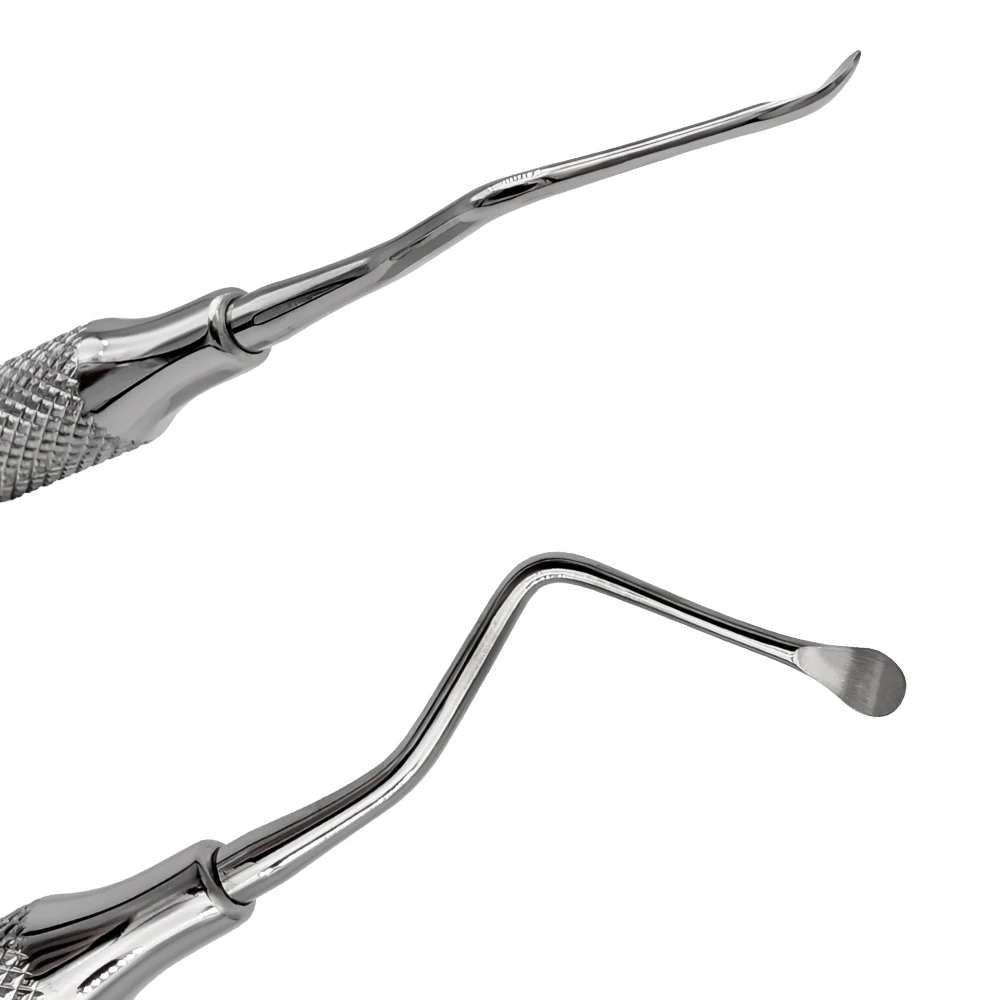
Describe Curette
most versatile removal instrument that is supra + subgingivally
Two cutting edges come together as a rounded tip

Describe Universal curettes
lower shank needs to be tilted towards the tooth for correct angulation
Allows hard deposits to be easily removed
Tip is rounder + wider

Describe Gracy curettes
area specific
Use sub + supragingivally
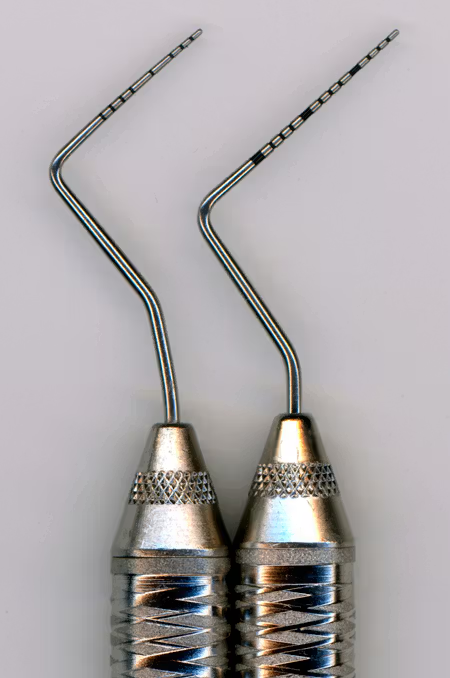
Describe Probe
no cutting edges
Evaluates periodontium health by measuring pocket depth in mm

Explorer (Shepherd’s hook)
has one sharp tip
Used to see & feel for calculus, furcation

Describe Mirror
Helps with visual inspection of distal surfaces of teeth
Assists in holding back tissue

Describe Dental Elevator
Place between root + bone to stretch the periodontal ligaments
Winged elevator wrap around tooth
Helpful to retrieve root tips

Describe Periosteal Elevators
elevate + reflect tissue flaps

Describe Extraction Forceps
removes teeth + heavy calculus
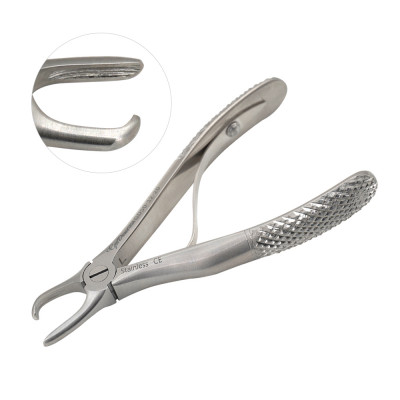
Describe Calculus Removing Forceps
Similar to extraction forceps but have a “hook” to help elevate calculus from crown

What is this dental tool?
Dental Scaler
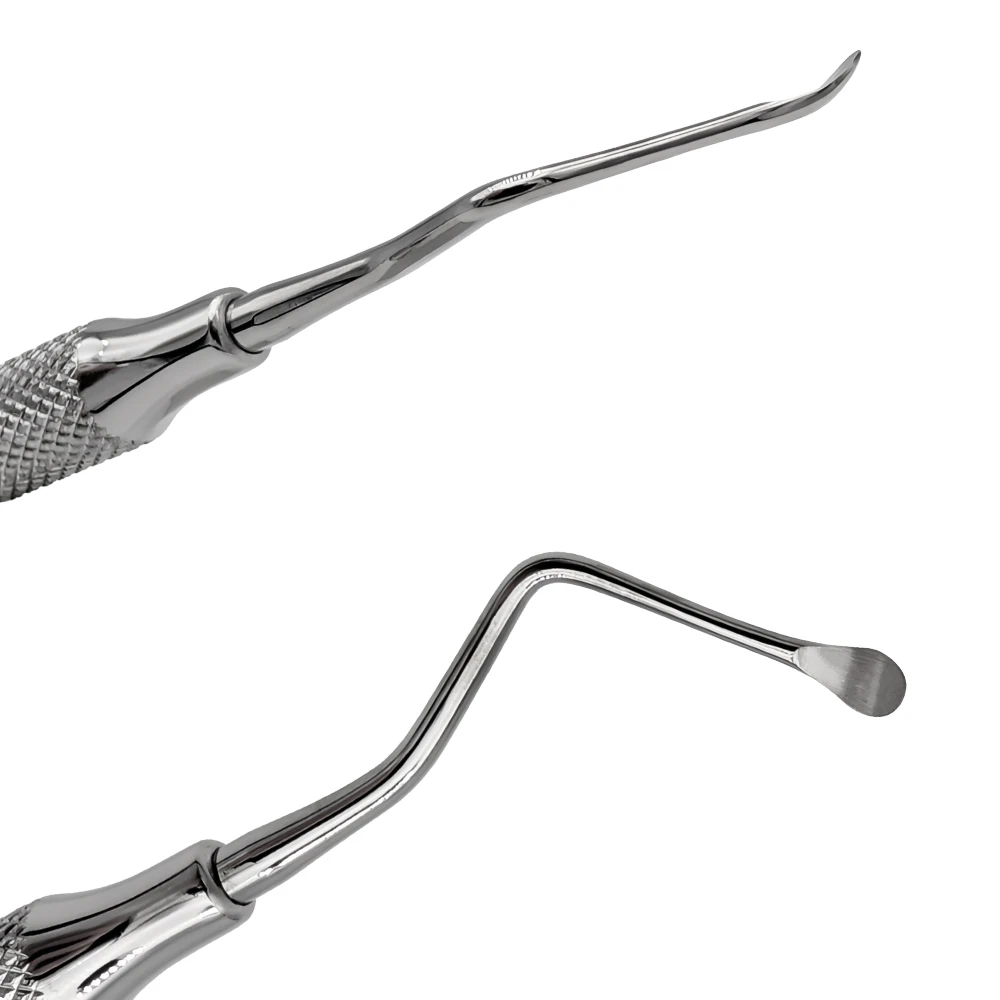
What is this dental tool?
Curette

What is this dental tool?
Universal curettes

What is this dental tool?
Gracey curettes

What is this dental tool?
Probe

What is this dental tool?
Explorer (Shepard hook)

What is this tool?
Dental Mirror

What is this tool?
Dental elevator

What is this tool?
Periosteal Elevators

What is this tool?
Extraction Forceps

What is this tool?
Calculus Removing forceps
What is the function of subgingival curette?
remove any plaque/ calculus/ foreign material + diseased tissue below the gumline
How do you use a subgingival curette?
inserted to bottom of sulcus with curved side directed toward gingiva = rounded tip aimed toward root
What must you do after scaling?
flush entire mouth to make sure all large chunks of plaque are out so patient does not swallow
What happens if you do not flush the mouth after scaling?
Loose debris can settle back in to the pockets + cause irritation/ infection
How do you use a dental probe / explorer?
run along gingiva to check for pockets/ bone loss/ inflammation
measure sulcus depth around entire tooth
Explorers detect subtle defects on tooth surface
What must you do with all your findings?
chart ALL findings
Why must you do dental radiographs?
preventative reasons: can spot fractures/ abscesses + anything underneath the gingiva that may be seen during cleaning
What can radiographs be used for by the DVM?
prior to extracts DVM can diagnosis + extract teeth
Can you radiograph after polishing + sealing?
No must be taken BEFORE
What does polish do?
smooths out the tooth surface after rough scaling from tartar removal
Must rinse it all out after
What must you apply after applying polish?
Fluoride foam + finish with sealant
Can Fluoride foam + sealant be applied on a wet tooth?
No, completely dry tooth with gauze before applying sealant
What are home care owners can do?
brush daily or once a week
Dental treats
dental wipes
water additives
What signs should owners look out for after dental cleanings?
vomiting, diarrhea, extreme lethargy
frank amount of blood (minimal bleeding is normal)
Should food be given after the procedure?
no, wait 4-6 hours after and feed small amounts after