brain structure and subdivision of the human brain
 Call Kai
 Learn
 Practice Test
 Spaced Repetition
 Match
 Flashcards
 Knowt Play
1/30

There's no tags or description
Looks like no tags are added yet.
31 Terms
development of brain
hindbrain first
basic survival needs
midbain next
process sensory information and basic motor functions
forebrain last
handles more complex cognition and learning
advanced survival and cognition
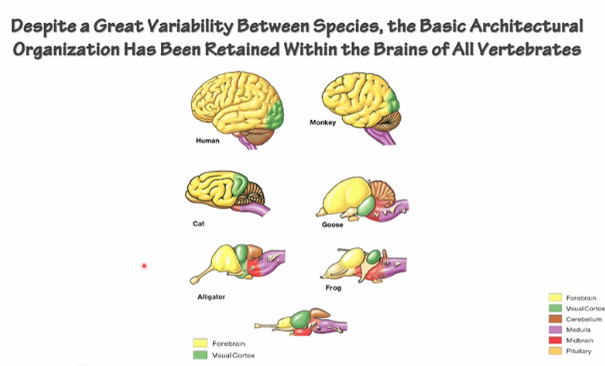
structures are shared between vertebrates
structures are shared
same subdivisions and components
different proportions
humans = forebrain is most prominent, we have advanced cognitive ability
hindbrain main components in adults
cerebellum
pons
medulla oblongata
midbrain main components
optic lobes
integrates visual information w other sensory inputs
relays auditory information
midbrain nuclei
involuntary control of muscle tone
processing of incoming sensations and outgoing motor commands
forebrain main components
cerebrum
motor area controls voluntary muscle movements
sensory cortex is center of conscious perception of touch, pressure, vibration, pain, temp, taste
association areads integrate and process sensory data
thalamus
part of limbic system
integrates sensory info arriving @ thalamus (except for olfactory)
projects info to cerebral frontal lobes
hypothalamus
controls autonomic functions
sets appetitive drives (thirst, hunger, sex) and reproductive behaviour
participates in emotional responses
secretes adh, oxytocin
secretes releasing hormones for anterior pituitary regulation
cerebellum + brain stem
maintaining the basic aspects of living
cerebellum
balance. coordination, control of voluntary movement
involuntary coordination and control of outgoing movements for equilibrium, muscle tone, posture
pons
links cerebellum w other brain centers and with medulla and spinal cord; modifies output of respiratory centers in medulla
medulla oblongata
regulates heart rate and force of contraction; vasomotor control; sets rate of respiration; relays information to the cerebrum
brain stem
breathing, digestion, heart control, blood vessel control, alertness
occipital lobe
visual reception and procession and interpretation
humans have a fairly large visual cortex
temporal lobe
auditory reception
affect/emotional processing
language system and network
encoding of memory, shift memories from short to long term
parietal lobe
an integration lobe (?)
receiving nad processing memory input
touch, pressure, heat, cold, pain
perception of body awareness
spatial coordinate system (mental map) to represent us and the world around us
integration between the two
frontal lobe
planning, mentalizing, emotion regulation, judgment, inhibition, attention, perspective taking, and cognitive flexibility
motor cortex
premotor cortex
prefrontal cortex
motor cortex
voluntary motor activity
works tgt w the sensory cortex (in a diff lobe
premotor cortex
storage of motor patterns
prefrontal cortex
high order cognition !!! highest cognitive abilities and skills
last to develop
most modern part of our brain
planning, mentalizing, emotion regulation, judgment, inhibition, attention, perspective taking, cognitive flexibility, empathy, super high things
default mode network
medial system
patches are in medial part of brain
activated when we do nothing
many interesting functions and roles (will talk abt later)
somatomotor network
somato cortex and motor cortex
work tgt to processing sensory _ voluntary motoro simulation
sending commands for motor action
visual network
gravitates to the occipital lobe / visual cortext
language network
strong region in temporal lobe and frontal lobe
has the vernica area
crucial and central in language comprehension
broca area
language expression
dorsal attention network
upper
top down attention
intentional and conscious direction of attention from one thing to the other
ventra attentional network
ventral - closer to bottom
bottom up
more automatic
detect + process significant stimuli and salient and will prioritize attention to those stimuli
threats, survival
human faces bc we are social and we need to know social cues
frontoparietal control network / central executive network (CEN)
executive functions
centred in the PFC
mostly in the parietal and frontal
the telencephalon
mainly focused on the cerebral cortex but also has the limbic system
the limbic system
emotion processing and memory coding center
regulated autonomic or endocrine function in response to emotional stimuli
reinforcing behaviour
thalamus
relaying sensory and motor signals
connecting and spreading the signals
regulation of consciousness and alertness
hypothalamus
endocrine system modulation
regulation of temperature
sleep, appetite, sexual behaviour, emotional responses
amygdala
emotional processing, salience (being noticeable and important, emotional/exciting things), threat detection
we have two, bilateral
hippocampus
memory and spatial navigation
basal ganglia
group of subcortical structures of nuclei
play role in control of voluntary motor movements, procedural learning, habit learning
eye movements
cognition
emotion
motivation and reward system!!!
caudate + putamen = striatrum
in between the two striatums = thalamus