[AP Psychology] Biological Bases of Behavior Part C
 Call Kai
 Learn
Learn Practice Test
 Spaced Repetition
 Match
Match Flashcards
 Knowt Play
1/31

There's no tags or description
Looks like no tags are added yet.
Name | Mastery | Learn | Test | Matching | Spaced | Call with Kai | Chat |
|---|
No analytics yet
Send a link to your students to track their progress
32 Terms
Behavior genetics
the study of how genes and environments contribute to differences in behavior
Heredity
the passing of genetic information from parents to offspring
Environment (behavior genetics)
all non-genetic influences, including prenatal conditions, family, peers, and surroundings
Nature vs nurture
the question of how much behavior reflects inherited influences versus environmental experience
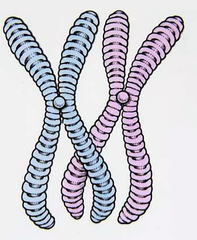
Chromosomes
threadlike structures made of DNA that contain genes
DNA (deoxyribonucleic acid)
the molecule that carries hereditary genetic information

Genes
segments of DNA that provide instructions for making functional products such as proteins

Gene expression
the process by which a gene is active and its information is used to make a functional product
Inactive gene
a gene not currently being expressed in a particular cell or condition
Genome
all of an organism's genetic material
Identical twins (monozygotic)
twins that develop when one fertilized egg splits, producing two people with nearly identical inherited DNA

Fraternal twins (dizygotic)
twins that develop from two separate fertilized eggs and are genetically similar to ordinary siblings

Identical vs fraternal twins
identical twins originate from one fertilized egg; fraternal twins originate from two
Twin studies
research that compares twins to help estimate genetic and environmental influences on traits
Separated identical twins
identical twins raised apart whose similarities can help researchers investigate hereditary influences
Minnesota separated-twin studies
studies of identical twins raised apart that examined similarities in traits and behavior
Virtual twins
unrelated children of about the same age raised together, used to study shared environmental influences
Adoption studies
research comparing adopted people with biological and adoptive relatives to examine genes and environment
Genetic relatives
biologically related family members who share some inherited DNA
Environmental relatives
family members who share a home or upbringing but are not necessarily genetically related
Heritability
a statistical measure that estimates how much of the variation in a trait within a specific population is due to genetic differences rather than environmental factors
Heritability - key limitation
a population statistic about differences among people, not the percentage of one person's trait caused by genes
Gene-environment interaction
when the effect of genes depends on the environment or the effect of the environment depends on genes
Evolutionary psychology
the study of behavior and mental processes using ideas from evolution and natural selection
Natural selection
the process by which inherited variations that support survival and reproduction tend to become more common over generations
Mutation
a change in genetic information that can create a new inherited variation
Adaptation (evolution)
an inherited characteristic favored across generations because it helped reproduction or survival in an ancestral environment
Evolutionary fitness
reproductive success, or how well an organism passes genes to future generations
Evolutionary explanation of shared behaviors
some behavioral tendencies may appear across cultures because they were useful to human ancestors
Evolutionary mismatch
a once-useful inherited tendency that may be less helpful or harmful in a modern environment
Evolutionary psychology and mating preferences
the hypothesis that some partner preferences may have been shaped by ancestral reproductive pressures
Nature and nurture - modern conclusion
genetic influences and environmental experiences work together rather than acting as completely separate causes