CH4: Prenatal Development, Birth, & the Newborn
 Call Kai
 Learn
 Practice Test
 Spaced Repetition
 Match
 Flashcards
 Knowt Play
1/89

Earn XP
Description and Tags
PSYC 207 unit 2 exam material
90 Terms
prenatal development
Changes that occur in utero, divided into three periods
Germinal
Embryonic
Fetal

germinal period
Begins with conception & ends with blastocyst implantation in uterine wall

conception
Occurs in the fallopian tube — sperm fuses with the egg, forming zygote. Cellular division occurs, until composed of 100 cells and then implantation in uterine lining (occurs during first 2 weeks)
zygote
Cell containing combined genetic information of both parent cells
blastocyst
Multi-cellular organism derived from the zygote, composed of 100 cells
Embryonic disk — becomes the embryo
Trophoblast — becomes the placenta
acrosome
Part of the sperm that contains the genetic information
embryonic period
Begins with the implantation of the blastocyst into the uterine wall, and ends with the formation of basic organs and systems.
Weeks 3-8

embryo
Multi-cellular organism implanted into the uterine lining
cephalocaudal
A principle of growth that states that physical development proceeds from the head down to the toes
proximodistal
A principle of growth that states that physical development proceeds from the center of the body (midline) outward toward the extremities.
umbilical vein
Blood vessel that carries oxygen and nutrient rich blood from the placenta directly to the growing fetus
arteries
Blood vessels that carry deoxygenated blood and waste away from the embryo and into the placenta.
fetal period
Begins with the formation of major organs/systems and ends with birth (weeks 9-delivery)
Throughout this period…
Vital structures continue to develop
Major organs become functional
Cell differentiation continues
Sexual differentiation occurs

fetus
Organism with major structures formed, which experiences additional growth in size and function
month 3
Fetal Milestones
_____ -___:
Hair, nails, and teeth
Digestive development continues
month 4-6
Fetal Milestones
______ ___:
Eyes more sensitive
Hearing develops
Respiratory development continues
Month 5:
Reflexes emerge
Sucking
Swallowing
Sleep/wake cycle
Month __:
Age of viability (24 weeks)
Majority of neurons developed
Rudimentary
Glial cells still developing
Pain perception
month 7-9
Fetal Milestones
_____ ___-___:
Preparing for birth
Fat reserves grow
Subcutaneous fat
Increased motor activity
Lungs expand and contract
37 weeks
Organs sufficiently developed
neural plate
Location of the embryonic stem cells capable of producing all the different cells that make up the brain.
Changes shape, folds inward, forming the neural groove
Neural groove converges & fuses
neural tube
Early foundation of the nervous system, formed around 25 days after conception
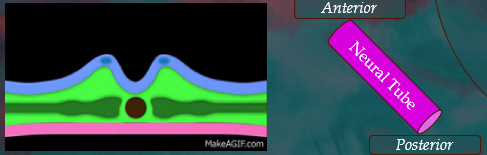
endoderm
The innermost layer that becomes the internal (digestive & respiratory) tissue
mesoderm
The middle layer that becomes the muscular & connective tissue
ectoderm
The outermost layer that becomes the nervous system and outer tissue
neuron
Specialized cells which allow communication throughout the nervous system
neurogenesis
Begins week 9 & mostly complete by 20 weeks (exception = hippocampus)
The process of neural growth & development
neural migration
Begins week 9 & mostly complete by 24 weeks
Process of orderly migration by neurons of the neocortex
gray matter
Regions of the brain that contain the nerve cell bodies
white matter
Regions of the brain that contain axons, forming the neural pathways of the brain
teratogen
Environmental influences which hinder prenatal development
Can disrupt embryo & fetal development
Relevant Factors:
Species-specific vulnerability (between species differences)
Type of exposure (between factor differences)
Amount of exposure — greater exposure confers greater risk
Timing of exposure — depends on specific critical periods
Number of teratogens — additive or cumulative effects
Genotype — of both mother & offspring
congenital malformation
Structural defects or malformations present at birth
Affects 1 in 33 U.S. live births

alcohol
The leading cause of preventable intellectual disabilities in the U.S.
Confers risk of fetal alcohol spectrum disorders
Fetal Alcohol Syndrome (FASD): substantial risk among binge drinkers
Psychological Symptoms:
Impaired judgement
Impulsivity
Learning disabilities
Increased ADHD risk
Physical Characteristics:
Below average head circumference
Low nasal bridge
Flattened nose
small eye holes
thin upper lip
indistinct philtrum
Adult Challenges:
Criminal behavior
Psychiatric issues
Unemployment
medication
Non-prescription substances which present the risk of teratogenic effects
Herbal remedies, dietary supplements, over the counter medications
Effects of prenatal exposure to ______ vary by substance, and include:
Pre-term birth
Behavioral disorders
Learning disorders
Low birthweight
Miscarriage & stillbirth

opioids
Drugs which work by agonizing endorphin system activity (ex. Oxycodone, Hydrocodone, Codeine, Fentanyl)
neonatal abstinence syndrome
Withdrawal syndrome related to prenatal substance exposure — most commonly associated w/ prenatal opioid exposure
Symptoms:
Respiratory distress
Seizures
Diarrhea, fever, tremors, fussiness
Generally requires care in NICU
Long-term Adverse Effects:
Respiratory issues
Behavioral issues & Developmental delays
Vision & Language issues
Sleep disturbances
Tobacco
____ smoke contain numerous teratogenic substances
Nicotine, Carbon Monoxide, Tar, reduced o2 availability
Adverse Effects:
Ectopic pregnancy
Placenta Previa/Abruption
Still birth
Pre-term birth
Learning disability

placental abruption
A condition in which the placenta lies low in the uterus, blocking the cervix
placenta previa
A condition in which the placenta detaches from the uterine wall prematurely
second; third
___ Hand Smoke: Indirect exposure/inhalation of ambient smoke
____ Hand Smoke: Indirect exposure to smoke lingering on clothes & furniture
illicit drugs
Consumption of illegal drugs has potential to harm the developing organism (ex. Heroin, Cocaine, Ecstasy)
Maternal consumption increases the risk of issues across several broad domains — behavioral, academic, biological, developmental
Genetic & environmental effects are difficult to disentangle
Increases risk of… stillbirth, low birth weight, spontaneous abortion

lead
Environmental Pollutants
Found in paint, as well as contaminated soil
Resembles vital minerals such as calcium
Effects:
Hypertension
Low birth weight
Preterm birth
Infertility
Miscarriage
Neurodevelopmental delays
bpa
Environmental Pollutants
Bisphenol: found in many commonly used plastics
Resembles hormones such as estrogen
Effects:
Impacts function of Neural, Thyroid, Immune
Meta-analysis: impaired motor development
herbicides and pesticides
Environmental Pollutants
Used to regulate growth of plants and pest populations
Glyphosate, found in roundup, is one example
Effects:
Miscarriage
Congenital malformations: heart, oral cleft, limb
Neural tube defect
mercury
Environmental Pollutants
Heavy metal associated with brain damage — damages cells & disturbs migration
Effects:
Delayed sensory development: auditory, visual
Impaired motor development
radiation
Environmental Pollutants
Disrupts typical cellular division processes via transmission of wave energy
Effects:
Cancer
Failed implantation
Miscarriage
Motor, Growth, & Neural deficits
toxoplasmosis
Infection with protozoan parasite Toxoplasma Gondii — infection is typically asymptomatic
Exposure Risk:
undercooked meat
unwashed produce
contaminated soil
cat litter
Adverse Effects:
premature birth
visual malformation
neural malformation
stillbirth
zika virus
Viral infection often contracted through bodily fluids
Effects:
Congenital malformations
Severe microencephaly
Subcortical calcification
Still birth
Club foot
Hypertonia
Neural effects:
Asymmetry
Atrophy
Seizures
Tremors
Irritability
gestational diabetes
Diabetes which develops during pregnancy
Typical Course:
Develops ~20weeks (routine testing 24-28 weeks)
Resolves — Post pregnancy
Risk Factors:
Family/Personal History
Age
Obesity/ Excessive Pregnancy Weight Gain
Adverse Effects:
Jaundice
Low blood sugar
Respiratory Dysfunction
Birth Complications — Premature birth, stillbirth, preeclampsia, C-section

rubella
AKA German Measles — CDC recommends MMR (Measles, Mumps, Rubella) vaccines at least 1 month prior to conception
Symptoms:
Rash
Flu-like symptoms
Only experienced by 50% of infected children
Pre-natal Exposure — 1st trimester
Congenital malformations (heart, eyes, brain, ears)
Deafness almost certain if before week 11
hypertension
Gestational ______ develops over the course of pregnancy starting at ~20 weeks and resolves post pregnancy
Associated with low birthweight, placental abruption, preeclampsia
Risk factors:
Age > 35yrs.
Socioeconomic factors
Racial disparities
Psychosocial stress
Diet & Sedentary lifestyle
Poverty
Tobacco
covid 19
Infection with the SARS-CoV2 Virus; long-term effects are still unclear, but evidence of impaired neural development, speech, motor, and preterm birth
sexually transmitted infections
Highest risk of vertical transmission during childbirth (ex. chlamydia, gonnorrhea, herpes, syphilis, hep. B)
Minimize Harm — pre-natal STI screening, C-section, Maternal STI treatments

vertical transmission
Viral or bacterial transmission between mother and fetus or neonate
Effects vary, but include..
Premature rupture of amniotic sac
Premature birth
Pelvic inflammatory disease — stillbirth, congenital malformation, ectopic pregnancy
Treatment:
maternal anti-retroviral medication
C-section
rh compatibility
Rhesus factor: heritable blood protein (can be + or -)
Negative mother and positive offspring
Fetal blood cells enter maternal bloodstream
Maternal immune system creates antibodies
Maternal antibodies cross placenta & kill fetal red blood cells
Bilirubin buildup occurs as RBCs break down
High bilirubin levels = fluid buildup, swelling, brain damage & dysfunction, impaired speech, seizures, impaired hearing, impaired motor function
Treatment = RhoGam Injection
weight gain
Mothers should be consuming 300 more calories a day
Ideally, ____ ____ is gradual
Excessive Weight Gain
Premature birth
Oversized infant
Blood clots
Gestational diabetes
Preeclampsia

stress
Chronic maternal ____ can harm development
Can cause…
Birth complications
Low birthweight, preeclampsia
Childhood dysfunction
Inattention, fear, anxiety

maternal depression
Mood disorder characterized by feelings of worthlessness, sadness, guilt, and at least 2 weeks of impaired function
1 in 7 women experience depression surrounding birth (prior 7 subsequent year)
Risk factors:
Prior complications & miscarriage
Domestic abuse
Chronic stress
Prior depression
Risk of antidepressants:
Heart defect
Miscarriage
Low birthweight
Premature birth
Lung problems
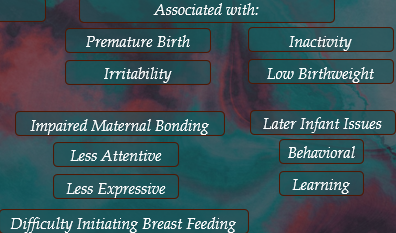
advanced maternal age
Pregnancies after age 35 are classified as “______ _____ ____”
If healthy, pregnancy is generally safe
Increased risk of…
Diabetes & hypertension
Miscarriage, stillbirth, premature birth, C-section
Placenta previa
Fertility challenges
Congenital malformation & genetic disorder
Has benefits as well…
Doubles likelihood of living to 95 after 33yrs.
Increase in 1% of lifetime income for each year delayed

teenage pregnancy
Pregnancy during adolescence caries unique risks
Increased likelihood of complications — anemia, nutritional deficiencies, hypertension
For mother >15yrs
Labor obstruction, premature birth, low birthweight
Underdeveloped organs
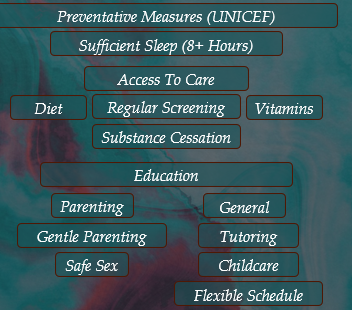
paternal; race
_____ Age:
Over 40yrs.
Achondroplasia
Miscarriage
Congenital malformation
Psychopathology (schizophrenia, autism)
Mediated by accumulated sperm mutations
Paternal ______:
Black = low birthweight, small for gestational age
Hispanic = small for gestational age
Mediated by psychosocial stress, socioeconomic status, utilization of healthcare
paternal; occupation
______ Education Level
High school or lower
Preterm birth & Low birthweight
Mediated by healthcare access, use of health information & health technology, openness to expert advice
Paternal ______:
Hazardous chemical exposure (petrochemicals, lead, pesticides)
Adverse effects = miscarriage, cancer
Radiation exposure = cancer
ultrasound
A prenatal imaging test which relies on sound waves; typically at least once, more if possible issues detected
Transvaginal — Early pregnancy
Transabdominal — Weeks 16-20
Can provide info on heart rate, motor activity, fetal positioning, number of fetuses, determine age
Monitor amniotic fluid levels, placental location, identifying malformations
chorionic villus sampling
A more intrusive prenatal assessment method that uses placental cell collection for genetic testing (~10-13 weeks)
Can increase risk of miscarriage
amniocentesis
A more intrusive prenatal assessment method that uses amniotic fluid collection for genetic testing (~14-20 weeks)
Can increase risk of miscarriage
infertility
A disease of the reproductive system resulting in failure to achieve pregnancy after a year of regular unprotected sex (10-15% U.S couples)
Most common causes
Females
Failure to ovulate
Pelvic inflammatory disease (infection of female repro. organs)
STI complications
Males
Insufficient sperm production
Treatment Options
Assisted reproductive technology
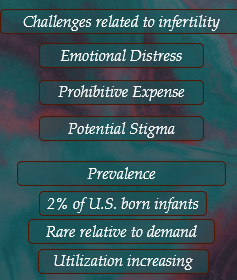
assisted reproductive technology
Techniques & procedures to assist couples struggling with infertility
Examples:
In-Vitro Fertilization
Gamete Intra-Fallopian Tube Transfer
Zygote Intra-Fallopian Tube Transfer
in vitro fertilization
Procedure where eggs are removed from the ovaries and then fertilized in a laboratory before being implanted into the uterus
Depends largely on quality of eggs
Fresh vs Frozen
Mother vs Donor
Maternal age
gamete; transfer
_____ Intra-Fallopian Tube _____
Procedure where both the sperm and egg are implanted in the fallopian tube
Higher rate of success than In-Vitro, but less common
zygote; transfer
_____ Intra-Fallopian Tube _____
Procedure where the fertilized zygote is implanted into the fallopian tube
Higher rate of success than In-Vitro, but less common
minor pregnancy complications
Insomnia
Back pain
Heartburn
Nausea
Gas, hemorrhoids
Varicose veins
Shortness of Breath
severe pregnancy complications
Ectopic Pregnancy
Maternal Mortality
Spontaneous abortion
preeclampsia
Characterized by hypertension, kidney dysfunction, and swelling of hands, feet, and face. Leading global cause of pregnancy complication (5-10% of all pregnancies; 40-60% of maternal death)
Risk factors = 1st pregnancies, obesity, diabetes, twinning
Treatment = bedrest, medication, anti-hypertensives, anti-convulsant, birth induction
Related complication = eclampsia (seizures from preeclampsia)

preparing for childbirth
Important factors to consider…
physical condition
social support
healthy environment
Supportive, responsive environments increase resilience & eases the transition into parenthood
parenting classes
birthing classes
relationship classes
lamaze method
Originating in Russia, emphasizes gaining control over the delivery process
Skills taught include…
muscle relaxation
attending to focal point
training of delivery coach
breathing through contractions
birthing locations
Traditions & practices vary by region & culture
In Hospital Settings:
Expert supervision (nurses, midwives, doctors)
Reduces Mortality Risk
Recognition of Complications
Timely Intervention
1/3 non-hospital births occur in another type of medical facility
Physician’s office, Clinic, & Birthing Center
In Home Settings:
67% Midwife Supervised
Generally safe if healthy
More likely if white, over 25, & subsequent births

uterine contractions
The tightening/squeezing of the muscular wall in the uterus
Duration = 30s ; Interval = 15-20min
Interval of 5 minutes — seek doctors
braxton hicks contractions
False uterine contractions; intermittent & often improve with movement
Less common with subsequent deliveries
indicators of labor
Uterine contractions w/ Duration = 1min ; Interval =3-4min
Bloody cervical discharge
Amniotic sac rupture (rare)
May lead to induction to decrease infection risk
stage 1
Stages of Vaginal Delivery…
Buildup to delivery
Typical Duration:
1st Birth = 12-26 hrs
Subsequent = 6-9 hrs
Key Events:
Cervix dilates to 4 inches
stage 2
Stages of Vaginal Delivery…
Passage of the infant through the birth canal
Typical Duration: 10-40min
Key Events:
Contractions = 2-3min apart
Potential Episiotomy (cut made in perineum)
Guided pushing
Umbilical cord clamped & cut
stage 3
Stages of Vaginal Delivery…
Typical Duration: 20min
Key Events:
Placenta delivered
Episiotomy stitched
epidural block
Regional anesthetic which alleviates most lower body pain without impairing labor; typically safe w/ no adverse impacts on infant or mother
Over 50% of hospital births utilize this
May be used w/ other analgesics in case of…
Vaginal delivery w/ forceps
C-section
Vaginal delivery w/ vacuum
c section
Surgical delivery of infant through the abdomen — can be used in response to emergent issues (maternal health, breech birth, fetal distress, narrow birth canal, multiple infants)
Prevalence = 1/3 U.S. births
Varies globally, but more common in urban settings
Generally safe but takes longer to heal & uterine wall weakness
induction
Methods which prompt uterine contractions before labor has begun
Common Reasons:
Failure for labor to occur naturally w/in 2 weeks of projected due date
Amniotic sac has ruptured but contractions have not begun
Evidence that mother’s uterus has become infected
Disruptions in projected fetal growth pace
Insufficient amniotic fluid surrounding the fetus
Early placental abruption from inner uterine wall
Maternal medical conditions that threaten fetal wellbeing (hypertension, diabetes)
apgar
Neonatal assessment measuring five health signs ; standardized test to evaluate a newborn’s physical condition & immediate response to birth
Conducted twice immediately following delivery (1min & 5min)
Neonatal Behavioral Assessment Scale (NBAS)
Motor development
Muscle tone
Stress response
Often used to further probe low APGAR infants

preterm birth
Describes infants delivered prior to 37 weeks of gestation; global leading cause of death in children younger than 5yrs
Risk factors:
National poverty — more common in low-income nations 50% die due to lack of access to care
Anything that interferes w/ maternal processes
respiratory distress syndrome
Respiratory issue characterized by weak and irregular breathing
low birthweight
Describes infants weighing less than 5.5lbs
Significant Risk Factor For…
Infant mortality in the 1st month
stunted growth
low IQ
premature birth
adult psychiatric disorders (ADHD, OCD, depression)
Chronic conditions (obesity, diabetes)
anoxia
Temporary lack of oxygen to the brain
Adverse Outcomes:
Brain damage
Death in especially severe cases
small for date
Infant whose weight is below expectation based on gestational age
Such infants can be full term or pre-term
Must be smaller than 90% of infants the same gestational age
4x mortality risk
Increased risk of cognitive impairments
baby blues
Characterized by feelings of sadness in the 3-5 days following birth; moodiness, difficulty sleeping, sense of being let down by birthing experience, typically resolve after 2 weeks
peripartum onset depression
Depressive mood disorder which occurs during or in the four weeks following pregnancy; maternal bonding issues, hopelessness, fear of maternal failure, intense irritability or anger, mood swings