BIOMG 1350 - Vocabulary
 Call Kai
 Learn
Learn Practice Test
 Spaced Repetition
 Match
Match Flashcards
 Knowt Play
1/259

Earn XP
Description and Tags
Vocab for prelim one
Name | Mastery | Learn | Test | Matching | Spaced | Call with Kai | Chat |
|---|
No analytics yet
Send a link to your students to track their progress
260 Terms
What do all living things have in common
common origin (LUCA), similar DNA sequences, basic chemistry, fundamental processes
prokaryotes
archaea/bacteria, no nucleus, single celled, no membrane-bound organelles, evolutionary successful
eukaryotes
eukaryotes, cells have a nucleus, membrane bound organelles
Theory of Endosymbiosis
two prokaryotic cells merged to form a eukaryotic cell with a mitochondria (only happened once with plants and once with chloroplasts)
surface per cell volume
larger ratio (as in smaller cells) makes it more efficient as reactions are carried out on cell membranes
compartmentalization
cells complete many reactions that need to be separated (benefit of membrane-bound organelles)
molecule is fluorescent if…
it absorbs wavelength of one wavelength and emits light of a longer wavelength

Green Fluorescent Protein (GFP)
comes from jellyfish Aequoria Victoria, fluorescent green, fluoresces on its own, scientists have modified to have more colors, helps identify location of cell components
plasma membrane
separates cell from environment, mediates interactions with environment (signaling, nutrient uptake, endo- and exocytosis)


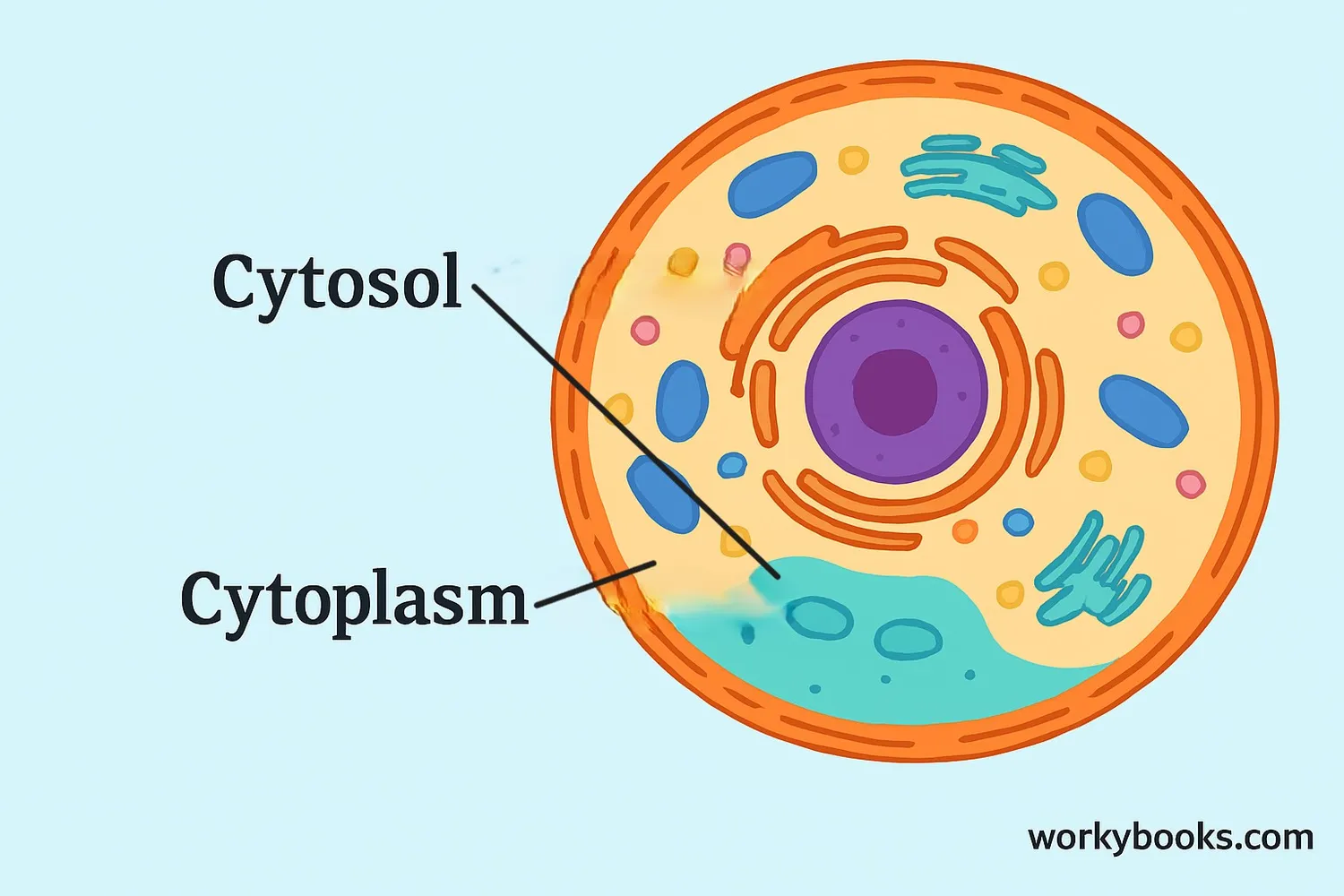
cytoplasm
everything in between plasma membrane and nucleus
Cytosol
soluble portion of cytoplasm outside of organelles, crowded with many chemical reactions (like protein synthesis)

nucleus
contains the genome, replication and transcription here, nucleolus

nucleolus
where ribosomes are assembled (darker region)

endoplasmic reticulum
primary site for synthesis of lipids and membrane proteins/secreted proteins
Golgi Apparatus/complex
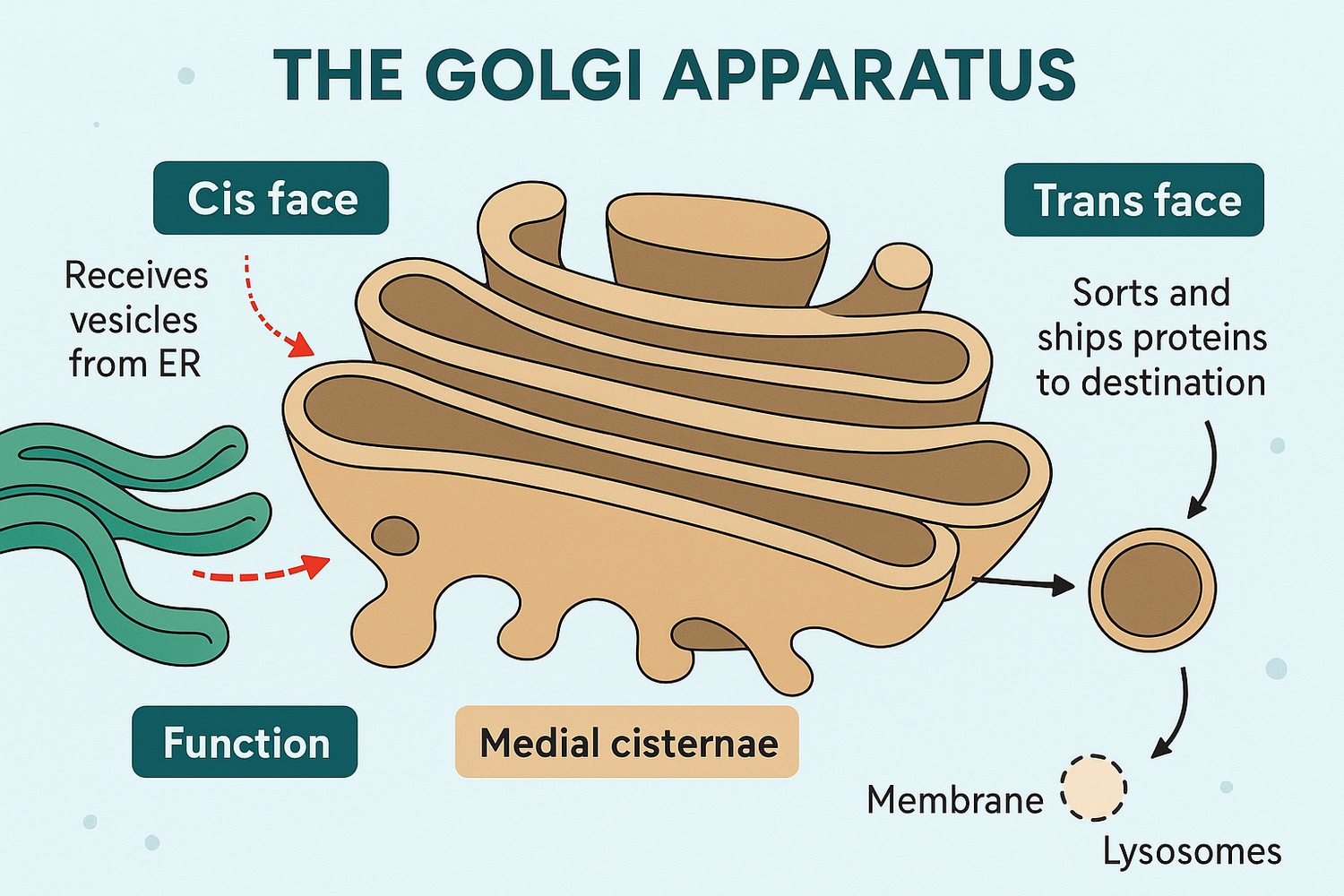
modification of secretory proteins, sorting station for vesicle tracking

mitochondria
major site for ATP production (oxidative phosphorylation), production of major metabolites (amino acids and nucleotides)
Central Dogma of Molecular Biology
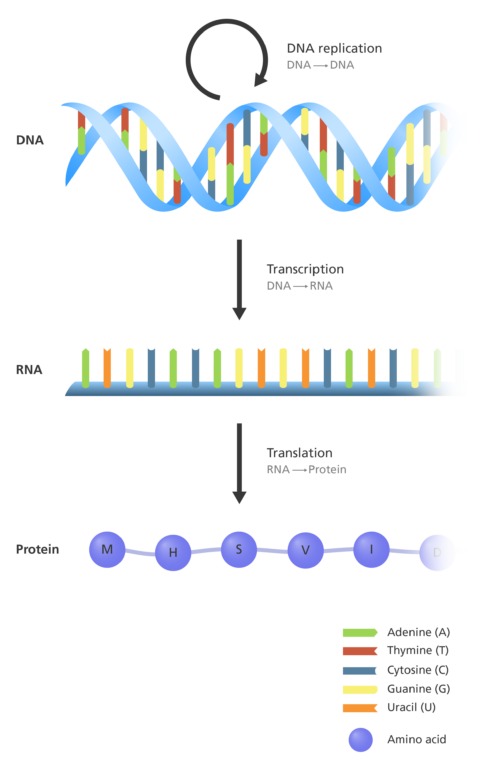
DNA sequence → mRNA sequence → protein sequence
macromolecules (biological polymers)
abundant in cells, signature of life, each one is a polymer constructed from monomers, formed by condensation
condensation/dehydration synthesis
a chemical reaction that joins smaller molecules together to form a larger molecule while releasing a water molecule as a byproduct
nucleic acids
DNA and RNA
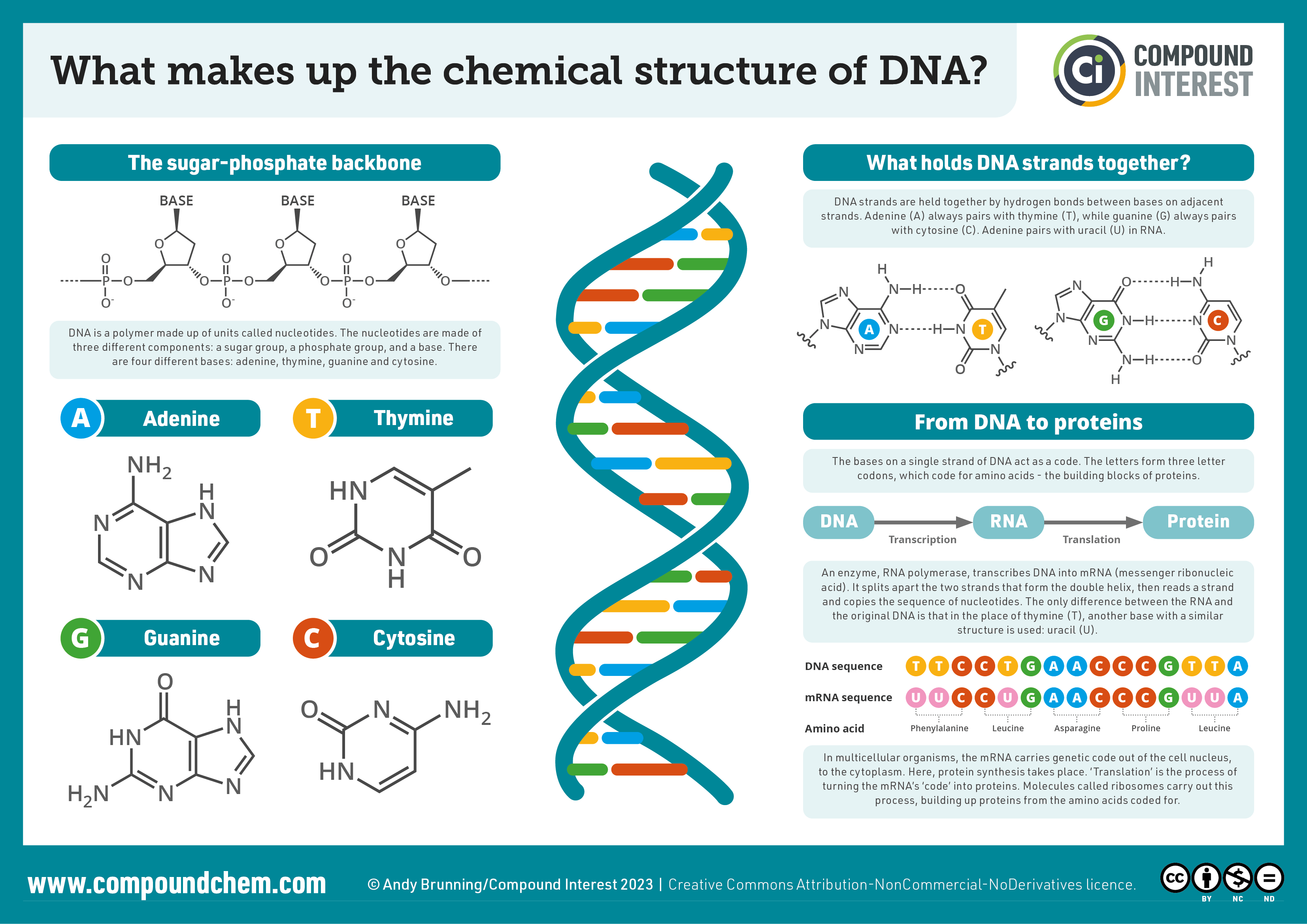
DNA (deoxyribonucleic acid)
monomers are deoxynucleotides (use deoxyribose) form polymers by phosphodiester linkages, the genetic material
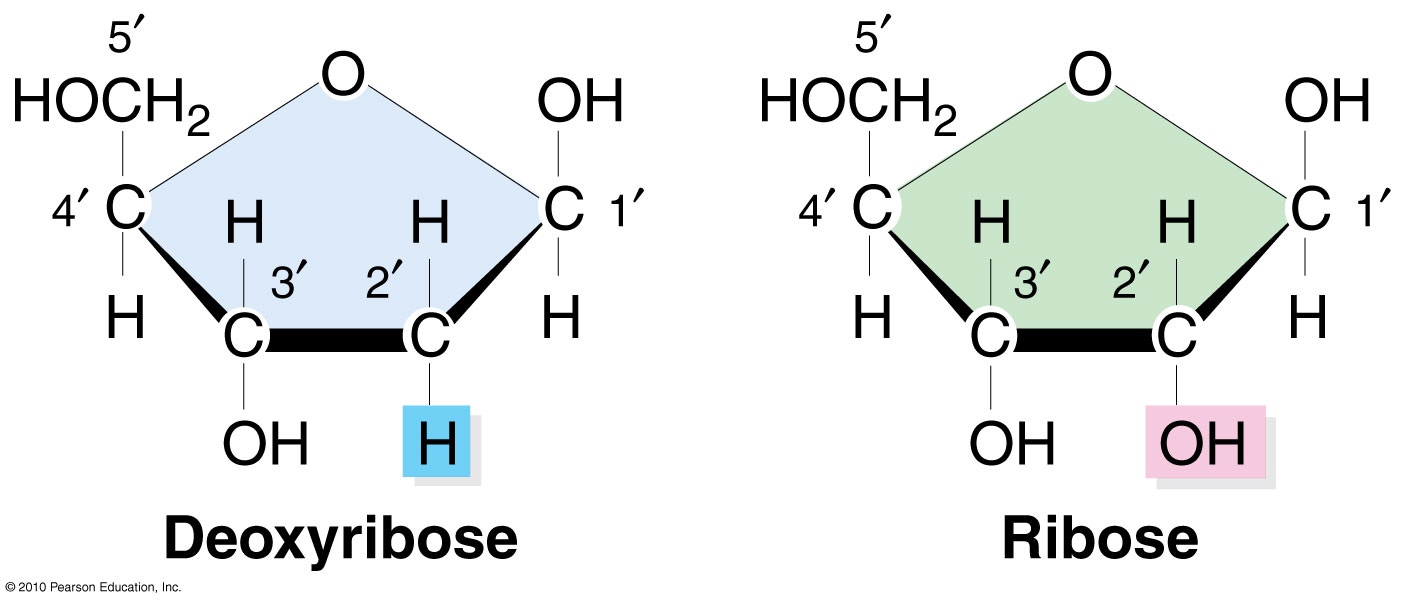
deoxyribose
2’ carbon carries a second hydrogen (instead of OH), effects on stability of DNA
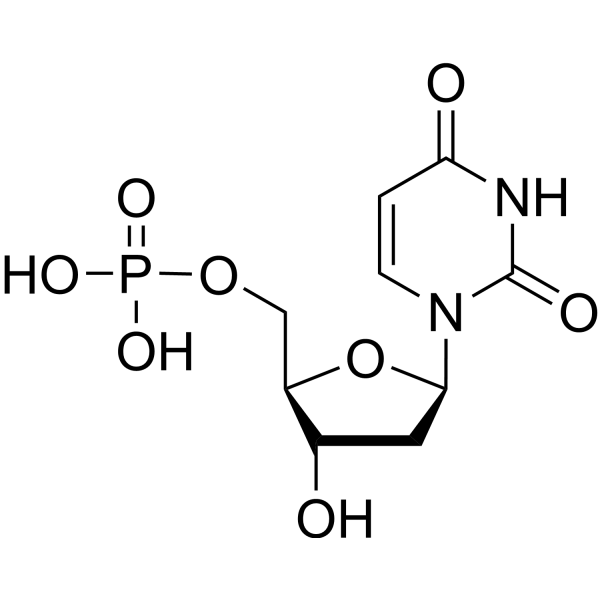
deoxynucleotide polymer
base + 5-carbon sugar (deoxynucleoside) + phosphate
structure of DNA
double-stranded antiparallel double helix with sugar-phosphate backbones on the outside and complementary nitrogenous bases paired inside
complementary base pairing in DNA
adenine (A) pairs with thymine (T) via 2 hydrogen bonds; cytosine (C) pairs with (G) via 3 hydrogen bonds
antiparallel DNA strands
one strand runs 5’ → 3’ direction while the complementary strand runs in the 3’ → 5’ direction

phosphodiester bond
covalent linkage connecting the 3’ hydroxyl group of one sugar to the 5’ phosphate group of the adjacent nucleotide

purines vs. pyrimidines in DNA
purines (adenine and guanine) have a double-ring structure; pyrimidines (cytosine and thymine) have a single-ring structure
DNA replication
semiconservative process of copying a double-stranded DNA molecule to produce two identical DNA copies
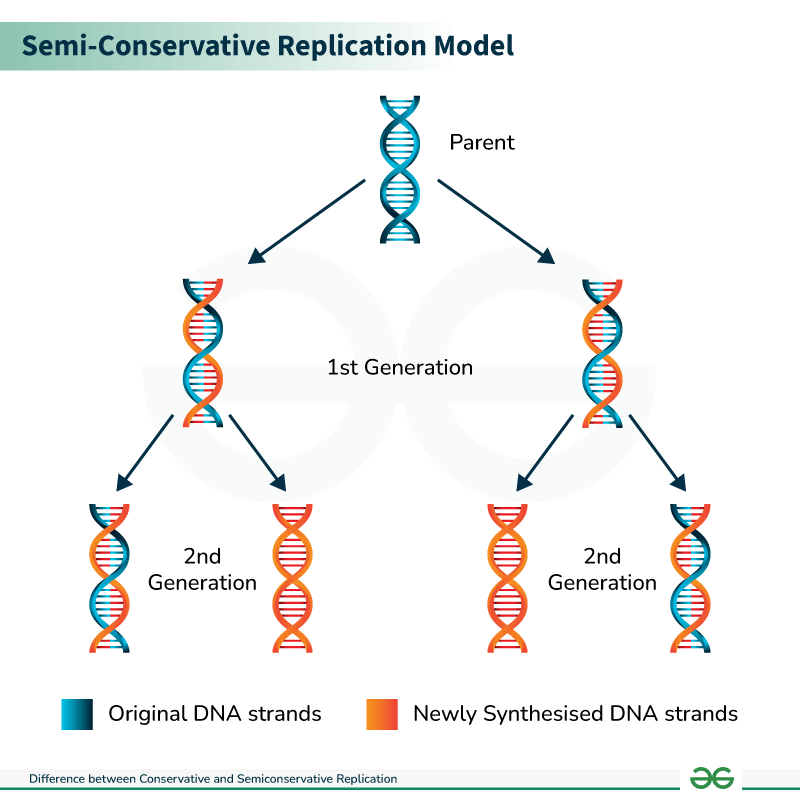
semiconservative replication
mechanism where each newly synthesized DNA molecule contains one original parental strand and one newly synthesized strand

DNA helicase
enzyme that unwinds and separates the double-stranded DNA helix at the replication fork by breaking hydrogen bonds
primase
RNA polymerase that synthesizes a short RNA primer to supply a free 3’ hydroxyl group required by DNA polymerase—provide 3’ hydroxyl group required by DNA polymerase

short RNA molecule
RNA primer, provides the free 3’-OH group for DNA polymerase to start DNA synthesis

DNA polymerase
enzyme responsible for synthesizing new DNA strands in the 5’ → 3’ direction by adding complementary nucleotides

leading strand
DNA strand synthesized continuously toward the replication fork in the 5’ → 3’ direction

lagging strand
DNA strand synthesized discontinuously away from the replication fork in short segments

Okazaki fragments
short segments of newly synthesized DNA produced on the lagging strand during replication

DNA ligase
enzyme that seals nicks in the sugar-phosphate backbone by joining Okazaki fragments with phosphodiester bonds
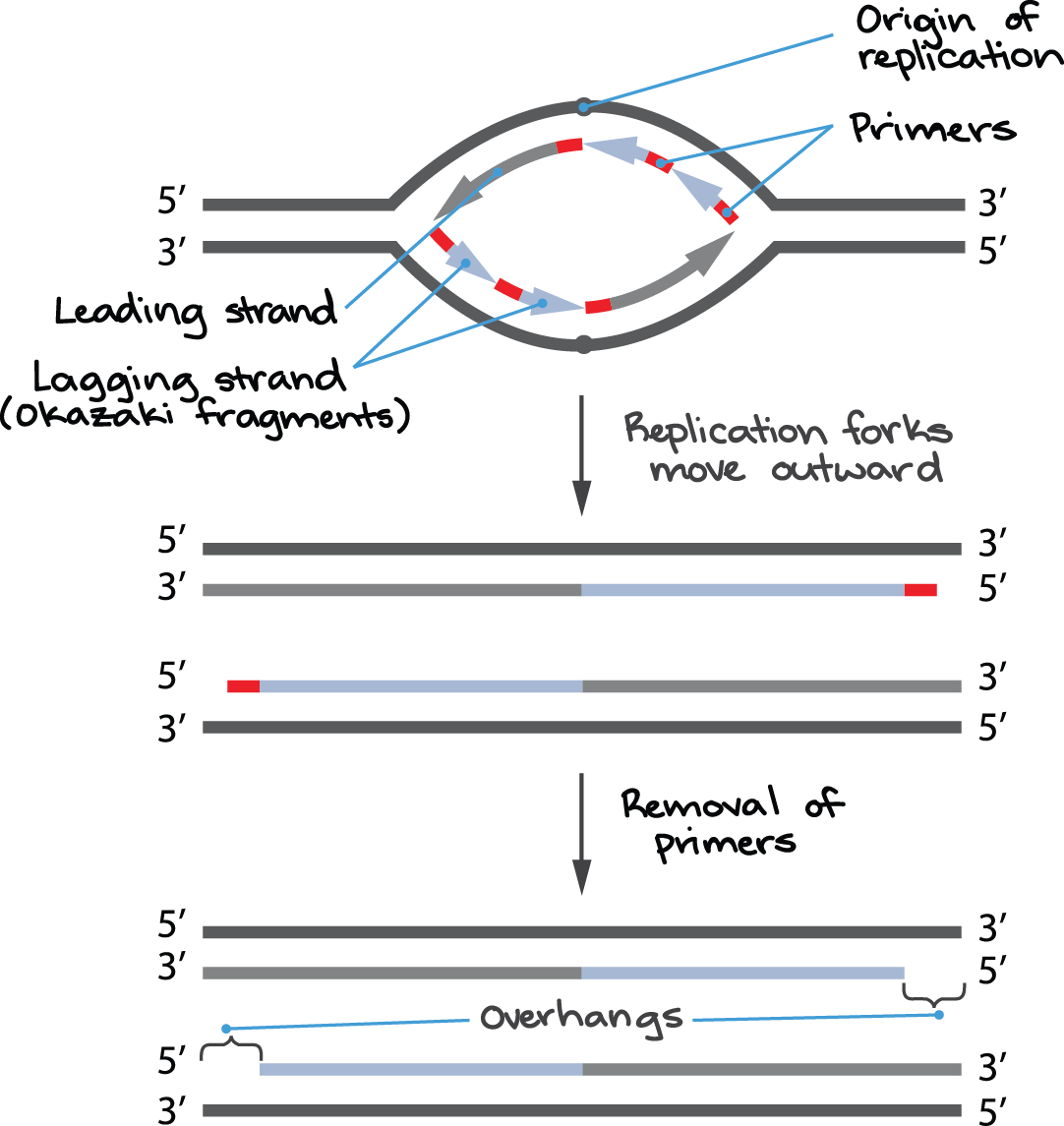
end-replication problem
inability of DNA polymerases to completely replicate the extreme 5’ end of the lagging strand, causing linear chromosomes to shorten over repeated divisions

telomeres
repetitive, non-coding nucleotide sequences at the terminals of linear eukaryotic chromosomes that protect vital genetic information from degradation and prevent chromosome end fusion
telomerase
ribonucleoprotein enzyme that extends chromosome ends by synthesizing repetitive telomeric DNA using its own internal RNA template

replication bubbles and multiple origins
feature of eukaryotic chromosome duplication where replication initiates at many sites simultaneously, creating expanding open regions where bidirectional synthesis occurs to replicate large linear genomes efficiently

chromatin
complex of DNA and protein (mainly histones) that packages long DNA molecules into a compact structure inside eukaryotic nuclei
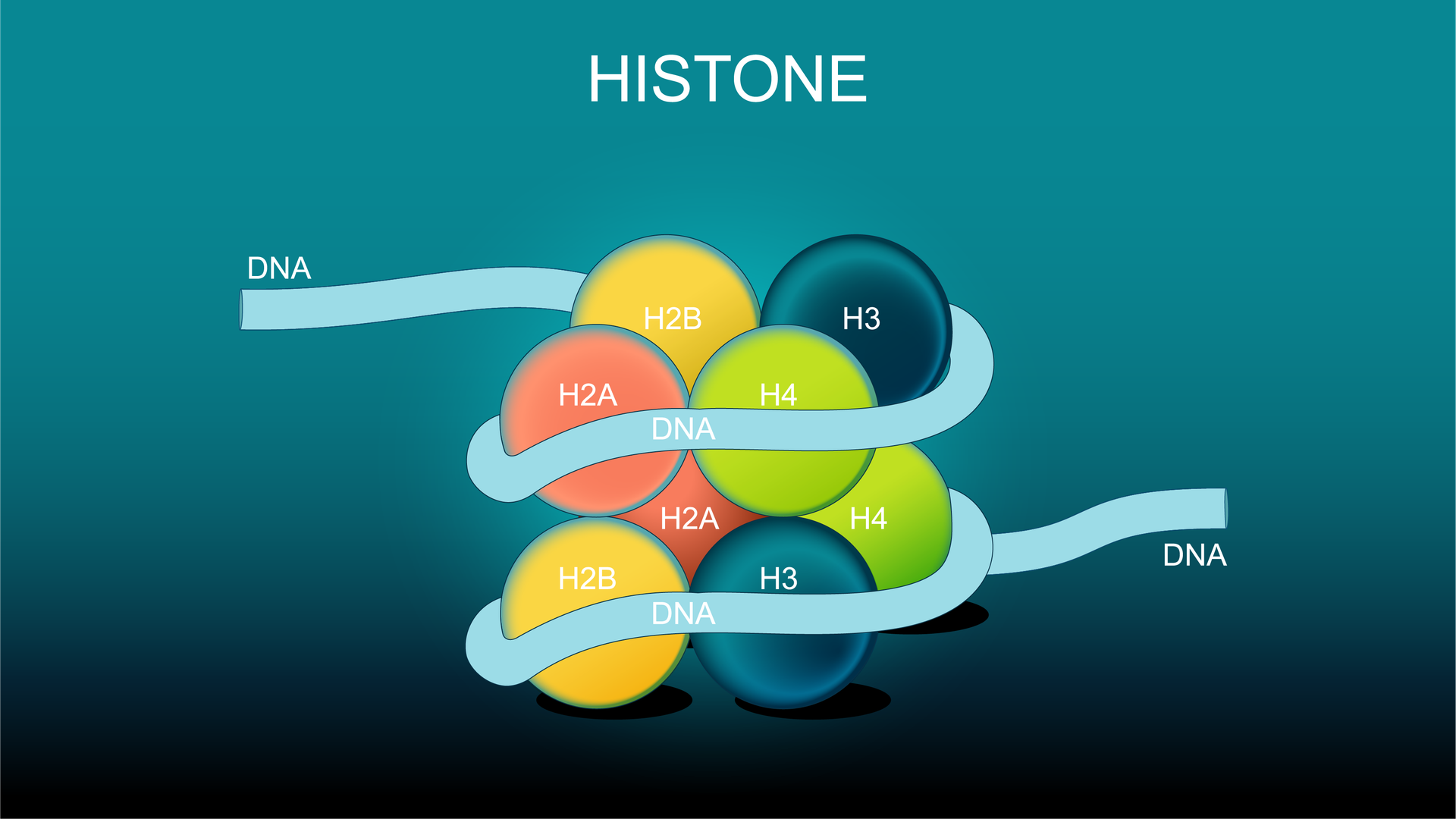
histones
positively charged proteins around which eukaryotic DNA wraps, forming nucleosomes to organize and package the genome

nucleosome
basic repeating structural unit of chromatin, consisting of a segment of DNA wound around an octamer of core histone proteins
genome
the sum of all genes (genetic information) of a given organism

ribose
the 5-carbon sugar in RNA; unlike DNA’s deoxyribose, it has an -OH group on the 2’ carbon

uracil
a nitrogenous base found in RNA that replaces thymine (T); it pairs with adenine
single-stranded
RNA is generally single-stranded, but it can fold back on itself through complementary base pairing to form complex 3D structures
gene
a segment of DNA containing the information needed to produce a functional RNA or protein
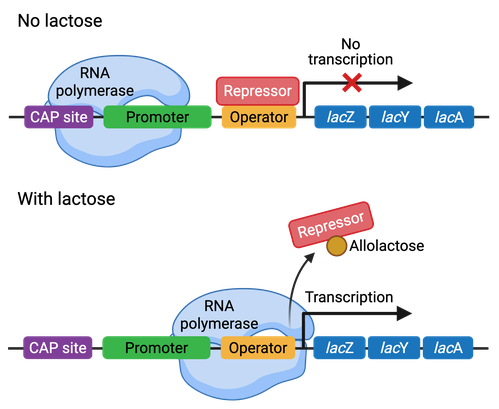
promoter
a DNA sequence where RNA polymerase and other transcription machinery bind to initiate transcription
template strand
the DNA strand that RNA polymerase reads 3’ → 5’ to make a complementary RNA strand
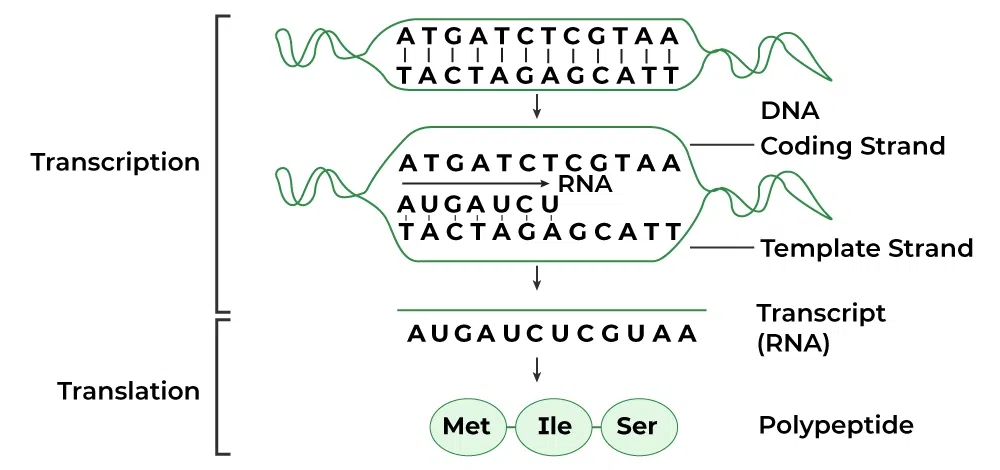
coding DNA
the DNA strand that has essentially the same sequence as the RNA transcript, except DNA has T where RNA has U

transcription
the process of making RNA from a DNA template

RNA nucleotide
made of ribose + phosphate group + nitrogenous base (A, U, C, or G)
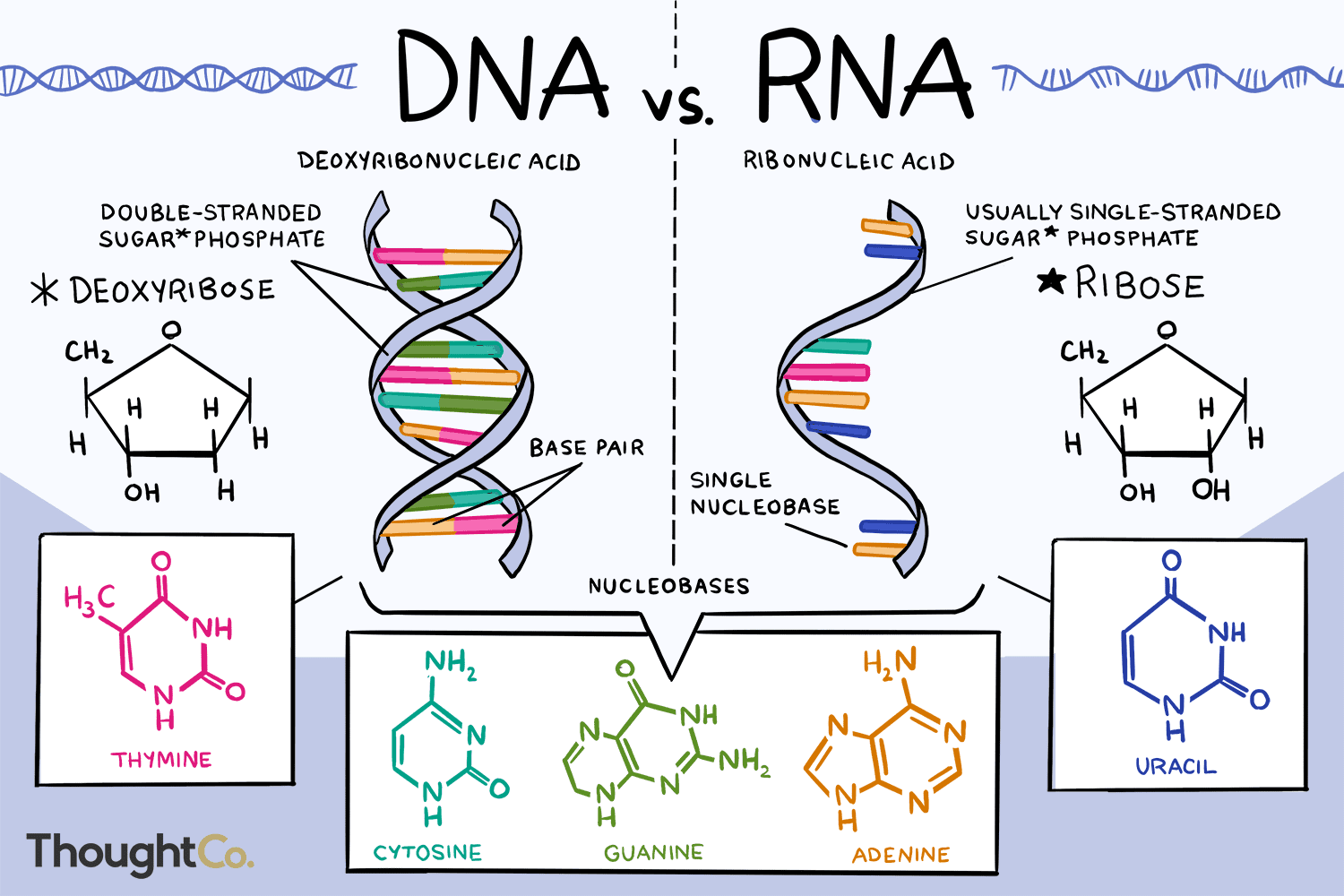
complementary base pairing
during transcription, DNA bases determine the RNA sequence (A-U, T-A, C-G, G-C)
5’ → 3’ direction
the direction in which RNA is synthesizes; RNA polymerase adds new nucleotides to the 3’ end
transcription start site
The specific nucleotide in DNA where RNA synthesis begins, usually designated +1. It is located within/just downstream of the promoter region
elongation
the stage of transcription when RNA polymerase moves along the template DNA and adds RNA nucleotides to the growing RNA strand

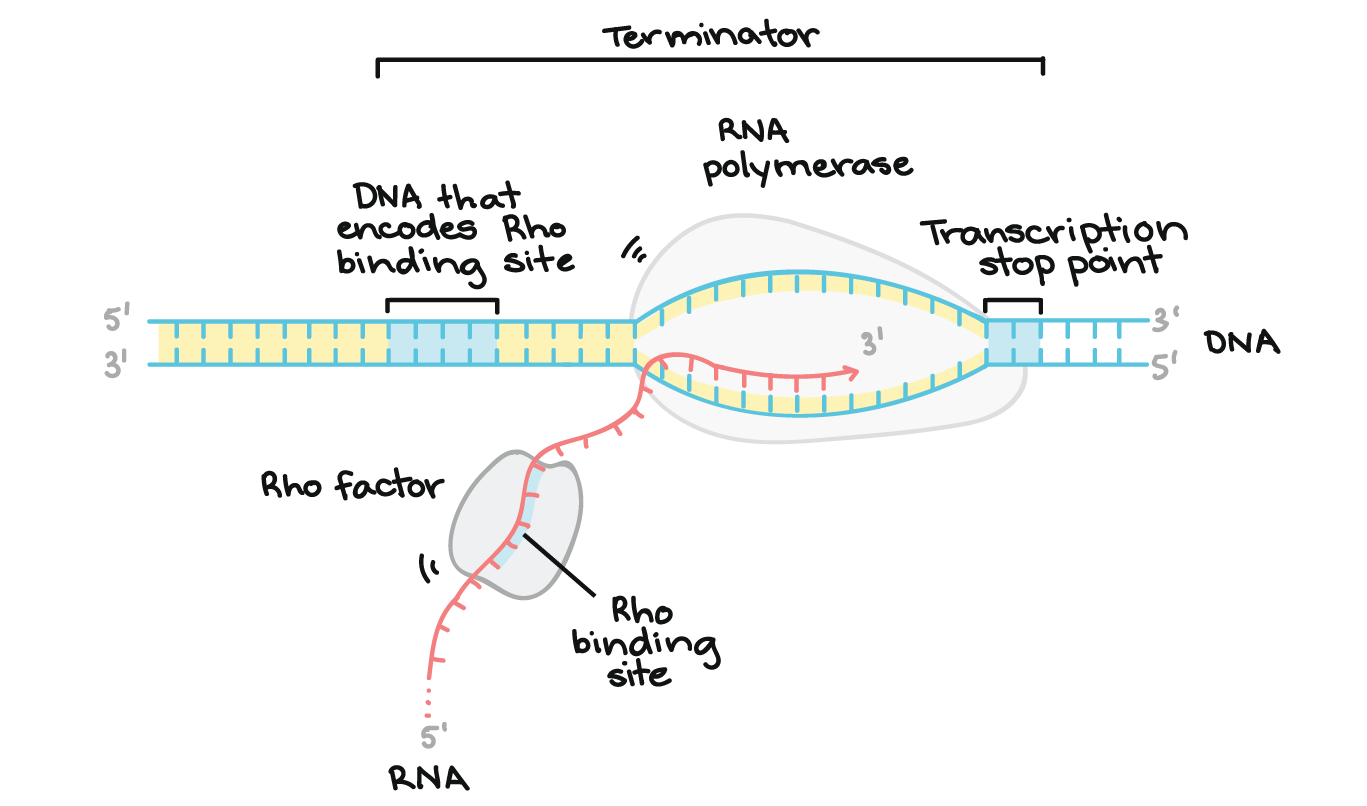
termination
The transcription stage ends when RNA polymerase receives a termination signal, stops RNA synthesis, and releases the RNA transcript. Translation ends when a release factor binds to the stop codon

mRNA (messenger RNA)
an RNA molecule that carries the genetic information copied from DNA and can be used by a ribosome to make a protein
terminator
a DNA sequence that signals the end of transcription
advantages of cells making RNA
three different types of RNA (mRNA, tRNA, rRNA) work together in protein synthesis (translation)
genes can be encoded in both DNA strands
The promoter’s position and orientation determine where RNA synthesis starts and which strand serves as the template. Many RNA polymerases can transcribe a single gene simultaneously.
function of mRNA (messenger RNA)
protein coding
function of rRNA (ribosomal RNA)
protein synthesis (machinery), RNA that combines with proteins to form ribosomes and plays an important structural and catalytic role in translation
function of tRNA (transfer RNA)
protein synthesis (adaptors to mRNA), carries a specific amino acid to the ribosome during translation
what does transcription allow
amplification and regulation (can be regulated to change cell behavior)
intron
sequences of RNA that are removed during RNA splicing
exon
squences that remain in the mRNA after RNA splicing
RNA splicing
the process of removing introns and joining exons together to produce mature mRNA

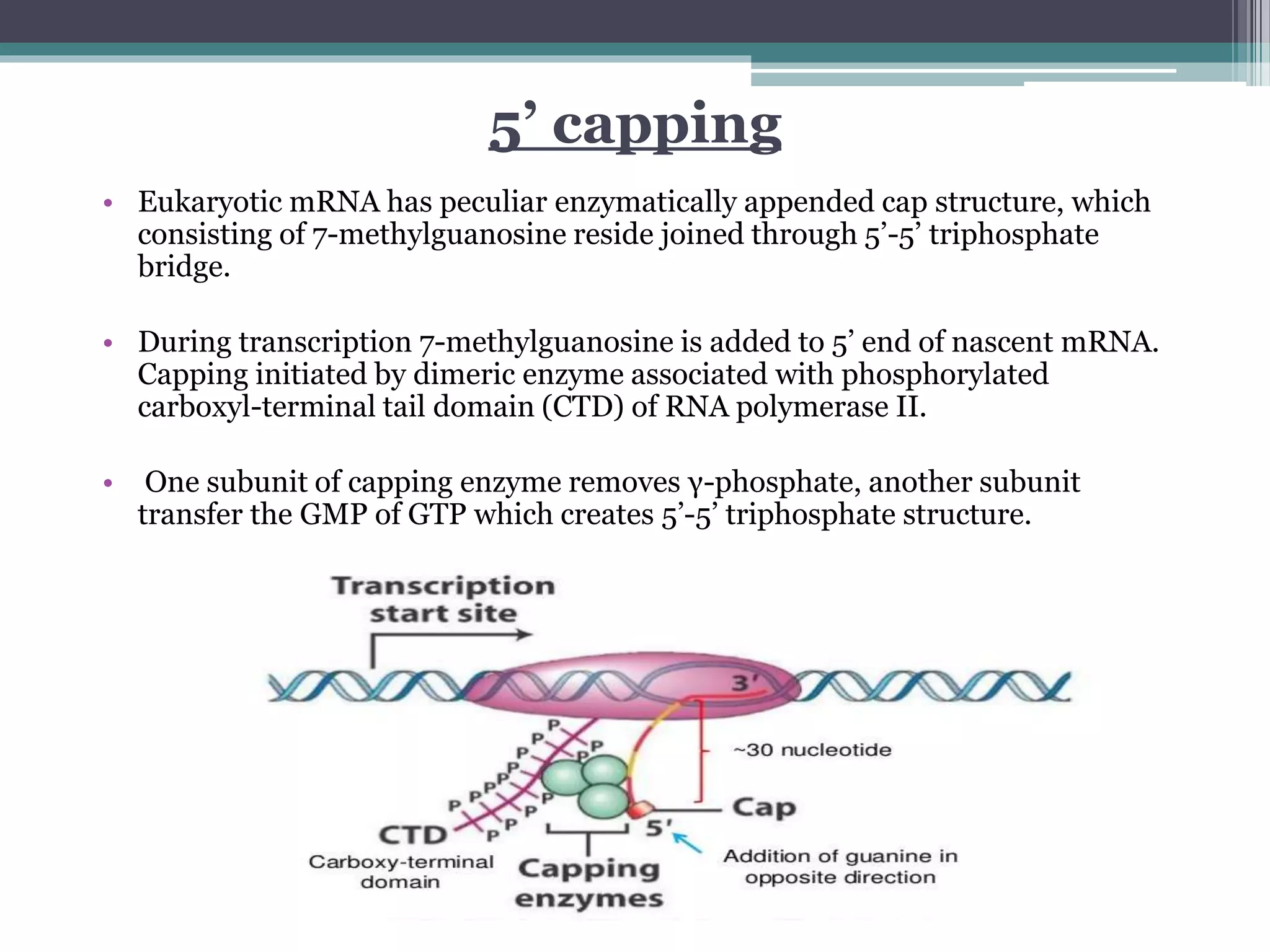
5’ capping
Addition of a modified guanine nucleotide (5’ cap) to the 5’ end of a pre-mRNA. This protects the RNA and aids in nuclear export and translation, and helps ribosome recognize mRNA
polyadenylation
the addition of a poly (A) tail—a string of adenine nucleotides—to the 3’ end of a pre-mRNA it helps to increase mRNA stability and assists with nuclear export and translation
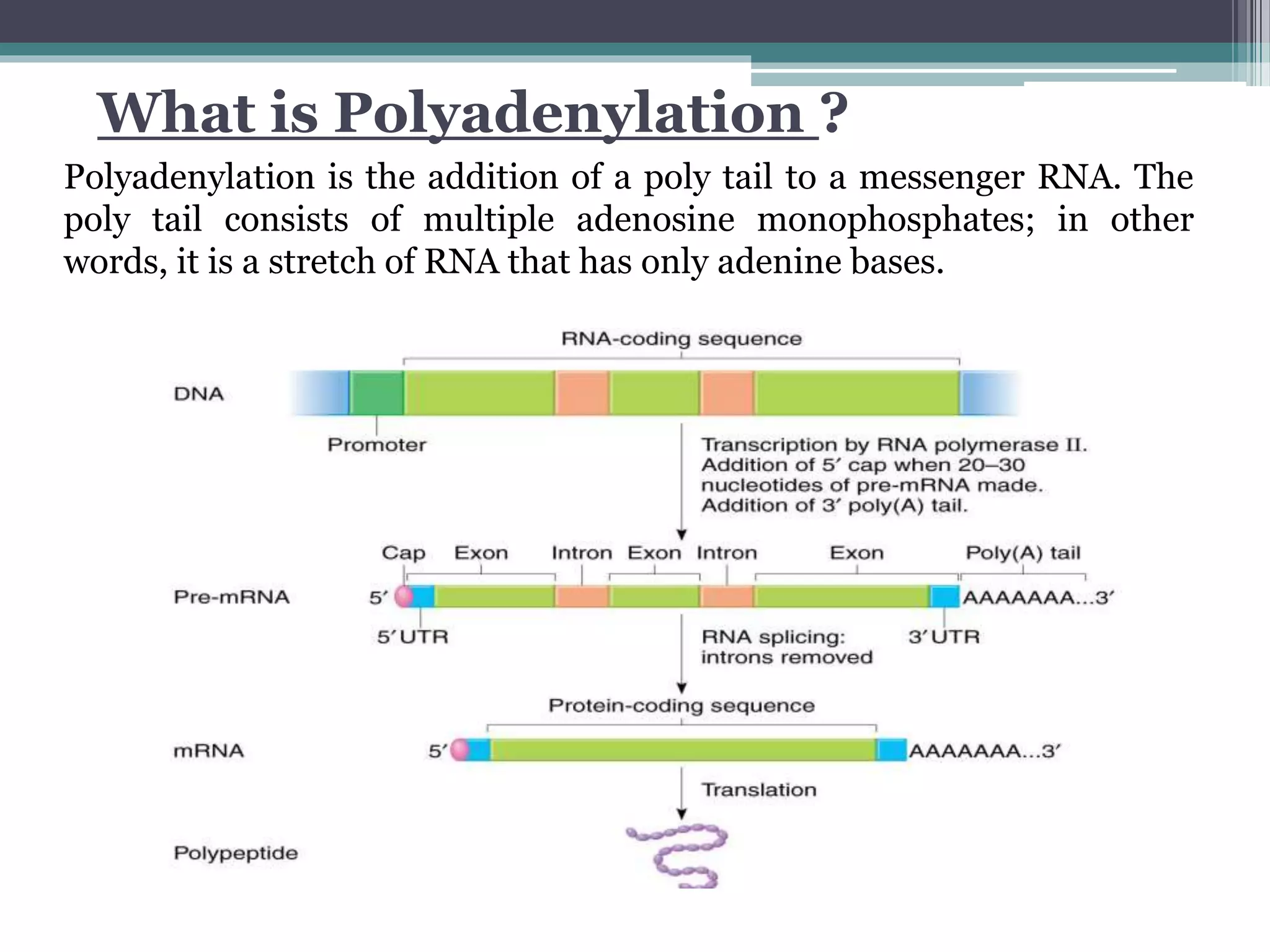
pre-mRNA
initial RNA transcript made from a protein-coding gene that has not yet undergone all of its processing

Mature mRNA
processed mRNA containing a 5’ cap, joined exons, and usually a 3’ poly (A) tail, ready to leave nucleus and be translated

modifications to mRNA (like poly A tail and 5’ cap) can affect…
how quickly mRNA is turned over (mRNA stability) and how efficiently mRNA is translated
spliceosome
a complex of snRNAs and proteins that removes introns and joins exons during RNA splicing

snRNA (small nuclear RNA)
small RNA molecules found in the nucleus that combine with proteins to form the spliceosome and help recognize and remove introns during RNA splicing
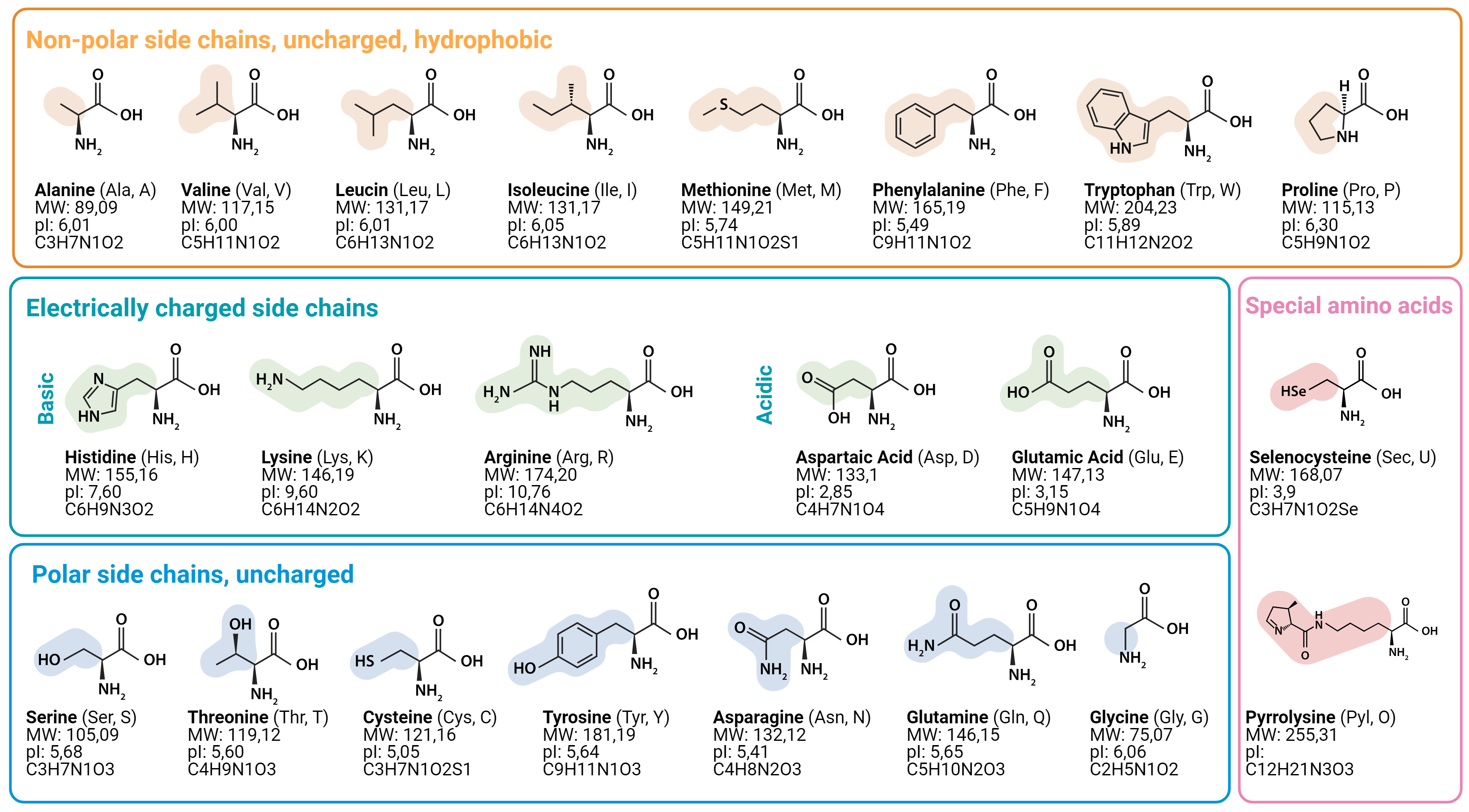
amino acid
The building blocks of proteins. During translation, amino acids are linked together to form a polypeptide/protein
codon
a sequence of 3 nucleotides on mRNA that specifies an amino acid or signals the end of translation, defined by 3 nucleotides

how many nucleotides define a codon?
3 nucleotides
how many possible codons are there
64 possible codons—61 code for amino acids and 3 are stop codons

start codon
AUG. signals beginning of translation (and codes for methionine)
stop codon(s)
UAA, UAG, or UGA (don’t have to memorize) signal the end of translation and do not code for amino acid
anticodon
a sequence of 3 nucleotides on tRNA that is complementary to an mRNA codon

anticodon loop
the region of a tRNA that contains its anticodon, which pairs with a complementary codon on mRNA

how is mRNA read during translation?
ribosome reads mRNA 5’ → 3’, one codon at a time
how does a codon determine an amino acid
a tRNA with a complementary anticodon binds the codon, bringing its attached amino acid to the ribosome
what are the monomers of proteins?
amino acids
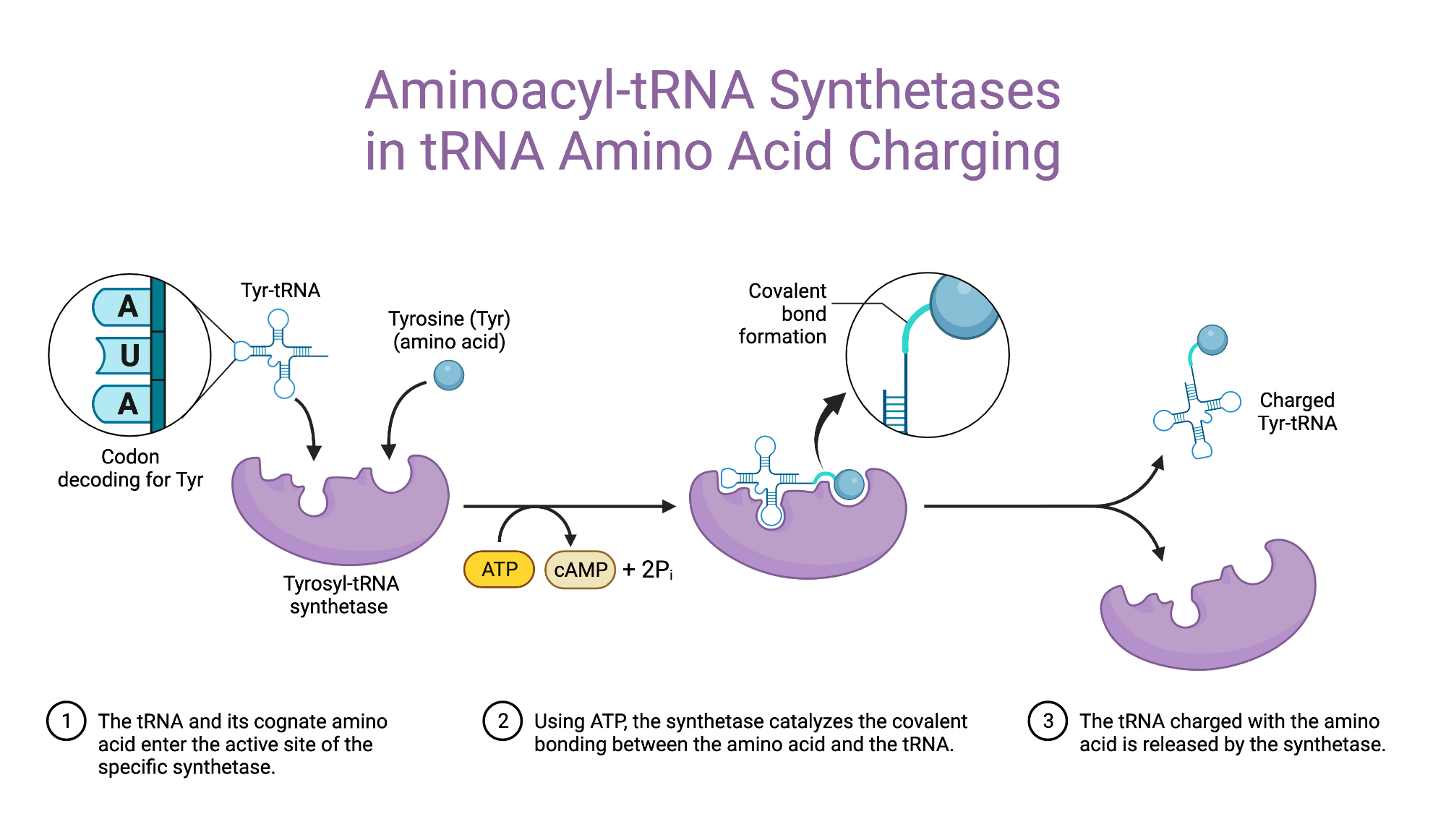
aminoacyl-tRNA synthetase
an enzyme that attaches the correct amino acid to its corresponding tRNA, ensures that the correct amino acid is attached to each tRNA, helping connect mRNA codon sequence to the correct amino acid sequence
small ribosomal subunit
the smaller part of the ribosome that binds the mRNA and helps position it for translation

large ribosomal subunit
the larger part of the ribosome that contains the sites where tRNAs interact and peptide bonds are formed
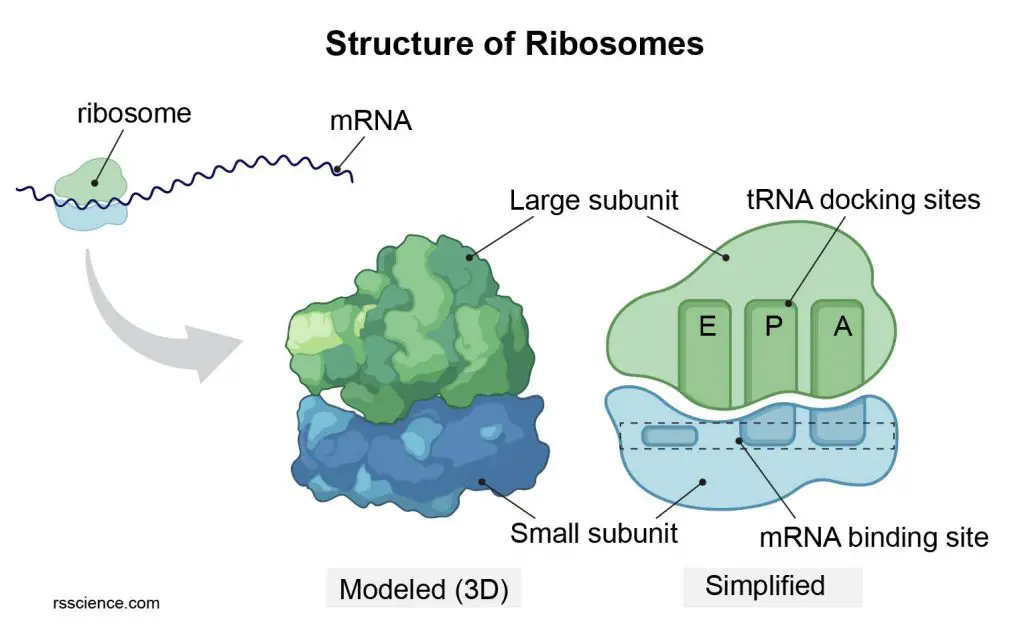
ribosome
complex made of rRNA and proteins, consisting of a small subunit and a large subunit, it is the site of protein synthesis
what do peptide bonds do
covalent bonds that link amino acids together during translation to form a growing polypeptide

condensation reaction (dehydration synthesis)
a chemical reaction that joins to molecules together while removing a molecule of water (H2O)

how does dehydration synthesis relate to proteins
amino acids are joined together by condensation reactions, forming polypeptide bonds and releasing water
what occurs chemically during peptide bond with two amino acids?
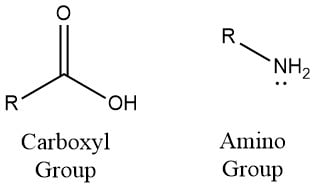
an -OH from the carboxyl group of one amino acid and an H from the amino group of another combine to form H2O, leaving a peptide bond between the amino acids

hydrolysis
a reaction that breaks a chemical bond by adding water; is essentially the reverse of dehydration synthesis

amino group
a functional group found in amino acids containing nitrogen, typically written as -NH2 or NH3 (depending on pH). it is one of the two groups that make up the backbone of an amino acid