AKI pathophysiology, diagnosis and grading + AKI causes, diagnosis, and treatment
 Call Kai
 Learn
 Practice Test
 Spaced Repetition
 Match
 Flashcards
 Knowt Play
1/90

There's no tags or description
Looks like no tags are added yet.
91 Terms
true or false: injury can happen to intrinsically normal kidneys, but diseased kidneys are at greater risk (acute on chronic kidney disease)
true
What leads to prerenal acute kidney injury?
Insufficient blood delivery to otherwise functional kidneys.
what are some causes of prerenal AKI
-Severe dehydration
-Hypovolemia
-Hypotension
-Decreased effective circulating volume (e.g. cardiac failure)
-Shock (hypovolemic, hemorrhagic, hypotensive, septic)
-Heatstroke
What urine specific gravity typically accompanies prerenal AKI in dogs and cats?
Above 1.030 in dogs and above 1.035 in cats.
What is intrinsic renal AKI?
damage to any section of the kidney: glomeruli, tubules, interstitium, or vessels.
what are some causes of intrinsic renal AKI
-Ischemia
-Nephrotoxicants
-Inflammatory or immune-mediated
-Infectious
-Neoplasia
-Prolonged urinary obstruction
What typically causes intrinsic AKI in companion animals?
Ischemic or toxic tubular damage.
What leads to postrenal AKI?
Urinary obstruction or intracavitary urinary leakage.
what are some causes of postrenal AKI
-Obstruction in the urethra, both ureters, or one ureter with a solitary functional kidney
-Uroliths
-Masses
-Feline idiopathic cystitis
-Uroabdomen - more common due to bladder or urethral tear
what is AKI
an abrupt (within hours) decrease in kidney function, which encompasses both injury (structural damage) and impairment (loss of function)
what are the characteristics of AKI
-Rapid onset
-Potentially reversible
-Repair processes ongoing
-Compensatory mechanisms are just beginning
what are the traits of CKD
- > 3 months
-Irreversible and slowly progressive
-Compensatory mechanisms are exhausted
What distinguishes AKI from chronic kidney disease?
AKI develops abruptly and may reverse; CKD lasts over three months and is irreversible.
How does long-term prognosis compare at the same degree of azotemia for AKI and CKD?
Long-term prognosis is better with AKI than with CKD.
What characterizes the initiation phase of intrinsic AKI?
-initial injury occur
-early intervention may prevent progression.
What characterizes the extension phase of intrinsic AKI?
Inflammation and ischemia propagate kidney damage.

What characterizes the maintenance phase of intrinsic AKI?
-Damage and repair occur simultaneously
-GFR remains at its lowest level
-possible change in urine output
What characterizes the recovery phase of intrinsic AKI?
-Cellular repair and reorganization
-progressively improving kidney function.
true of false: Understanding the time course of intrinsic AKI is crucial for client communication. you must let them know that full recovery can take months.
true
animals that recover from intrinsic AKI are presumed to have _____, even if serum creatinine returns to normal.
CKD
Why should CKD staging be delayed after intrinsic AKI?
Recovery can take months, even if creatinine normalizes.
How is AKI graded and subgraded?
-Grade by serum creatinine
-subgrade by urine output and renal replacement therapy need

Why should AKI grades and subgrades be reassigned?
AKI is dynamic and can improve or worsen.
Why does oligoanuria worsen the prognosis of AKI?
Oligoanuric animals are harder to manage and keep alive.
what is the grading process for AKI
-Establish a diagnosis of AKI
-Assign a grade based on serum creatinine concentration
-Assign a subgrade based on urinary output
-Assign a subgrade based on the need for renal replacement therapy
-Reassign grades and subgrades as the disease evolved (for better or worse)
what are some early markers/markers of active AKI
-urinary cystatin B
-Urinary clusterin
-Urinary gamma-glutamyl transferase (GGT)
-Urine or serum neutrophil gelatinase associated lipocalin (NGAL)
-Urine kidney injury molecule-1
-urine microscopy for granular/waxy casts
what is urinary cystatin B
-small intracellular protein typically found in small concentrations in circulation
-Released by damaged tubular cells and measured in urine
What does increased urinary cystatin B indicate?
Active tubular injury, including AKI or CKD progression.
what markers of GFR are late markers of kidney function
-Serum creatinine
-Serum SDMA
-Blood urea nitrogen
Which blood markers are late, insensitive indicators of GFR?
Serum creatinine, serum SDMA, and blood urea nitrogen.
what markers of tubular function are late markers of kidney function
-USG
-fractional solute excretion
what markers of glomerular and tubular function are late markers of kidney function
-urinary output
-urinary protein-to-creatinine ratio
why is distinction btwn AKI and CKD important
-AKI is potentially reversible, rapid onset, repair processes ongoing, compensatory mechanisms are just beginning
-CKD is > 3 month duration, irreversible and slowly progressive, and compensatory mechanisms are exhausted
what is azotemia
biochemial abnorality, defined as elevation of non-protein nitrogenous products, such as BUN, creatinine, SDMA, in blood
what is uremia
constellation of clinical signs associated with the accumulation of substances (uremic toxins) urually excreted in the urine under normal physiologic conditions
true or false: Damage to any section of the kidney (glomeruli, tubules, interstitium, or vessels) can cause intrinsic renal AKI
true
what are some causes of renal intrinsic AKI
-ischemia
-nephrotoxicants
-inflammatory or immune mediated
-infectious
-neoplasia
-prolonged urinary obstruction
what are the most common causes of intrinsic renal AKI
ischemia or toxic tubular damage
how does ischemia cause intrinsic renal AKI
-Renal vascular disease (e.g. thrombosis, DIC, stenosis)
-Any of the hemodynamic factors previously discussed can cause ischemia
-Severe dehydration
-Hypovolemia
-Hypotension
-Decreased effective circulating volume (e.g. cardiac failure)
-Shock (hypovolemic, hemorrhagic, hypotensive, septic)
-Heatstroke
what are some nephrotoxicants that can cause intrinsic renal AKI
-Ethylene glycol
-Aminoglycosides
-NSAIDs
-Lillies (cats)
-Grapes/raisins
-Cholecalciferol
-Amphotericin B
-Cisplatin (chemotherapeutic)
-Endogenous pigments (e.g. hemoglobin, bilirubin)
-Melamine + cyanuric acid
-Intravenous contrast agents
where do aminoglycosides come from
bactericidal, concentration dependent antibiotics
what species can aminoglycosides cause nephrotoxicity in
any
How do aminoglycosides damage the kidneys?
They accumulate in proximal tubular cells, causing lysosomal rupture and mitochondrial injury, leading to tubular cell death.
list the aminoglycosides from most nephrotoxic to least nephrotoxic potential
neomycin > gentamicin ≳ tobramycin ≳ amikacin > streptomycin
How does aminoglycoside nephrotoxicity depend on treatment?
Risk increases with dose and duration.
where does risk of nephrotoxicity from aminoglycosides increase in animals (key)
-Preexisting kidney disease
-Fever, sepsis, dehydration, or electrolyte disturbances
-Concurrent furosemide therapy
how do you diagnose nephrotoxicity from aminoglycosides (key)
-Monitor urinalysis daily to identify cylindruria or isosthenuria
-Urinary cystatin B is a newer option
-Monitor BUN/creating for the first two days of treatment
What should be done if aminoglycoside nephrotoxicity develops?
Stop the drug and provide supportive care.
what is the prognosis of aminoglycoside nephrotoxicity
Usually reversible if detected early and drug is discontinued
what is the source of NSAID nephrotoxicity and what species are affected
-us or owner
-any species
-toxicity is species and drug dependent
what is the pathophysiology of NSAID nephrotoxicity
-Interferes with renal autoregulation by tubuloglomerular feedback
-Inhibition of cyclooxygenase (COX) decreases prostaglandins → afferent arteriolar constriction
-Prostaglandins normally help dilate the afferent arteriole
How do NSAIDs impair renal perfusion?
COX inhibition decreases prostaglandins, causing afferent arteriolar constriction.
What conditions increase NSAID nephrotoxicity risk?
Volume depletion and concurrent diuretics or vasoactive drugs.
what are some causes of imflammatory/immune mediated nephrotoxicity
-Immune-mediated glomerulonephritis
-Systemic lupus erythematosus
what are some causes of infectious nephrotoxicity
-Pyelonephritis → ascending infection or hematogenous
-Leptospirosis
what are some causes of neoplasia nephrotoxicity
lymphoma
What are common clinical signs of AKI?
-Anorexia
-Lethargy
-Nausea or vomiting
-Diarrhea
-Weakness
-PU/PD or oliguria/anuria
- +/- signs of cause (e.g. acute CNS signs in early ethylene glycol toxicity)
- +/- history of risk factors
How does clinical history help distinguish AKI from CKD?
-AKI signs usually less than one week onset
-chronicity differentiates overlapping signs of AKI vs CKD
What physical examination findings can occur in AKI?
-Often dehydrated
-Usually have a good BCS unless there is concurrent disease
-Uremic halitosis/oral ulceration if severe uremia
-Sometimes, painful kidneys
-Normal to enlarged kidneys
-Tachycardia (e.g. hypovolemia) or bradycardia (e.g. hyperkalemia)
- +/- signs of cause
what is the main site for potassium elimination
kidneys
animals with AKI can develop
-hyperkalemia
-hypokalemia
How can AKI cause hyperkalemia?
Impaired renal potassium excretion allows potassium to accumulate, especially from oligoanuria
Why can polyuric AKI cause hypokalemia?
Excessive urinary potassium excretion lowers potassium concentration, typically from polyuria
What is the major complication of hyperkalemia?
Life-threatening cardiac arrhythmias.
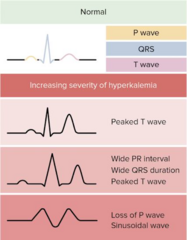
how does hyperkalemia cause cardiac arrhythmias
Hyperkalemia raises the resting threshold but slows conduction
what are some hematology and chemistry findings of AKI
-Hematocrit is usually normal or increased (because of dehydration)
-azotemia
-hyperphosphatemia
-metabolic acidosis
-hyperkalemia if oligouria
-hypokalemia if polyuria
why can hematocrit be normal or increased with AKI
-dehydration
-concurrent blooding/hemolysis
why might there be azotemia with AKI
-Decreased GFR
-Slow tubular flow - increased reabsorption of urea
why might there be hyperphosphatemia with AKI
Failure to excrete phosphate (dec GFR)
why might there be metabolic acidosis with AKI
-Failure to reabsorb bicarbonate
-Failure to excrete acids
-Failure of renal ammoniagenesis
Why does metabolic acidosis develop in AKI?
Impaired bicarbonate reabsorption, acid excretion, and renal ammoniagenesis.
what might you see in a urinalysis with AKI
-minimally concentrate urine
-cylindruria (granular cells, hyaline, waxy degenerate cells)
-Renal epithelial cells
-Cellular debris
-Calcium oxalate crystals with ethylene glycol
-Normoglycemic glucosuria (aka renal glucosuria; a tubulopathy of the proximal tubule)
-Proteinuria (tubular or glomerular)
What urine specific gravity suggests minimally concentrated urine in intrinsic AKI?
-Below 1.030 in dogs and below 1.025 in cats
-often close to or is isosthenuria
What does normoglycemic glucosuria indicate in AKI?
A proximal tubular dysfunction causing glucose loss despite normal blood glucose.
what DI can you do for AKI
-rads
-USwhat might you
what might you see on rads with AKI
-Normal to enlarged kidneys
- +/- uroliths
what might you see on US with AKI
-Normal to enlarged kidneys
- +/- pyelectasia
- +/- hydronephrosis
- +/- uroliths
- +/- echogenic rims at the corticomedullary junction (w/ ethylene glycol)
- +/- masses/nodules/altered echotexture/cortical thickening (lymphoma)
- +/- free fluid (uroabdomen)
What US imaging finding can suggest ethylene glycol toxicity?
Echogenic rims at the corticomedullary junction on ultrasound.
what US findings indicates lymphoma
masses/nodules/altered echotexture/cortical thickening
How often should blood pressure be measured in AKI?
At least twice daily.
how can hypertension be caused in kidney disease
-Impaired excretion of sodium
-Impaired baroreceptor sensitivity
-Excessive activation of the RAAS and SNS
-Increase in systemic vascular resistance secondary to endothelial
dysfunction
what are the target organs for high BP
-eyes
-kidneys
-brain
-heart
what are the major aims of diagnosis of AKI
-recognition of AKI and distinction from CKD
-grading of its severity based on level of azotemia, urine production, and need for renal replacement therapy
-search for undelrying etiology
-detailed characterization of its clinical manifestations
what are the treatment principles of AKI
-Diagnostic workup is crucial
-Make an effort to determine the cause of AKI
-Failure to focus on diagnostics leads to therapeutic failures
-Individualized care (particularly for K+ and acidosis)
-Support the animal while nephrons undergo repair and compensatory mechanisms develop
-Drugs only if indicated (avoid nephrotoxic drugs and conditions)
-Don't make it worse
Why is avoiding overhydration important in AKI treatment?
Overhydration is common and decreases survival.
what are some of the therapies for nephrotoxicants
-Depends on agent and timing
-Emesis or gastric decontamination
-Activated charcoal
-Antidotes (e.g. 4-methylpyrazole or ethanol for ethylene glycol toxicity)
-Extracorporeal blood purification therapies (hemodialysis, hemoperfusion, therapeutic plasma exchange)
What antidotes can be used for ethylene glycol toxicity?
4-methylpyrazole or ethanol, depending on agent and timing.
what is some specific therapy for pyelonephritis with AKI
-Enterobacteriaceae are more common (+++ E. coli)
-Fluoroquinolones or cefpodoxime are suggested by current
guidelines
-Base treatment on urine culture and susceptibility
How should pyelonephritis antimicrobial treatment be selected?
Base treatment on urine culture and susceptibility.
What is the first-choice treatment for leptospirosis?
Doxycycline.
how should you treat postrenal obstruction or rupture with AKi
-Urethral catheterization
-Ureteral stent/subcutaneous ureteral bypass
-Surgery