Lecture 1 CBNS 106
 Call Kai
 Learn
Learn Practice Test
 Spaced Repetition
 Match
Match Flashcards
 Knowt Play
1/34

There's no tags or description
Looks like no tags are added yet.
Name | Mastery | Learn | Test | Matching | Spaced | Call with Kai | Chat |
|---|
No analytics yet
Send a link to your students to track their progress
35 Terms
What is Neuroscience?
Neuroscience is the study of all aspects of nervous system function from molecular to cellular to systems to cognition (behavior)
central nervous system includes the
brain
spinal cord
the peripheral nervous system inlcudes
somatic
somatic motor
somatic sensory
autonomic
sympathetic
parasypathetic

A

B

C

D

Dorsal

ventral

lateral
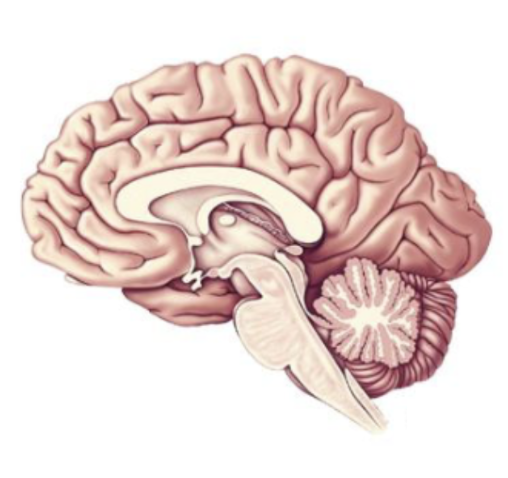
medial
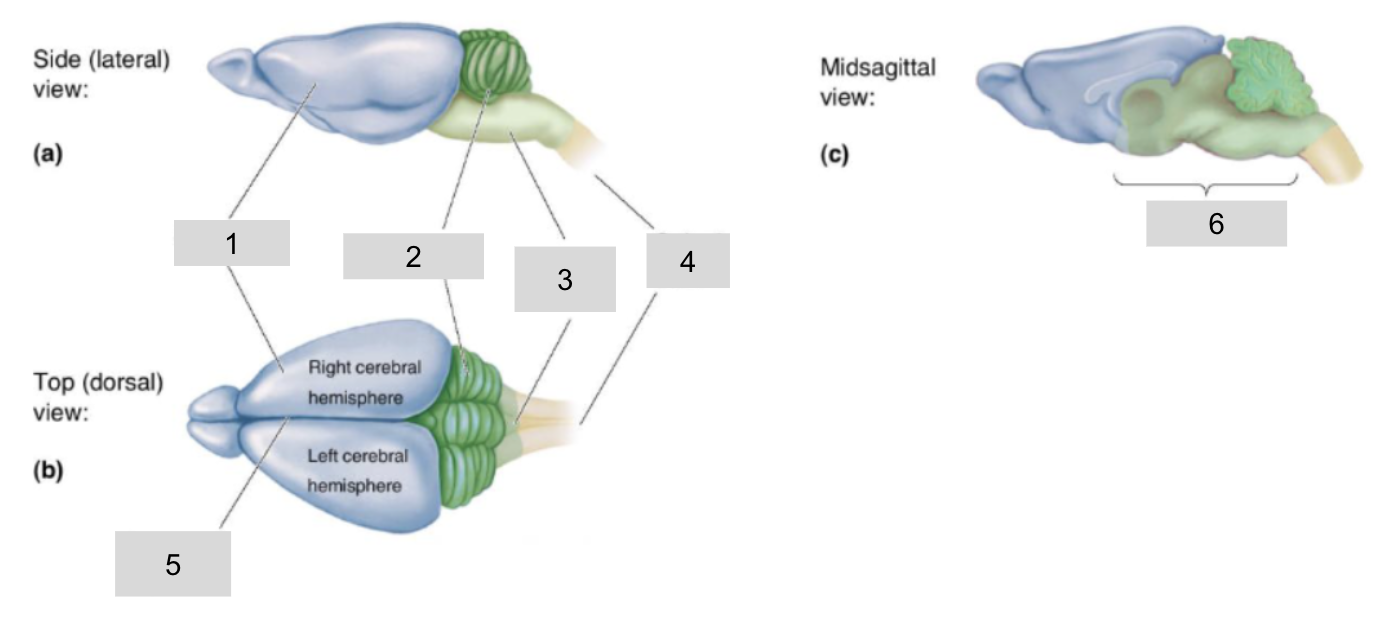
Cerebrum
right hemisphere receives sensation from and controls movement of left side of body and vice versa
cerebellum
movement control center; Left hemisphere control left side of body; right controls right
brain stem
Relays information from cerebrum to the spinal cord and cerebellum, and vice versa. Controls vital functions, breathing, consciousness, and control of body temperature

1

2

3

4
5

6
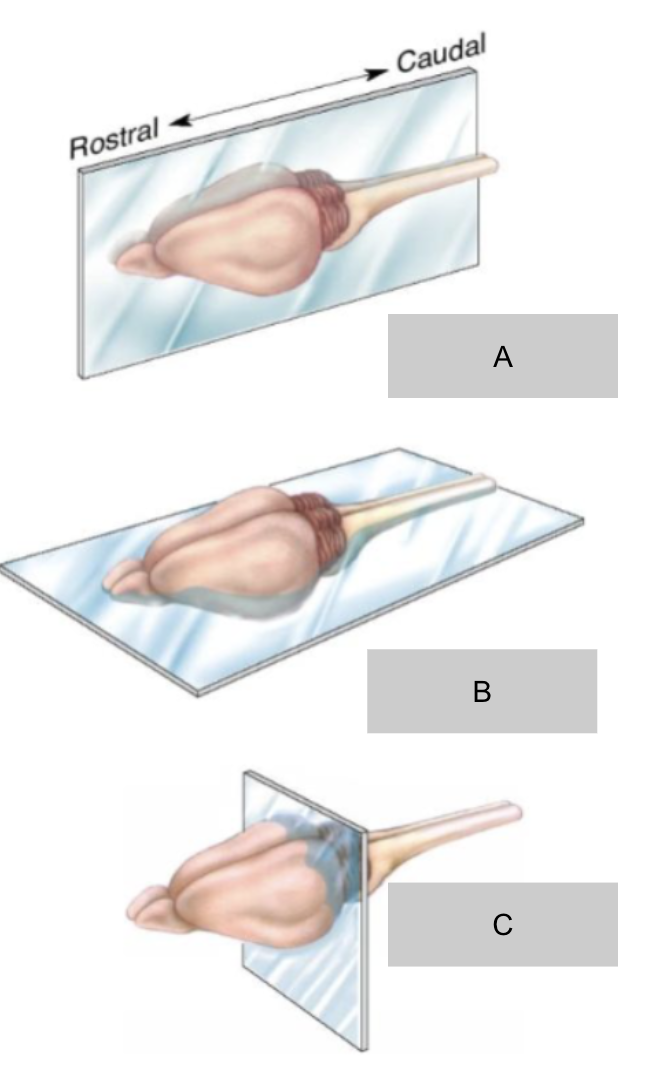
A

B

C

Motor
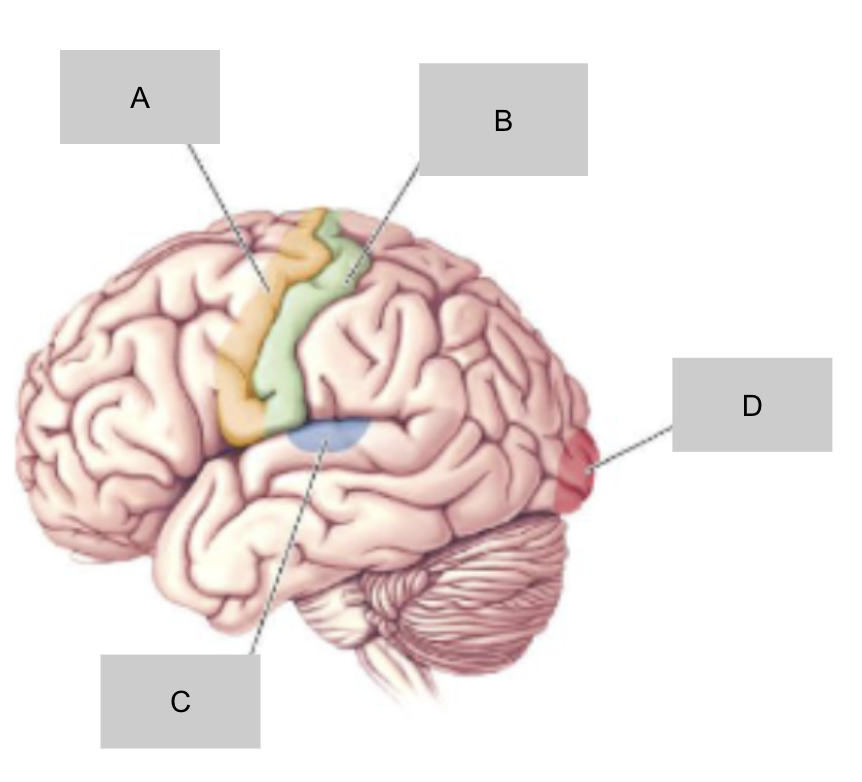
Somatic sensory

Auditory

Visual
Spinal Cord
location
function
attached to the brainstem
conduit of information (brain-body)
skin, joints, muscles
spinal nerves
dorsal root — sensory fibers (cell body outside the CNS)
ventral root — outgoing motor fibers (cell body inside CNS, but project axons to the PNS)
Peripheral nervous system (PNS)
Nervous system outside the brain and spinal cord
Somatic PNS: innervates skin, joints, muscles
dorsal root ganglia: clusters of neuronal cell bodies outside the spinal sord that contain somatic sensory axons
ventral root — outgoing motor fibers (cell body inside CNS, but project axons to the PNS)
autonomic PNS: innervates internal organs, blood vessels, glands
afferent nerves
(“carry to“: carry information toward a particular point)
efferent nerves
(“carry from“): carry information away from a point

afferent nerve

efferent nerve
Somatic Nervous System
all the spinal nerves that innervate the skin, the joints and the muscles that are under voluntary control (command the skeletal muscles)
Automatic Nervous System (ANS)
innervates glands, smooth muscle, and cardiac muscle (the viscera)
has both sensory and motor components
the sympathetic and parasympathetic nervous systems have antagonistic properties