AP Chemistry — VSEPR Essentials (Pruned)
 Call Kai
 Learn
 Practice Test
 Spaced Repetition
 Match
 Flashcards
 Knowt Play
1/57

Earn XP
Description and Tags
58 cards: all 13 shapes with visual identification, key counts and electron geometry, bond angles and traditional hybridization, examples and polarity, plus six essential rules. Idealized image angles may differ from actual lone-pair geometries.
58 Terms

Image 01: Identify the molecular shape and AXE notation.
Linear (AX2)

Image 02: Identify the molecular shape and AXE notation.
Trigonal planar (AX3)
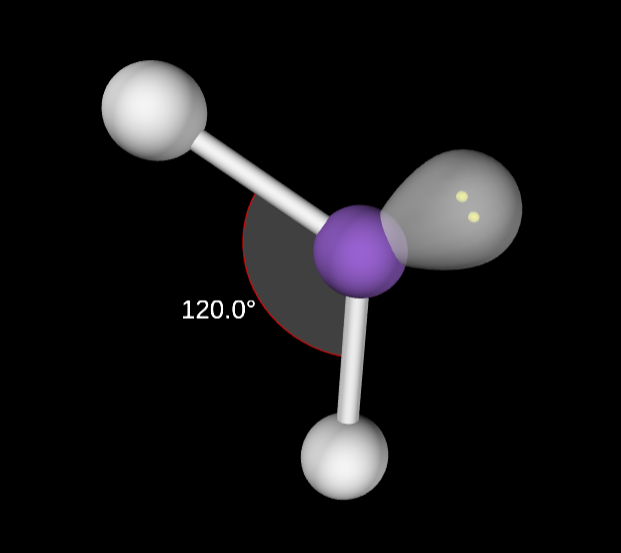
Image 03: Identify the molecular shape and AXE notation.
Bent (AX2E)

Image 04: Identify the molecular shape and AXE notation.
Tetrahedral (AX4)

Image 05: Identify the molecular shape and AXE notation.
Trigonal pyramidal (AX3E)

Image 06: Identify the molecular shape and AXE notation.
Bent (AX2E2)
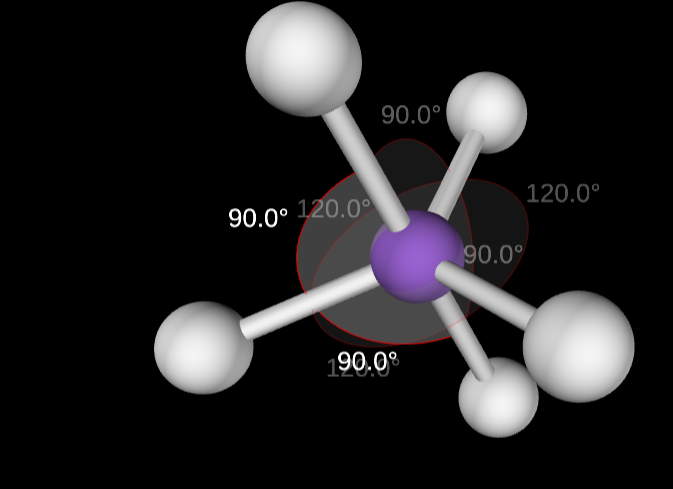
Image 07: Identify the molecular shape and AXE notation.
Trigonal bipyramidal (AX5)

Image 08: Identify the molecular shape and AXE notation.
Seesaw (AX4E)

Image 09: Identify the molecular shape and AXE notation.
T-shaped (AX3E2)

Image 10: Identify the molecular shape and AXE notation.
Linear (AX2E3)

Image 11: Identify the molecular shape and AXE notation.
Octahedral (AX6)
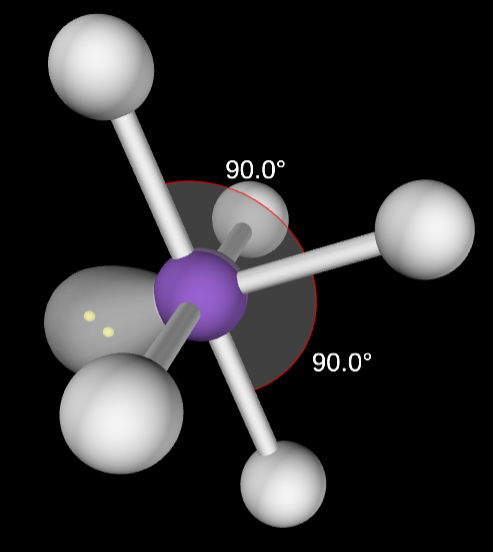
Image 12: Identify the molecular shape and AXE notation.
Square pyramidal (AX5E)

Image 13: Identify the molecular shape and AXE notation.
Square planar (AX4E2)
Linear (CO2-type): Give the AXE notation, electron-domain count, bonded-atom count, lone-pair count, and electron geometry.
AX2; 2 total domains; 2 bonded atoms; 0 central lone pairs; Linear electron geometry.
Linear (CO2-type): Give the bond angles and traditional hybridization label.
180° Hybridization: sp.
Linear (AX2): Give an example and predict polarity for identical surrounding atoms with polar bonds.
CO2 (two double bonds still give two domains). Nonpolar: equal, opposite bond dipoles cancel.
Trigonal planar: Give the AXE notation, electron-domain count, bonded-atom count, lone-pair count, and electron geometry.
AX3; 3 total domains; 3 bonded atoms; 0 central lone pairs; Trigonal planar electron geometry.
Trigonal planar: Give the bond angles and traditional hybridization label.
120° Hybridization: sp2.
Trigonal planar (AX3): Give an example and predict polarity for identical surrounding atoms with polar bonds.
BF3. Nonpolar: three equal bond dipoles cancel.
Bent (SO2-type): Give the AXE notation, electron-domain count, bonded-atom count, lone-pair count, and electron geometry.
AX2E; 3 total domains; 2 bonded atoms; 1 central lone pairs; Trigonal planar electron geometry.
Bent (SO2-type): Give the bond angles and traditional hybridization label.
Less than 120°; 120° is the parent ideal angle. Hybridization: sp2.
Bent (AX2E): Give an example and predict polarity for identical surrounding atoms with polar bonds.
SO2. Polar: the two bond dipoles do not cancel.
Tetrahedral: Give the AXE notation, electron-domain count, bonded-atom count, lone-pair count, and electron geometry.
AX4; 4 total domains; 4 bonded atoms; 0 central lone pairs; Tetrahedral electron geometry.
Tetrahedral: Give the bond angles and traditional hybridization label.
109.5° Hybridization: sp3.
Tetrahedral (AX4): Give an example and predict polarity for identical surrounding atoms with polar bonds.
CH4. Nonpolar: four equal bond dipoles cancel.
Trigonal pyramidal: Give the AXE notation, electron-domain count, bonded-atom count, lone-pair count, and electron geometry.
AX3E; 4 total domains; 3 bonded atoms; 1 central lone pairs; Tetrahedral electron geometry.
Trigonal pyramidal: Give the bond angles and traditional hybridization label.
Less than 109.5°; about 107° in NH3. Hybridization: sp3.
Trigonal pyramidal (AX3E): Give an example and predict polarity for identical surrounding atoms with polar bonds.
NH3. Polar: bond dipoles leave a net dipole along the pyramid axis.
Bent (H2O-type): Give the AXE notation, electron-domain count, bonded-atom count, lone-pair count, and electron geometry.
AX2E2; 4 total domains; 2 bonded atoms; 2 central lone pairs; Tetrahedral electron geometry.
Bent (H2O-type): Give the bond angles and traditional hybridization label.
Less than 109.5°; about 104.5° in H2O. Hybridization: sp3.
Bent (AX2E2): Give an example and predict polarity for identical surrounding atoms with polar bonds.
H2O. Polar: the two bond dipoles do not cancel.
Trigonal bipyramidal: Give the AXE notation, electron-domain count, bonded-atom count, lone-pair count, and electron geometry.
AX5; 5 total domains; 5 bonded atoms; 0 central lone pairs; Trigonal bipyramidal electron geometry.
Trigonal bipyramidal: Give the bond angles and traditional hybridization label.
90° axial-equatorial; 120° equatorial-equatorial; 180° axial-axial. Hybridization: sp3d (traditional classroom label).
Trigonal bipyramidal (AX5): Give an example and predict polarity for identical surrounding atoms with polar bonds.
PF5. Nonpolar: three equatorial dipoles cancel, and the two axial dipoles cancel.
Seesaw: Give the AXE notation, electron-domain count, bonded-atom count, lone-pair count, and electron geometry.
AX4E; 5 total domains; 4 bonded atoms; 1 central lone pairs; Trigonal bipyramidal electron geometry.
Seesaw: Give the bond angles and traditional hybridization label.
Parent ideal angles: 90°, 120°, 180°. Actual angles are distorted; the smaller angles are generally less than 90° and less than 120°. Hybridization: sp3d (traditional classroom label).
Seesaw (AX4E): Give an example and predict polarity for identical surrounding atoms with polar bonds.
SF4. Polar: the remaining equatorial bond dipoles do not cancel.
T-shaped: Give the AXE notation, electron-domain count, bonded-atom count, lone-pair count, and electron geometry.
AX3E2; 5 total domains; 3 bonded atoms; 2 central lone pairs; Trigonal bipyramidal electron geometry.
T-shaped: Give the bond angles and traditional hybridization label.
Approximately 90° and 180°; lone pairs can cause deviations. Hybridization: sp3d (traditional classroom label).
T-shaped (AX3E2): Give an example and predict polarity for identical surrounding atoms with polar bonds.
ClF3. Polar: the axial bond dipoles approximately cancel, leaving the equatorial contribution.
Linear (XeF2-type): Give the AXE notation, electron-domain count, bonded-atom count, lone-pair count, and electron geometry.
AX2E3; 5 total domains; 2 bonded atoms; 3 central lone pairs; Trigonal bipyramidal electron geometry.
Linear (XeF2-type): Give the bond angles and traditional hybridization label.
180° Hybridization: sp3d (traditional classroom label).
Linear (AX2E3): Give an example and predict polarity for identical surrounding atoms with polar bonds.
XeF2. Nonpolar: the equal, opposite axial bond dipoles cancel despite three lone pairs.
Octahedral: Give the AXE notation, electron-domain count, bonded-atom count, lone-pair count, and electron geometry.
AX6; 6 total domains; 6 bonded atoms; 0 central lone pairs; Octahedral electron geometry.
Octahedral: Give the bond angles and traditional hybridization label.
90° between adjacent bonds; 180° between opposite bonds. Hybridization: sp3d2 (traditional classroom label).
Octahedral (AX6): Give an example and predict polarity for identical surrounding atoms with polar bonds.
SF6. Nonpolar: three pairs of opposite, equal bond dipoles cancel.
Square pyramidal: Give the AXE notation, electron-domain count, bonded-atom count, lone-pair count, and electron geometry.
AX5E; 6 total domains; 5 bonded atoms; 1 central lone pairs; Octahedral electron geometry.
Square pyramidal: Give the bond angles and traditional hybridization label.
Approximately 90° and 180°; distortion is possible. Hybridization: sp3d2 (traditional classroom label).
Square pyramidal (AX5E): Give an example and predict polarity for identical surrounding atoms with polar bonds.
BrF5. Polar: the square-base contributions cancel ideally, leaving the apical contribution.
Square planar: Give the AXE notation, electron-domain count, bonded-atom count, lone-pair count, and electron geometry.
AX4E2; 6 total domains; 4 bonded atoms; 2 central lone pairs; Octahedral electron geometry.
Square planar: Give the bond angles and traditional hybridization label.
90° between adjacent bonds; 180° between opposite bonds. Hybridization: sp3d2 (traditional classroom label).
Square planar (AX4E2): Give an example and predict polarity for identical surrounding atoms with polar bonds.
XeF4. Nonpolar: opposite equal bond dipoles cancel despite two lone pairs.
What counts as one electron domain?
A single, double, or triple bond counts as one bonding domain. Each lone pair on the central atom also counts as one domain.
What do A, X, and E mean in AXmEn notation?
A is the central atom; X counts surrounding bonded atoms; E counts central lone pairs. E0 is usually omitted.
What is the usual order of electron-domain repulsion strength?
Lone pair–lone pair > lone pair–bonding pair > bonding pair–bonding pair.
Why do lone pairs prefer equatorial sites in trigonal bipyramidal geometry?
An equatorial site has two 90° interactions; an axial site has three. Equatorial placement reduces strong 90° repulsions.
Does having lone pairs automatically make a molecule polar?
No. XeF2 and XeF4 have central lone pairs but symmetric bond arrangements with canceling bond dipoles.
What does sp2 mean, and does it always mean trigonal planar molecular shape?
One s and two p orbitals combine to make three hybrid orbitals, ideally 120° apart in a plane. Three domains give trigonal planar electron geometry. AX3 is trigonal planar molecular shape; AX2E is bent. The superscript counts p orbitals, not bonds. sp3d and sp3d2 are traditional classroom labels for 5 and 6 domains, not a requirement for substantial d-orbital involvement in modern hypervalent bonding.