Calculus (20/05/26) ( Mathematics)
 Call Kai
 Learn
 Practice Test
 Spaced Repetition
 Match
 Flashcards
 Knowt Play
1/84

There's no tags or description
Looks like no tags are added yet.
85 Terms
TP formula: x=
-b/2a
Midpoint of x-axis : x =
(sum of x-intercepts) / 2
cubic formula using x-intercepts: y =
a( x-x₁ )( x-x₂ )( x-x₃ )
tangent formula:
y - yₜ = mₜ( x-xₜ )
what happens at the point of inflection?
f ‘‘ (x) =0
steps to complete the square?
take out first two terms
do (b × 1/2)²
f(x) = - (x² + 2x + 1) - 1 + 9
(2 × 1/2 )² = 1
f(x) = - (x+1)² + 9
TP( -1;9 )
‘roots’ alone →
‘roots’ / non-real / real →
→ x-intercept
→ nature of roots
a > 0
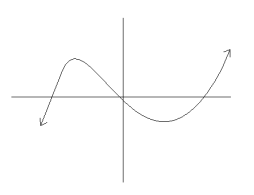
a < 0

how to get point of inflection? and what is important about?
turning point formula
steepest point of graph
gradient of tangent =
gradient of graph (at that point)
concave up:
concave down:
f ‘‘ (x) > 0
f ‘‘ (x) < 0
tangent to graph that has max gradient in y=mx+c format??
find point of inflection w/ f ‘‘ (x) = 0
use inflection x-value & sub into f’ (x) for gradient
use inflection x-value and plug into f(x) for gradient point on graph.
sub into straight line formula and solve for x
what does y=k ?
horizontal line
value of k for y=k is NOT tangent to y=ax²+bx+c
get TP of parabola
write in yER; y≠ans format
what to remember each time it says “tangent”?
use derivative
whats the simultaneous equation?
MODE → 5 → 1
whats the x-intercept on parabola on cubic graph?
TP
whats the TP of parabola on cubic graph?
point of inflection
what to write when you gt derivative of y
dy/dx
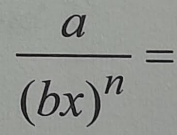
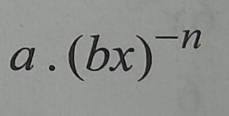
what to remember when using fractions for derivatives
only move the x up


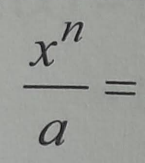


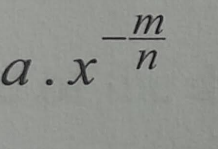

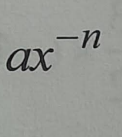

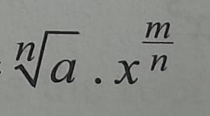
why f ‘ (x) > 0 for all values of p
denominator > 0 for all values of x (
what does d repsent on cubic?
y-intercept
what to remember when deriving fractions?
let each term have its own base
how to get the difference/distance between functions?
D(x) = f(x) - g(x)
how to get max vertical distance?
D(x) = f(x) - g(x)
D ‘ (x) = 0
check to see which ans is largest
how to calculate a point with two given points?
sub in the two points seperately and make a simultaneous equation
if they give equation like ‘f(2 +h)’
sub in 2 instead of x
how to get axis of symmetry in parabola?
x = -b/2a
what does b2 - 4ac = 0 mean?
its the TP
whats undefined? and whats non-real
denminator is 0
neg in sqrt (Δ < 0)
formula using intercepts
y = a(x-x₁)²(x-x₂)
on cubic…
f’(x) = TP
f’’(x) = point of inflection
when is the gradient on a cubic graph positive based on parabola?
above x-axis
what is the TP of cubic on parabola?
x-intercepts
what is f’’’(x) = 0 and what can it guve?
point of inflection
midpoint gives TP
how to get the cubic gradient if parabola?
use y-value when at given/asked x-value
how get max or min
mainly use derivative when = 0
“combine”
need to multiply
minimum radius =
minimum surface area
when to use dy/dx
if you don’t have graph name
reflected in x and y axis…
x axis = -y
y axis = x
perimeter of rectangle =
2(l +w)
“perimeter”
make formula and isolate variable
put in area formula
“max/long”
find vertex/TP/ derivative
negative axis of sym =
-(x-p)+q
what to remember?
NO NEG EXPONENTD
“three real roots”
move k & coefficient to side
find y-values of TP on graph
set inequality y min < (RHS value) < y max
solve k
How to ans dimensions questions?
Length=…. Width=..
area of triangle =
½ x b x h
“distance”
usually vertical distance
f(x) is higher graph
D(x) = f(x) - g(x)
for derivative/gradient graph , what tells you gradient?
y-value tell you gradient on x-value of original graph
what to doe if many fractions in first principles
tip and times
x-inercepts on cubic or parabola?
cubic: d
parabola: c
when to use gradient formula?
ONLY when straight line
“max/min”
find derivative of that thing
make it = 0
get rid of variables with info I gave
How to answer if they ask for dimensions
(Width) by (
Volume of rectangle =
l x b x h
always times by 3 things
“first/last”
just ignore the one(s) fixed in spot so there are boxes
volume of cylinder =
area x height
“next to each other”
do boxes
What to mention when describing graph movement
Say direction it shifts and how many units it does
how to solve any optimisation? (6)
assign variables to all unknown values using their relationship to each other etc
create an equation using the fixed given value and let it equal a constant (P/constraint equation)
isolate a variable in terms of another using the constraint equation (whatever varible makes finding ans easiest)
substiute that experession into target formula (volume/area/cost/etc) so there’s only one variable
derive the equation and set to zero
solve for variable and get final answer for question
what are three equations we can work with for optimisation?
area
perimeter
given equation (if not above)
** can’t use the same equation twice
why is the formula you choose to derive important?
its also the one being minimized so read and choose carefully so it answers the question your being asked
volume of cylinder =
πr2h
surface area of cyclinder =
2πrh + 2πr2h
(2πrh is for twi circle faces)
in an optimisation question, what should you always start with
writing equation of what you need
what does '“point A lies on y=….”
A will always just be the value of like (y=M)
what to always check for gradient
if ± gradient
A (in formula) ~
area of polygonal base
what to remember if using cartesian plane
if on an axis ont just assume y/x = 0
what can you write “change in dimension as”
+ x / - x
(whole thing repsent new area/perimeter/etc)
how to write differentiation like “in terms of..”
dA/dx
time =
volume/rate
time diffrence =
slow time - fast time
“per”
divison
amount =
rate x time
cm to m
cm ÷ 100