Marine Biology 3924 - Ex 3
 Call Kai
 Learn
 Practice Test
 Spaced Repetition
 Match
 Flashcards
 Knowt Play
1/16

17 Terms
Phylum - Echinodermata
Tripoblastic with PentaRadial Symmetry
Have a Coelom
Calcaerous Endoskeleton composed of ossicles
Water Circulatory / Vascular System
Nerve Ring Simple nervous system w/o brain
Regenerate from central disk
Presence of Aristotles Lantern in some
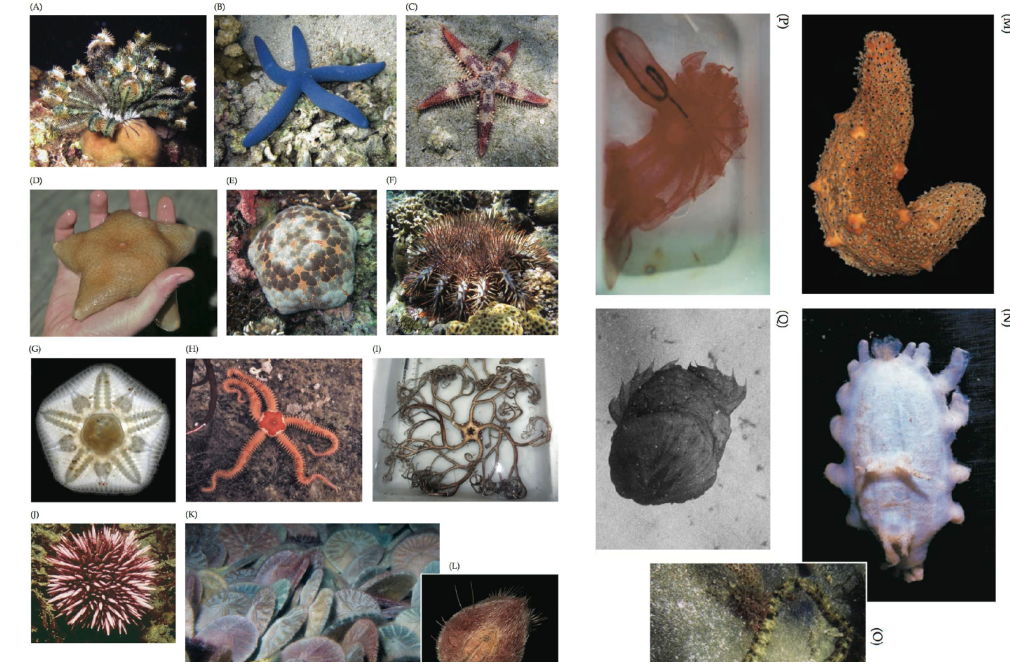
Class: Asteroidea - Phylum: Echinodermata
Stellate Body NOT separated from central disk
Mouth Towards Substrate
Oral and Aboral side
Anus on aboral side
Each arm has full organs w stacked organs on each arm
Ossicles
Small, calcareous (calcium carbonate) plates or elements embedded within the dermis that collectively form the animal's endoskeleton
Water Vascular system of feeding & locomotion in C: Asteroida - P:Echinodermata
Water pressure operates tube feet, allowing movement
Water enters across the Madreporite, ampulla on each foot functions by forcing fluid into foot, expanding w suckers at the end
Ampulla connects through five canals via ring canal
Aristotle’s Lantern
Jawlike structure in Echinodermata
Constructed from specialized ossicles connected by ligaments & muscles
5 teeth come together at the point
Teeth r also used in “burrowing into rocks, sediment and when worn down they are replaced by secretion of calcium carbonate
Phylum; Echinodermata
Deposit feeders, scavengers, predators
important to maintaining abundance of other organisms
Gas Exchange in Echinodermata
Through the feet- special outpockets of the body wall called Papulae, Ciliated on papulae and coelom side to create counter currents to maximize water movements

Echinodermata Excretion & Osmoregulation
Across the tube feet & papulae , confined to narrow salinity range bc they loose water pressure they cannot operate water vascular system
Echinodermata Sensory & Nervous System
Nerve Net & Ring- respond to touch, dissolved chemicals and lights —- photoreceptors at the tips of arms
Diffuse and decentralized
Echinodermata Reproduction
Regenerate from substantial portion of the central disk
Fissiparity = split in two
Gonochoristic and Hemaphrodites
fre spawning, external fertilization + larval stage (occasional brooding)
Nocturnal
C: Asteroida - P: Echinodermata Larvae (2 kinds)
Mipinnaria
Brachiolaria
Class: Echinoidea - P: Echinodermata
Globose To flattened with ossicles forming rigid test
Pedicellaria covered outer skin & spines to protect against predation
Aristotles Lantern present to feed and scrape plants and algae
Most herbivores
Pedicellaria
Echinodermata’s lil feet/spikes that grab and hold objects for camoflage defense against predators, some latch break off and deliver toxins
Echinopluteus
Echinoidae larval stage
Class: Holothuroidea - Echnidermata
Reduced ossicles & flexible — have a crown of tentacles used for suspension or deposit feeding - can have anal teeth
Have ambulacral region w tube feet mouth w oral + mouth
Respiratry tree- water passed into anus and past the tree for gas exchange
Auto-visceration (evisceration ) of digestive tract or cuvierian tubules from Chemical stress or crowding as a defense mechanism

Class Ophiuroidea - Phyluym Echinodermata
Disc distinct from arms w flexible arms
No anus, only mouth
Tube feet not involved in locomotion
Class: Crinoidea - P; Echinodermata
Cup shaped body, have arms that feed in the water column. Stalked - unstalked oral sides facing upward
