Unit 3: The Central Dogma
 Call Kai
 Learn
 Practice Test
 Spaced Repetition
 Match
 Flashcards
 Knowt Play
1/303

There's no tags or description
Looks like no tags are added yet.
304 Terms
Human DNA has how many base pairs?
3.2 billion (3200 Mb or 3.2 Gb)
2 meters packed in a cell 250 000 times smaller
Eukaryotes have what enclosed in a nucleus?
To keep the DNA organized, and help regulate gene expression, the double helix is condensed into?
Histone proteins
The DNA double helix is first wrapped twice(ish) around this to form a
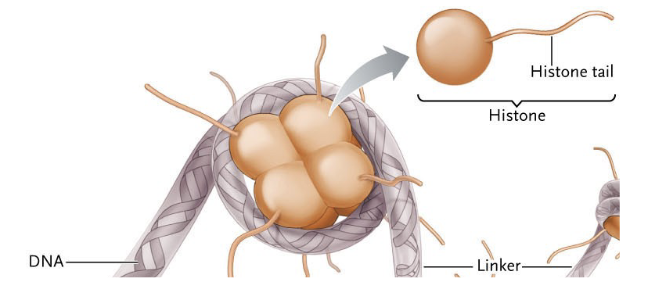
Each DNA molecule is a repeating series of nucleosomes, called?
Chromatin that look like “beads on a string” under an electron microscope

Additional histones cause the chromatin to coil further into?
(solenoids)
“Normal” state of our DNA molecules
Chromatin
How does chromatin change during DNA replication, transcription, and cell division?
It unwinds during DNA replication and transcription and tt condenses further, into , during cell division
Nucleosome
A histone octamer [2(H2A, H2B, H3 and H4)] with approximately 147 bp of DNA wrapped around it (1.65 X around outside of octamer)

Histone H1
Binds linker DNA and coils nucleosomes to form the fibre
Is DNA packing along the chromosome uniform?
No
_ Regions
Have lower DNA compaction, and genes are
Are chromosomal regions of high DNA compaction where gene expression
Constitutive heterochromatin
DNA always highly compacted
(centromeres and telomeric regions)
Facultative heterochromatin
Can switch to euchromatin depending on cell type and during cell development

Chromosomes are the fully compact form of?
DNA
Chromosome structure protects?
DNA from damage
Chromosomes can be separated?
Easily and transmitted to each daughter cell during cell division
What needs to happen to chromosomes correctly during mitosis/meiosis?
Chromosomes need to be fully duplicated (DNA replication) and properly transmitted to each daughter cell
Multiple DNA sequences along chromosome which initiate DNA replication
DNA sequences located at the ends of the chromosome that prevent detrimental degradation
DNA sequences required for correct segregation of chromosomes during cell division
Majority of eukaryotic cells are?
Diploid
(two copies of each homologous chromosome)
Only sexually-reproductive cells (e.g. sperm and ova) have a?
genome
Some eukaryotes are?
Polyploid*
(more than a pair of each chromosome) such as large protists (Tetrahymena : 10-10,000 copies) and flowering plants
Prokaryotes typically have?
Found in the cytosol (no nucleus)
Do prokaryotes and eukaryotes have same levels of compaction?
NO prokaryotes can be less compact
What type of proteins do prokaryotes use?
They use histone-like proteins (HLPs), also called nucleoid-associated proteins (NAPs)

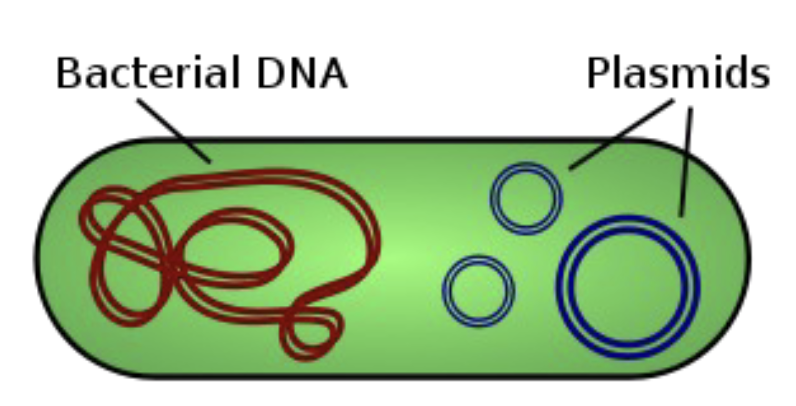
Plasmids
Small independent circular DNA molecules found in prokaryotes
How many plasmids can a cell have?
Each cell can have multiple different plasmids, as well as multiple copies of each plasmid
How many genes do plasmids hold? What do they carry that give them an advantage in some environments?
Plasmids only carry a few genes - none essential for life
The eukaryotic cell cycle
An ordered set of processes by whichone cell grows and divides into two identical daughter cells
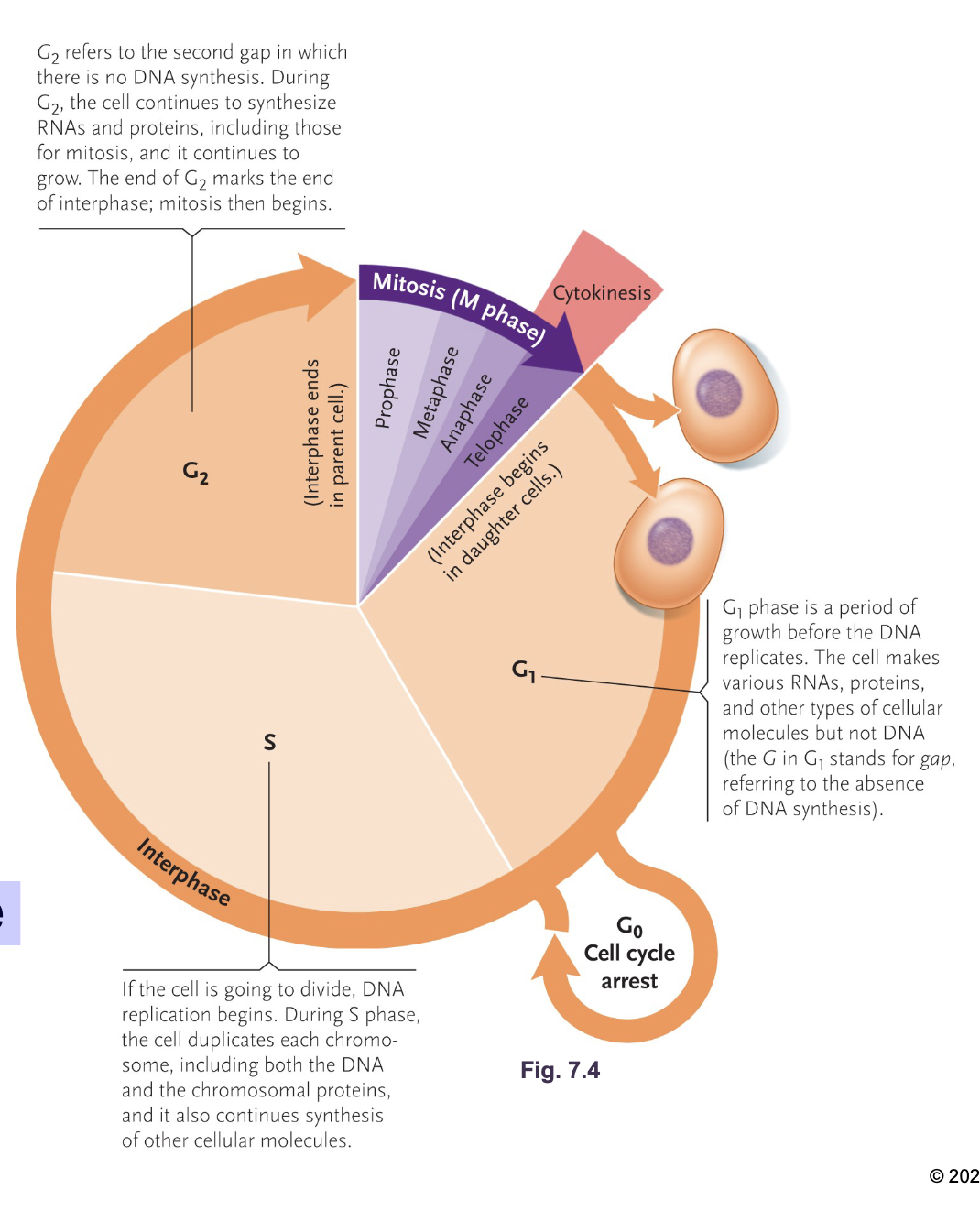
What does the cell cycle need to do?
Need to fully replicate DNA and organelles and properly segregate them to daughter cells
Homologous chromosomes
Parental pair of DNA molecules
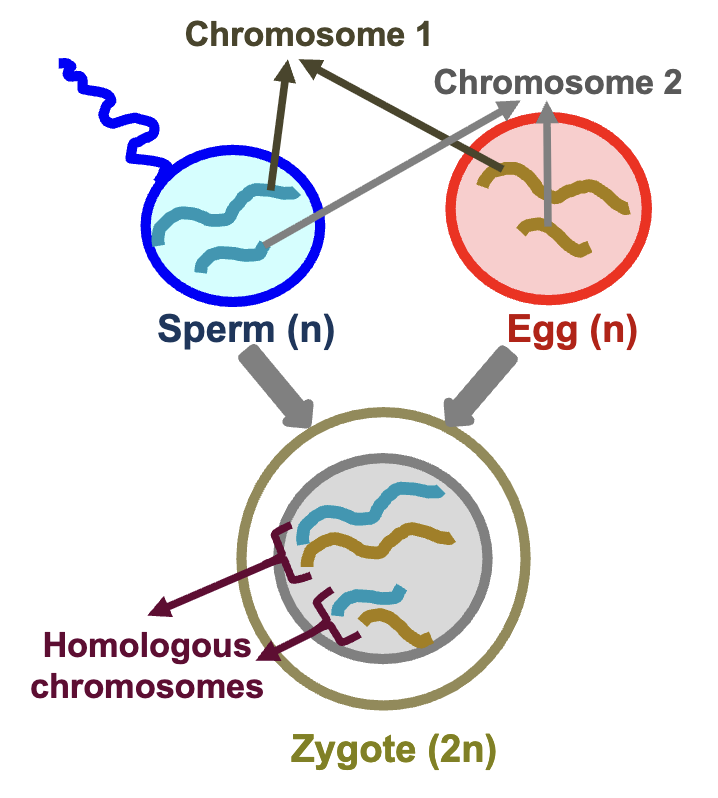
The number and order of genes are the same between homologous chromosomes, but:

2n
Diploid number of DNA molecules
n
Haploid number of DNA molecules
Each DNA molecule is replicated?
Independently

Following replication, each DNA molecule exists as a?
S Phase
DNA replication
Why should all the genes on sister chromatids be the same allele?
Why should some genes on non-sister chromatids on homologous chromosomes have different alleles?
What two supports are found in the Cytoskeleton and are Involved in Cell Division?
Microtubules and centrosomes
Microtubules
Polymers of tubulin dimers that dynamically change length to support cell structure, movement and division
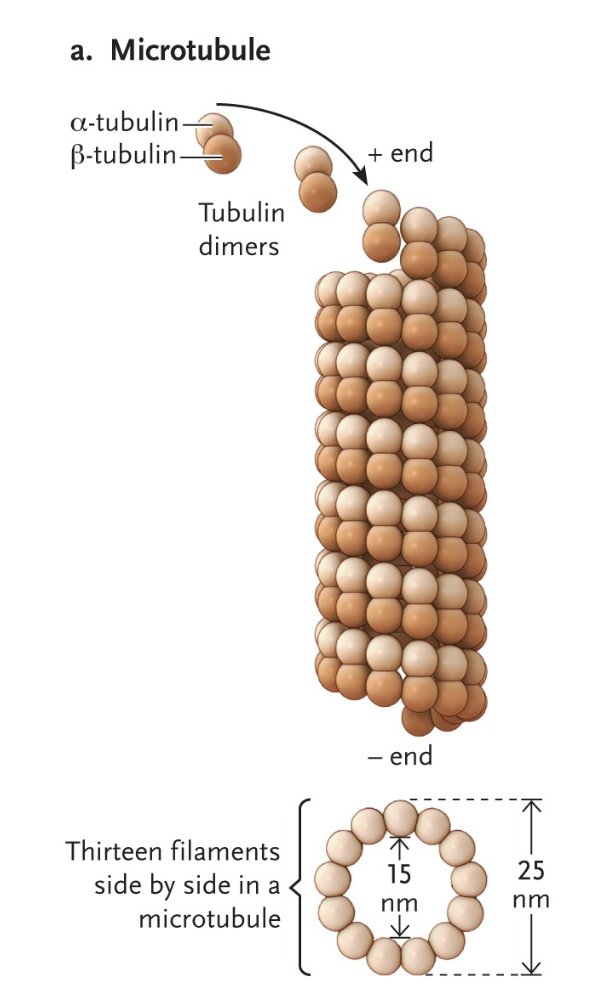
Centrosomes
A pair of centrioles that organize microtubule formation

Number of DNA molecules and chromatids in G1 (2n)
4 DNA molecules
1 chromatid/molecule

Number of DNA molecules and chromatids in G2 (2n)
4 DNA molecules
2 chromatids/molecule

Number of DNA molecules and chromatids in prophase (2n)
4 DNA molecules
2 chromatids/molecule

Mitotic spindle formation

Number of DNA molecules and chromatids in prometaphase (2n)
4 DNA molecules
2 chromatids/molecule
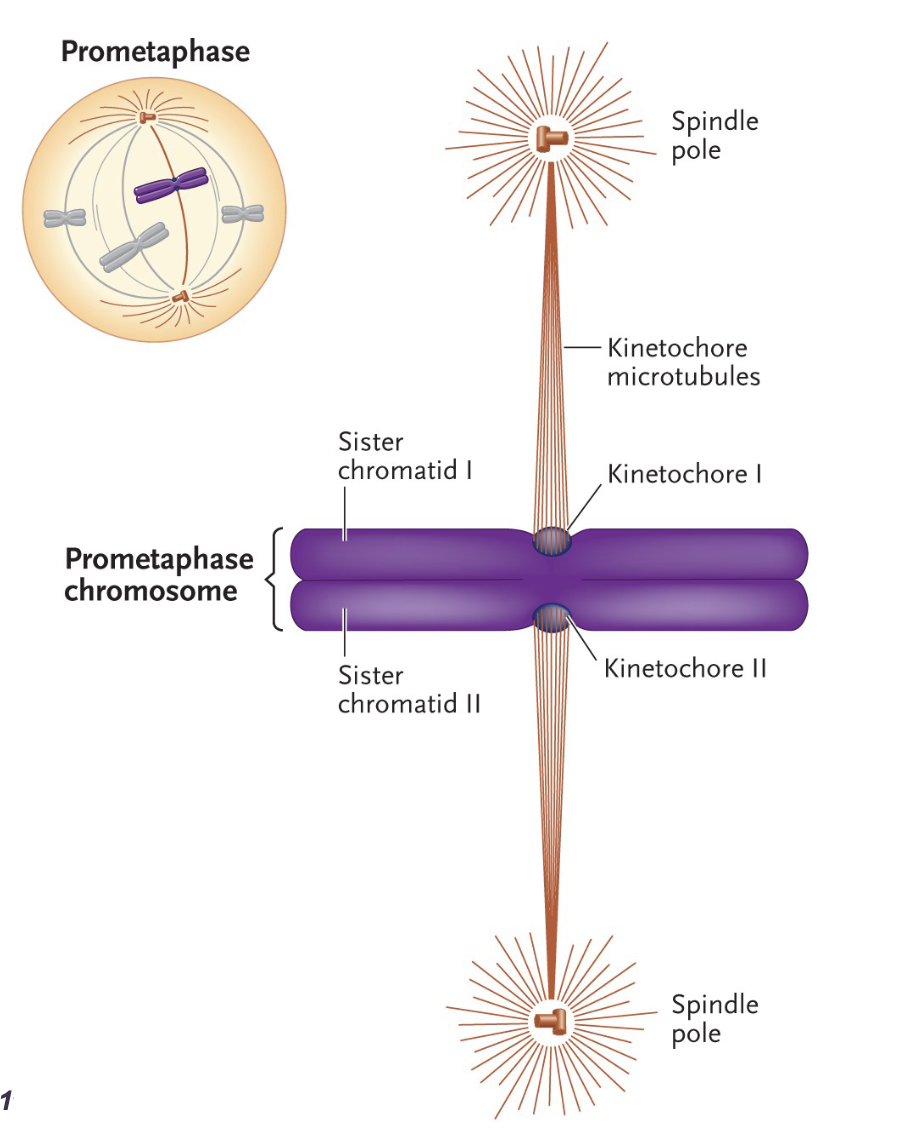
Prometaphase
Centrosomes reach opposite “ ”
microtubules attach to each other
microtubules attach to kinetochore proteins at the centromeres
Sister chromatids are connected to
Chromosomes start migrating to “
Kinetochore Microtubules
Number of DNA molecules and chromatids in metaphase (2n)
4 DNA molecules
2 chromatids/molecule
Metaphase
All DNA molecules are aligned at the equator (metaphase plate)
Sister chromatids are attached to opposite poles by kinetochore microtubules

Number of DNA molecules and chromatids in anaphase (4n)
8 DNA molecules
1 chromatid/molecule
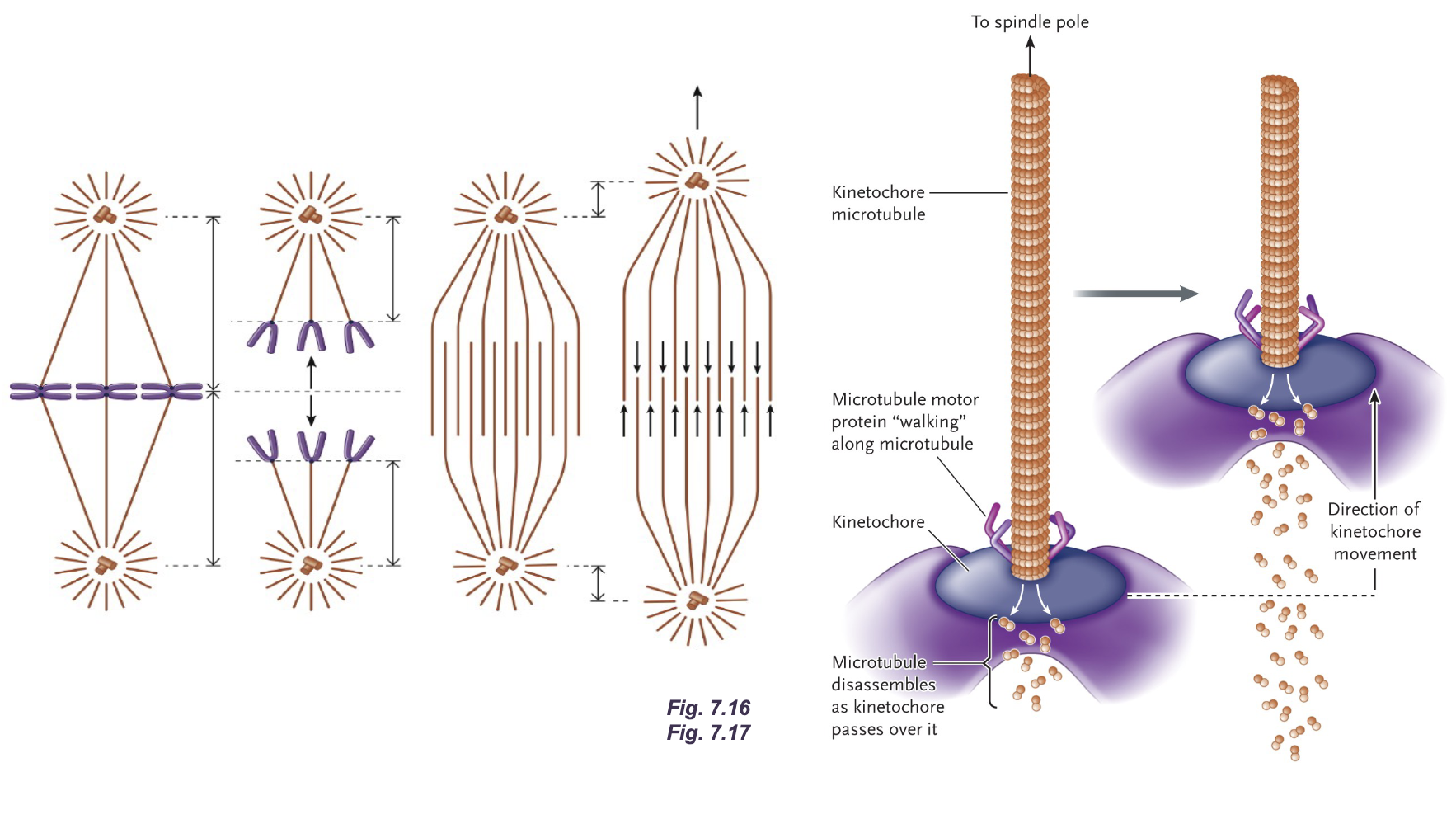
Anaphase
Sister chromatids separate
• Chromatids are now independent DNA molecules
• Kinetochore microtubules will shorten (depolymerize)
• Non-kinetochore microtubules will lengthen (polymerize)

During anaphase the cell is how many ploidy?
Tetraploidy
Microtubule (de)polymerization
Shorten
Number of DNA molecules and chromatids in telophase (4n)
8 DNA molecules
1 chromatid/molecule
Telophase
Chromosomes cluster at opposite poles and decondense
Nuclear envelope form around each new nuclii
Cyotkinesis
Cell divison starts by furrowing as a ring of proteins (microfilaments) pulls
Cell cycle in prokaryotes name
Binary fission
Where does DNA replication begin in binary fission?
Ori
Binary fission
Cell elongates and bacterial chromosomes separate
Inward growth of plasma membrane and partition assembly of new cell wall, dividing replicated DNA

Binary fission products, effectiveness, and evolvement
Produces two daughter cells (clones)
Effective because only 1 chromosome
Mitosis evolved from this process
Number of DNA molecules and chromatids in G1 (2n)
4 DNA molecules each
1 chromatid/molecule
G1 stage
Two daughter cells that are genetic duplicates (clones) of the parental cell
Progression of the cell cycle depends upon activation of a?
Cyclin- dependent kinase (CDK) bound to its regulatory cyclin subunit in each phase of the cell cycle
What do checkpoints do?
Delay progress to allow completion of the events of each phase before proceeding to next phase
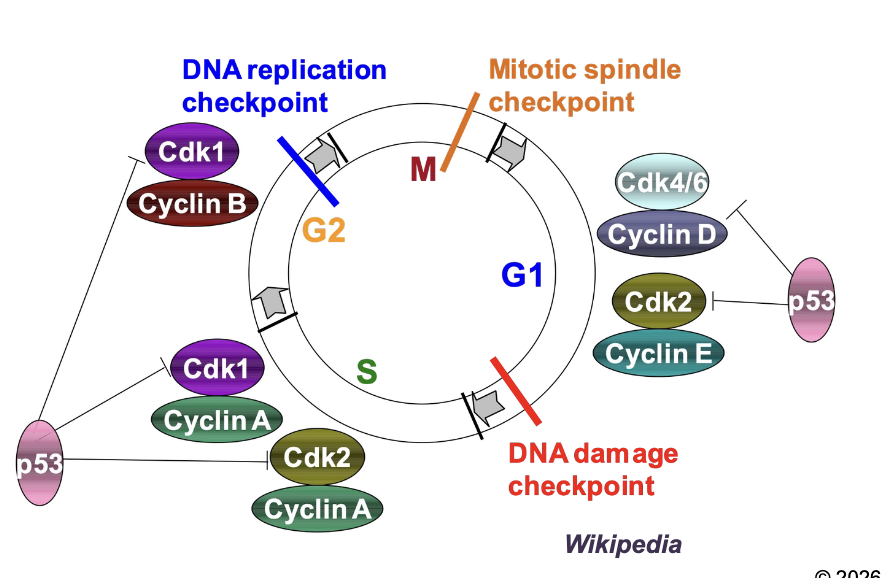
DNA damage (G1/S) checkpoint
Is DNA OK for replication?
DNA replication (G2/M) checkpoint
Is DNA fully replicated before mitosis?
Mitotic spindle (M) checkpoint
Are chromosomes aligned properly in metaphase?
Apoptosis
Cell death
Cancer
Malignant growth caused by uncontrolled cell division and is caused by altered expression of multiple genes due to mutations (polygenic disease)

Which mutated genes are implicated in cancers?
Oncogenes
Tumour suppressor genes
(go genes)
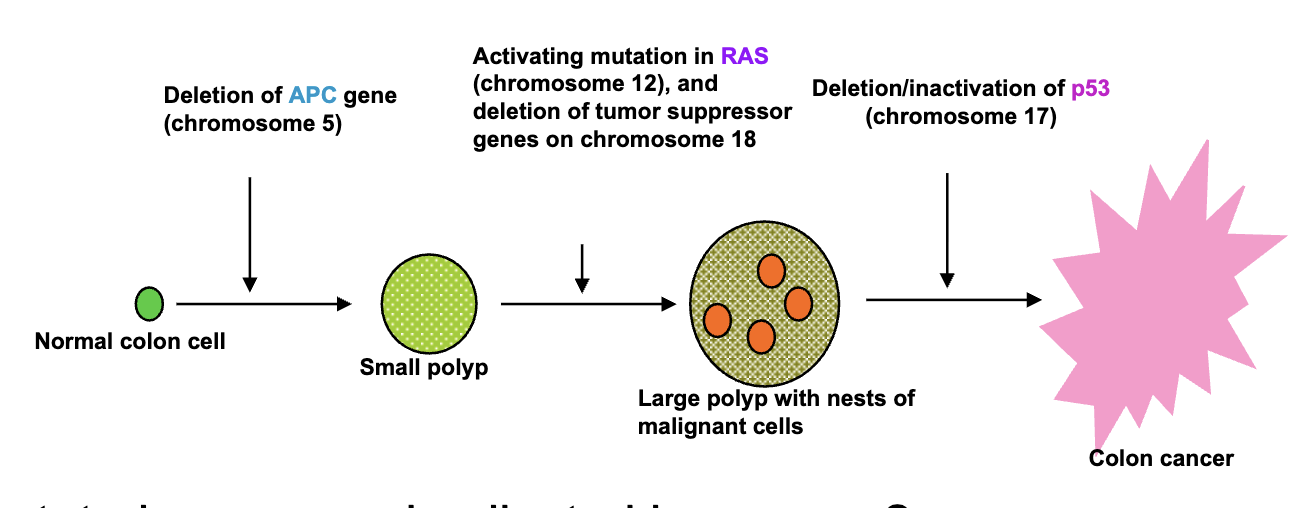
Oncogenes
Positive regulators of the cell cycle (gain-of-function) including cyclin D/E (gene amplification), cdk4 alleles (insensitive to inhibition)
Tumour suppressor genes
Negative regulators of the cell cycle (loss of function) including checkpoint genes p53 and RB
About 50% of tumors have?
An inactivated p53 gene and cyclin D and E are often highly expressed in breast cancer carcinomas
Why is it difficult to find a universal cure for cancer?
Each cancer is caused by different gene mutations
Mitosis produces?
Cellular clones essential for maintaining the genetic complement of an organism throughout its life
For a population to evolve what must be present?
Genetic variation
Sexual reproduction
The mechanism by which most eukaryotic organisms ensure genetic variation is maintained and introduced from generation to generation
Meiosis
The mechanism by which sexually reproducing individuals generate genetically variable gametes that can be combined into infinite rearrangements
Our germ cells contain how many chromos? How many pairs do we humans have?
46 chromosomes
We have 23 pairs of homologous chromosomes
Reproduction must maintain the diploid number of chromosomes. Why?
So gamete formation separates the homologous pairs and results in haploid sperm/ova
Syngamy
Fertilization that restores the diploid number in the zygote in a “new” combination of alleles

Germ cells follow what type of cell cycle?
Modified
G1, S, G2, M*
S Phase in germ cells
All 46 DNA molecules are replicated
Each DNA molecule exists as a pair of sister chromatids
M phase in germ cells (First cellular division)
Homologous chromos are seperated
Generates haploid cells
Each DNA molecule exists as a pair of sister chromatids
M phase in germ cells (second cellular division)
Sisters chromatids are seperated
Generates haploid gametes
Each with a single copy of each DNA molecule
Change in DNA molecules and chromatids in pre-meiotic DNA replication
Germ cell (2n): 4 DNA molecules, 1 chromatid/molecule
Germ cell (2n): 4 DNA molecules 2 chromatids/molecule
Meiosis I: Prophase I
Just like Prophase in mitosis...except: homologous chromos will synapse (align)
Pieces of non-sister chromatids of homologous chromosomes are exchanged by “breakage and reunion
Homologous recombination
Homologous chromosomes align with each other during prophase I and exchange of sections of non-sister chromatids occur by crossing over
Crossing over
Precise breakage of each strand
Equal exchange of non-sister chromatid material
Repair of breakage after genetic exchange
What does crossing over allow for?
Genetic exchange can involve large sections of the homologous chromosomes creating new chromatids with various combinations of 100’s of genes/alleles