Speed and agility fundementals
 Call Kai
 Learn
 Practice Test
 Spaced Repetition
 Match
 Flashcards
 Knowt Play
1/45

There's no tags or description
Looks like no tags are added yet.
46 Terms
Agility
Change of direction with REACTIVE component
Plyometrics
Exercise involving repeated rapid stretching and contracting of muscles to increase muscle power
strength capacity motor pattern efficiency skill
three things that you need for speed and agility
rate of force development
Development of maximal force in minimal time. Typically used as an index of explosive strength
change in force change in time
formula for RFD
impulse
change in momentum. Measured as the area under the force-time curve
ground contact time x force
formula for impulse
20m
how long does the acceleration phase last
Initial Contact Loading Response Midstance Toe Off Pre-swing Mid Swing
all phases of gait phases
initial contact
what phase of running is this

loading response
what phase of running is this

midstance
what phase of running is this

toe off
what phase of running is this
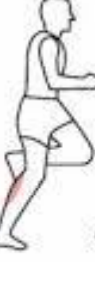
pre swing
what phase of running is this

mid swing
what phase of running is this
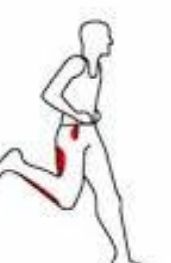
.23 -.25
GCT for agility
.44 - .722
GCT for change of direction
.17 - .2
GCT for acceleration
.09 - .11
GCT for max velo
NEURAL DRIVE
Rate and amplitude of impulses being sent from the nervous system to target muscles
muscle spindles
senses muscle stretch. causes muscle activation
golgi tendon organ
senses tendon stretch causes muscle inhibition
Complex Training
Alternating SSC tasks with heavy resistance exercise within the same session
pretension
what may be related to an increase in the sensitivity of associated muscle spindles
2.70
Elite male sprinters stride length
2.56
Novice sprinters stride length
4.63 steps/second
Elite male sprinters stride rates
4.43 steps/second
Novice sprinters lesser stride rate
vertical force during stance phase
the most critical component to improving speed
stance phase
gait phase noted by an Eccentric braking period followed by a concentric propulsive period
flight phase
gait phase noted by Recovery and ground preparation segments of the swing leg
Internal focus
Focuses on the athlete's own body movements
External focus
Focuses on the effect of the movement on the environment
Mobility
Freedom of an athlete’s limb to move through a desired ROM
improper distribution of forces
athlete is stepping out laterally during the drive phase
Cause
drive through the ground
athlete is stepping out laterally during the drive phase
fix
drive elbow down and back
arm movement is tight
Fix
push off angle too high
Athlete jumps the first step or steps over the knee of the stance leg
cause
initiate the movement by driving through the ground. step over ankle not knee keep foot of the swing leg close to the ground
Athlete jumps the first step or steps over the knee of the stance leg
fix
low push off force improper head placement
the athlete gets vertical too fast
cause
push the ground while keeping head in line with spine
the athlete gets vertical too fast
fix
as shins rise so do hips
athlete bending over even though they are in max velocity
fix
low force production and hip mobility
the athlete isnt getting his knees high
cause
misunderstanding of force application
athlete is overstriding
cause
low mobility improper positioning of the pelvis
athlete has chronic hamstring injuries
cause
stop overstriding stop anterior tilt
athlete has chronic hamstring injuries
fix