Biology: Cell Cycle, Mitosis, and DNA Replication
 Call Kai
 Learn
 Practice Test
 Spaced Repetition
 Match
 Flashcards
 Knowt Play
1/32

There's no tags or description
Looks like no tags are added yet.
33 Terms
Cell Cycle
Stages a cell goes through during its life span, including interphase, mitosis and cytokinesis (controlled by enzymes called cyclins)

cell division
the process in reproduction and growth by which a cell divides to form 2 daughter cells

DNA
Deoxyribonucleic Acid, a complex molecule containing the genetic information that makes up the chromosomes.

chromatin
granular material visible within the nucleus; made of DNA tightly coiled around proteins

chromosome
condensed packages of genetic material formed from chromatin as a cell prepares to divide

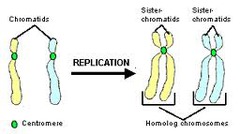
chromatid
one of two identical "sister" parts of a duplicated chromosome
mitosis
part of cell division in which the nucleus divides into nuclei containing the SAME # of chromosomes (DOES NOT INCLUDE INTERPHASE or cytokinesis)

Interphase
period of the cell cycle between cell divisions in which the cell grows, includes G1, S, and G2, longest period of cell cycle

Prophase
1st phase of mitosis, Chromosomes become visible, nuclear envelop dissolves, spindle forms

metaphase
2nd phase of mitosis, during which the chromosomes line up across the center of the cell

anaphase
3rd phase of mitosis in which the chromosomes separate and move to opposite ends of the cell

telophase
last phase of mitosis, chromosome are in two new cells and nuclear membranes start to reform

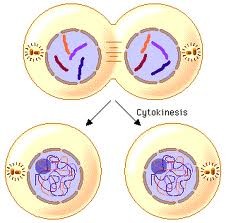
cytokinesis
Division of the cytoplasm during cell division, occurs immediately after mitosis
surface area vs volume ratio
because volume grows faster than surface area, cells must divide in order to expel wastes and take in nutrients, otherwise they would be unable to maintain homeostasis

cancer
any malignant growth or tumor caused by abnormal and uncontrolled cell division

carcinogen
cancer causing agent, (viruses, chemicals, radiation, UV light etc) can lead to mistakes in cell cycle

daughter cells
2 identical cells produced as result of mitosis & cytokinesis, they have SAME # of chromosomes as parent cell and one another

sister chromatids
one of a pair of IDENTICAL chromosomes, formed during DNA replication is S phase of interphase

spindle fibers
Microtubules involved in the movement of chromosomes during mitosis.

centrioles
Cell organelle that aids in cell division in animal cells only, spindle fibers attached

centromere
region of a chromosome where the two sister chromatids attach

G1
first phase of interphase; cell grows in size makes proteins

S phase
The synthesis phase of the cell cycle; the part of interphase during which DNA is replicated.

G2
The final period of interphase during which the cell prepares for mitosis.

benign
non cancerous tumor

malignant
cancerous tumor

metastasis
spread of cancer cells beyond their original site in the body, happens through bloodstream

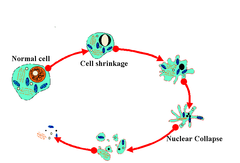
apoptosis
programmed cell death, death of a cell caused by a chemical signal that activates a genetic mechanism inside the cell
tumor
A mass of abnormal cells that develops when cancerous cells divide and grow uncontrollably. (can be benign or malignant)

cleavage furrow
The area of the cell membrane that pinches in and eventually separates the dividing cell

cell plate
wall that forms during cytokinesis in plant cells to produce separate daughter cells

DNA Replication
DNA replication is the process by which a double-stranded DNA molecule is copied to produce two identical DNA molecules. (happens during S phase of interphase)

Cyclins
proteins that regulate the cell cycle, cyclin levels stimulate cell division (mitosis)
