Endocrine System 2
 Call Kai
 Learn
 Practice Test
 Spaced Repetition
 Match
 Flashcards
 Knowt Play
1/12

There's no tags or description
Looks like no tags are added yet.
13 Terms

The Pancreas
Islets of Langerhans (beta cells) produce and co-secrete insulin and amylin
Insulin: released in response to elevation in serum glucose
1. Promotes uptake and metabolism of glucose by cells
2. Promotes uptake of amino acids by muscle tissue: anabolic growth hormone
3. Inhibits release of glucose by liver & breakdown/release of fats: restores euglycemia
Amylin: peptide hormone, balances effect of insulin by slowing gastric emptying, inhibiting glucagon secretion and enhancing feeling of satiety

Glucagon and Insulin
Glucagon
Produced by the alpha cells of the islets of Langerhans in the pancreas
Maintains blood glucose between meals and during fasting
Main action: Increase blood glucose
Initiates glycogenolysis (breakdown of glycogen) as a means of raising blood glucose
Glucagon secretion is regulated by blood glucose
Insulin
Produced by the beta cells of the islets of Langerhans in the pancreas
Promotes glucose uptake by target cells and provides for glucose storage as glycogen
Prevents fat and glycogen breakdown
Inhibits gluconeogenesis and increases protein synthesis
Action of Insulin & Glucagon on Glucose
Insulin
Increases glucose transport into skeletal muscle and adipose tissue
Increases glycogen synthesis
Decreases gluconeogenesis
Glucagon (treats hypoglycemia)
Promotes glycogen breakdown
Increases gluconeogenesis
Diabetes Mellitus
Characterized by imbalance between insulin availability & need
Type 1 (5%)
Usually autoimmune, can also be genetic w/env components
Complete absence of insulin, unable to produce
Must have exogenous insulin injected
Type 2 (most common)
Usually related to obesity, can also be genetic w/env components
May still be able to produce insulin, but not enough
Cannot properly metabolize carbs with endogenous insulin
Can be treated with oral agents
Other
Gestational
Prediabetes
Secondary Diabetes: something else going on that prevents function of pancreas. Ex. pancreatitis
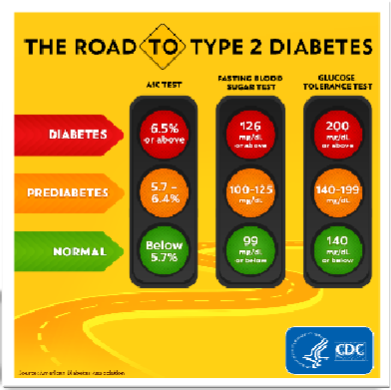
Blood Tests for Diabetics
Fasting blood glucose test (6-8hrs)
Target 80-130 mg/dL (ADA)
Capillary blood tests and self-monitoring of capillary blood glucose levels after meals
Target <180 mg/dL (ADA)
Glycated hemoglobin testing (HbA1c) (how well controlled glucose been past few months)
Target <7% (ADA)
Continuous glucose monitoring (CGM)
Diabetes Mellitus- the 3 polys
Polyuria
Polydipsia
Polyphagia
Diabetes Impacts
Leading cause of
End-stage renal disease
Adult blindness
Non-traumatic lower limb amputations
Major contributing factor
heart disease
Stroke

Diabetes Mellitus Type I
Causes
Loss of beta cell function
Could be iatrogenic
Could be genetic
Could be autoimmune
Almost always multifactorial
Clinical manifestation
Absolute insulin deficiency

Diabetes Mellitus 2
Causes
Impaired beta cell function
Peripheral insulin resistance
Increased hepatic glucose production
Clinical manifestation
Insulin resistance and reduced insulin production
Often preceded by prediabetes
Vascular Complications
Result from thickening of vessel membranes in capillaries and arterioles
Response to chronic hyperglycemia
Specific to diabetes (unlike macrovascular)
Peripheral vascular disease
Kidneys: nephropathy
Eyes: retinopathy

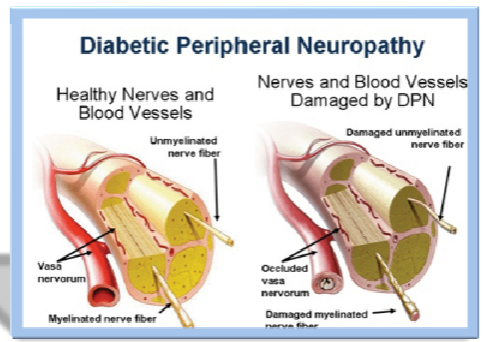
Diabetic Peripheral Neuropathy
Autonomic issues
Can affect nearly all body systems
Complications
Gastroparesis
Delayed gastric emptying
Sexual function
Neurogenic bladder
Cardiovascular abnormalities-postural hypotension, resting tachycardia, and painless MI
Pancreatic Disorders (oral hypoglycemics): sulfonylureas: glipizide & glyburide
sulfonylureas:
glipizide (Glucotrol) & glyburide (Glynase)
MOA
Causes beta cells within the pancreas to secrete insulin
Must have a functioning pancreas to work
This reduces glucose output from liver
May increase insulin sensitivity in tissues
Therapeutic Use
Type 2 DM
Adverse Drug Reactions
Hypoglycemia (safety alert!)
Nausea, Diarrhea
Interventions
Monitor for s/sx of hypoglycemia
Monitory for persistent N/V
Monitor CBC (if N/V persists)
Client Instructions
Always carry snacks
Wear medical alert bracelet
If feeling hypoglycemic, check BG
Take orally 30 min prior to meals!!! MUST HAVE FOOD!!!
Contraindications
Pregnancy& Breastfeeding
(insulin is preferable in pregnancy and lactation)
DKA
Drug Interactions
Alcohol! – may experience (N/V/ palpitations, flushing)
Alcohol, NSAIDs, Salicylates may increase hypoglycemic effects (dizziness, weakness, tremors, malaise, sweating, tiredness, irritability, confused, gait, speech)
Precautions
Renal or hepatic dysfunction
Adrenal or pituitary insufficiency due to increased risk for hypoglycemia (low cortisol)
Pancreatic Disorders (oral hypoglycemics): Meglitinides/ antidiabetic: repaglinide & nateglinide
Meglitinides/ antidiabetic:
repaglinide (Prandin) & nateglinide (Starlix)
MOA
Causes beta cells within the pancreas to secrete insulin
Must have a functioning pancreas to work
This reduces glucose output from liver
May increase insulin sensitivity in tissues
*similar to sulfonylureas, so if the patient doesn’t respond to those, they likely won’t respond to meglitinides
different half life compared to sulfonylureas
Therapeutic Use
Type 2 Diabetes Mellitus
Adverse Drug Reactions
Hypoglycemia (safety alert!)
Nausea, Diarrhea
Interventions
Monitor for s/sx of hypoglycemia
Monitory for persistent N/V
Monitor CBC (if N/V persists)
Client Instructions
Always carry snacks
Wear medical alert bracelet
If feeling hypoglycemic, check BG
Take orally 30 min or less prior to meals (fast acting!): Kinda emergent. HAVE TRAY IN ROOM
Contraindications
DKA
Drug Interactions
Gemfibrozil (Lopid)
Alcohol and rifampin may decrease hypoglycemic effects
Precautions
Renal or hepatic dysfunction especially in older adults
Individuals with other endocrine disorders
Pancreatic Disorders (oral hypoglycemics): Biguanides: metformin (Glucophage)
Biguanides: metformin (Glucophage)
MOA
Decreases absorption of glucose from the intestines
Decreases glucoses output from liver
Increases insulin sensitivity in tissues
does not promote secretion of insulin!!! Less risk of hypoglycemic event from dumping
*Can be combined with other hypoglycemics (often Sulfonylureas and meglitinides) especially since it does not impact insulin secretion
Therapeutic Use
Type 2 diabetes mellitus
Adverse Drug Reactions
Lactic acidosis (rare): muscle ache, urine output change
Nausea and vomiting
Diarrhea eventually resolves
Metallic tasting med: GI tapers over time
Vitamin deficiencies (folic acid/B12)
Interventions
Monitory for persistent N/V/D
Monitor I/O
Monitor for lactic acidosis
Supplement folic acid/B12 PRN
Client Instructions
Avoid alcohol
Report weakness, hyperventilation
May cause weight loss
Take twice a day am/pm
If ER form, take once a day (don’t chew or crush ER form)
Contraindications
DKA
Renal Insufficiency (eGFR < 30)
hepatic insufficiency
Hx of Recent MI or CHF
COPD
Alcoholism
Drug Interactions
Alcohol increases risk for lactic acidosis
CONTRAST must stop 2 days before procedure and do not resume until 48 hr after
very bad on kidneys and buildup can occur, leading to lactic acidosis
Precautions
Diarrhea
Gastroparesis
Hyperthyroidism
Older adults
Pituitary insufficiency
Pancreatic Disorders (oral hypoglycemics): Thiazolidinediones or glitazones: pioglitazone & rosiglitazone
Thiazolidinediones or glitazones:
pioglitazone (Actos) & rosiglitazone (Avandia)
MOA
Increases insulin sensitivity in tissues (via PPAR gamma receptors)
Therefore, it requires insulin, so may need to be given in combination with insulin or medications that stimulate the pancreas to release insulin
Therapeutic Use
Type 2 Diabetes Mellitus (with or without medication therapy with insulin or sulfonylureas)
Adverse Drug Reactions
Fluid Retention!
Hepatotoxicity: jaundice
Increased serum lipid levels
UTI
Headaches
Myalgia
Interventions
Monitory for edema
Monitor I/O
Monitor serum lipids/triglycerides
Liver enzyme surveillance
Bone health
Client Instructions
Do not take with food: changes absorption
Can be given in combination with metformin, sulfonylureas or insulin
Report swelling/weight gain
Report jaundice
Report urinary changes
Contraindications
Cardiovascular disease (esp HTN, severe CHF)
Active hepatic disease
T1DM or hx of DKA
Drug Interactions
With insulin, may increase risk of heart failure and edema
Given with Lopid will increase hypoglycemic effects
Precautions
Mild CHF
Hepatic impairment
May increase the risk of bladder cancer
Pancreatic Disorders (oral hypoglycemics): Gliptins: linagliptin & sitagliptin
Gliptins: linagliptin (Tradjenda) & sitagliptin (Januvia)
MOA
Augments incretin production by inhibiting the enzyme that inactivates incretin hormone (DPP-4): ozempic is incretin mimetics
As a result, promotes the release of insulin and decreases glucagon
Therapeutic Use
Type 2 Diabetes Mellitus
Adverse Drug Reactions
Upper respiratory infxn: fluid, edema
Headache
Pancreatitis: interacts w/ pancreas w incretin and insulin production
Stevens-Johnson Syndrome (rare): immune response
Angioedema
Interventions
Monitor for respiratory infxn
Monitor for s/sx pancreatitis
Assess for SJS
OTC pain meds for headache
Client Instructions
Report s/sx of resp infection
Report s/sx of pancreatitis
Contraindications
Hypersensitivity
Type 1 Diabetes
DKA
Drug Interactions
May increase digoxin levels
If in combination with other antidiabetic meds, can increase the risk for hypoglycemia
Precautions
Hemodialysis
Moderate renal dysfunction
History of pancreatitis
Pancreatic Disorders (injectable hypoglycemics): Incretin Mimetics: semaglutide, exenatide, tirzepatide
Incretin Mimetics:
semaglutide (Ozempic), exenatide (Byetta), tirzepatide (Mounjaro)
MOA
Mimics the action of incretin (activates GLP-1 agonist receptors)
Slows gastric emptying
Stimulates the release of insulin
Inhibits secretion of glucagon (reducing the amount of BG)
Increases feelings of satiety/reduces appetite (tirzepatide is also GIP agonist)
Therapeutic Use
T2DM – often used in combination with oral hypoglycemics if needed
Adverse Drug Reactions
Hypoglycemia
N/V/D
Pancreatitis
Renal Failure
Severe hypersensitivity
Interventions
Monitor for Hypoglycemia
Monitor for persistent N/V/D
Monitor carb intake
Monitor for pancreatitis
Client Instructions
Give SQ in thighs or abdomen
Rotate sites!
Always carry a carb snack
May cause weight loss
Contraindications
Severe renal impairment
T1DM
DKA
Severe GI disease
Pregnancy
Children (except tirzepatide)
Drug Interactions
Sulfonylureas increase the risk for hypoglycemia
Oral med absorption slows,
So take abx and oral contraceptives 1hr before taking incretin mimetics***
Precautions
Thyroid carcinoma (black box)
Moderate renal impairment
Hx of pancreatitis
Using insulin