energetics, rates of reaction, equlibria
 Call Kai
 Learn
 Practice Test
 Spaced Repetition
 Match
 Flashcards
 Knowt Play
1/13

There's no tags or description
Looks like no tags are added yet.
14 Terms
EXOthermic reaction
-gives OUT energy to the surroundings, usually in form of heat, shown by rise in temp of surroundings
ENDOthermic reaction
-takes IN energy from the surroundings, usually in form of heat, shown by fall in temperature of the surroundings
exothermic reaction profile
-products are at a lower energy than the reactants.
difference in height = energy given out (per mole) in the reaction. Delta H is negative here
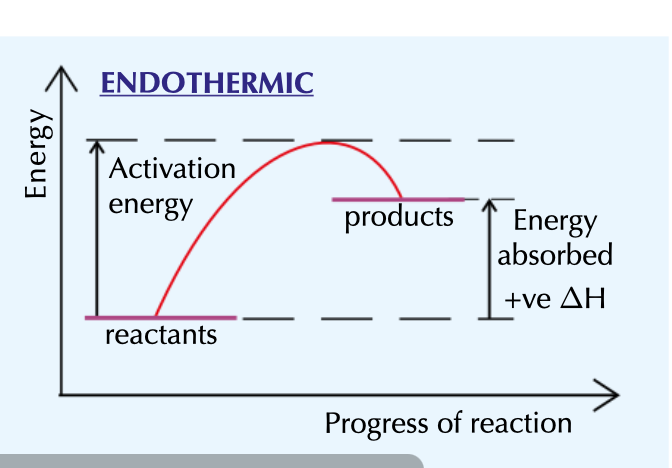
initial rise in energy represents the energy needed to start the reaction (activation energy)
activation energy = the minimum amount of energy the reactants need to collide with each other and react

endothermic reaction profile
products are at a higher energy than the reactants
difference in height represents the energy taken in (per mole) during the reaction
Delta H is positive here
calorimetry: dissolving, displacement and neutralisation reactions
to measure amount of energy transferred in these reactions, take temp of reactants, mix them in a polystyrene cup, then measure temp of solution at the end of the reaction
to reduce energy lost to the surroundings, put the polystyrene cup into a beaker of cotton wool to give more insulation, and put a lid on the cup to reduce energy loss by evaporation
measure energy transferred in neutralisation reaction between HCl and NaOH- PRACTICAL
put 25cm3 of HCl and NaOH in separate beakers
place the beakers in a water bath at 25C for 10 mins
add both to a polystyrene cup with lid (reduces energy loss by evaporation)) and thermometer
place the cup in a beaker full of cotton wool to provide insulation + reduce energy loss
take the temp of the mixture every 30s and record the highest temp
use equation

combustion calorimetry
(to measure amount of energy transferred when fuel is burnt, burn the fuel and use the flame to heat up water. we use a copper container here bc copper is a good conductor of heat as well as draught excluders which prevent heat from the flame being lost to the surroundings)
put 50g water in a copper can and record its temp
weigh a spirit burner and its lid with contents to find initial mass
put spirit burner underneath can and light wick. heat the water, stir constantly until the temp reaches around 50C
put out the flame using the burner lid and measure the final temp of the water
weigh the spirit burner and its lid again with its contents
use equation

calculate heat energy transferred
Q = m x c x Delta T
q = heat energy transferred
m = mass of liquid being heated
c = specific heat capacity ( for water = 4.2 J )
Delta T = change in temp of the liquid
to find energy transferred per gram of fuel, do Q/mass change of fuel
calculate heat energy transferred per mole
= Delta H
calc heat energy change (q)
find moles of fuel
q/ fuel mols
if exothermic reaction, delta h is negative
bendo mexo
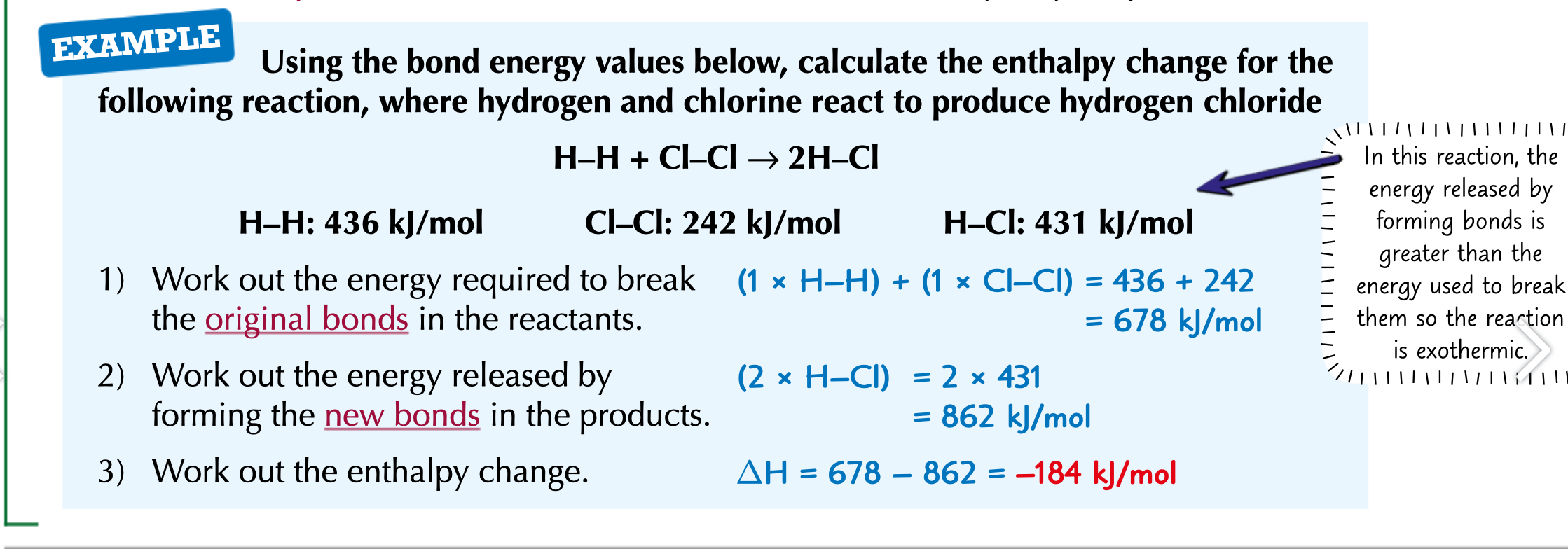
-during a chemical reaction, old bonds are broken and new bonds are formed
energy must be supplied to break existing bonds, so bond breaking is ENDOTHERMIC. energy used to break bonds is greater than energy released when forming them.
energy is released when new bonds are formed - so bond formation is EXOTHERMIC. energy released by forming bonds is greater than energy used to make them
enthalpy change is
total energy absorbed to break bonds - total energy released to make bonds
positive energy change = more energy absorbed to break than is released = EXO
negative energy change = ENDO
what is a rate of reaction
how fast reactants are changed into products in a chemical reaction