Lecture 10: Variance Analysis
 Call Kai
 Learn
 Practice Test
 Spaced Repetition
 Match
 Flashcards
 Knowt Play
1/16

There's no tags or description
Looks like no tags are added yet.
17 Terms
What are the components of planned, flexible and actual budget and what is total variance
Planned
planned price
planned cost per unit
planned volume
Flexible
planned price
planned cost per unit
actual volume
Actual
actual price
actual cost per unit
actual volume
Total variance consists of the sales volume variance component and the flexible variance which consists of the price variance and efficiency variance
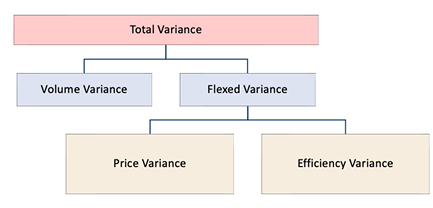
What is the purpose of flexible budgets and how else can flexed variance be broken down
they are a variance analysis tool
help detangle the reasons for variance
they help separate volume effects from other effects
flexed variance can also be broken down into flexed selling price, flexed variable cost variance and fixed cost variance
flexed variable cost per unit of output can differ because of a change in the usage on inputs required to make one output or cuz the cost of inputs changes

variable cost , input price variance and efficiency variance
variable costs consists of = cost per unit of input x input quantity used per unit of output x number of output
Input price variance= (actual price per input-predicted price per input) x actual input quantity used per unit of output x actual volume of output
efficiency variance= actual price per input

Examples of interlinkages between material variances
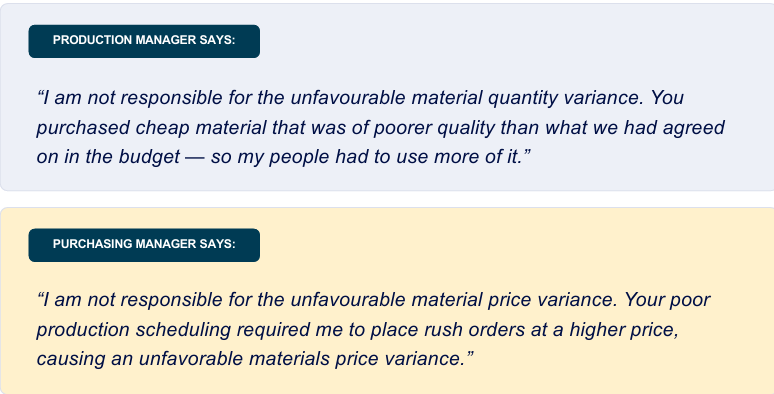
What do you need to remember about material variances
For price variance: this is based on quantity of material purchased not used
for efficiency variance: this is based on quantity used not purchased

Interpretation of materials variance

What does AP, AQ,SP,SQ mean
AP= actual price=actual price of one unit of input
AQ= actual total quantity of input used to make actual output
SP= standard/predicted price of one unit of input
SQ= standard amount on input used per unit of output x actual output
examples of interlinkage between labour variance

Variable overhead actual and static cost variance components and what variable MOH consists of
variable overhead volume (diffierence in volume of variable input used)
Flexible VOH variance
VOH efficiency variance occurs when inputs per unit of output changes from what was planned
VOH spending variance when cost per input unit differs from what was planned
Variable MOH= allocation rate(price) x quantity of allocation based used per unit of output(efficiency) x output volume(volume)

Interpretation of VMOH variances

only works if the allocation base is the most appropriate one.
fixed overhead cost variance
Fixed overheads are a lump sum —they don't change with volume (within the relevant
range).
• When the volume of activity rises and falls (within the relevant range), fixed overheads
do not vary.
• So, for control, only the spending variance matters.
BUT …
• Fixed overheads are applied using a pre-set standard rate. (eg. $10 of fixed MOHper shirt)
• The actual rate is only known after the period ends.
• If applied differs from budgeted fixed overhead, this creates a fixed overhead production
volume variance.
• Fixed overhead may be over-appliedor under-applied once aggregated


How to actually do fixed MOH questions like this and whats the interpretation
FOHSV=fixed MOH spending variance doesn’t depend on volume produced so will just be actual FMOH- Budgetted FMOH=100,000-90,000=10,000
FOHPVV=fixed moh volume variance = 90,000-(90,000/30,000) x 28000=6000 unfavourable bc. production capacity wasn’t utilised.

How to use variances
variances can be used to prompt follow up investigations.
large variance=/= poor performance
causes of variances are often interrelated eg. a favourable price variance may relfect lower quality inputs which leads to an unfavourable flexed cost variance
use causal links, never just use variances in isolation
Variance analysis cycle

How to decide which variances to investigate
can either investigate all: continuous improvement
or can investigate things that have a significant departure from what we though: management by exception
What can variances be used for
to evaluate performance/reward to see whether standards are reasonable
was budegt reasonable
to be used for organisational learning
understand root cause of variance to see what action to take and if variances are interlinked.
eg. unfavourable materials efficiency variance could lead to better workforce training, redesigning processes
who is made resposible for labour variances
the production manager.