The American Revolution - Key Characters and Groups
 Call Kai
 Learn
Learn Practice Test
 Spaced Repetition
 Match
Match Flashcards
1/18

There's no tags or description
Looks like no tags are added yet.
Name | Mastery | Learn | Test | Matching | Spaced | Call with Kai | Chat |
|---|
No analytics yet
Send a link to your students to track their progress
19 Terms
Patriots
American colonists who supported independence from Great Britain

Loyalists
American colonists who supported British rule
Red Coats
British soldiers who fought against the colonists in the American Revolution; so called because of their bright red uniforms.

Night Riders
This group was a part of the mail system created by Post Master General Benjamin Franklin that reduced time to transport mail by half by riding at night.

King George III
Tyrannical ruler of Great Britain who imposed oppressive laws and taxes on the American colonies

John Hancock
This Patriot was the richest man in Boston and is the owner of the largest signature on the Declaration of Independence.

Paul Revere
This Patriot and silversmith created widespread anti-British feelings amongst colonists following the Boston Massacre by designing and mass producing a propaganda piece called the "Bloody Massacre". He was also a Night Rider who alerted American forces at Lexington that British forces were coming to arrest and disarm them.

Benjamin Franklin
This Patriot served as Post Master General, helped write the Declaration of Independence, and negotiated the Treaty of Paris. While serving as Post Master General, he created a group called the Night Riders who spread anti-British feelings and support for the American Revolution by circulating inflammatory images and rhetoric throughout the colonies.

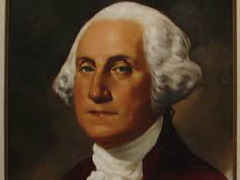
George Washington
This Patriot was Commander in Chief of Colonial Army. He led the American army to victory over British army using various innovative strategies like creating a secret spy network, creating a smallpox inoculation at Valley Forge, welcoming in Baron Von Steuben and making him a Major General that trained American forces after he had been exiled from the Prussian military for being gay, and utilizing Guerrilla Warfare tactics.
Thomas Jefferson
This Patriot was the main author of the Declaration of Independence and served as a delegate to the Second Continental Congress

Samuel Adams
This Patriot was a leader in the colonists' rebellion against the several taxation acts imposed by England and was believed to be the main orchestrator of the Boston Tea Party

Friedrich von Steuben
This brilliant ex-Prussian Military commander was ostracized because he was gay. He was made an Inspector General and a Major General of the Continental army by Washington. He brought discipline, hygiene, and a winning mentality to the American forces that helped them win the war. He also wrote a war drill manual that is still used today.

Joseph Brant
This leader of the Iroquois Nation fought with the British during the American Revolutionary War to try and stop colonists from expanding into his peoples' land.

Thomas Paine
This Patriot was also the author of Common Sense; a 50 page pamphlet which convinced many Americans that independence from Great Britain was worth the risk.

Charles Cornwallis
This British general's surrender to a combined American and French force at the Siege of Yorktown marked the end of the war and a victory for the American Rebels.

Marquis de Lafayette
This major-general in the Continental Army went to France to negotiate an increase in French support. On his return, he blocked British troops allowing the American and French armies to organize and win the battle that won the war for the Americans.

Casimir Pulaski
This Polish soldier, nobleman, and politician is known as "the father of American cavalry". He saved the life of George Washington and was a General in the Continental Army.

Crispus Attucks
This Patriot was an American slave, merchant seaman and dockworker of Wampanoag and African descent. He was the first person killed by British Red Coats during the Boston Massacre. He is known as the first martyr of the American Revolutionary War

Sybil Ludington
This 16-year-old made her ride on April 26, 1777 during a driving rainstorm, traveling forty miles, and unlike Paul Revere, avoiding capture. She learned that the British were planning to attack nearby Danbury, Connecticut the location of a stockpile of provisions for Continental Army. Her father, Henry, was a Colonel in the militia in command of 400 men. Not unlike Revere who two years earlier roused the communities outside of Boston to British troops being on the march to seize arms, this patriot spurred her horse, prodding him with a stick to raise the alarm in Putnam County, New York. Unlike Revere who had a patriotic poem written about him by a famous poet, Henry Wadsworth Longfellow, this patriot remained obscured in history until in 1961 the Daughters of the American Revolution commissioned noted sculptor Anna Hyatt Huntington to replicate her in bronze.
