L26- intro to endocrine disorders: diabetes type 1 and 2
 Call Kai
 Learn
 Practice Test
 Spaced Repetition
 Match
 Flashcards
 Knowt Play
1/22

There's no tags or description
Looks like no tags are added yet.
23 Terms
describe the role of the pancreases in the regulation of glucose in a healthy body after and before a meal + insulin and glucagon
after food
the pancreatic ilets cells ( alpha and beta ) are responsible for the regulation of glucose levles
when the glucose levels increase after food has been eaten the pancreatic beta cells sense it and cause the relsease of insulin
the insulin causes the uptake of glucose into the liver, muscle and adipose tissues ( anabolic effetcs )
this decreases glucose levels back to homeostatic 4-5.5. mmol
before food
the pancreatic alpha cells sense the low blood glucose and release glucogon as a response
glucogon ( catabolic )mobilises glucose by stimuation glycogenylysis which breaks down glycogen ( stored glucose )
it also stimulates gluconeogenesis ( prodcution of new glucose through alternative pathways )
this increases blood glucose
whats the difference between type 1 diabtes and type 2
type one is an autoimmune condition where the body produces antibodies which destroys the pancrease so insulin cant be secreted
type 2 the pancrease does function but tissues arent responding to insulin or the insulin being relseased isnt enough
what is diabetes mellitus
excess glucose in the blood- hyperglycaemia
fasting blood glucose above 2 mmol/l
three types type one, type 2 and gestational
what is type one diabetes + causes
autoimmune condition due to production of antibodies which destroy pancreases
causes production of no insulin so glucose remains in the blood and increases
usually appears in childhood and very rapid onset

what are the symptoms of type one diabetes

what are the risks and the benefits of islet cell transplantation

what is type 2 diabetes

what are the symptoms of type 2 diabetes

what are the risk factors for type 2 diabetes

describe how insulin usually causes the uptake of glucose and other functions
the tissues dont respond effectivel to the insulin produced
usually insulin will activate a receptor tyrosine kinase and this will activate a sequence of signalling molecules to bring about the effects of insulin

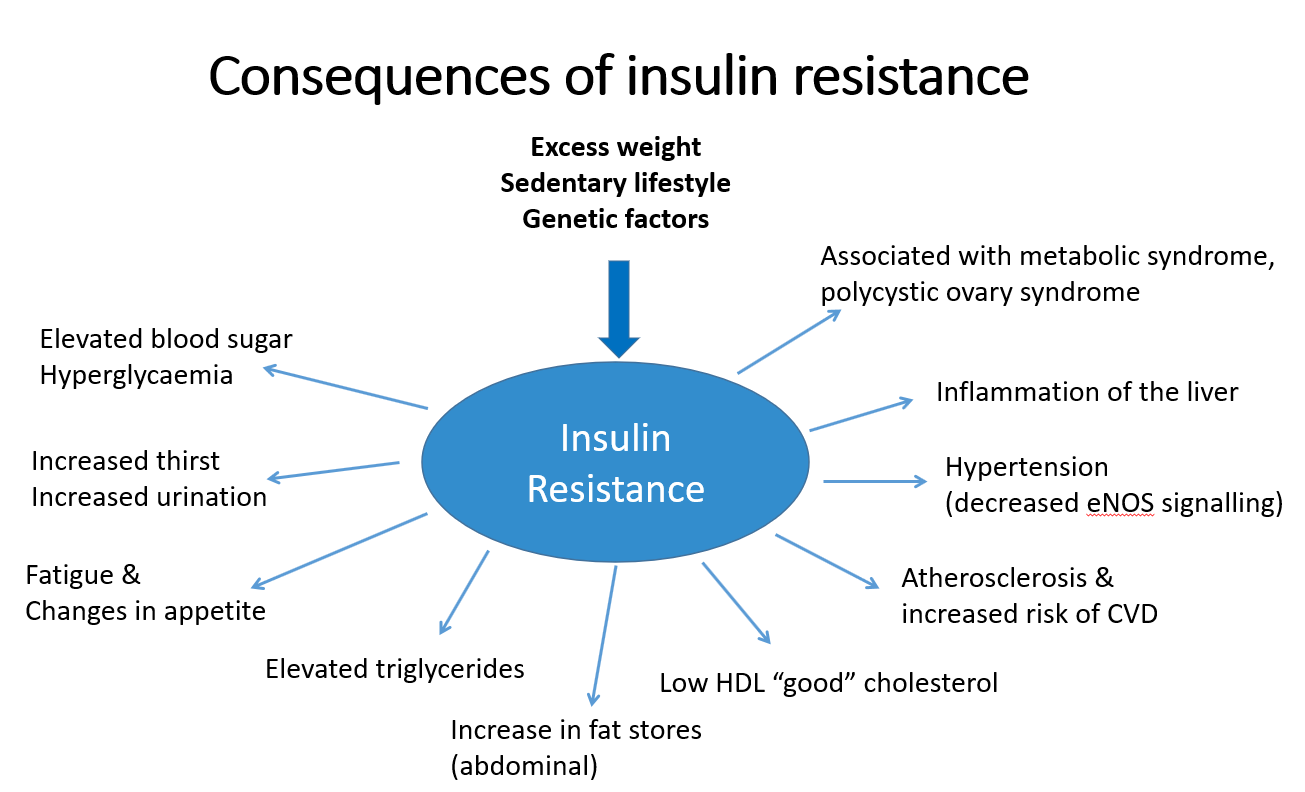
what are the consequences of insulin resistance
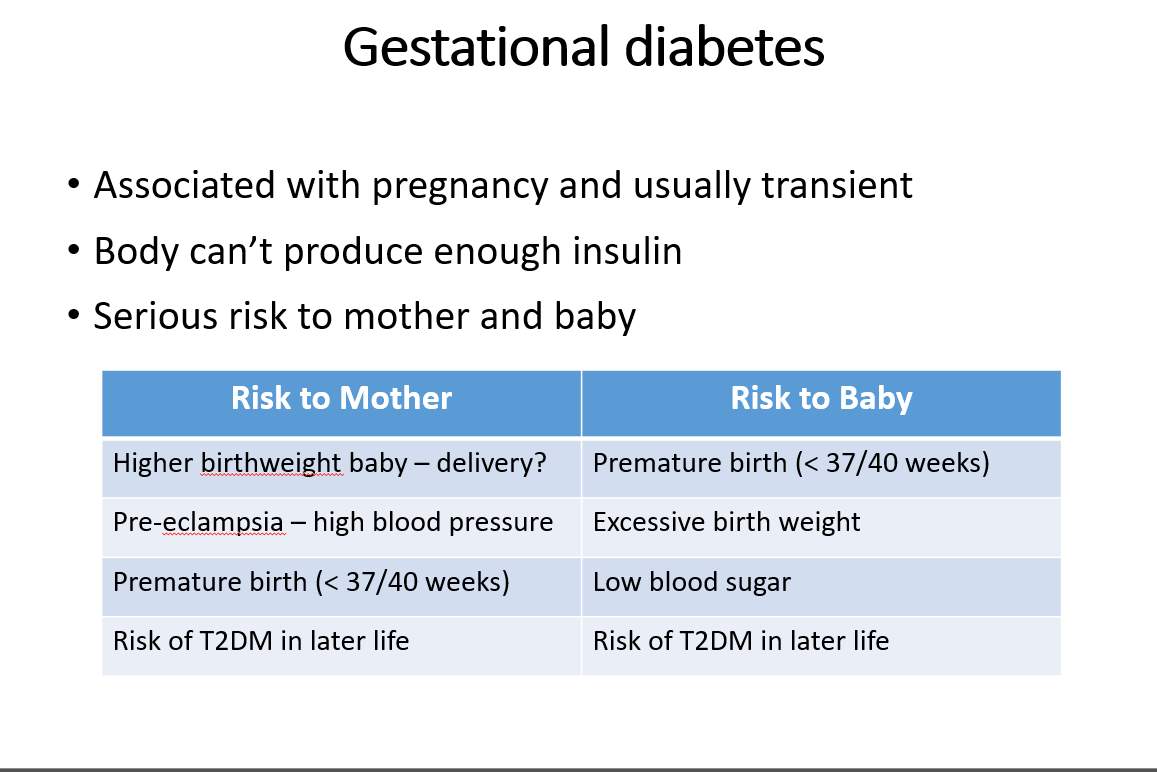
what is gestational diabetes
what is the testing for diabetes
glycosylated haemoglobin ( HbA1c )
fasting plasma glucose test
oral glucose tolerance test
urine analysis
describe HbA1c for testing for diabetes

describe the fasting glucose test and oral glucose intolerance test

describe urine analysis for testing for diabetes

what are the three catagories of complication diabetes can cause
metabolic
mircovascular
macrovascular
what are the metabolic complications of diabetes

describe the microvascular complications of diabetes

describe the macrovascular complications for diabetes

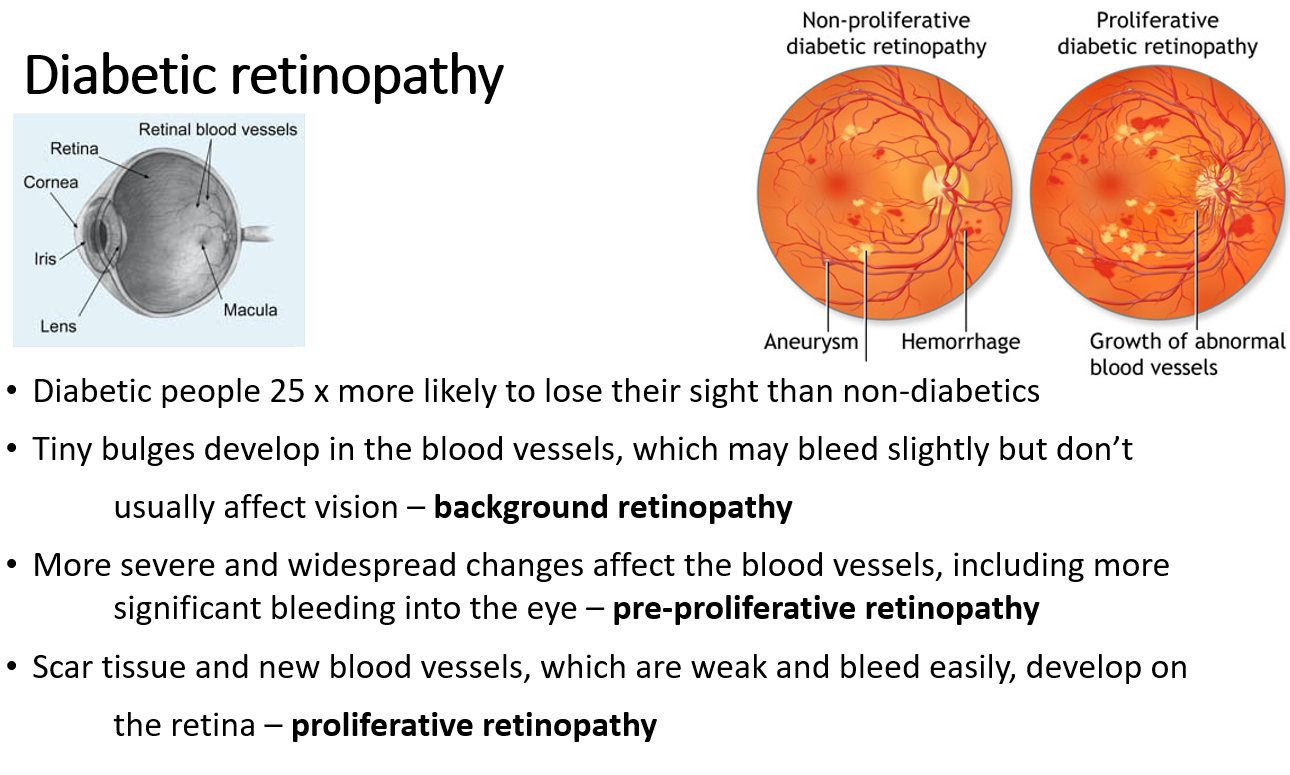
what is diabetic retinophathy
what is diabetic nephropathy

what is diabetic neuropathy
