bsc2011l final
 Call Kai
 Learn
 Practice Test
 Spaced Repetition
 Match
 Flashcards
 Knowt Play
1/52

There's no tags or description
Looks like no tags are added yet.
53 Terms
endemic species
any organism whose natural geographic range is confined exclusively to a single, specific location on earth and is found nowhere else
non-native species
any organism that lives in an area where it does not naturally occur, having been moved there by human activity
invasive species
any organism that is non-native to a specific ecosystem and whose introduction causes, or is likely to cause, harm to the environment, the economy, or human health
keystone species
an organism that has a disproportionately large effect on its ecosystem structure and biodiversity relative to its low abundance or total biomass
taxis
an innate, directional behavioral response where an entire mobile organism move either toward (positive taxis) or away from (negative taxis) an external stimulus
lophophore
a specialised ring or horseshoe-shaped feeding structure made of a crown of hollow, ciliated tentacles that surround the mouth of certain aquatic invertebrates used for filter feeding, capturing small particles or organisms from the surrounding water
blastopore
the opening that forms on the surface of an early animal embryo (the gastrula) during a developmental stage called gastrulation
difference of what the blastopore becomes in the deuterostome vs protostome
deuterostomes: becomes the anus, and the mouth forms later as a second opening
protostomes: becomes the mouth, and the anus forms later
what is unique about earthworm reproduction and capabilities
they are simultaneous hermaphrodites that can exchange sperm with a partner simultaneously, and some species can also regenerate lost body parts or breathe entirely through their skin via gas diffusion
function of the atria of the heart
two upper chambers of the heart that receive blood returning from the body and lungs and pump it into the lower chambers (ventricles)
lichen vs moss
moss: looks like a soft, fuzzy, or feathery green carpet
lichen: looks crusty, papery, or branch-like with varied colors like gray, yellow, orange, or pale green

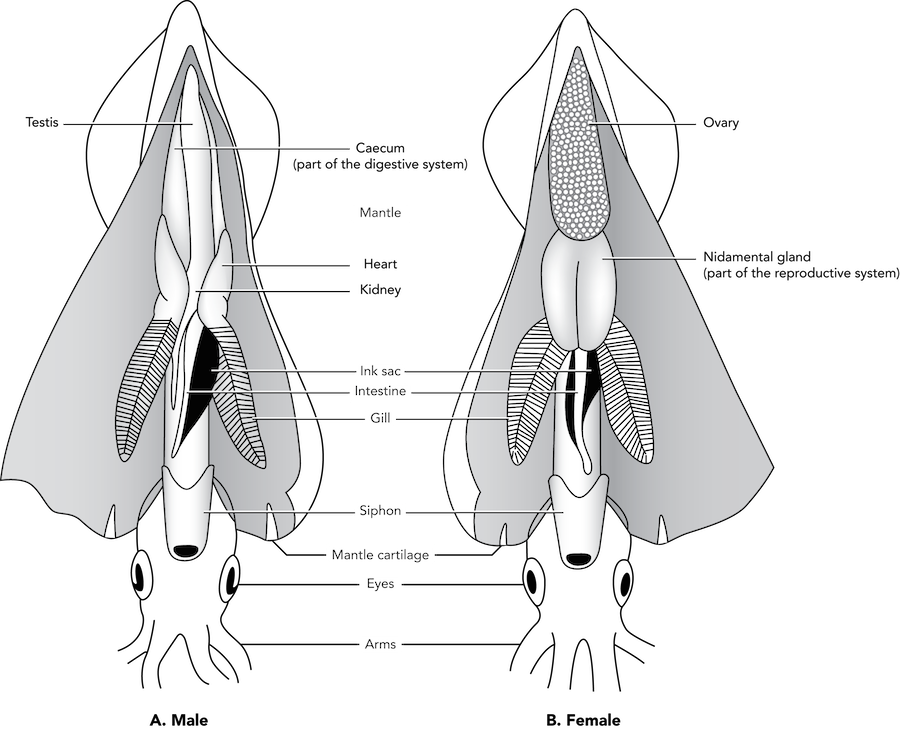
what are nidamental glands in squids
large, paired internal organs found in the mantle cavity of females that secrete a gelatinous substance to form protective egg cases and egg masses
what is unique or unusual about the structure of a squid - what do they have that isnt seen in other cephalopods
unique internal structure featuring a stiff, transparent chitinous pen (glades), ten total limbs (eight arms plus two specialised, retractable feeding tentacles), and a donut-shaped brain wrapped around their esophagus
tapeworm anatomy
scolex (head): anchors the worm to the wall of the host’s small intestine so it does not get swept away by digestion
neck: acts as the growth and regeneration zone of the parasite
strobila (segmented body): responsible for nutrient absorption and reproduction
tegument (outer surface layer): absorbs all necessary nutrients directly from the host’s digested food
clade bilateral characteristics
bilateral symmetry: the body can be divided into matching left and right halves along a central longitudinal axis
triploblastic development: embryos develop from three primary germ layers—the ectoderm, mesoderm, and endoderm
complete digestive tract: most possess a tube-like gut with a separate mouth at the front and an anus at the rear
cephalization: the concentration of nervous tissue and sensory organs at the front end, forming a distinct head and brain
how do sponges feed
as filter feeders by pumping water through their porous bodies to trap microscopic food particles
they do not have a mouth, stomach, or true digestive tract
what cells are involved in sponge feeding
choanocytes (collar cells)
the primary feeding and pumping cells that line the inner chambers of the cell
amoebocytes (archaeocytes)
mobile, amoeba-like cells located in the gelatinous matrix (mesohyl)
they receive food particles or nutrients from choanocytes (or digest them directly) and distribute those nutrients to other cells throughout the sponge body
pinacocytes
flat, skin-like cells that form the outer layer of the sponge
they can engulf larger particles at the sponge's surface through phagocytosis if the particles are too big to enter the standard ostia (pores)
can fungi perform photosynthesis
no
what is the name of the group around fungi with little projections that help feed it
hyphae
how do yeasts divide/reproduce
asexually through budding
mycorrhiza
a mutually beneficial symbiotic relationship between a fungus and the roots of a plant
difference between eumetazoa and parazoa
parazoa are multicellular animals that lack true, differentiated tissues and organs, while eumetazoa are “true” multicellular animals that possess organised true tissues, germ layers, and specialised organ systems
difference between opisthokonta and unikonta
opisthokonta is a clad of organisms in the supergroup unikonta
what are the 3 lichen shapes
crustose: lichens are flat and adhere tightly to the surface of rocks or tree bark
foliose: lichens are more leaf-like, and their edges generally curl away from the substrate; typically found growing on the trunks or branches of trees
fruticose: lichens have a more 3-dimensional, shrubby growth

what are the differences between the structures lophophore and trochophore in clade lophotrochozoa
feature | lophophore | trochophore |
|---|---|---|
type of structure | tentacular feeding apparatus | free-swimming larval stage |
life cycle stage | adult phase | juvenile/larval phase |
locomotion | stationary or sessile structures | actively swims via ciliary bands |
primary role | filter feeding and gas exchange | dispersal, swimming, and larval feeding |
what organisms exhibit torsions in their shells
those that belong exclusively to the class gastropoda (gastropod mollusks):
snails
slugs
limpets
abalones & whelks
purpose of the clitellum
slides off of the head of the worm into the worm and carries the new embryo/zygote
difference between a brachiopod and clam
feature | brachiopods | clams (bivalves) |
|---|---|---|
phylum | brachiopoda (lophophorates) | mollusca (mollusks) |
shell valves | dorsal + ventral (top & bottom, unequal size) | left + right (sides, mirror images) |
symmetry plane | cuts down the midline of each individual shell | cuts between the two separate shells |
feeding / breath | lophophore (coiled, tentacled arm) | gills (filter-feeding via mantle/siphons) |
anchoring | pedicle fleshy stalk (permanently sessile) | foot / siphons (burrow, swim, or stick) |
resting state | closed when muscles are relaxed | open when muscles are relaxed |
peak era | paleozoic (dominant fossil record) | modern (dominant post-Paleozoic to present) |
how does a squid camouflage itself
by combing dynamic pigment cells, light-reflecting plates, and clever lighting tricks to blend into the open ocean
earthworm external anatomy
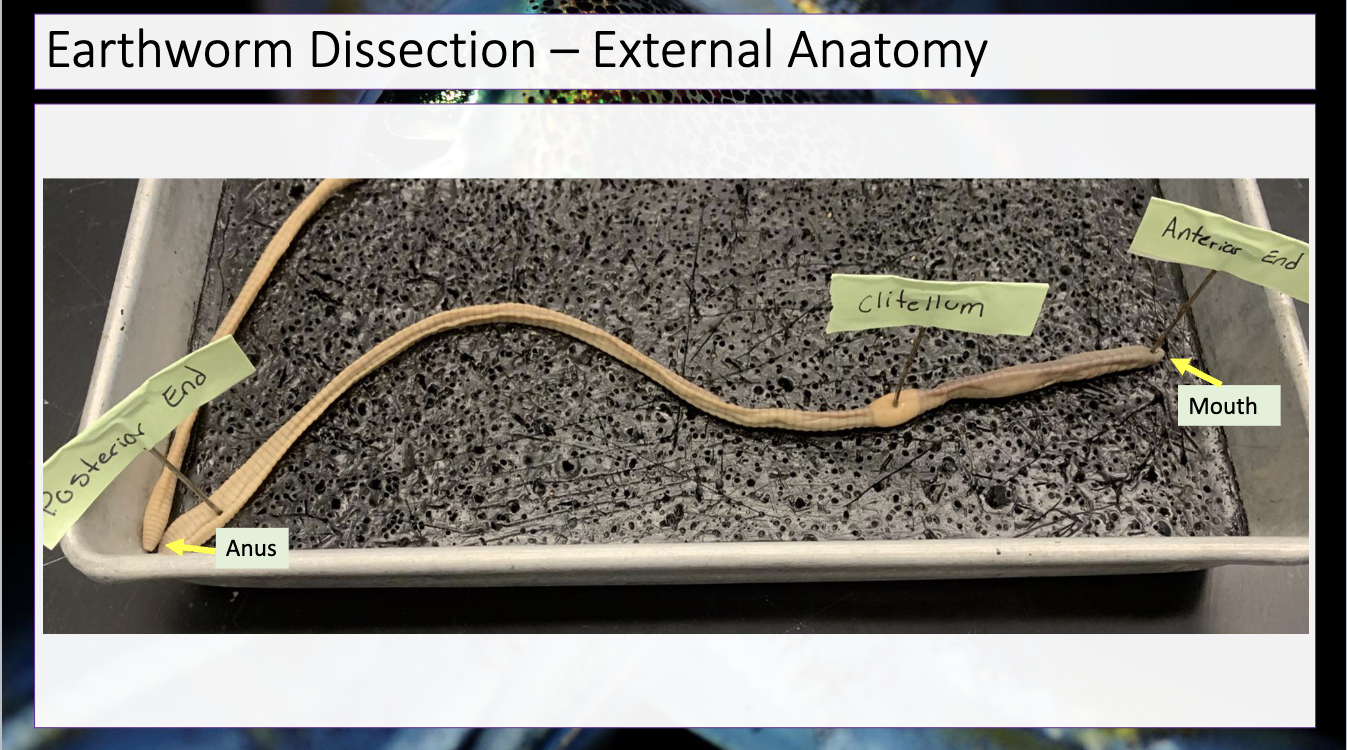
earthworm internal anatomy

functions of the siphon in squids
jet propulsion
directional steering
respiration
waste and gamete discharge
defense (ink release)
squid external anatomy

squid internal anatomy
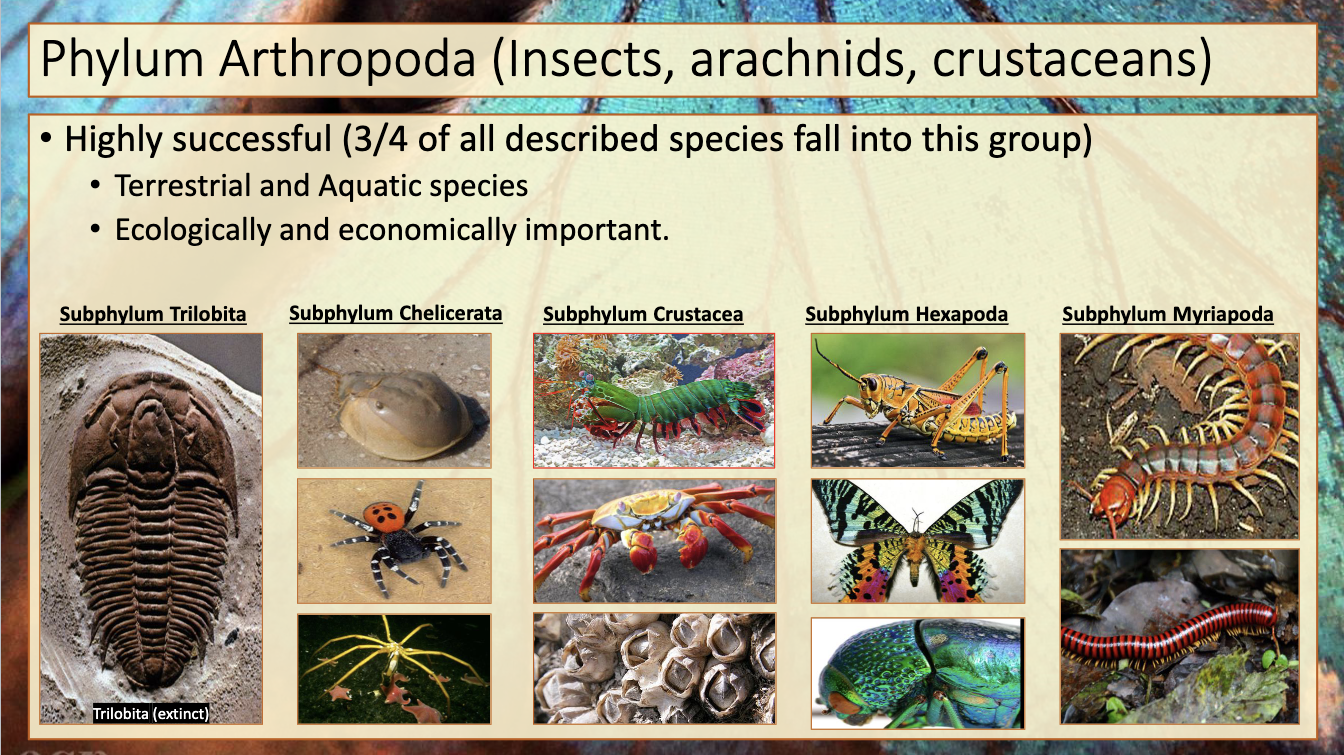
phylum arthropoda (insects, arachnids, crustaceans)
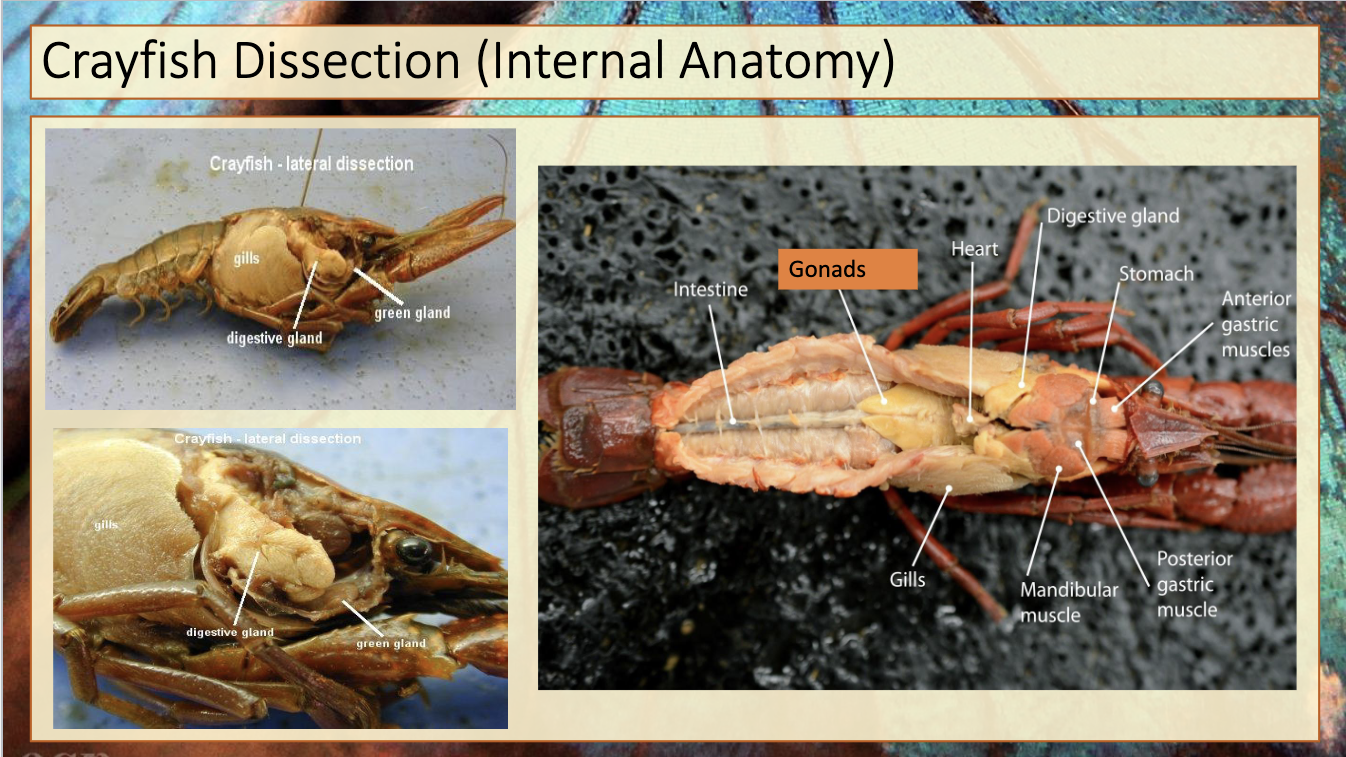
crayfish external anatomy

crayfish internal anatomy
phylum echinodermata
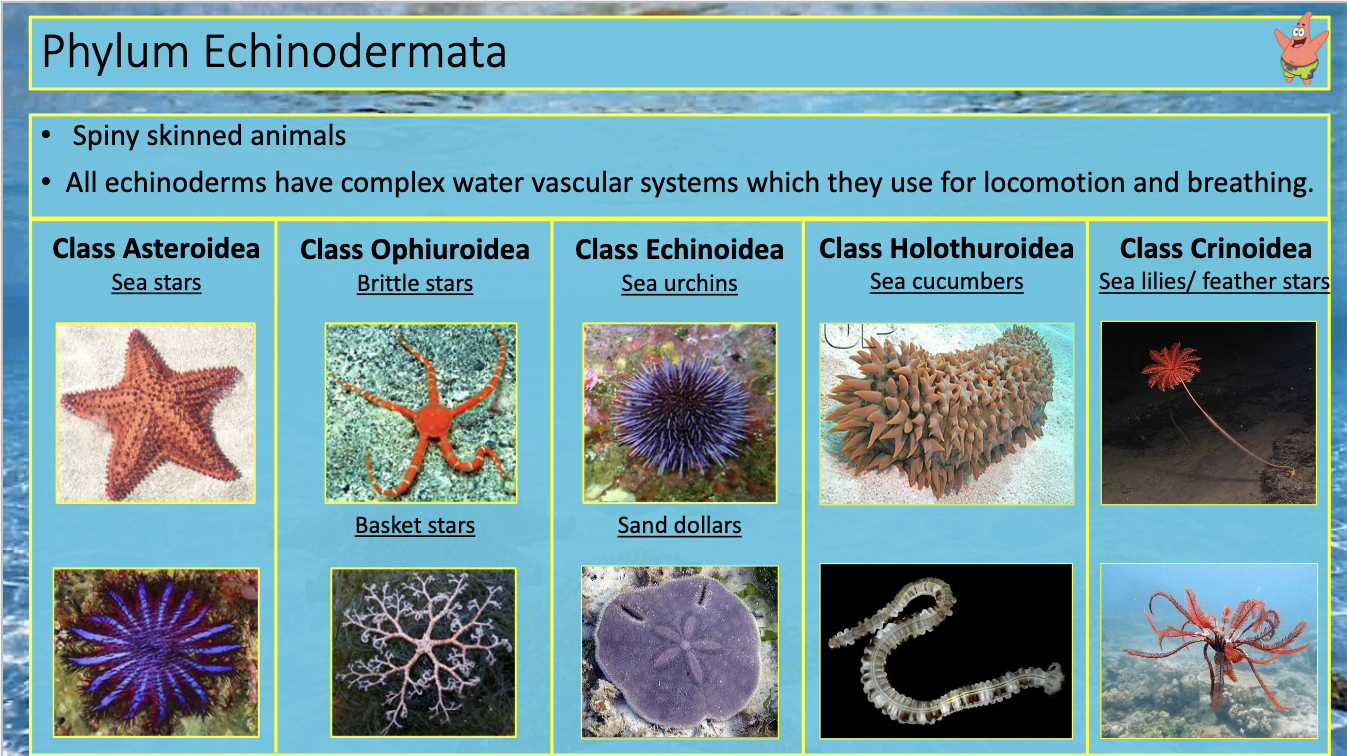
phylum molluska
insert chart
chytrid fungi
an early-diverging lineage of microscopic fungi of microscopic fungi that retain ancestral, animal-like features such as flagellated, motile reproductive cells (zoospores)
how to identify a trilobite
a calcified exoskeleton divided into 3 main body sections and 3 longitudinal lobes
how do sponges have distinct cell layers
by cellular division of labor and specialized surface proteins for cell recognition
pinacoderm (outer): protective "skin" made of flat pinacocytes and pore-forming porocytes
mesohyl (middle): jelly-like matrix containing amoebocytes (stem cells) and skeletal structures (spicules/spongin)
choanoderm (inner): flagellated choanocytes (collar cells) that generate water currents and trap food
3 main parts of clam
mantle
muscular foot
visceral mass

how many body segments do insects have
three
horseshoe crab anatomy

scyphozoa clade
class within the phylum Cnidaria that comprises the “true jellyfish”
named for their cup-shaped or bell-shaped swimming bodies
~200-400 recognised extant species
what do rotifers have that is unique
the corona (wheel organ)
the mastax (jawed pharynx)
all-female asexuality
horizontal gene transfer during rehydration
anhydrobiosis (extreme desiccation survival)

what type of eye do insects usually have and what is special about it
compound eyes (large on the sides of their head) and ocelli (simple eyes on top of the head)
super fast motion detecion
massive field of view (up to 300-360)
ultraviolet and polarised light vision
no moving or focusing lens
know different types of jellyfish. which have stingers, which dont
singers
box jellyfish / sea wasp
portuguese man o’ war
lion’s mane jellyfish
sea nettle
compass jellyfish
moon jellyfish
cannonball jellyfish
barrel jellyfish
non-stingers
comb jellies
upside-down jellyfish
mushroom jellyfish
what structure is found under fungus
mycelium (vast network of hyphae)
what are the different structures in mushroom

arthrospores
a primitive type of asexual fungal spore formed when a fungus breaks apart into individual rectangular or barrel-shaped cells
peziza
a large, widespread genus of saprophytic cup fungi belonging to the phylum ascomycota