Cancer therapies 3 - radiotherapy
 Call Kai
 Learn
 Practice Test
 Spaced Repetition
 Match
 Flashcards
 Knowt Play
1/39

There's no tags or description
Looks like no tags are added yet.
40 Terms
What are the different forms of radiotherapy?
Brachytherapy —> direct application
Pleisiotherapy (e.g. strontium 90 wand)
Implantation —> iridium wires
Systemic admin
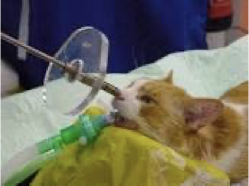
Teletherapy (most common) —> external beam
Orthovoltage source
Linear accelerator (most common)
Cobalt 60
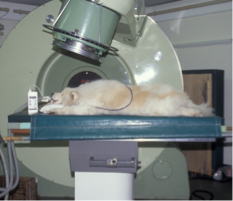
How is teletherapy used therapeutically?
Radiation prod by linear accelerators or by natural radioactive decay
Electromagnetic radiation
X rays
Gamma rays
Electrons
Particle beam therapy —> heavy particles (not commonly used)
How does high energy electromagnetic radiation work?
Low linear energy transfer —> x-ray, gamma rays
Lose energy slowly as they pass through tissues
Deep penetration (but consider effect on deep structures)
Indirectly ionising
Absoprtion by Compton effect
Interaction of photon with water molecules importnat
What is the Compton effect?
The maximum dose is not absorbed at the surface —> build up below surface, attenuated deeper
bigger field = bigger dose because more scatter
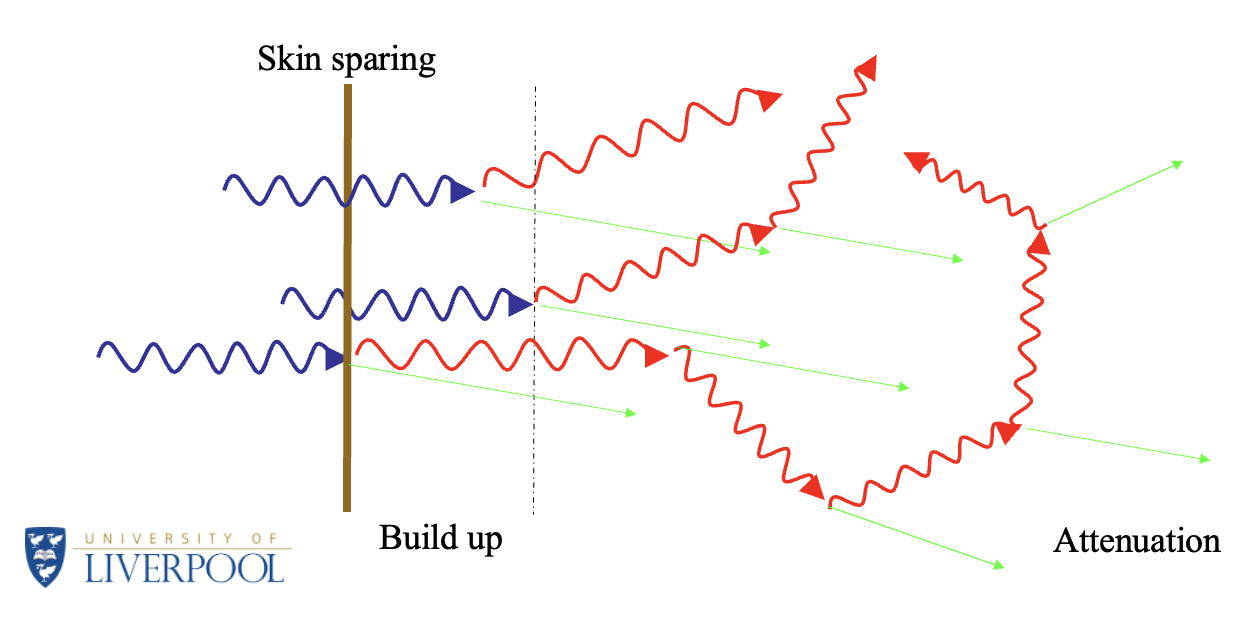
What should you do if you want to treat something superficial with radiotherapy?
Counteract the Compton effect —> bolus = tissue-like material allows build up dose to occur @ surface of skin rather than deeper
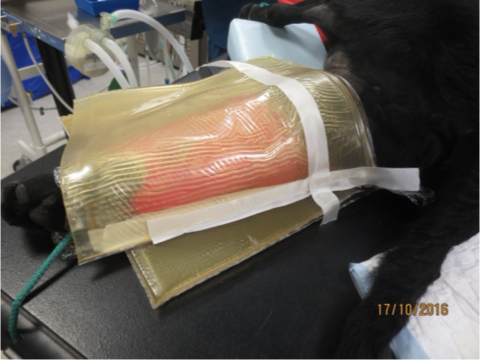
What is the critical target for therapeutic radiation? How is this target damaged?
DNA —> damage caused by ionisation of water molecules
Free radicals generated
DNA damaged by these free radicals
What makes damage by radiotherapy permanent?
Oxygen (damage rapidly reversible unless fixed by this) —> in hypoxic cells DNA is rapidly repaired
Requires 2.5-3x as much radiation to kill hypoxic cell cf to euoxic cell
How does oxygen inhibit the repair of free radical induced damage?
Forms irreversible peroxides w/ the injured biomolecules
Makes radiation damage permanent
What does cell death by radiation occur due to?
Induction of apoptosis
Permanent cell cycle arrest
Mitotic catastrophe
Damage often not expressed until cell tries to divide
What is this?
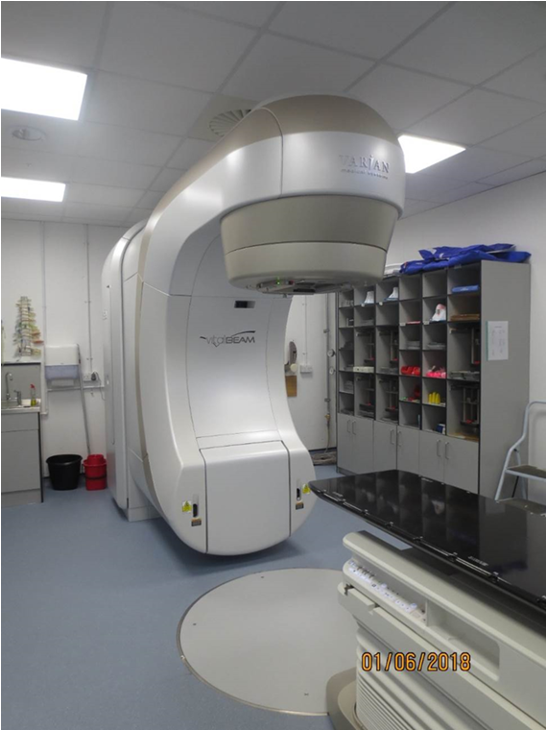
Linac machine
Isocentric mounting —> couch, collimator and gantry rotate around a fixed point
minimises damage to surrounding healthy tissue
Label this Linac machine
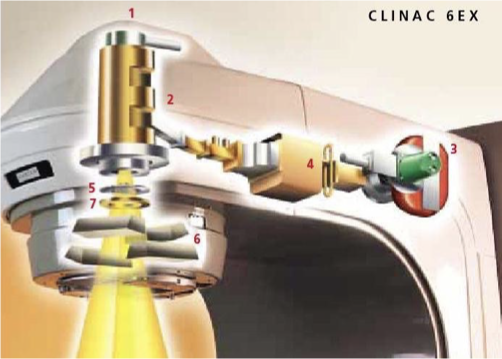
Electron gun
Accelerating wave-guide (travelling / standing wave)
Magnetron
RF wave-guide
Photon target
Photon jaws
Flattening filter
How do you shape the beam of a radiotherapy machine?
With the jaws
Like an xray —> rectangular field
Shaping to the tumour using a multileaf collimator & margins

What can we do to incr tumour dose while sparing surrounding tissue?
Use multiple beams (fields)
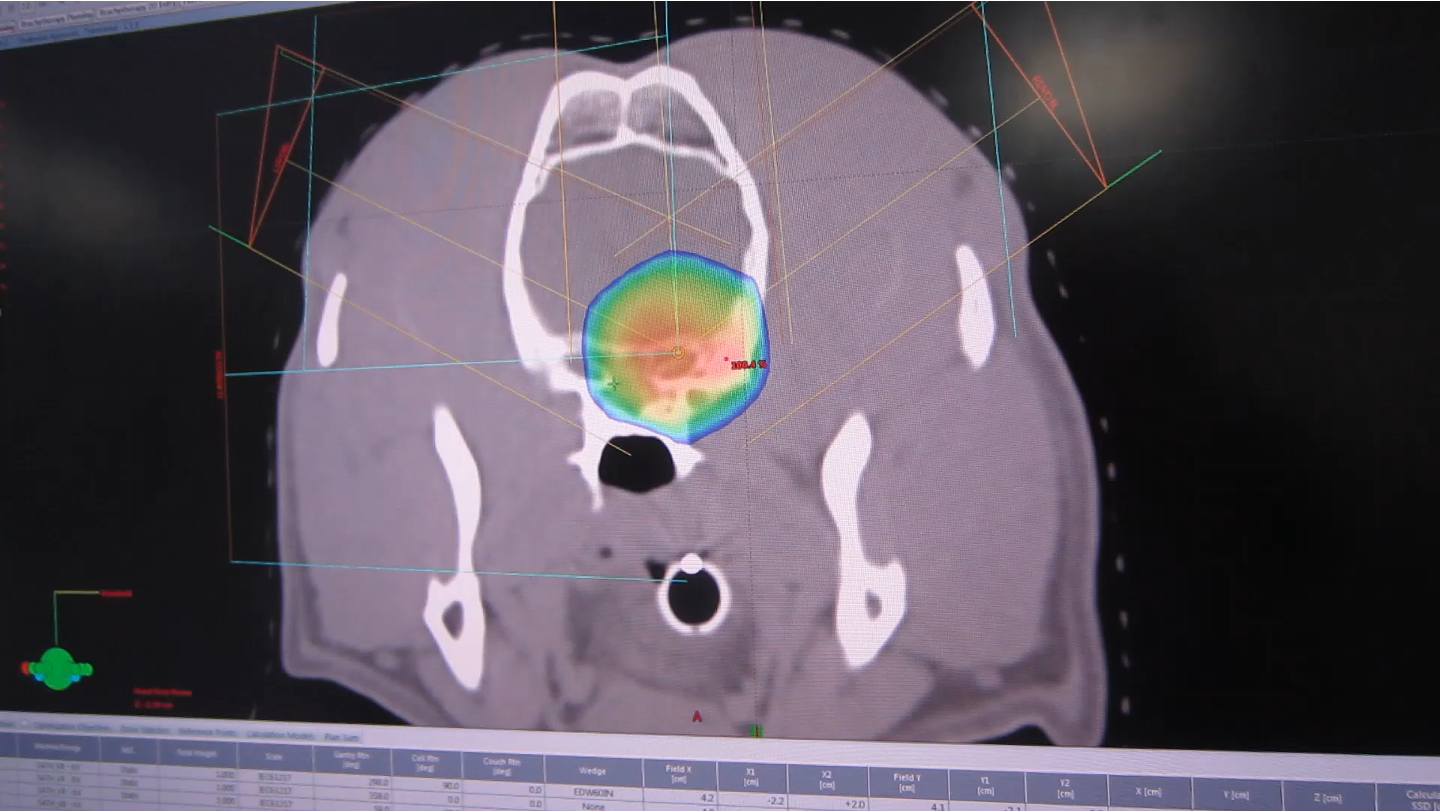
maximise dose tumour gets but minimise dose surrounding tissue gets

What are electrons useful for?
Directly ionising & high linear energy transfer
Very light cf to the nuclei of target tissue—> lose a lot of their energy in a single interaction.
Can treat superficial tumours
What are the 4 Rs of response to radiotherapy?
Repair
Repopulation
Redistribution/ reassortment
Reoxygenation
What happens during repair after radiotherapy?
Repair of sublethal or potentially lethal damage to cells after exposure —> occurs rapidly
What is fractionation?
Fractionation is the practice of giving multiple small frequent doses instead of one big one over set period of days / wks
Between txs —> cells can REPAIR sublethal damage esp in healthy tissue
Normal tissue & tumour tissue can REPOPULATE from cells that are in resting phases/cycle arrest
How does repopulation occur as a response to radiotherapy?
Seen in rapidly dividing tissues
Cells are recruited from G0
Protects rapidly dividing normal tissues
Rapidly dividing tumours also repopulate effectively
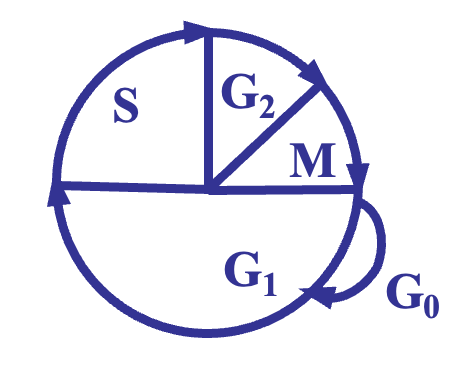
How does redistribution / reassortment occur as a response to radiotherapy?
Cells are more sensitive to radiation in some phases of the cell cycle than others (late G2 & M)
Cells may become synchronised in the post tx period
Synchrony is soon lost
Timescale over which redistribution occurs is variable & poorly defined
Slowly dividing tissues may be more radioresistant as fewer cells in sensitive phases

How does reoxygenation occur as a response to radiotherapy?
Important factor
Many solid tumours have poor blood supply
Sinusoidal vessels, poorly formed microvasculature
Areas of hypoxia/necrosis
Reoxygenation may occur after therapy
Euoxic cell death
Changes in tumour vascularity
What is the aim of fractionation
Achieve better tumour cell kill for any given level of normal tissue toxicity
reduce normal tissue toxicity
REPAIR
REPOPULATION
achieve better tumour cell kill
REOXYGENATION
REDISTRIBUTION
What are the different ways you can you use fractionation?
Larger fraction sizes
Greater normal tissue damage
Especially late responding tissues
Smaller fraction sizes
Ideal for most tumours
More txs required for the same anti-tumour effect
What are the limiations of fractionation for animals?
Requirement for general anaesthesia
Cost
Owner reluctance
Inconvenience
Frequent visits
Long hospitalisation
What is response to radiotherapy affected by?
Tumour growth characteristics
Tumour size
Inherent sensitivity
Tumour type
Tumour site
Patient species
How does volume impact the sensitivity of a tumour to radiation?
Smaller tumours are more sensitive to radiation
More rapidly dividing, higher growth fraction, more cells in sensitive phases
Less likely to contain large numbers of hypoxic cells
Easy to dose accurately & evenly
What is radiotherpy sensitivity dependent on?
Tumour type & site, patient spp.
What tumour type is more sensitive
Carcinomas or sarcomas?
Carcinomas more sensitive than sarcomas
List the highly radiosensitive tumours?
Lymphoma
Transmissible venereal tumour
Gingival basal cell carcinoma (acanthomatous ameloblastoma)
List the moderately radiosensitive tumours?
Oral SCC (dogs)
Oral malignant melanoma (dogs)
Nasal tumours
Perianal adenocarcinoma
MCTs
Rhinarial SCC (cats)
Thyroid carcinomas
Brain tumours
List some tumours that are poorly radiosensitive
Fibrosarcomas
Haemangiopericytomas
Oral SCC (cats)
Osteosarcomas
Rhinarial SCC
in dogs
Why do we get side effects as a result of radiation therapy?
Due to undesirable effects on normal tissues
Only tissues in the irradiated area (field) will be affected
remember exit beam location too
Radiation damage is not usually apparent until cells try to divide
Can be acute or late
Rapidly dividing cells express response in days to weeks
Slowly dividing tissues may not show effects of radiation for months or years
Can be carcinogenic due to DNA damage & mutagenesis
In what tissues do we see acute side effects of radiation therapy?
How long do they last?
Affect rapidly dividing tissues:
Skin
Mucous membranes
Erythema/desquamation
Develop during or soon after tx
Resolve within a few weeks of cessation of therapy
Worse if tx course is compressed
In what tissues do we see late side effects of radiation therapy?
When do they start?
What can occur?
Affect slowly dividing tissues (e.g. cartilage / bone / brain)
Develop many weeks, months or even years after treatment
Damage to tissues & their microvasculature
Potentially very serious —> ischaemic necrosis of brain or bone tissue
Many inconsequential / less serious late effects —> alopecia, skin fibrosis etc.
Reduced healing capacity
Radiation is carcinogenic (due to DNA damage) however it tends to be years before malignancy develops in dogs.
How can we avoid this?
Avoid irradiating young patients
Avoid irradiation caused by inadequate surgery or poor surgical planning
What needs to be considered when selecting whether radiotherapy is the best choice of tx?
Is tx given w/ palliative / curative intent
Would combined therapy be better than radiation alone?
What will be effect on adjacent structures? (consider margins)
Consider tumour of head, neck, extremities
Concurrent dx
Costs
Which protocol?
daily or M-W-F
weekly
When is radiotherapy indicated for the majority of solid tumours?
For most solid tumours complete excision = tx of choice
Radiotherapy may be appropriate where complete excision cannot be achieved
How can radiotherapy be used as an adjunct to surgery?
Post-op:
after radical surgical debulking (gross to microscopic dx)
remaining tumour has high growth fraction and should be well oxygenated
Intra-op:
possible —> single large dose of radiotherapy to unresectable, otherwise inaccessible tumours at the time of surgery
rarely done
Pre-op (neoadjunctive):
reduces tumour burden
eliminates small numbers of tumour cells at the periphery of the lesion
? reduced risk of tumour cell dissemination at surgery
Can have a negative impact on wound healing
Used occasionally for OSA and ST sarcoma
What are the outcomes of radiotherapy?
The effects of radiation on tumour growth are not instantaneous
Residual mass may be left esp mesenchymal tumours
Analgesia may be achieved within hrs
V. valuable
Powerful for majority of patients
What are the key indications for radiotherapy?
Brain & nasal tumours
Before commencing radiotherapy, what is it important to do?
Ensure you know exactly where the tumour was:
Take or draw a picture
Take measurements
Consider referral ideally prior to any (surgical) tx