Chapter 9.1: Atomic Properties and Chemical Bonds
 Call Kai
 Learn
 Practice Test
 Spaced Repetition
 Match
 Flashcards
 Knowt Play
1/5

6 Terms
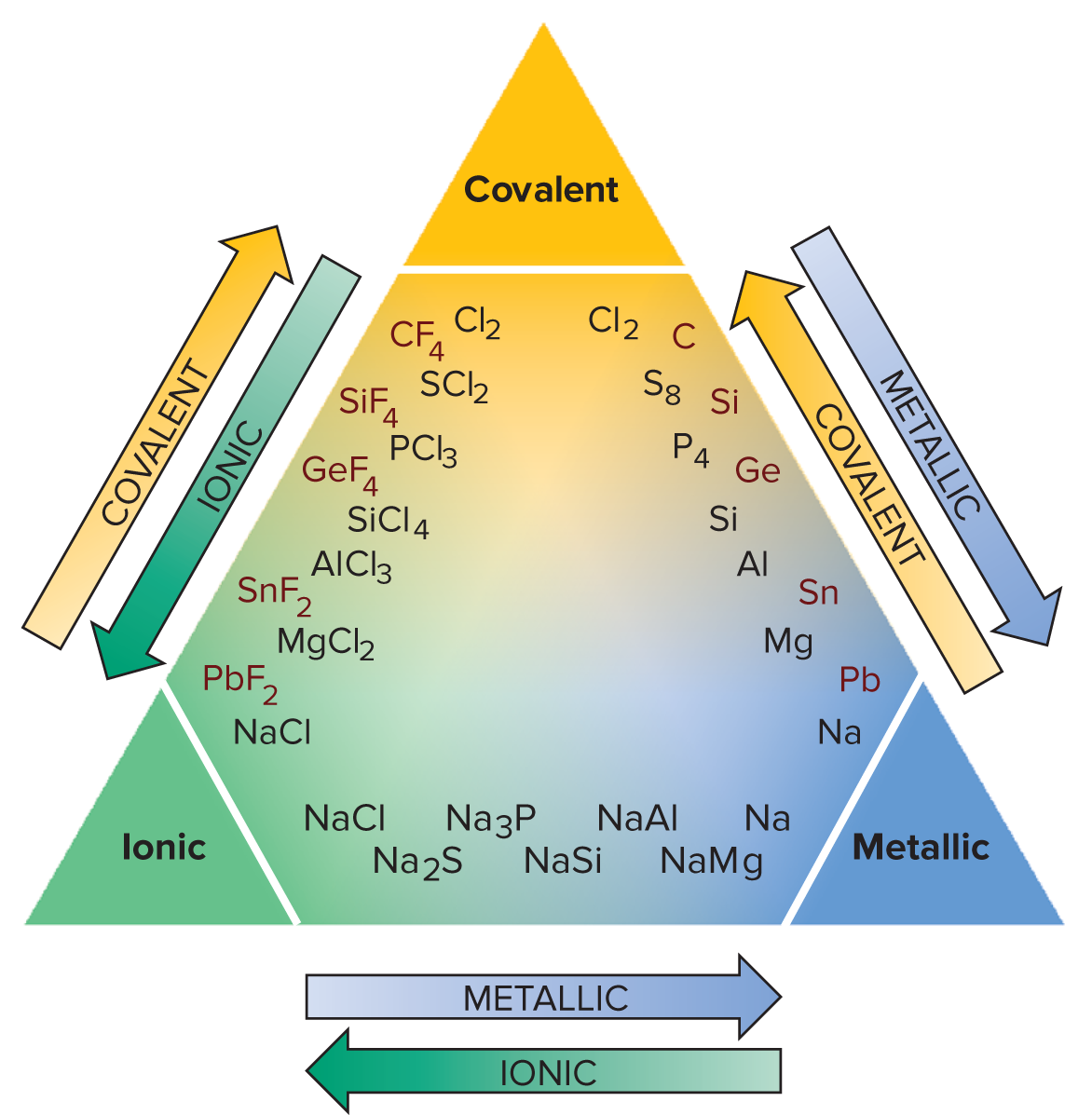
Bonding
This lowers the potential energy between positive and negative particles
Can be imperfectly modeled with classifications

Ionic bonding
This occurs between atoms with large differences in their tendencies to lose or gain electrons
Often occurs between reactive metals and nonmetals to form a noble gas configuration for a solid

Covalent bonding
This occurs between atoms with small differences in their tendencies to lose or gain electrons
Often occurs with electron-sharing nonmetals as separate molecules form

Metallic bonding
This occurs between metals when electrons are shared, with electrons being “pooled” (delocalized) due to low electron affinity that creates attractions between the positive nuclei
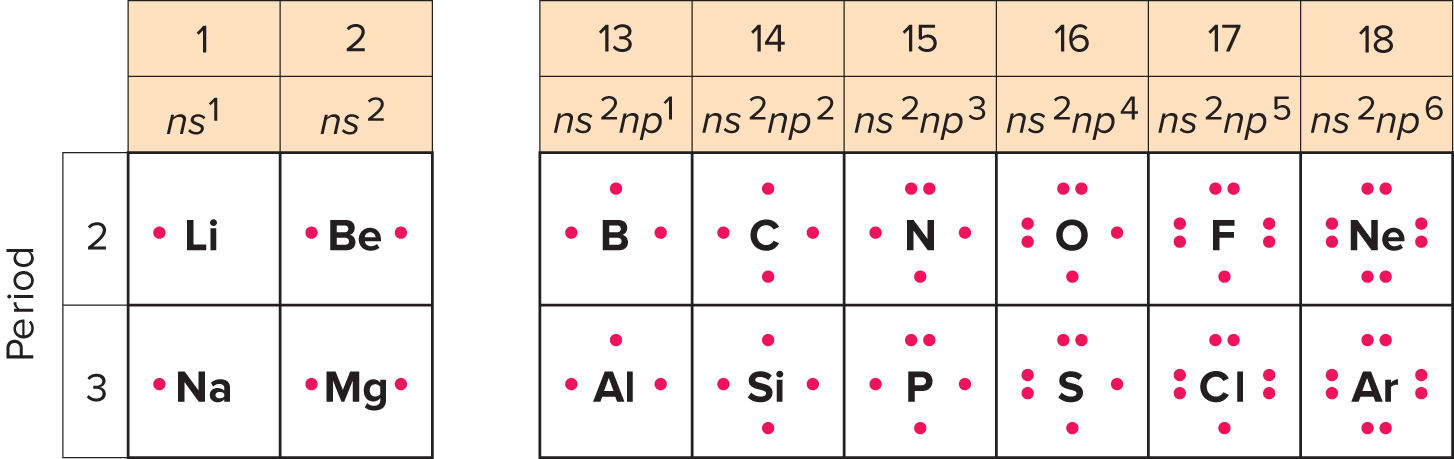
Lewis electron-dot symbol
A way of representing an atom through drawing a symbol that represents the nucleus and core electrons with dots representing the reactive valence electrons
Dots are drawn one at a time on each side until all valence electrons are represented, demonstrating a target towards the octet rule
Octet rule
A generalization of atomic bonding that states that atoms lose, gain, or share electrons to attain a filled outer level of eight electrons