Bio exam 3
 Call Kai
 Learn
 Practice Test
 Spaced Repetition
 Match
 Flashcards
 Knowt Play
1/254

There's no tags or description
Looks like no tags are added yet.
255 Terms
Central Dogma
Proposed by Crick as well

G1?
Cell Growth
S phase?
Genome Duplication
G2 phase
DNA Repair and Completion
M phase
Mitosis
Interphase in Cell Cycle
Everything but mitosis and cytokinesis

What do cyclins do?
Cyclins specify targets for cyclin-dependent kinases (CDKs)

What do CDKs do?
Group of enzymes that regulate the cell cycle, transcription, and cell division by adding phosphate groups to target proteins

What residues are likely phosphorylated in substrate proteins?
Serine, Threonine, Tyrosine (any AA with hydroxyl R-group)
When CDKs associate with specific cyclins, what happens?
Different events in the cell cycle trigger
What is the cyclin and CDK partner(s) for G1-CDK? What is the function of the Cyclin-CDK Complex?
Cyclin D and CDK4/CDK6. Cell growth
What is the cyclin and CDK partner(s) for G1/S-CDK? What is the function of the Cyclin-CDK Complex?
Cyclin E and CDK2. DNA Replication
What is the cyclin and CDK partner(s) for S-CDK? What is the function of the Cyclin-CDK Complex?
Cyclin A and CDK2. DNA Replication
What is the cyclin and CDK partner(s) for M-CDK? What is the function of the Cyclin-CDK Complex?
Cyclin B and CDK1. Mitotic factors
What are ways that cyclin/cdk complexes are turned off
Protein degradation: cyclins
Inhibitory phosphorylation: CDKs
Blocked by inhibitory (pocket) proteins: cyclins and CDKs
Protein degradation of cyclins and how it works
Ubiquitin chain signal is added to cyclin of active cyclin-cdk complex (ubiquitylation) by APC, leads to destruction of cyclin via proteasome (inactive CDK)

Inhibitory phosphorylation: CDKs
Inhibitory Kinase phosphorylates CDK and inhibits CDK-cyclin complex.
Activating phosphatase removes inhibitory phosphates and leads to the activation of the CDK complex.

Blocked by inhibitory proteins: cyclins and CDKs
Inhibitory (pocket) proteins inactivate active cyclin-cdk complexes through binding to complex (p27)

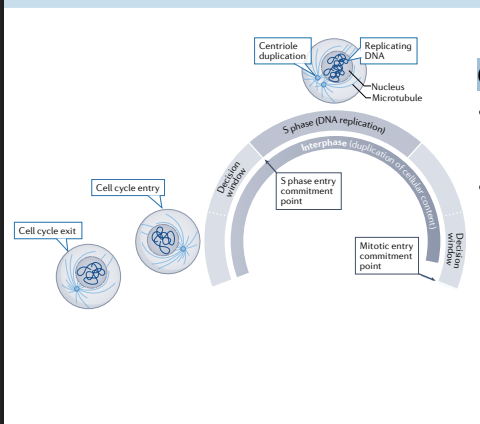
G0/quiescence
a reversible resting state where a cell exits the active cell cycle and stops dividing while remaining metabolically active

G1 phase
Enter or exit cell cycle.
Depends on intrinsic (cell size) and extrinsic (nutrients/mitogens) signals.

S Phase
Genome duplication: Once and only once per cell cycle and All or nothing
Requires S-CDK activity (CycE/CycA-CDK2)
Centrioles are duplicated (centrosomes)

G2 phase:
Ensure that DNA replication is complete
Repair/resolve any DNA damage prior to mitosis
M Phase
Chromosome Segregation
Requires M-CDK - CycB/CDK1
Occurs in 5 discrete stages

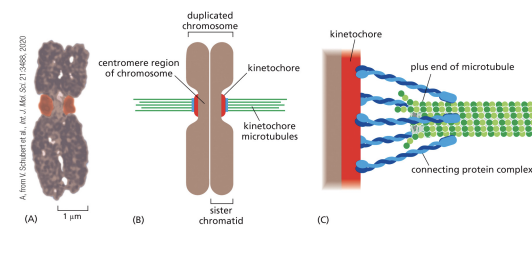
What provides pulling force for mitosis
Kinetochore MTs

What is the mechanism for the separation of chromosomes
Plus end of MT binds to protein complex that connects kinetochore to MT
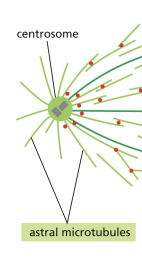
Astral MTs and their function
MTs that do not have kinetochore association proteins and function to maintain spindle position from centrosome.
Non-kinetochore MTs
MTs with kinetochore associating proteins that have not yet binded to the kinetochore.

Kinetochore MTs
MTs with kinetochore associating proteins that are binded to the kinetochore at the plus end.

Mitosis Phases in Order
Prophase
Prometaphase
Metaphase
Anaphase
Telophase → Cytokinesis (final stage of cell cycle)
Prophase
• Duplicated chromosomes condense
• Mitotic spindle assembles
• Centrosomes move apart

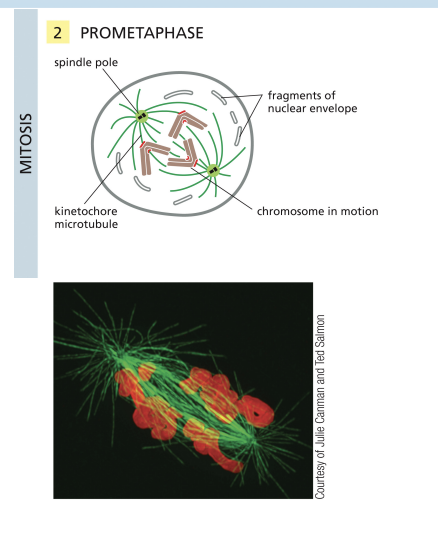
Prometaphase
• Breakdown of the nuclear envelope
• Chromosomes attach to the mitotic spindle through the kinetochore
• Active movement of chromosomes
Metaphase
• Chromosomes align a the equator of the spindle
• Each sister chromatid is attached to opposite poles of the spindle

Anaphase
• Sister chromatids are pulled toward opposite spindle poles
• Kinetochore microtubules get shorter
• Spindles move outward

Telophase
• Chromosomes arrive at the spindle poles
• New nuclear envelope reassembles around each set of chromosomes
• Chromosomes beging to decondense

Cytokinesis
• Cytoplasm is divided in two by a contractile ring (dynamic actin)
• Two daughter cells are formed, each with one nucleus

What do you think happens if Cyclin or CDK activity is not properly regulated?
Mutations → tumors/cancer
What are some of the most frequent mutations that drive cancer?
Mutations in cell cycle regulators, such as a RB1 gene mutation (tumor supressor) that results in a non-functional regulatory protein (RB).
RB regulates S phase transcription factors,
Leads to unregulated entry into S phase and tumor formation
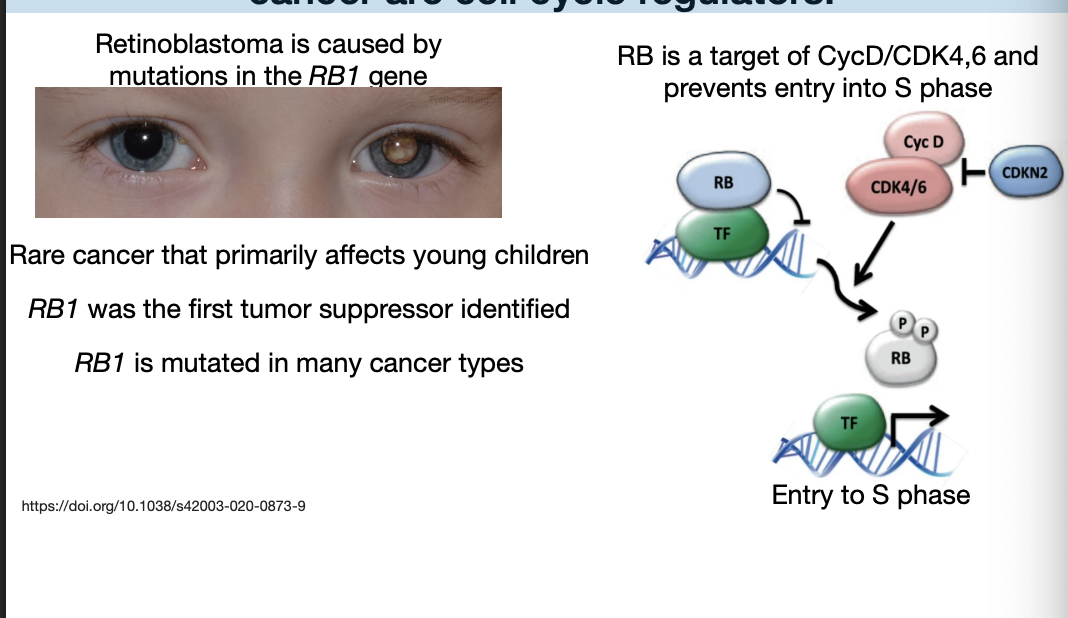
Retinoblastoma
Rare cancer in mostly young children that mutates the RB1 gene
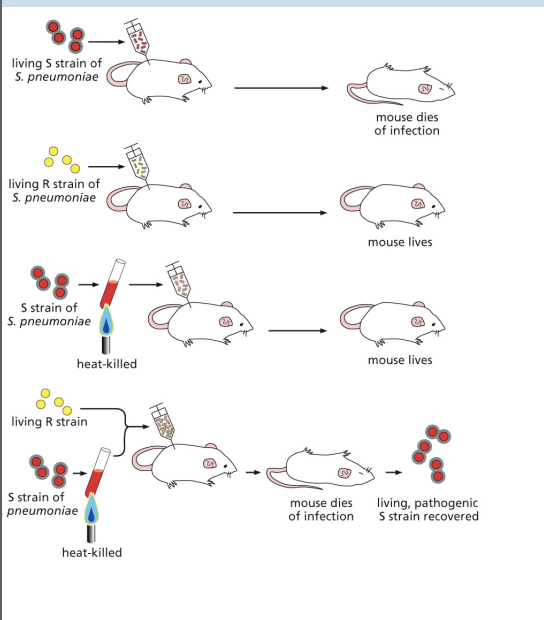
What did Fred Griffith demonstrate in 1928?
A heat killed lethal strain of S. pneumoniae could permanently change (transform) a non-lethal strain of S. pneumoniae into a lethal strain
Avery, MacLeod, and McCarty demonstrated what in 1944
DNA is the genetic material
Purified RNA, protein, DNA, lipid and carbohydrate from the lethal strain. Then, incubated those molecules with the R strain in a test tube.
Only the DNA fraction could ‘transform’ the lethal strain into the nonlethal strain!

What is a bacteriophage/phage
• A virus that infects a bacterium
• Phage can infect bacteria and direct
the synthesis of new phage particles
• Phage contain only protein and DNA

How did Hershey and Chase show definitively that genes are made of DNA
Centrifuged labeled bacteriophages (Sulfur = protein, Phosphorous = DNA)
In pellet, DNA was found and Protein in Supernatant

Who solved structure of DNA and how?
Watson Crick, using X-ray data from Franklin and Wilkins
How are nucleotides structured?
Consist of three different parts: a sugar (ribose in RNA, deoxyribose in DNA), a phosphate, and a purine/pyrimidine base
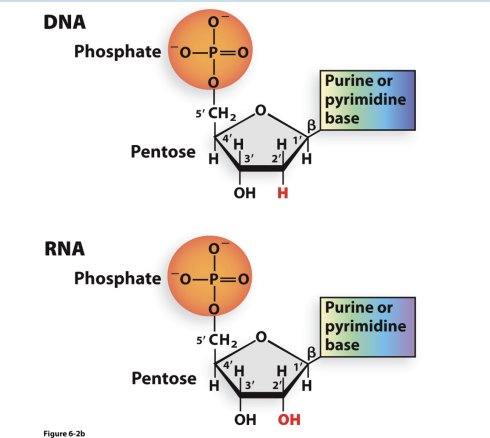
Where is the base and the phosphate group linked on a nucleotide?
Bases are linked to carbon 1 (1’) of the sugar and phosphate is linked to carbon 5 (5’) of the sugar.

How do RNA and DNA nucleotides differ in structure?
RNA has a hydroxyl group at Carbon 2 (2’) on pentose sugar, DNA has a single hydrogen at Carbon 2/2’ (deoxy)

What nucleotide bases are purines?
Adenine and Guanine
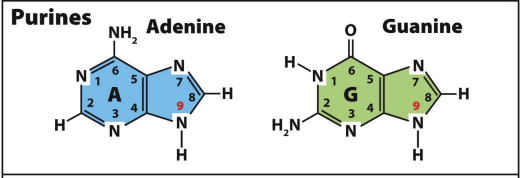
What nucleotide bases are pyrimidines?
Cytosine, Thymine, and Uracil (RNA)

Where are Purines linked to the pentose sugar
At the N9 position

Where are Pyrimidines linked to the pentose sugar
At the N1 position

What is the difference between nucleosides and nucleotides?
Nucleosides = base and sugar, nucleotides = base, sugar, and PHSOPHATE

Nomenclature for nucleotides?
ex. Adenine
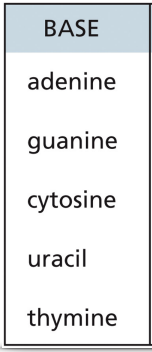
Nomenclature for nucleosides?
ex. Adenosine


Adenine

Guanine

Cytosine

Thymine (DNA)

Uracil (RNA)

Structure of ATP
How are nucleotides linked?
Phosphodiester Bonds
Do DNA strands have end polarity?
Strands of nucleic acid have a 5’ end and a 3’ end thus establishing polarity.
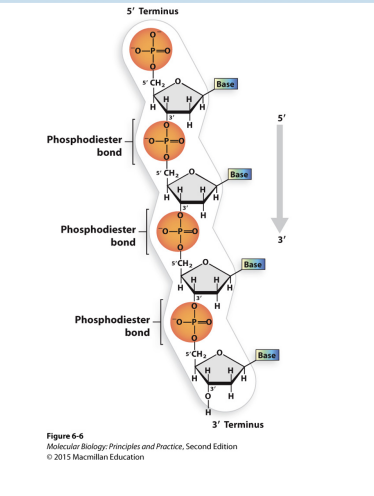
What does the 5’ end contain?
Phosphate Group
What does the 3’ end contain?
Hydroxyl/OH group
The DNA strand shown has the sequence 5’ - A C T G - 3’, What is the complementary sequence written from 5’ to 3’?
CAGT
DNA Helix
Contains two antiparallel strands of DNA with the bases connecting the two strands

B-form DNA Helix
Most common DNA Helix orientation, right handed, strands tilted to right when crossing the helical axis side towards the viewer

How many base pairs per turn in B-DNA?
10.5 base pairs per turn
Rise/Van der waals thickness in B-form DNA
3.4 Å per base pair
Pitch in B-form DNA
34 Å
Helix twist in B-form DNA
36° per base pair
Helix diameter in B-form DNA
20 Å (same regardless of helix size)
Major groove
Bigger groove on rear side of helix

Minor groove
Smaller groove on front side

Number of H-bonds per base pair?
A-T = 2, C-G = 3

Chargaff’s rule?
% A = %T
% C = %G
How does hydrogen bonding pattern is differ between the minor and major grooves?
Major groove side flips to mirror image when G:C → C:G, minor groove side stays the same regardless of orientation

What is the driving force for the stability of the double helix? (i.e. what’s holding the two strands together?)
Base stacking (van der Wall interactions)

Why are H-bonds not the dominant stabilizing force?
Bases are fully hydrogen bonded in single strand and double strand DNA with no chnage in free energy (single standed bases can still H-bond to aqueous environment)

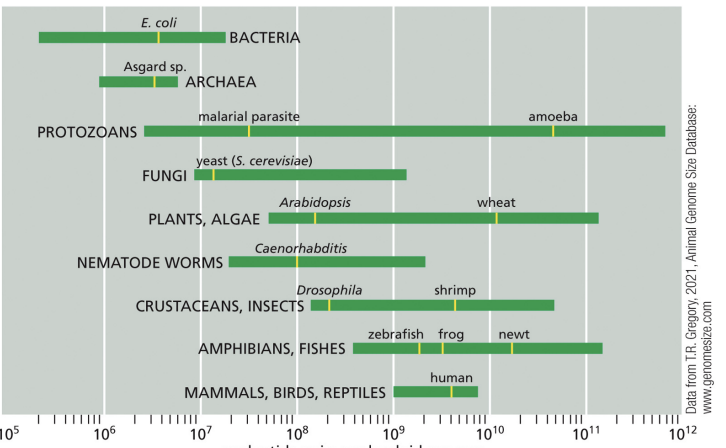
The C-value paradox
Genome size does not always scale with complexity, number of different genes is a better indicator
Genome
Total genetic information carried by all chromosomes of a cell organism

Chromosome
Long threadlike structure composed of DNA and proteins that carry the genetic information of an organism

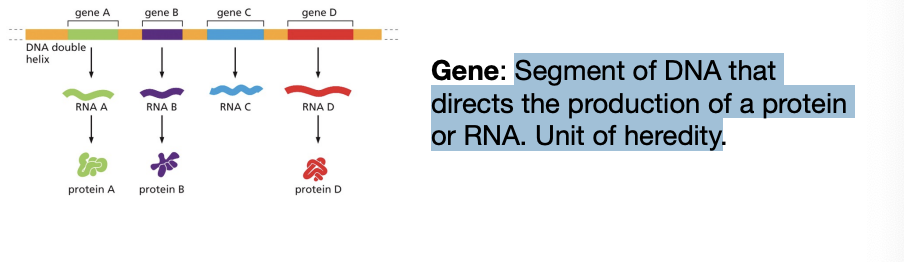
Gene
Segment of DNA that directs the production of a protein or RNA. Unit of heredity
Is there a universal difference in chromosome size, structure and number across organisms?
No, Chromosome size, structure and number differ across organisms in various ways
Prokaryotic Chromosome shape?
Singular, circular chromosome

Karyotype
Arrangement of Chromosomes

Eukaryotic Chromsome
Multiple, linearly shaped chromosomes in pairs
Downs syndrome/Trisomy 21
Trisomy in Chromosome 21 and causes:
• Developmental delays
• Intellectual disability
• Characteristic physical features

Can closely related species can have very different chromosome numbers?
Yes, closely related species can have very different chromosome numbers

Does gene number does scale with genome size?
No, Gene number does not scale with genome size

How does gene density and noncoding DNA differ between organisms?
Eukaryotes generally have a lower percentage of protein coding regions in genome
Contrary, prokaryotes generally have a higher percentage of protein coding regions in genome,

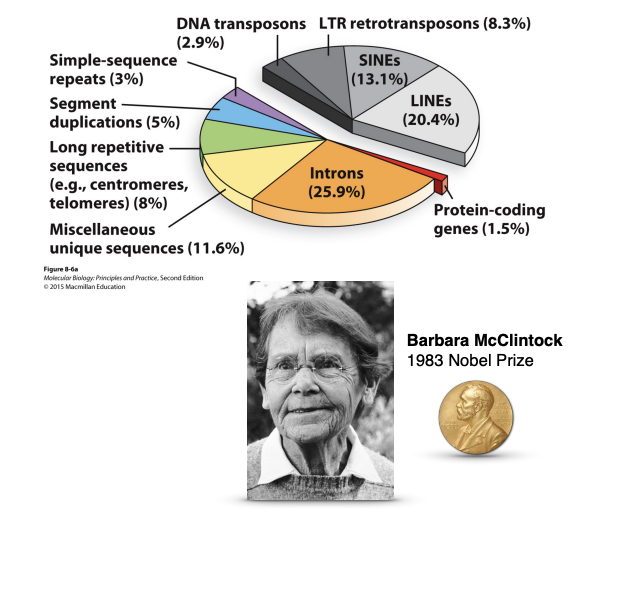
~28% of the human genome contains genes, yet only 1.5% of the genome is protein coding. What element explains this difference?
Introns making a substantial amount of the percentage of the genes in the eukaryotic genome
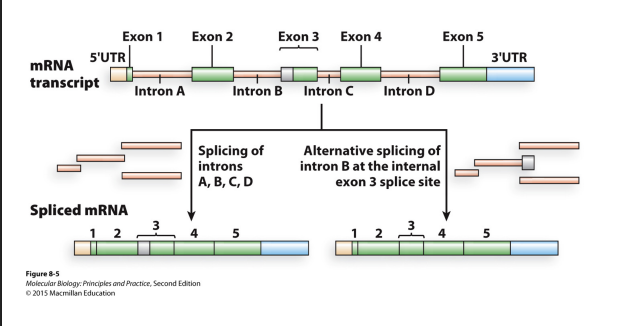
Introns
Noncoding regions within genes that are transcribed into pre-mRNA but removed during RNA splicing

Exons
Protein coding portion of gene, only the protein-coding portions of exons contribute to protein sequences.
Which is longer between introns and exons
Introns
Transposons
DNA elements that can move throughout the genome (make up 50% of human genome)
cut and paste mechanism
LINE
Long interspersed nuclear element (retrotransposon - many kb in length)
SINE
Short interspersed nuclear element (transposable element 100-700bp in length)
LTR Transposons
Long terminal repeat retrotransposon (transposon that uses an RNA intermediate)
Are Interphase chromosomes randomly distributed within the nucleus?
No, Interphase chromosomes are not randomly distributed within the nucleus

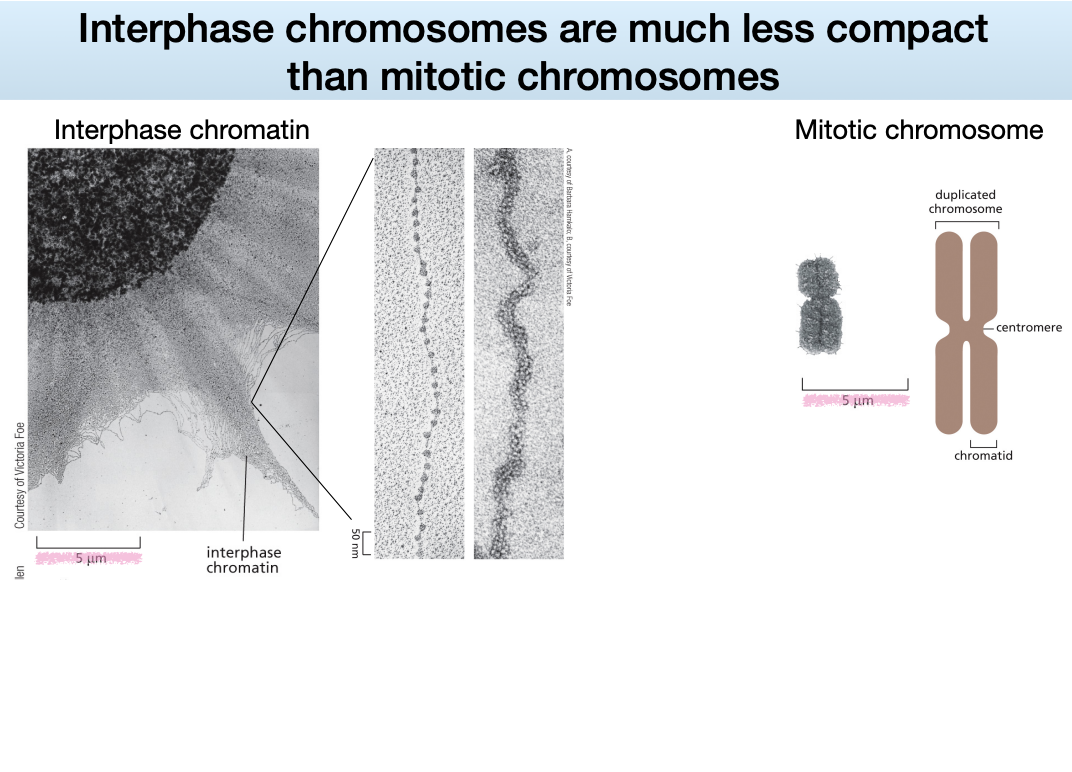
Difference in compaction between interphase chromosomes and mitotic chromosomes?
Interphase chromosomes are much less compact than mitotic chromosomes