Unit 2 - AP2
 Call Kai
 Learn
 Practice Test
 Spaced Repetition
 Match
 Flashcards
 Knowt Play
1/108

There's no tags or description
Looks like no tags are added yet.
109 Terms
Active Immunity
Immunity built up by the body's immune system in response to exposure to pathogens or vaccines, resulting in the production of memory cells and antibodies.
Acute Inflammation
The body’s rapid response to injury or infection, characterized by redness, heat, swelling, and pain. This process helps to eliminate pathogens and begin repair.
Adaptive Immune Response
A specific immune response where the body recognizes and targets specific pathogens through the activation of B-cells, T-cells, and antibodies. It results in the formation of memory cells, allowing for a quicker response to future infections.
Antibody
A protein released by mature B-cells, plasma cells, which binds to specific antigens. An immunoglobulin.
Afferent Lymphatic Vessels
Vessels that carry lymph fluid from peripheral tissues to lymph nodes, facilitating filtration and immune cell activation.
Antigen
A molecule or substance that is recognized by the immune system as foreign, triggering an immune response by activating B-cells and T-cells.
Antigen Processing
The intracellular breakdown of antigens into smaller peptide fragments that can bind to MHC molecules for presentation to T-cells, facilitating their activation.
Antigen Presentation
The display of processed antigen fragments on the surface of antigen-presenting cells (APCs) bound to MHC molecules, enabling T-cells to recognize and respond to the antigen.
Antigen Receptor
A specialized protein found on the surface of B and T-cells that recognizes and binds to specific antigens, initiating the immune response.
Antigenic Determinant (Epitope)
A specific region on an antigen that is recognized and bound by antigen receptors on B and T-cells, triggering an immune response.
B-Cells
Also called B-lymphocytes, oversee humoral immunity; their descendants differentiate into plasma cells and memory B-cells that produce antibodies.
Barrier Defenses
The body’s first line of defense against pathogens that prevent microorganisms from ‘entering the body and causing infection.
Bone Marrow
Tissue found inside bones that produces blood cells, including red blood cells, white blood cells, and platelets. The site of all blood cell differentiation and maturation of B lymphocytes.
Bronchus-Associated Lymphoid Tissue (BALT)
A collection of immune cells located in the lining of the bronchi that plays a crucial role in the immune response to inhaled pathogens.
Central Tolerance
The process by which developing B & T-cells are tested to ensure they do not react against the body's own tissues, preventing autoimmune responses.
Chemokine
A small signaling protein that attracts immune cells to sites of inflammation, injury, or infection.
Chronic Inflammation
A long term inflammatory response that lasts for months or years when the body is unable to eliminate the cause of injury, infection, or inflammation
Chyle
A milky, fat-rich substance formed in the small intestine during the digestion. It contains absorbed lipids and is transported through the lymphatic system to the bloodstream.
Cisterna Chyli
An enlarged sac at the base of the thoracic duct; the origin of the thoracic duct that collects chyle from the intestinal lymphatic vessels.
Class Switching
The process by which a B cell changes the class of antibody it produces, such as from IgM to IgG, without altering the specificity for the antigen.
Clonal Anergy
A state in which B or T cells become functionally inactive and unresponsive to their specific antigen, preventing autoimmunity.
Clonal Deletion
the process by which self-reactive B or T cells are eliminated through apoptosis during lymphocyte development to prevent autoimmunity.
Clonal Expansion
The rapid proliferation of activated B or T-cells into a large number of identical cells that respond to a specific antigen, enhancing the immune response.
Clonal Selection
The process by which specific B or T cells are activated and proliferate upon encountering their antigen, leading to an enhanced immune response.
Clone
Descendents of a single cell.
Complement
A group of proteins in the blood that assist in the destruction of pathogens by marking them for destruction or promoting inflammation.
Constant Region Domain
The part of an antibody whose amino acid sequence stays relatively the same among antibodies of the same class. Does not bind to antigens and is responsible for mediating effector functions.
Cytokine
Small proteins released by cells that communicate with immune cells, influencing their activity and response.
Cytotoxic T-Cells
A type of T-lymphocyte that directly kill damaged, infected, or cancerous cells in the body.
Delayed Hypersensitivity
(type IV) T cell-mediated immune response against pathogens infiltrating interstitial tissues, causing cellular infiltrate
Early Induced Immune Response
includes antimicrobial proteins stimulated during the first several days of an infection
Effector T-Cells
immune cells with a direct, adverse effect on a pathogen efferent lymphatic vessels
Graft-Versus-Host Disease
in bone marrow transplants; occurs when the transplanted cells mount an immune response against the recipient
Granzyme
apoptosis-inducing substance contained in granules of NK cells and cytotoxic T cells
Heavy chain
larger protein chain of an antibody
Helper T-Cells (Th)
T cells that secrete cytokines to enhance other immune responses, involved in activation of both B and T cell
Histamine
vasoactive mediator in granules of mast cells and is the primary cause of allergies and anaphylactic shock

IgA
antibody whose dimer is secreted by exocrine glands, is especially effective against digestive and respiratory pathogens, and can pass immunity to an infant through breastfeeding

IgD
class of antibody whose only known function is as a receptor on naive B cells; important in B cell activation

IgE
antibody that binds to mast cells and causes antigen-specific degranulation during an allergic response

IgG
main blood antibody of late primary and early secondary responses; passed from carrier to unborn child via placenta

IgM
antibody whose monomer is a surface receptor of naive B cells; the pentamer is the first antibody made blood plasma during primary responses
Immediate Hypersensitivity
(type I) IgE-mediated mast cell degranulation caused by crosslinking of surface IgE by antigen
Immune System
series of barriers, cells, and soluble mediators that combine to response to infections of the body with pathogenic organisms
Immunoglobulin
protein antibody; occurs as one of five main classes
Immunological Memory
ability of the adaptive immune response to mount a stronger and faster immune response upon re-exposure to a pathogen
Inflammation
basic innate immune response characterized by heat, redness, pain, and swelling
Innate Immune Response
rapid but relatively nonspecific immune response
Interferons
early induced proteins made in virally infected cells that cause nearby cells to make antiviral proteins
Light Chain
small protein chain of an antibody
Lymph
fluid contained within the lymphatic system
Lymph Node
one of the bean-shaped organs found associated with the lymphatic vessels
Lymphatic Capillaries
smallest of the lymphatic vessels and the origin of lymph flow
Lymphatic System
network of lymphatic vessels, lymph nodes, and ducts that carries lymph from the tissues and back to the bloodstream.
Lymphatic Trunks
large lymphatics that collect lymph from smaller lymphatic vessels and empties into the blood via lymphatic ducts
Lymphocytes
white blood cells characterized by a large nucleus and small rim of cytoplasm
Lymphoid nodules
unencapsulated patches of lymphoid tissue found throughout the body

Macrophage
ameboid phagocyte found in several tissues throughout the body
Macrophage Oxidative Metabolism
metabolism turned on in macrophages by T cell signals that help destroy intracellular bacteria
Major Histocompatibility Complex (MHC)
gene cluster whose proteins present antigens to T cells
Mast Cell
cell found in the skin and the lining of body cells that contains cytoplasmic granules with vasoactive mediators such as histamine
Memory T-Cells
long-lived immune cell reserved for future exposure to a pathogen
MHC Class I
found on most cells of the body, it binds to the CD8 molecule on T cells
MHC Class II
found on macrophages, dendritic cells, and B cells, it binds to CD4 molecules on T cells
MHC Polygeny
multiple MHC genes and their proteins found in body cells
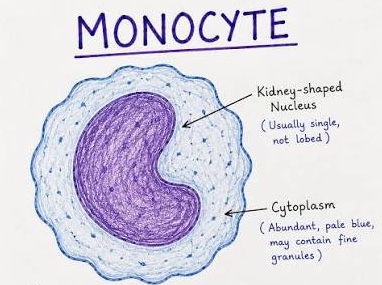
Monocyte
precursor to macrophages and dendritic cells seen in the blood
Mucosa-Associated Lymphoid Tissue (MALT)
lymphoid nodule associated with the mucosa
Natural Killer Cell (NK)
cytotoxic lymphocyte of innate immune response
Naïve Lymphocyte
mature B or T cell that has not yet encountered antigen for the first time
Negative Selection
selection against thymocytes in the thymus that react with self-antigen
Neutralization
inactivation of a virus by the binding of specific antibody

Neutrophil
phagocytic white blood cell recruited from the bloodstream to the site of infection via the bloodstream
Opsonization
enhancement of phagocytosis by the binding of antibody or antimicrobial protein
Passive Immunity
transfer of immunity to a pathogen to an individual that lacks immunity to this pathogen usually by the injection of antibodies
Pattern Recognition Receptor (PRR)
leukocyte receptor that binds to specific cell wall components of different bacterial species
Perforin
molecule in NK cell and cytotoxic T cell granules that form pores in the membrane of a target cell
Peripheral Tolerance
mature B cell made tolerant by lack of T cell help
Phagocytosis
movement of material from the outside to the inside of the cells via vesicles made from invaginations of the plasma membrane
Plasma Cell
differentiated B cell that is actively secreting antibody
Polyclonal Response
response by multiple clones to a complex antigen with many determinants
Positive Selection
selection of thymocytes within the thymus that interact with self, but not non-self, MHC molecules
Primary Adaptive Response
immune system’s response to the first exposure to a pathogen
Primary Lymphoid Organ
site where lymphocytes mature and proliferate; red bone marrow and thymus gland
Regulatory T-Cells (Treg)
(also, suppressor T cells) class of CD4 T cells that regulates other T cell responses
Right Lymphatic Duct
drains lymph fluid from the upper right side of body into the right subclavian vein
Secondary Adaptive Response
immune response observed upon re-exposure to a pathogen, which is stronger and faster than a primary response
Secondary Lymphoid Organs
sites where lymphocytes mount adaptive immune responses; examples include lymph nodes and spleen
Sensitization
first exposure to an antigen
Spleen
secondary lymphoid organ that filters pathogens from the blood (white pulp) and removes degenerating or damaged blood cells (red pulp)
T-Cell
lymphocyte that acts by secreting molecules that regulate the immune system or by causing the destruction of foreign cells, viruses, and cancer cells
T-Cell Tolerance
process during T cell differentiation where most T cells that recognize antigens from one’s own body are destroyed
T-Cell-Dependent Antigen
antigen that binds to B cells, which requires signals from T cells to make antibody
T-Cell-Independent Antigen
binds to B cells, which do not require signals from T cells to make antibody
Th1 Cells
cells that secrete cytokines that enhance the activity of macrophages and other cells
Th2 Cells
cells that secrete cytokines that induce B cells to differentiate into antibody-secreting plasma cells
Thoracic Duct
large duct that drains lymph from the lower limbs, left thorax, left upper limb, and the left side of the head
Thymus
primary lymphoid organ; where T lymphocytes proliferate and mature
Tissue Typing
typing of MHC molecules between a recipient and donor for use in a potential transplantation procedure
Tonsils
lymphoid nodules associated with the nasopharynx
Type I Hypersensitivity
immediate response mediated by mast cell degranulation caused by the crosslinking of the antigen-specific IgE molecules on the mast cell surface