Pathology - Unit 4, Wk 12 GI IE
 Call Kai
 Learn
 Practice Test
 Spaced Repetition
 Match
 Flashcards
 Knowt Play
1/32

Earn XP
33 Terms
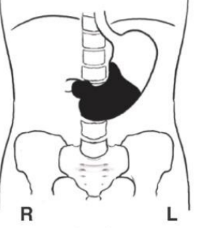
UGI Study
What position is the patient in? Air = black. Barium = white
Supine
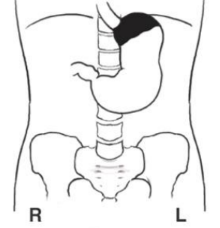
UGI Study
What position is the patient in? Air = black. Barium = white
Prone
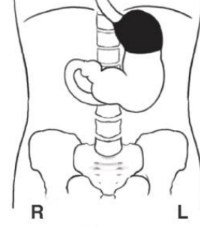
UGI Study
What position is the patient in? Air = black. Barium = white
Erect
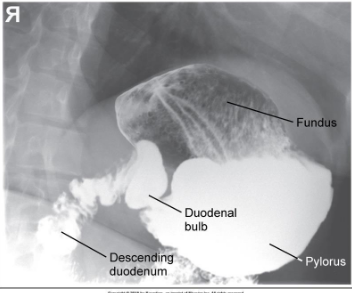
UGI Study
Identify the Position.
RAO (40-70 degrees)
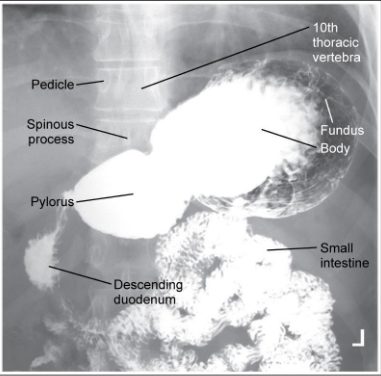
UGI Study
Identify the Position
Prone
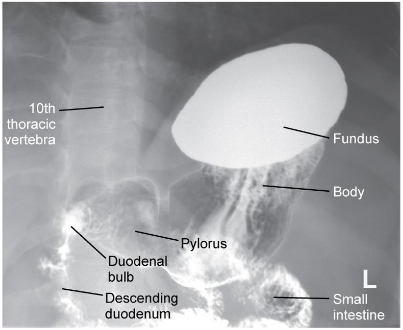
UGI Study
Identify the Position
LPO (40-70 degrees)
Where is the CR at for the first 15-30 mins of a SBS and why?
CR is 2” above iliac crest to include the stomach since contrast has just entered the body
Where is the CR at for 60+ minute radiographs?
CR is at the iliac crest to include the symphysis because the contrast has gone down further into the anatomy
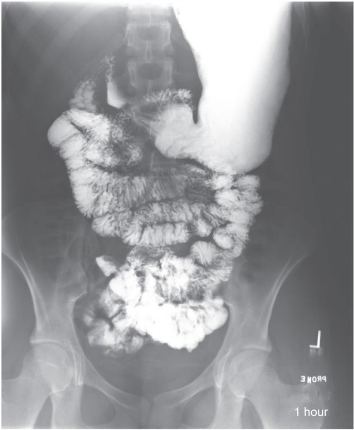
Small Bowel at 1 Hour: What is wrong with this image?
The symphysis is included bc we moved CR down since it’s at 1 hour (good!)
It is a little off-center in terms of right and left, but it does not warrant a repeat since no barium-filled anatomy was clipped.
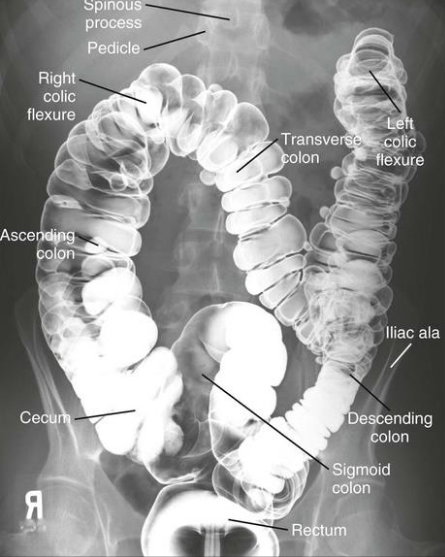
Large Intestine: Imaging Criteria
Proper positioning with the anatomy. (both pelvises are in view)
CR is at the crests
Air-filled balloon and rectum with contrast
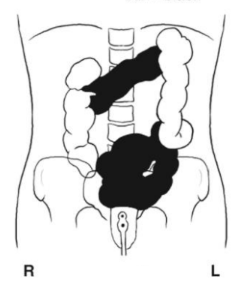
SBS
What position is the patient in? Air = black. Barium = white
Supine
Air fills the anterior (stomach) portions while barium fills the posterior (back) portions.
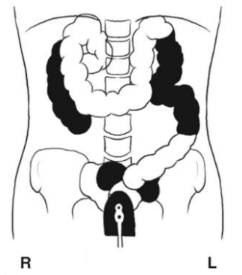
SBS
What position is the patient in? Air = black. Barium = white
Prone
Air fills the posterior (back) portions while barium fills the anterior (stomach) portion
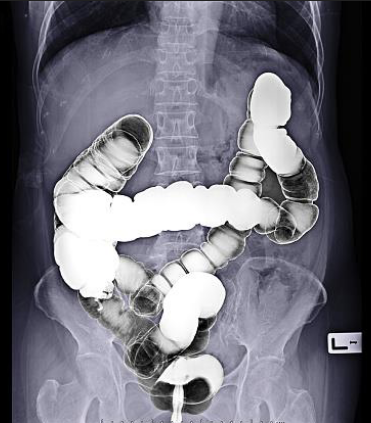
Barium Enema: Identify the Position
Prone (PA)
-Transverse and sigmoid colon are filled with barium

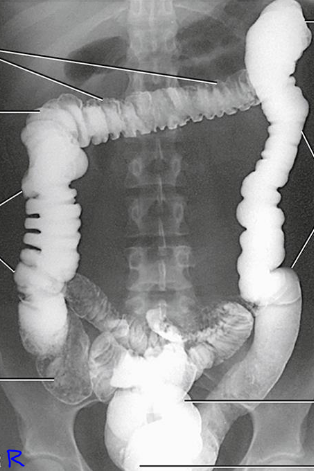
Barium Enema: Identify the Position
Supine (AP)
-ascending, descending, and some sigmoid colon and rectum filled with barium

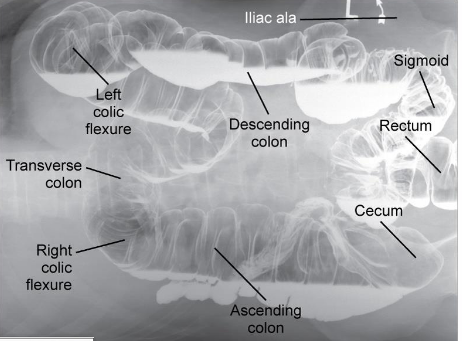
Barium Enema: Identify the Position
Right Lateral Decub
Barium in lateral ascending and medial descending
Spinous processes are aligned with the midline to the vertebral bodies
straight line for air-fluid levels indicates decub

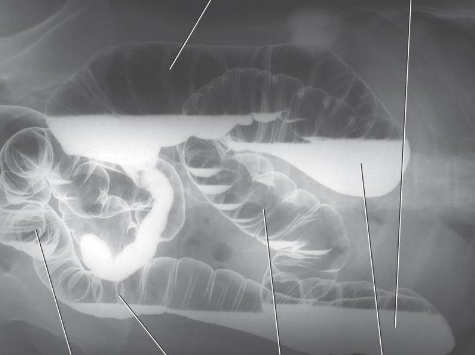
Barium Enema: Identify the Position
Left Lateral Decub
Barium in medial ascending and lateral descending


BE Study
Left side has a higher flexure than the right side because the liver pushes down the right colic flexure. This confirms the pt is laying on their _____ side.
Left
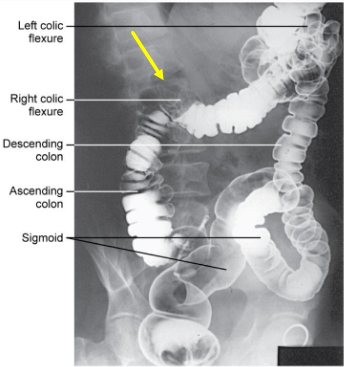
Barium Enema: Identify the Position
RAO or LPO (bc it does not specify how it was shot/hung)
-Right colic flexure is open, Left colic flexure is closed
-narrowing of the right pelvis and pancaking the left pelvis
In an RAO/LPO Barium Enema
If you shot it RAO, you have to hang it __
AP
-this is true for all images
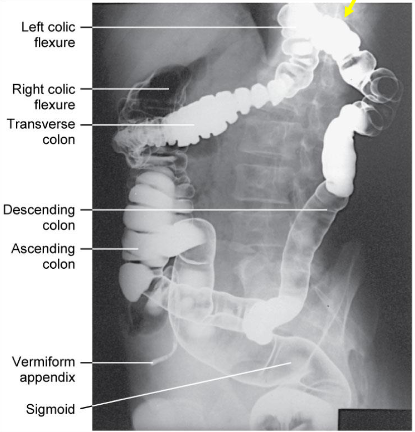
Barium Enema: Identify the Position
LAO or RPO
-Right colic flexure is closed, Left colic flexure is open
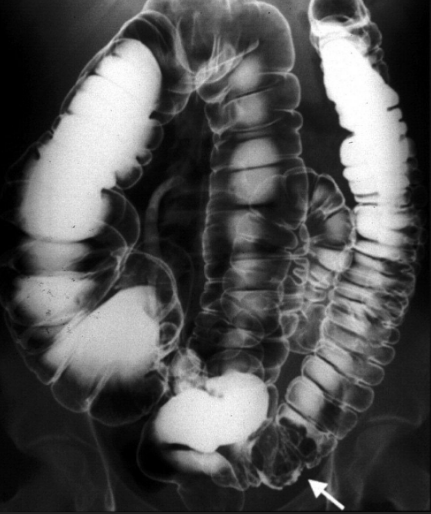
AP Barium Enema: What is wrong with this image?
Overexposed (too dark)
Fix by lowering only mAs
Clipped the Splenic Flexure and Transverse Colon
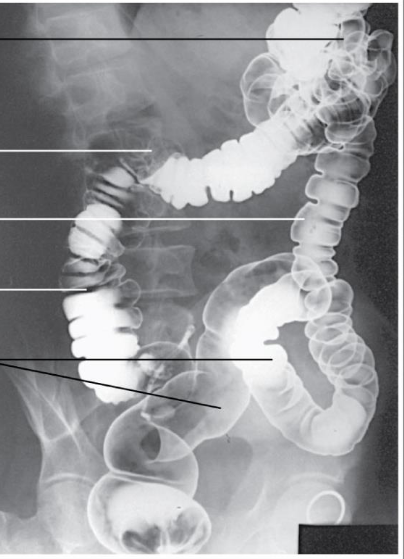
AP BE: What is wrong with this image?
Patient is rotated LPO. It is NOT RAO bc we know it was shot AP.
Bladed right pelvis and pancaked left pelvis
Hepatic Flexure is open and spine is off-centered
Spinous Processes are not aligned with the midline of the vertebral bodies
Bring right side back toward IR.
More likely scenarios in obliqued BE exams would be ___ or ___
RPO
LPO
Where does the barium go in the stomach during a supine, double contrast UGI?
Fundus
True or False:
In a double-contrast LPO UGI, the air is in the pylorus, duodenal bulb, and descending duodenum.
True.
What UGI positions will demonstrate barium in the descending duodenum?
RAO only (40-70 degrees)
What double-contrast UGI position will demonstrate barium in the body and pylorus?
RAO
True or False:
When viewing a Right Lateral Decubitus Barium Enema radiograph, the pelvis is viewed on the right side of the image.
True
In which Barium Enema position is the transverse colon usually filled with barium?
Prone

In what position was the patient most likely placed for this radiograph?
RAO or LAO?
RAO
In which positions will the left colic flexure be open and best demonstrated for a barium enema?
LAO and RPO
In what position will the medial ascending and lateral descending portions of the colon be best visualized during a barium enema?
Right Lateral Decubitus (not in a “white-out”)
If the left iliac ala is narrower than the right, the patient is likely in a(n) ______________ position. (Select all that could apply)
RPO or LAO