e - Extraction + uses of metals
 Call Kai
 Learn
 Practice Test
 Spaced Repetition
 Match
 Flashcards
 Knowt Play
1/9

Earn XP
10 Terms
Metal extraction
Unreactive metals don’t usually form compounds with other elements
Unreactive metals such as gold are found uncombined - must be found and dug upMost metals do react with other metals to form compounds, which can be found naturally in Earth’s crust
If compound contains enough metal to be worthwhile extracting, the compound is called metal ore
Metal ores are limited - ‘finite resources’
The more reactive a metal is,… (extraction)
the harder it is to extract it from a compound
Lots of common metals like iron + aluminium form metal oxide ores
Metal can be separated from oxide by reduction reactionMost common type of reduction uses carbon as reducing agent to separate oxygen from metal (carbon can’t be used for all metals)
Methods of extraction
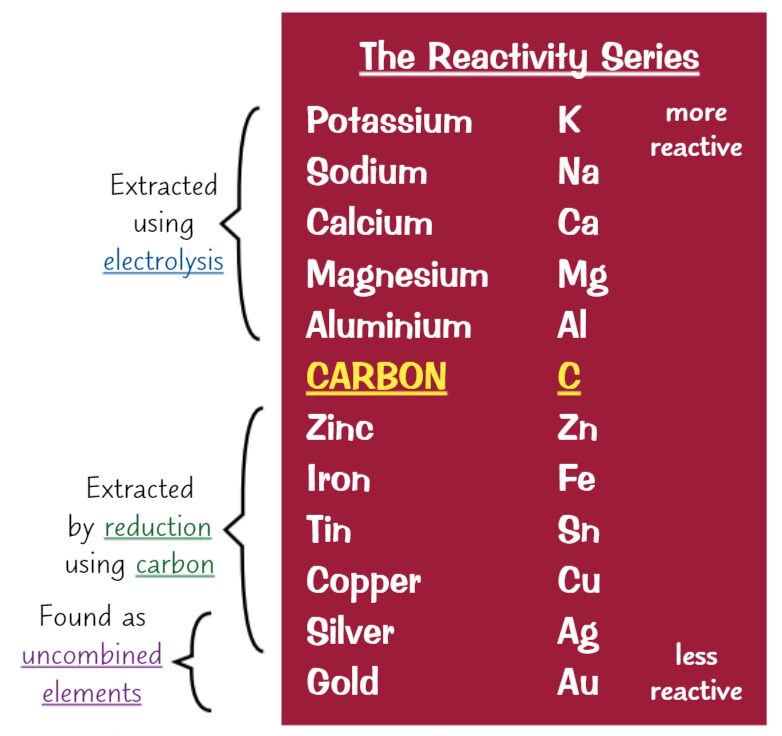
Only metals less reactive than carbon can be extracted by reduction reaction with carbon - done by heating ore with carbon monoxide
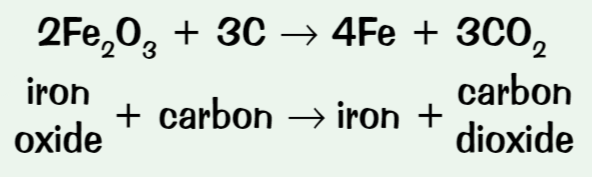
e.g. iron oxide reduced in blast furnace to make ironBecause more reactive elements form compounds more readily
Carbon’s more reactive than iron, so carbon takes oxygen from iron oxidei.e. carbon can only take oxygen away from metals which are less reactive than carbon itself
Very reactive metals form stable ores - i.e. difficult to get metal out of its compound
So metals more reactive than carbon (higher in reactivity series) have to be extracted using electrolysisElectrolysis uses electricity to separate metal from other elements in compound
e.g. aluminium extracted from aluminium oxide using electrolysis
Properties of iron, aluminium and copper
Dense and lustrous (shiny) and have high melting points - Iron: 1538ᵒC, Aluminium: 660ᵒC, Copper: 1085ᵒC
Have high tensile strength - strong + hard to break
Malleable - can be hammered into different shape
Good electrical + thermal conductors
Iron
Has all properties expected for a metal
Adding other materials can change properties
Wrought iron is almost completely pure iron - malleable, so used to make gates + railings
Main problem is that it corrodes easily (rusts)
Aluminium
Typical metal, but doesn’t corrode easily
Reacts very quickly with oxygen in air to form aluminium oxide
A protective layer of aluminium oxide sticks firmly to aluminium below and stops any further reaction occurringBecause aluminium doesn’t corrode, it’s useful for products that come into contact with water, e.g. drink cans
Aluminium is much less dense than iron, making it lighter
This makes it useful when weight of metal is important, e.g. bicycle frames, aeroplanes
Copper
Good conductor of heat + electricity
Used in electrical components + wiring as it has low resistance so is efficient at transferring electricity
Also used in heating systems, such as underfloor heating, as it allows quick transfer of heat to surroundings
Alloys
Regular structure of pure metals makes them soft - often too soft for everyday use
Alloys are made by adding other elements to the metal (usually other metals and/or carbon)
Many alloys are used in everyday life, e.g. brass (copper + zinc) and bronze (copper + tin)
Alloy hardness
Different elements have different sized atoms
So when another element is mixed with pure metal, new atoms will distort layers of metal atoms, making it more difficult for them to slide over each other
This makes alloys harder than pure metals
Iron alloys
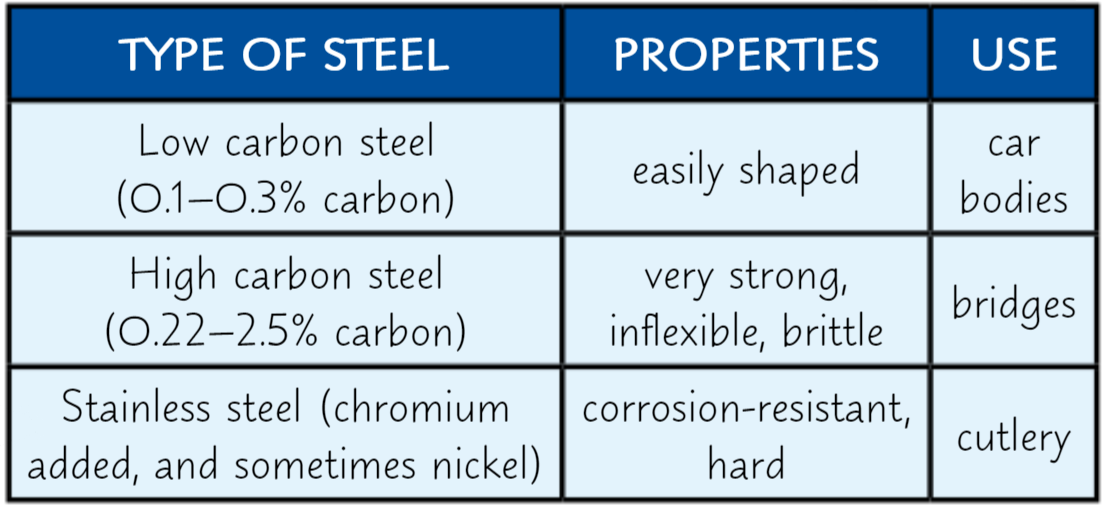
Called steels, often used instead of pure iron
Steels are made by adding small amounts of carbon and sometimes other metals to iron