hist 109_Midterm2
 Call Kai
 Learn
 Practice Test
 Spaced Repetition
 Match
 Flashcards
 Knowt Play
1/4

There's no tags or description
Looks like no tags are added yet.
5 Terms

"The Temperance Movement" (Week 11)
The Temperance movement was the effort to reduce the consumption of alcohol. The picture depicts how alcohol contributes to poverty/financial burdens, and how it would lead to the fall of the family. As mentioned in Week 11 lecture, this movement acknowledged moral, economic, and scientific rationale to support it. This Temperance Movement was important mostly due to women’s roles in politics, and how this movement eventually led to more freedom and rights for women, including women suffrage rights.

"The Alamo" (Week 10)
While Texas was under Mexico’s control, revolution broke out in Texas because Mexico attempted to centralize the country in 1834. Mentioned in Week 10 lecture, in 1836, Texas declared independence and seized the Alamo; but this led to the Battle of Alamo where Texans were defeated by Mexican troops. Even though Texans were defeated at the Alamo, Texas secured their independence at the Battle of San Jacinto and yelled the phrase “Remember the Alamo”. The Alamo was ultimately important as it signified freedom, sacrifice, and perseverance.

"The Trail of Tears" (Week 10)
The Andrew Jackson presidency made the 1830 Indian Removal Act, which was the forced removal of the indigenous populations to expand westward. As mentioned in the Trail of Tears video in week 10 lecture, the Trail of Tears is directly translated from what indigenous people would call this relocation, “the trail where they cried”. The trail of tears is significant because of the trauma done to the indigenous populations and wiping of their land.
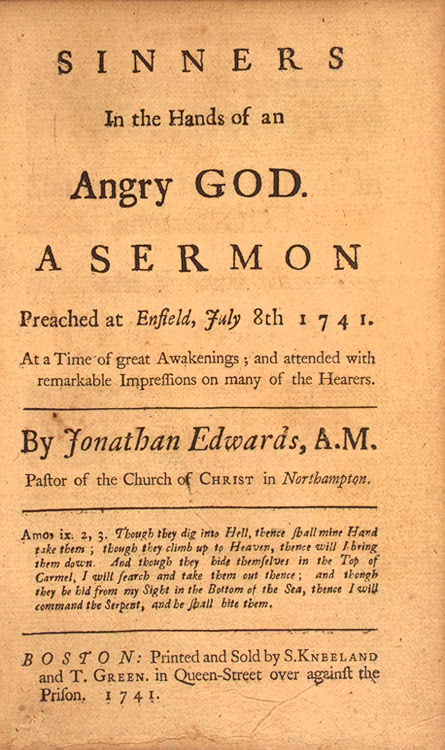
"Sinners in the Hands of an Angry God" (Week 9)
During the First Great Awakening of the 1730s-1740s, themes of redemption and salvation resurged. As mentioned in week 9 lecture, Jonathan Edwards’ “Sinners in the Hands of an Angry God” gained major attention across New England in the 1730s. Edwards used fear and emotional revival meetings in response to Enlightenment trends to get people drawn back to the church. It was considered significant because it was one of the most widespread sermons and encouraged individual faith over good deeds or membership.

"Pennsylvania Hall" (Week 11)
Pennsylvania Hall was a dedicated meeting space in Philadelphia for the abolitionist movement and built in 1838. However, mentioned in week 11 lecture, it was burned down within a few days and would be blamed on the abolitionists and praised in the south. The burning of Pennsylvania Hall was significant due to bringing in more support and new recruits to the abolitionist movement.