neironal control
0.0(0)
Studied by 2 people Call Kai
 Learn
 Practice Test
 Spaced Repetition
 Match
 Flashcards
 Knowt Play
Card Sorting
1/18

Earn XP
Description and Tags
19 Terms
1
New cards
resonance
tidal volume and respiratory frequency set at point where required minute ventilation is reached with minimal effort from respiratory muscles
2
New cards
respiratory cycle
alternating activity in inspiratory and expiratory muscles which allow changes in thoracic volume, pressure and air flow
3
New cards
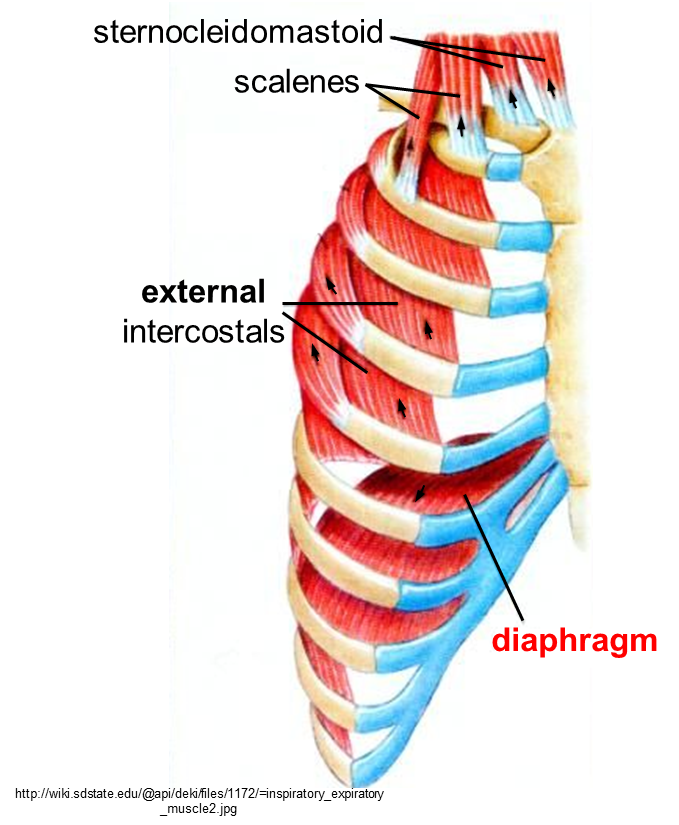
muscles involved in inspiration
diaphragm (innervated by phrenic nerve) used during rest breathing
accessory inspiratory muscles (external intercostals, scalenes and sternocleidomastoid) used if extra effect needed and large min ventilation required
accessory inspiratory muscles (external intercostals, scalenes and sternocleidomastoid) used if extra effect needed and large min ventilation required
4
New cards
how does scalene and sternocleidomastoid in neck help with breathing
raises ribs and expands chest cavity
5
New cards
how does external intercostals help with breathing
raises ribs
6
New cards
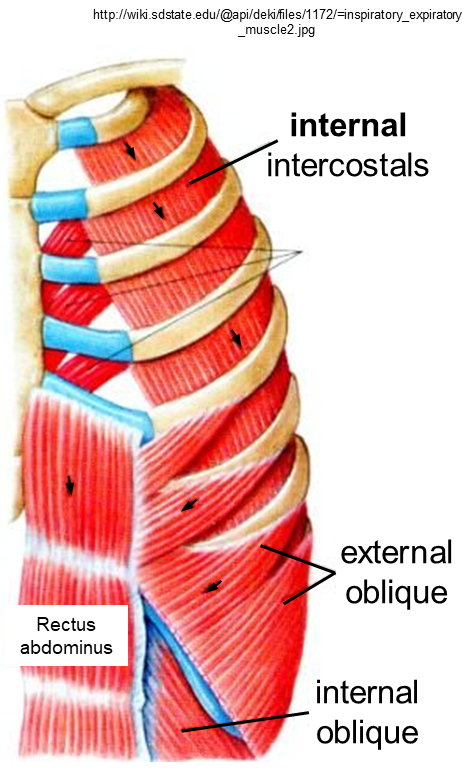
muscles involved in expiration
expiration happens by passive relaxation of diaphragm
accessory expiratory muscles (internal intercostals and oblique muscles) used if there’s increase in metabolic demand, high levels of ventilation or forced expiratory
accessory expiratory muscles (internal intercostals and oblique muscles) used if there’s increase in metabolic demand, high levels of ventilation or forced expiratory
7
New cards
how do internal intercostal and oblique muscles help with breathing
depress ribs → shrink diameter of thoracic cavity → pushes air out of lungs
8
New cards
medullary respiratory centres
botzinger complex, DRG, VRG and prebotzinger complex
9
New cards
DRG
dorsal respiratory group
used in inspiration - they send impulses to phrenic nerves and motor nerves of external intercostal muscles during inspiration
used in inspiration - they send impulses to phrenic nerves and motor nerves of external intercostal muscles during inspiration
10
New cards
VRG
ventral respiratory group
used in either inspiration or expiration
affects accessory muscles and are less active during quiet breathing but more active during forced expiration
used in either inspiration or expiration
affects accessory muscles and are less active during quiet breathing but more active during forced expiration
11
New cards
prebotzinger complex
important in rhythm generation
12
New cards
botzinger complex
important for when breathing increases
13
New cards
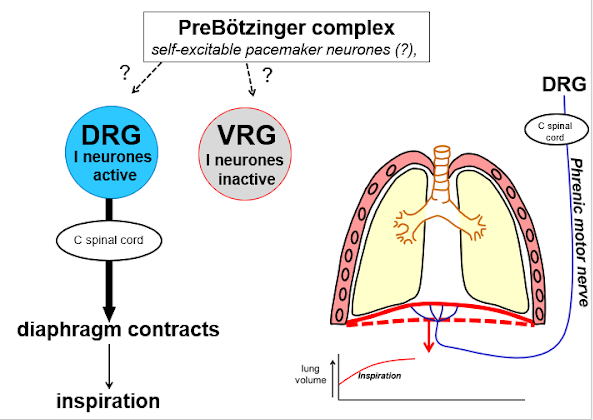
inspiration
DRG inspiratory neurones active
sends impulses to motor neurones in c spinal cord
phrenic nerve activated
diaphragm contracts and inspiration happens
VRG inspiratory neurones inactive
sends impulses to motor neurones in c spinal cord
phrenic nerve activated
diaphragm contracts and inspiration happens
VRG inspiratory neurones inactive
14
New cards
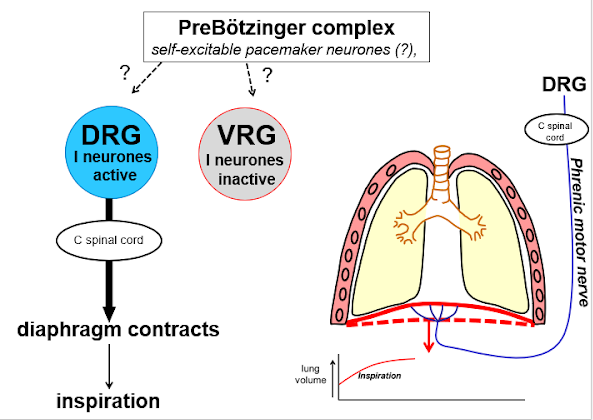
expiration
DRG inspiratory neurones inactive
motor neurones in c spinal cord inhibited
diaphragm relaxes and passively recoils
expiration to FRC
VRG inspiratory neurones inactive
motor neurones in c spinal cord inhibited
diaphragm relaxes and passively recoils
expiration to FRC
VRG inspiratory neurones inactive
15
New cards
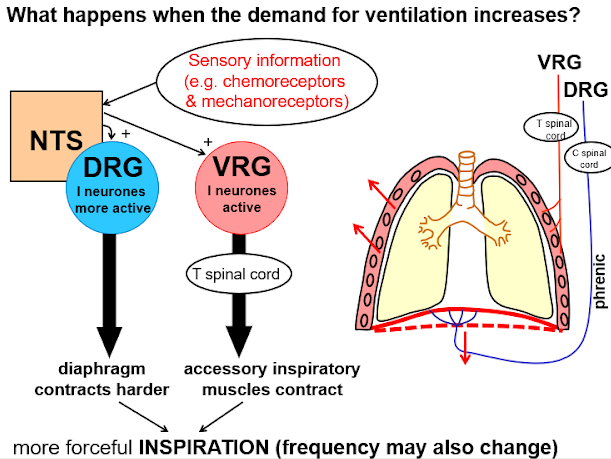
increase in ventilation (inspiration)
sensory information from chemoreceptors and mechanoreceptors to NTS
DRG inspiratory neurones electrical activity increases
diapgrahm contracts more
VRG inspiratory neurones activated
impulses sent to also T spinal
accessory inspiratory muscles contract
more forceful inspiration and frequency of breathing may change
DRG inspiratory neurones electrical activity increases
diapgrahm contracts more
VRG inspiratory neurones activated
impulses sent to also T spinal
accessory inspiratory muscles contract
more forceful inspiration and frequency of breathing may change
16
New cards
increase in ventilation (expiration)
botzinger complex inhibits inspiratory neurones in DRG and VRG
diaphragm and inspiratory muscles relax
botzinger complex excites VRG expiratory neurones
accessory expiratory muscles contract
more forceful expiration
diaphragm and inspiratory muscles relax
botzinger complex excites VRG expiratory neurones
accessory expiratory muscles contract
more forceful expiration
17
New cards
PRG function
pontine group
they alter the timing of breathing pattern
they inhibit DRG inspiratory muscles
they alter the timing of breathing pattern
they inhibit DRG inspiratory muscles
18
New cards
L
19
New cards
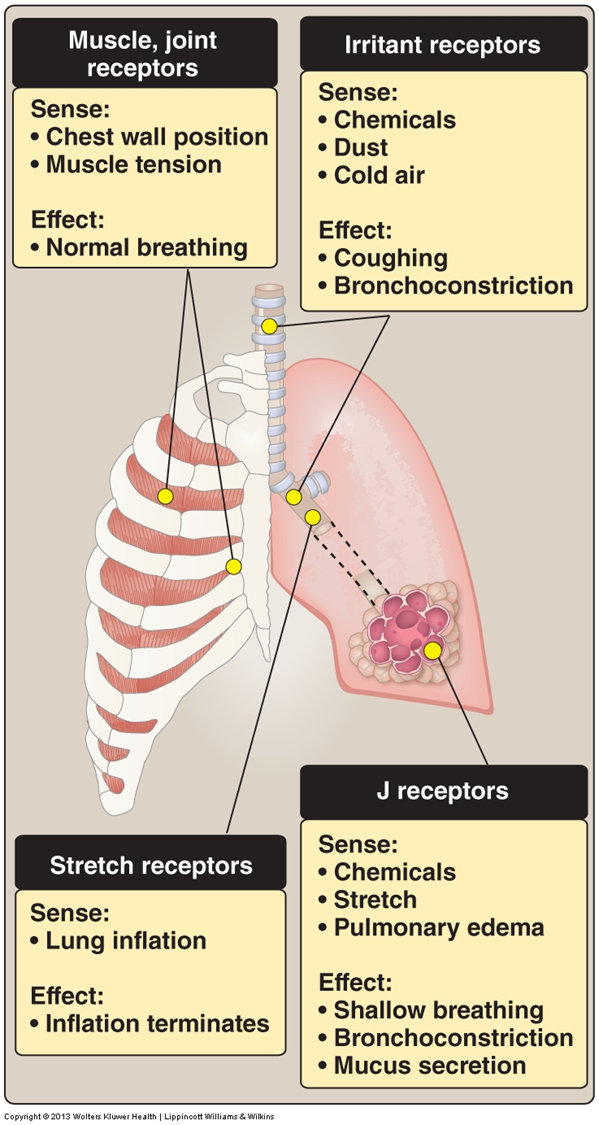
mechanoreceptors are
lungs and airways
nose and upper airways
joints and muscle
arterial baroreceptors
nose and upper airways
joints and muscle
arterial baroreceptors