Pt2 -> Cardiology Video 3 - Regulation of Arterial Blood Pressure
 Call Kai
 Learn
 Practice Test
 Spaced Repetition
 Match
 Flashcards
 Knowt Play
1/38

Earn XP
Description and Tags
Cardiology Exam 2
39 Terms
The relationship between flow, pressure, and resistance is as follows:

How to Find Cardiac Out Put with MEAN ARTERIAL PRESSURE
(MAP)

MEAN ARTERIAL PRESSURE (MAP) (2 types of regulation)
1) Short Term Regulation
2) Long Term Regulation
Short Term Regulation (MAP)
Occurs within seconds to minutes.
Occurs primarily through neural pathways.
Targets the heart and blood vessels.
Long Term Regulation (MAP)
Occurs within hours to days.
Occurs primarily through endocrine pathways.
Targets the kidneys and blood vessels.
Short‐Term Regulation → Baroreceptors
Baroreceptors are neural receptors located in the carotid sinus and aortic arch.
They participate in baroreceptor reflexes.
These bad boys monitor blood pressure and if it is too low or high they change it through baroreceptor reflexes

What carries signals of Baroreceptors? (2)
- Cranial nerve IX (glossopharyngeal) carries signals from the baroreceptors to the medullary cardiovascular (cardioregulatory) center of the brainstem.
.
- Cranial nerve X (vagus) also carries signals from the baroreceptors to the medullary cardiovascular (cardioregulatory) center of the brainstem.

Medullary Cardiovascular Center
- The medullary cardiovascular center is highly complex.
- Consists of individual “mini-centers,” such as the vasomotor area and cardioinhibitory area.
.
Makes decisions about how to respond to hypertension or hypotension.
Uses the sympathetic nervous system (SNS) and parasympathetic nervous system (ParaNS) to send signals to various target tissues.

OVERVIEW OF BARORECEPTOR REFLEXES ( Blood Pressure increases) (7)

OVERVIEW OF BARORECEPTOR REFLEXES (Blood Pressure decreases) (7)

Baroreceptor reflex in response to a hemorrhage

Baroreceptor sensitivity can be altered by __________
Disease
In chronic hypertension, baroreceptors do not recognize the elevated blood pressure as abnormal.
As a result, the baroreceptor reflex maintains hypertension rather than correcting it.
This defect may be caused by decreased baroreceptor sensitivity to increases in arterial pressure.
It may also be caused by an increased blood pressure set point in the brainstem centers.
Long‐Term Regulation → RAA Pathway (4 Steps)
A decrease in renal perfusion pressure (blood pressure) causes the kidneys to secrete the enzyme renin.
Renin catalyzes the conversion of angiotensinogen into angiotensin I in the plasma.
Angiotensin-converting enzyme (ACE) catalyzes the conversion of angiotensin I into angiotensin II, primarily in the lungs.
Angiotensin II has four primary effects.

RAA pathway in response to a hemorrhage

Other Hormonal Long‐Term Pathways (1)
Antidiuretic hormone (ADH) is also known as vasopressin.

Other Hormonal Long‐Term Pathways → ADH (2 Causes)
Increased plasma osmolarity is the most important physiologic stimulus for increasing ADH secretion.
.
Decreases in extracellular fluid (ECF) volume of 10% or more cause a decrease in arterial blood pressure.
Increased plasma osmolarity (ADH)
Increased plasma osmolarity is the most important physiologic stimulus for increasing ADH secretion.
Hypovolemia (decreased blood volume), or volume contraction (e.g., due to hemorrhage), is also a potent stimulus for ADH secretion.
Decreases in extracellular fluid (ECF) (ADH)
Decreases in extracellular fluid (ECF) volume of 10% or more cause a decrease in arterial blood pressure.
This decrease in blood pressure is sensed by baroreceptors in the left atrium, carotid artery, and aortic arch.
Overview of ADH

ADH has 2 effects that tend to increase blood pressure toward normal:
ADH increases water reabsorption in the kidneys by activating V2 receptors.
ADH is a potent vasoconstrictor that increases total peripheral resistance (TPR) by activating V1 receptors on the arterioles.
Other Hormonal Long‐Term Pathways → ANP
An increase in blood volume causes an increase in atrial pressure, which is detected by the volume receptors.
Volume receptor signals are coordinated to return blood volume to normal, primarily by increasing the excretion of Na⁺ and water.
.
Responses to an increase in blood volume include:
1. Increased secretion of ANP.
2. Decreased secretion of ADH.
Increased secretion of ANP
ANP (atrial natriuretic peptide) is secreted by the atria in response to increased atrial pressure.
ANP has multiple effects:
Causes relaxation of vascular smooth muscle, resulting in vasodilation and decreased TPR.
In the kidneys, this vasodilation leads to increased Na⁺ and water excretion.
This decreases total body Na⁺ content, extracellular fluid (ECF) volume, and blood volume.
Skeletal Muscle Pump (Pt 1)
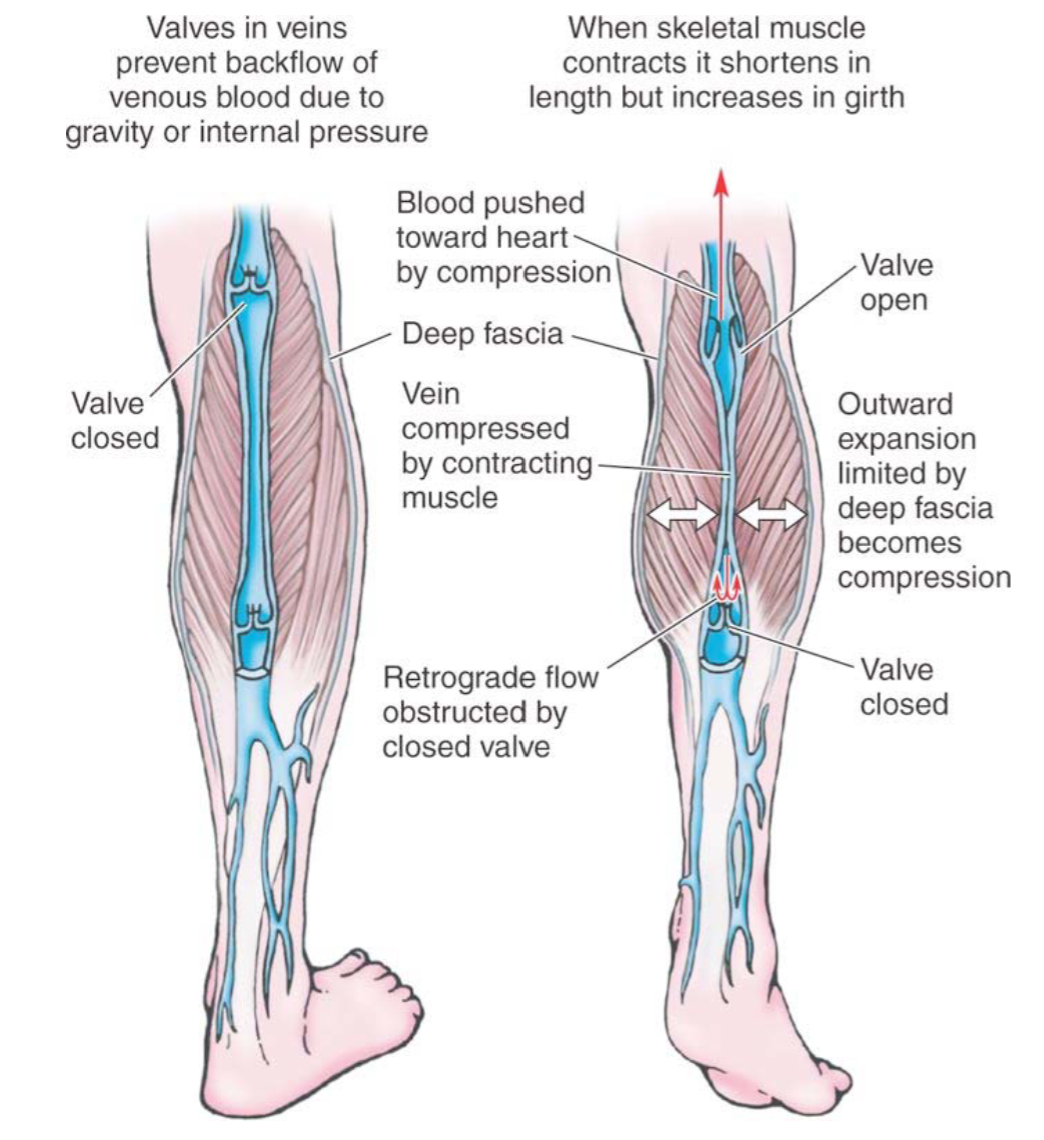
One other item that can affect venous return is the skeletal muscle pump.
When skeletal muscles contract, they force blood back to the heart.
The venous valves prevent the backflow of blood away from the heart.
Skeletal Muscle Pump (Pt 2)
Before muscle contraction, blood enters a vein.
When the muscle contracts, the upper valve opens while the lower valve closes.
The muscle contraction pushes blood upward toward the heart.
After the muscle relaxes, the upper valve closes, preventing backflow.
The lower valve opens, allowing the vein to fill with blood.

Thought Map of the Arterial Blood Pressure

Consistent (chronic) elevation of systemic arterial blood pressure (MAP) …
Obtaining 1 elevated blood pressure reading does not constitute the diagnosis of hypertension
Why is hypertension deadly?
Not easily detected – silent disease
Most cases of hypertension are typically asymptomatic and diagnosis is often make by chance screening or when a person seeks medical care for other problems
Stimulates arterial vessels to thicken and strengthen ‐‐ when vessels become thick, they become less elastic & their ability to change diameter lessens
Damages delicate capillaries of the eyes and kidneys
Why is hypertension deadly? (Cont.)
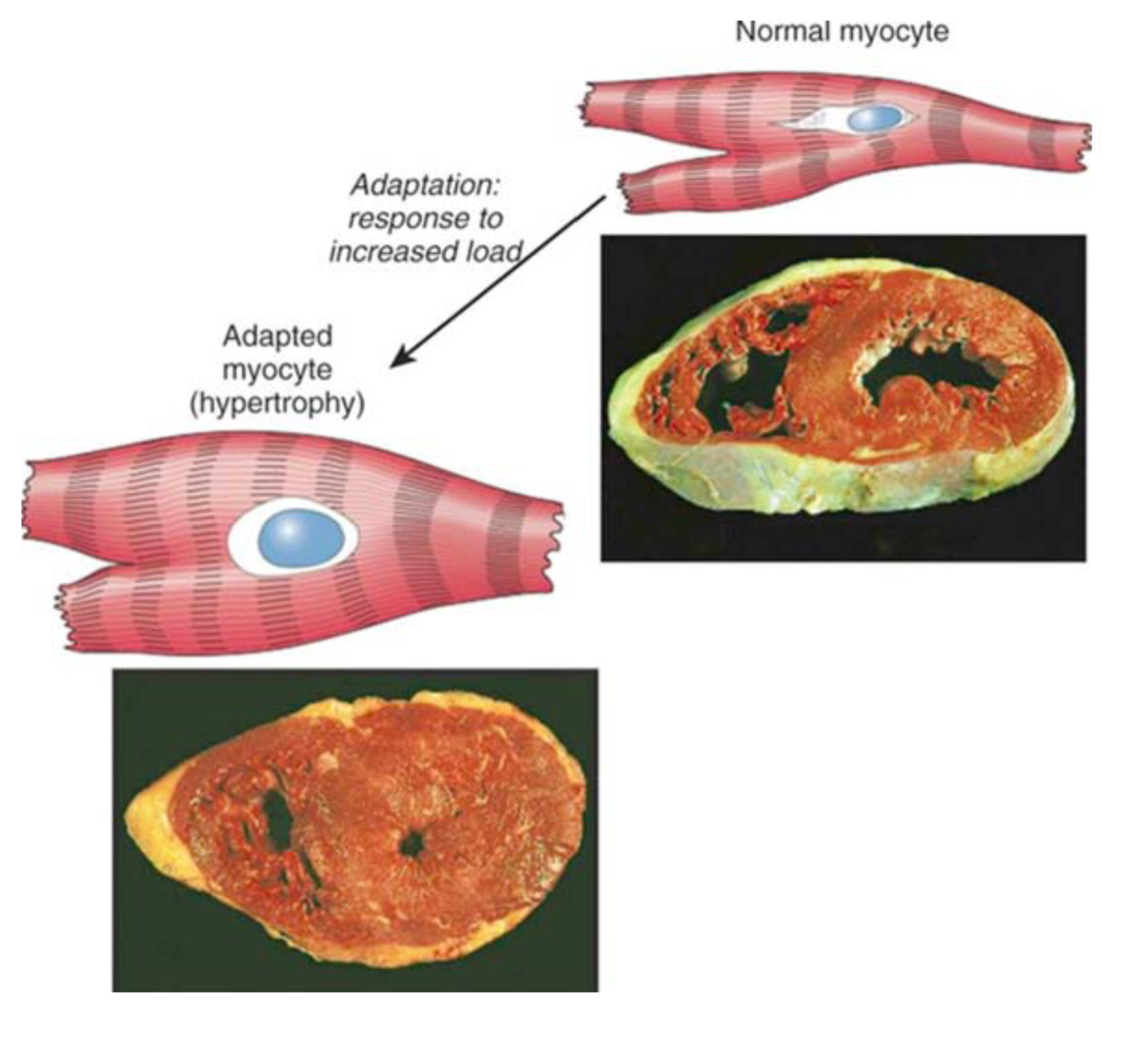
Directly creates a substantially higher afterload, thereby increasing the heart's workload and causing myocardial hypertrophy
Why is hypertension deadly? Pt2
Directly creates a substantially higher afterload, thereby increasing the heart's workload and causing myocardial hypertrophy

Hypertension is a major risk factor for: (6)
- Stroke
- Myocardial infarction
- Heart failure
- Aneurysms
- Peripheral artery disease
- Chronic kidney disease
Primary (Essential) Hypertension
The chronic elevation in blood pressure that occurs without any evidence of underlying disease
Accounts for 90‐95% of HTN cases
Related to:
advancing age
high salt intake
race
sedentary lifestyle
family history
stress
gender
obesity
smoking
heavy alcohol consumption
Secondary Hypertension
Only 5‐10% of hypertensive cases are classified as secondary
Caused by a disorder or situation that increases TPR or CO,
e.g.
.
• Renal failure (most common)
• hyperthyroidism
• renin‐producing tumors
• Cushing's syndrome
• hyperaldosteronism
• pheochromocytoma
Management of Hypertension (2)
Lifestyle Changes / Modification of Risk Factors
Anti‐Hypertensive Medications
Arteriosclerosis
- Abnormal thickening and hardening of the arterial walls (especially the tunica intima & media)
- Decreases the ability of an artery to change its radius, mainly because of rigidity and loss of elasticity
- Can lead to narrowing of the arterial lumen (thereby producing ischemia)
- Commonly associated with hypertension and diabetes mellitus
Aneurysms
Vessel aneurysms are due to weakening of the vessel wall, followed by abnormal dilations, which have a tendency to rupture
Often times, they are silent, unless there is compression of neighboring structures
Can be congenital or acquired
May be repairable, but depends on location
Aneurysms Types (2)
Circumferential or Fusiform
Saccular or Berry
Dissecting
Circumferential or Fusiform Aneurysms
Entire wall of the artery “outpouches”
Common in the abdominal aorta
(AAA = abdominal aortic aneurysm)
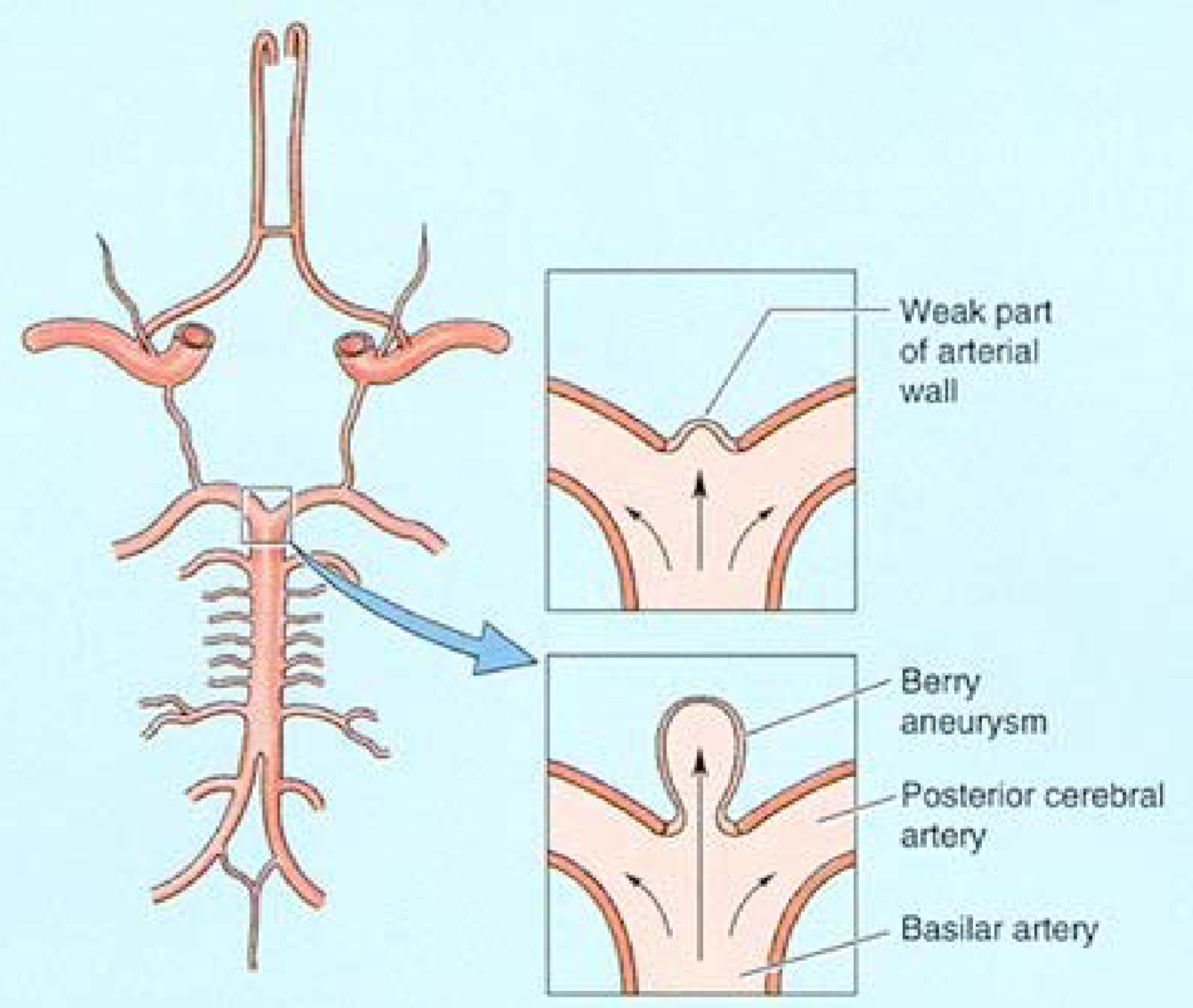
Saccular or Berry Aneurysms
Only one portion of the arterial wall “outpouches”
Most often observed in the small arteries of the brain, especially in the Circle of Willis
Dissecting Aneurysms
Similar to circumferential
Tunics of the arterial wall separate; blood collects in-between the tunics
Common in the aortic arch