Accounting Midterm
 Call Kai
 Learn
 Practice Test
 Spaced Repetition
 Match
 Flashcards
 Knowt Play
1/81

Earn XP
82 Terms
income statement
company performance
statement of retained earnings
what company did with profits, portion of net income reinvested into the business
balance sheet
financial position, snapshot, classifies current v.s. long term assets and liabilities
statement of cash flows
cash inflows and outflows
accounting equation
assets = liabilities + equity
relationship between financial statements
income statement » statement of retained earnings » balance sheet » statement of cash flows
what is accounting?
a) an information system that measures and records business activities
b) processes data into financial statements and reports
c) communicates results to decision makers
Generally Accepted Accounting Principles (GAAP)
method by which transactions are measured and recorded
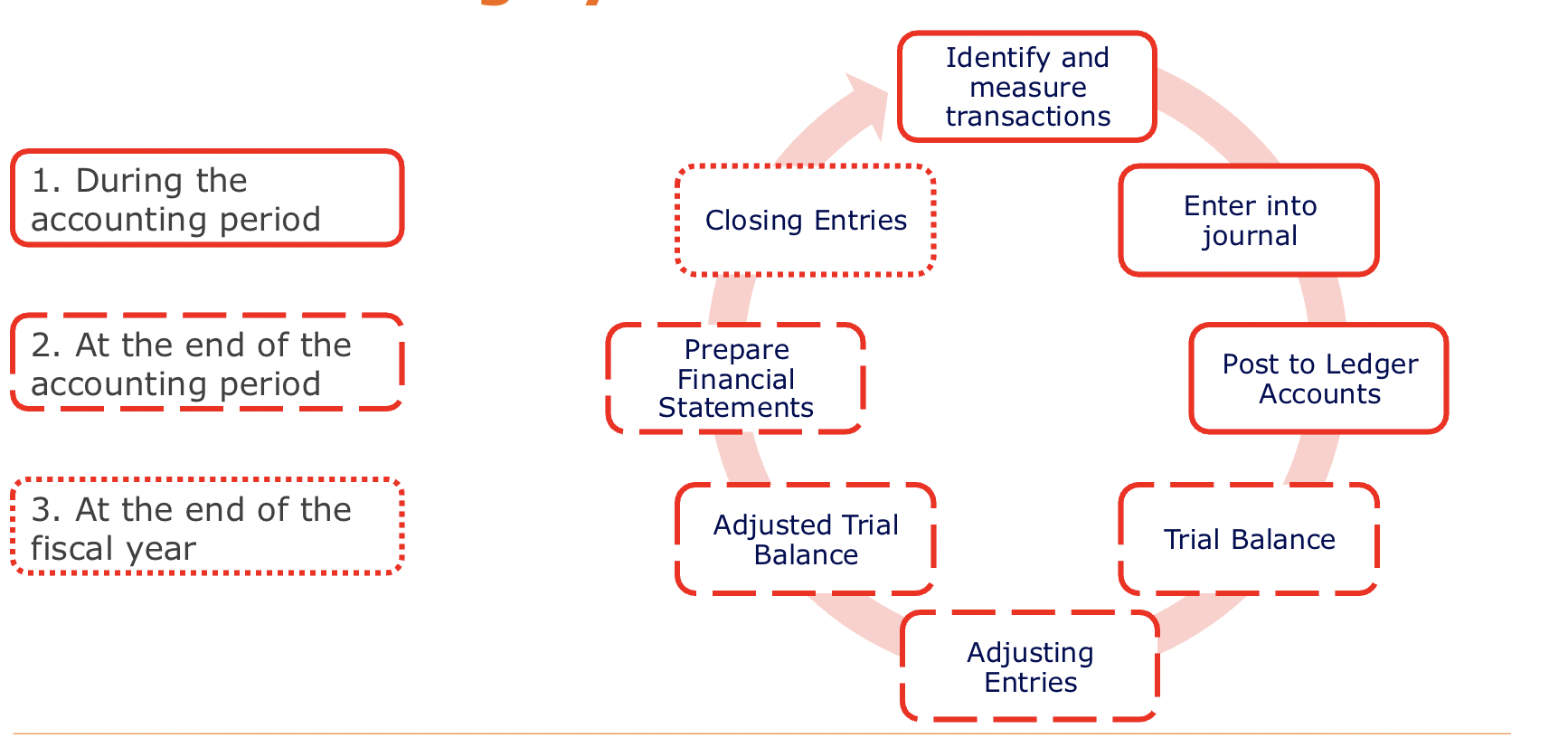
accounting cycle
the process by which a company’s financial statements are prepared
entity assumption
an organization stands apart from other
organizations and individuals as a separate
economic unit
continuity (going-concern) assumption
entity will continue to operate for the
foreseeable future
historical cost principle
assets should be recorded at their actual cost
on the date of purchase
stable-monetary-unit assumption
assume the dollar’s purchasing power is stable over time
assets
what you own
liabilities
what you owe/third party claim on assets
equity
insider claims on assets
net income (loss)
revenue — expenses
ending retaining earnings
(beginning retained earnings + net income) — dividends
revenue
what you earn, regardless of cash
expenses
costs of doing business
current asset
expected to be used or converted to cash within 12 months
Long-term assets
expected to benefit the company beyond just the next year/cycle
current asset accounts
cash, accounts receivable, inventory
long term assets accounts
property, plant, equipment, trademarks
current liabilities
debts due within 12 months
long-term liabilities
debts due after 1 year/cycle
current liabilities accounts
accounts payable, salary payable
long-term liabilities accounts
accrued liabilities, long term bond payments
stockholder’s equity accounts
paid-in capital (common stock), retained earnings, treasury stock
Transaction
an exchange — something is given and something is recieved in return. accounting records both sides of the transaction.
account
the record of all the changes in a particular asset, liability, or stockholders’ equity (type of account) during a period
Cash and cash equivalent
Cash: money
Cash equivalent: short term, highly liquid investments
Short-term investments
investments easily converted to cash and mature in less than 1 year
Accounts Receivable
Money owed to a business for sale of goods or services on account
Notes Receivable
A variation on accounts receivable. Legally binding document that grants the right to collect cash, plus interest in the future
Inventory
Goods the company sells to customers
Prepaid expenses
Expenses paid in advance, e.g. insurance/rent
Accrued revenues
Company's revenue that has been earned but not yet received
Property, plant and equipment
Tangible, long-lived assets used in the operation of the business, e.g.
Land, buildings, machinery, furniture, vehicles, natural resources
Long-term investment
Assets not directly used in the operation of the business
Intangible assets
Exclusive rights to valuable resources purchased or developed
Accounts payable
Obligations to suppliers/vendors for merchandise or services purchased on
account
Short term notes payable
A variation of accounts payable. Legally binding document that requires payment in cash, plus interest, due in less than 1 year
Deferred revenues
Money a company receives in advance for products or services that have not yet been delivered or performed
Accrued liabilities
Expenses that a business has incurred but not yet paid for
Long term debt
Legally binding agreements that requires payments in cash, plus interest, over a period greater than 1 year
Bonds payable
A type of debt financing that a company issues to raise capital
Common stock
Owners’ investment in the corporation through stock (Invested capital)
Retained earnings
Cumulative net income minus net losses and dividends over the company’s life (Earned capital)
Dividends
Company’s earnings distributed to its shareholders
Double-entry system
Recording dual effects of each transaction
debit
left side
credit
right side
assets are positive as…
debit
liabiltiies are positive as…
credit
stockholder’s equity is positive as…
credit
common stock is positive as
credit
retained earnings is positive as
credit
dividends are positive as
debit
expenses are positive as
debit
revenues are positive as
credit
journal
chronological record of transactions
ledger
grouping of all T-accounts
trial balance
lists all accounts with their balances and shows debits equal credits
accounting cycle
Analyze Transactions
Journalize Transactions
Post to Ledger
Construct Trail Balance
Prepare Financial Statements
accrual accounting
records revenue when it is earned, and expenses when they are incurred
cash basis accounting
records only cash transactions: cash receipts and cash payments.
when to record revenue
revenue is recognized when goods are delivered or services performed
expense recognition (matching) principle
expenses are recognized when they are incurred
journal entries
made at end of accounting period, made to ensure that the revenues and expenses are recognized in the proper accounting period
depreciation
allocates the cost of a plant asset to expense over the asset’s useful life
deferrals
an adjustment fr payment of an item or receipt of cash in advance
accruals
an adjustment for earned revenue or incurred expenses for future payment of an item or receipt of cash
calculating depreciation
divide the cost of the asset by estimated useful life
accumulated depreciation
shows the sum of all depreciation expense throughout the accounting period
prepaid expense (assets)
expense paid in advance
unearned revenue (liabilities)
cash received in advance
Accrued expenses (Liabilities)
Expense happened but not yet paid in cash
Accrued revenues (Assets
Revenue recognized(earned) but not yet received cash
closing entries
Prepares the accounts for the next period
debt ratio
Total Liabilities / Total Assets
current ratio
Current Assets / Current Liabilities