Chapter 12- ANIMAL SYSTEMS
 Call Kai
 Learn
 Practice Test
 Spaced Repetition
 Match
 Flashcards
 Knowt Play
1/37

There's no tags or description
Looks like no tags are added yet.
Name | Mastery | Learn | Test | Matching | Spaced | Call with Kai | Chat |
|---|
No analytics yet
Send a link to your students to track their progress
38 Terms
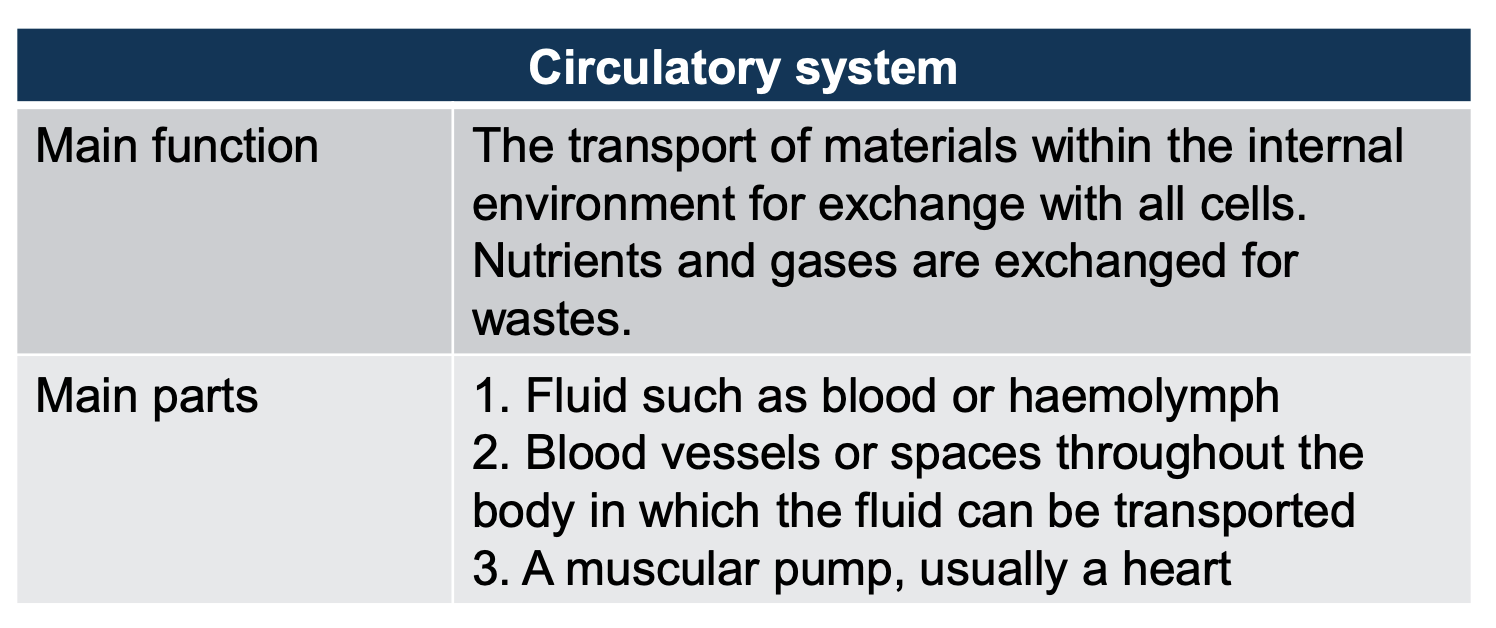
The circulatory system consists of three general components that together provide these essential features:
1) a fluid in which materials are transported, such as blood
2) a system of interconnected blood vessels or spaces throughout the body in which the fluid
moves
3) a muscular pump, usually a heart, that pushes the fluid through the blood vessels or spaces.
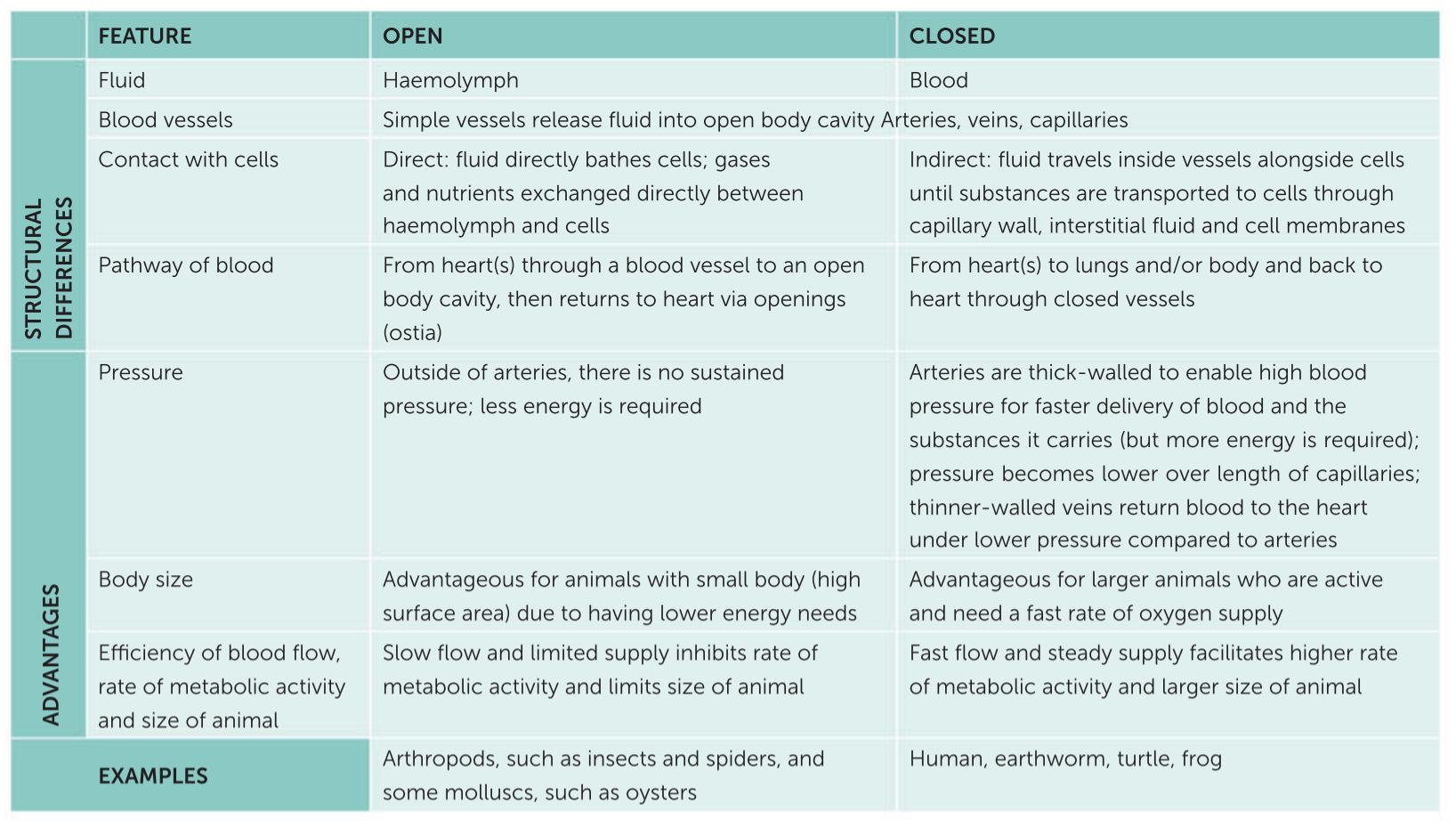
open circulatory system
the fluid circulates freely in the body cavity in which it bathes the cells. Substances can then enter cells by diffusion. Diffusion is the passive movement of substances from an area of high concentration to an area of low concentration across a semipermeable membrane.
The fluid in open circulatory systems
The fluid in open circulatory systems is called haemolymph because blood is mixed with interstitial fluid. Contraction of one or more muscular hearts pumps haemolymph through the open areas into spaces surrounding organs. Within these organs, haemolymph and body cells exchange substances such as gases. Relaxation of the muscular heart draws the haemolymph back from the organs through pores
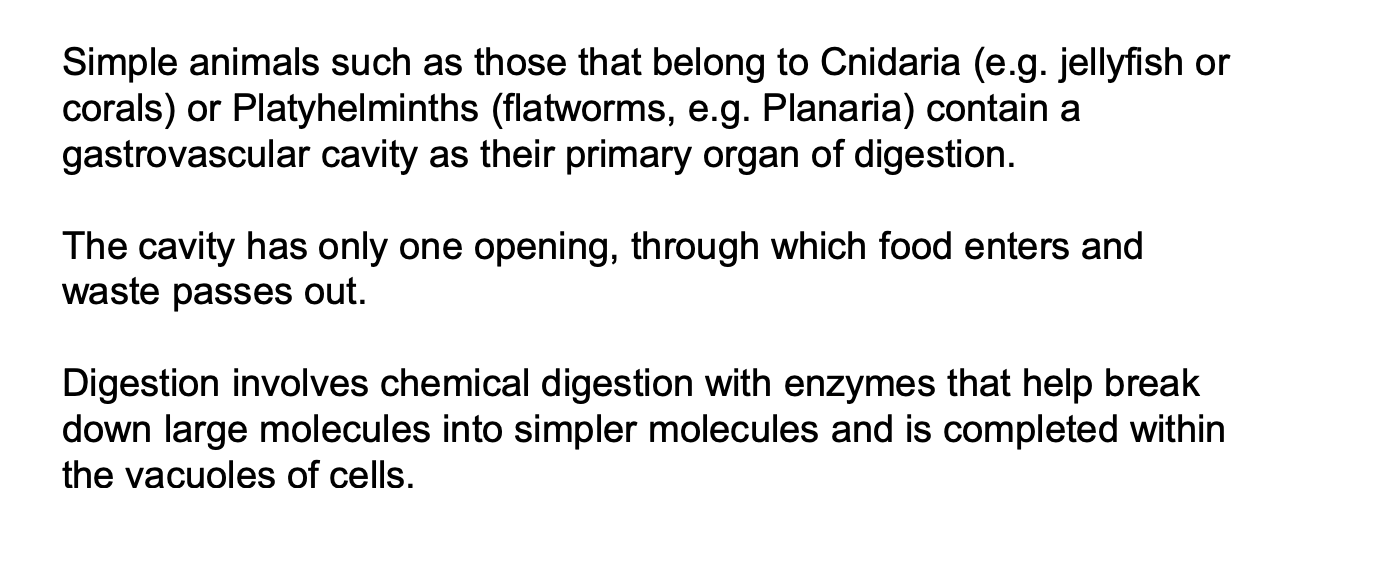
gastrovascular cavity
The gastrovascular cavity is a central cavity with a single opening that functions to transport and digest substances. The combination of a gastrovascular cavity and flat body, along with the process of diffusion, is enough to provide the substances needed.
closed circulatory system
the fluid flows through enclosed vessels called arteries, veins and capillaries. The fluid is called blood and it is distinct from the interstitial fluid found outside of blood vessels (in small spaces between cells). One or more hearts pump blood into large vessels that branch into smaller vessels that wind through tissues. The network of smaller vessels exchanges gases and nutrients with interstitial fluid and body cells.
A comparison of open and closed circulatory systems
Double circulatory systems
contain two circuits: a pulmonary circuit, which transports blood to the lungs and back to the heart, and a systemic circuit, which transports the oxygenated blood around the body and back to the heart
Single circulatory systems
Single circulatory systems (found in bony fish and sharks) contain one circuit. The heart pumps
blood to the gills to be re-oxygenated, then blood flows to the rest of the body and back to the
heart
Double circulatory systems (in a nut shell
(found in birds, reptiles, amphibians and mammals) contain two circuits. The pulmonary circuit transports blood to the lungs and back to the heart, and the systemic circuit transports oxygenated blood around the body and back to the heart.
The closed, double circulatory system is the transport system of the human body and
has four principal functions:
1 transportation of water, oxygen and carbon dioxide
2 distribution of nutrients and removal of wastes
3 maintenance of body temperature
4 circulation of hormones
gas exchange in fish
Fish absorb dissolved oxygen from water and release carbon dioxide through a process called diffusion. Water enters the mouth and passes over the gills, where oxygen moves from the water into the bloodstream, and carbon dioxide moves from the blood into the water to be exhaled
The circulatory system – for animals in which diffusion is not an efficient mechanism for transporting materials at a rate fit for survival.
Open circulatory system

Closed circulatory system

Examples of animals that contain an open circulatory system
Arthropods including insects such as grasshoppers and arachnids such as spiders. Some molluscs including gastropods such as snails and slugs.
Examples of animals that contain a closed circulatory system
Annelids such as earthworms.
Cnidaria such as squids.
All vertebrates including mammals, birds, fish, reptiles and amphibians have closed circulatory systems.
The gastrovascular cavity

diffusion

Single and double closed circulatory systems

Double closed circulatory systems

The closed, double circulatory system is the transport system of the human body and has four principal functions:

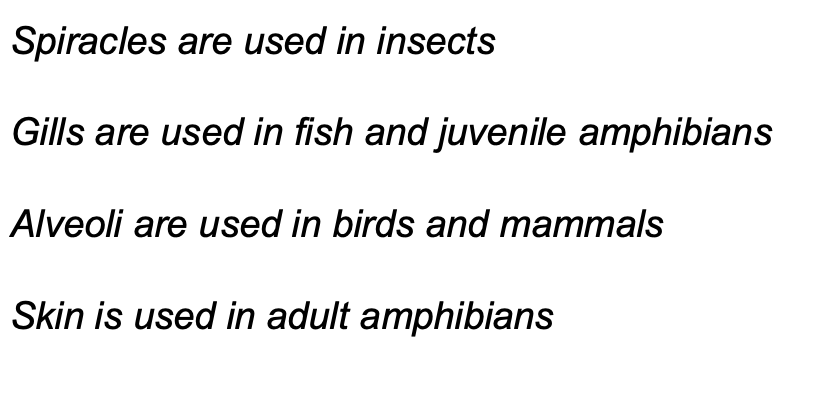
Gas exchange surfaces and examples of groups of animals that use them:
Cellular respiration

Features of gas exchange surfaces
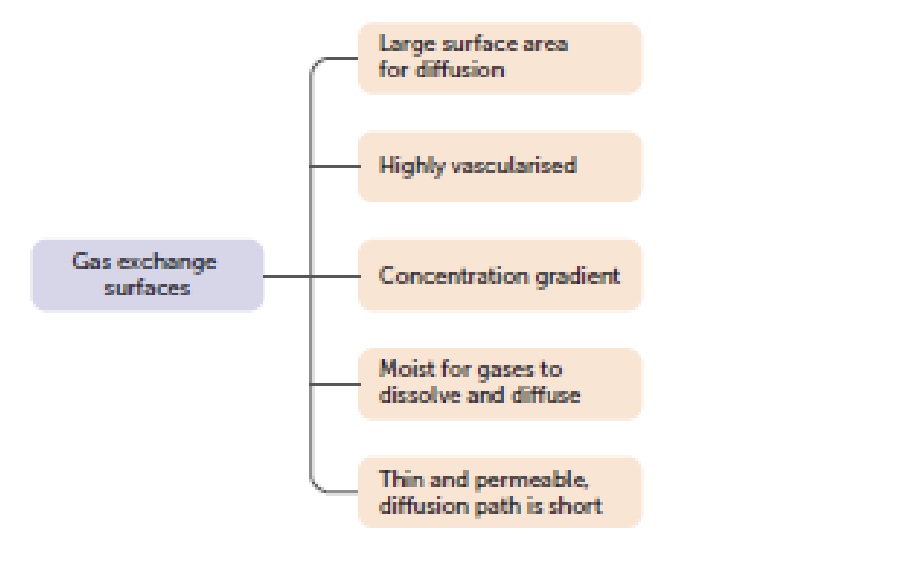
Summary of the four main specialised gas exchange surfaces

Gas exchange in amphibians

Gas exchange in fish
The gas exchange structures in the gills of a fish. Water flows through gill filaments in the opposite direction from blood flowing inside the blood vessels (countercurrent flow).
Countercurrent flow maximises oxygen transfer because it maintains a concentration gradient along the whole structure

Digestive systems

The digestive system has four main roles and these involve the functioning of specialised structures.
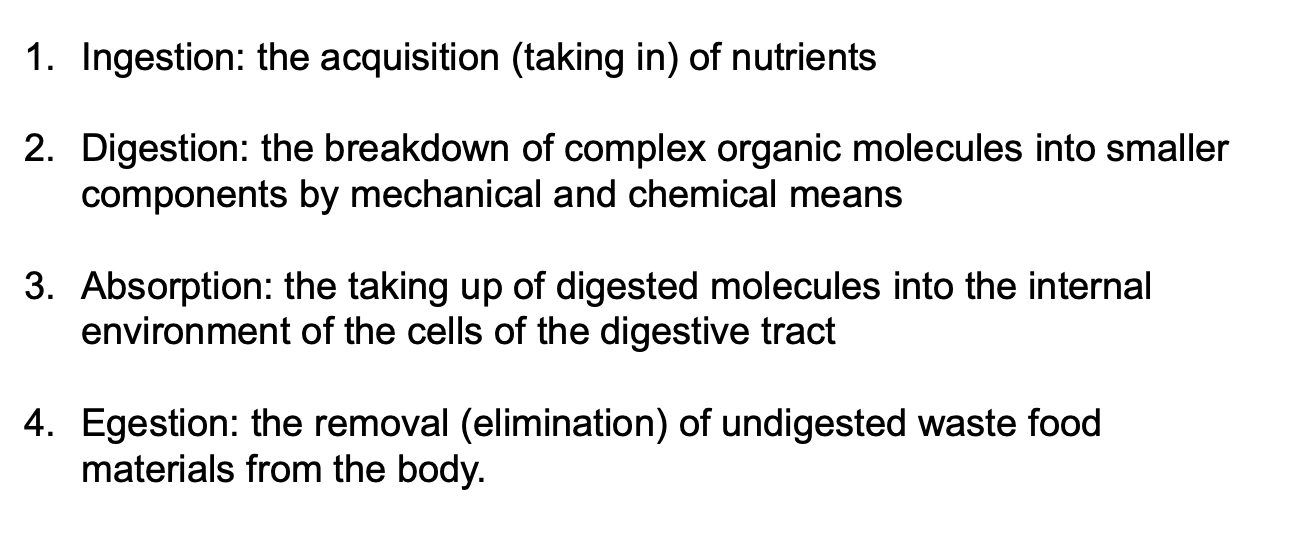
The gastrovascular cavity
Functions of large intestine:

Carnivore dentition
Many carnivores have pointed incisors and canines, and jagged premolars and molars. The functions of these specialised teeth are to kill prey, and to cut and rip pieces of flesh during their meal e.g. dingoes and sharks.
Herbivore dentition

omnivore dentition