L32-absorption:sublingulal, buccal and rectal drug delivery
 Call Kai
 Learn
Learn Practice Test
 Spaced Repetition
 Match
Match Flashcards
 Knowt Play
1/18

There's no tags or description
Looks like no tags are added yet.
Name | Mastery | Learn | Test | Matching | Spaced | Call with Kai | Chat |
|---|
No analytics yet
Send a link to your students to track their progress
19 Terms
what is the MEC
its the mininum effective concentration- the smallest concentration at which the drug is effective
what is the MTC
it is the minimum toxic concentration at which above the drug becomes toxic
what are the two ways drugs can be delivered to the systemic system via the mouth
sublingual
buccal
where is the buccal
underneath the cheeks and behind the lips
where is the sublingual
underneath the tongue
what is the main barrier in getting drugs through the buccal/sublingual into systemic circulation
the epithelium
whata re the three main mucosal types
masticatory- involved in eating
lining-delivery of drugs
specialised lining like the tongue
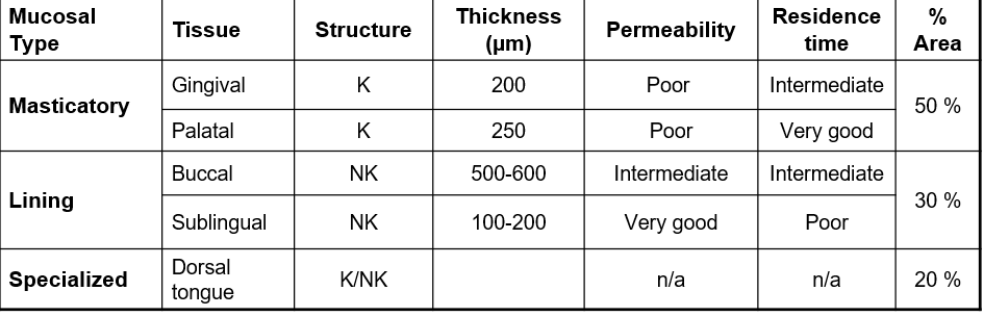
describe the difference in thickness, permeability and residence time for buccal and sublingual
buccal is more thicker than the sublingual route
the sublingual route is the most permeable
buccal has a better residence time than sublingual
what is the effect of saliva and mucus for drug absorption via the epithelia
saliva is mainly made up of water + mucus, electrolytes and enzymes
the mucus acts as a physical barrier to drug absorption
saliva can aid and hinder absorption as it provides aqueous environment that’s needed for drugs but saliva wash out can occur (dosage form can be washed away )
describe the blood supply in the mouth
there is good blood supply in the mouth and good blood flow
this allows drugs to enter the systemic circulation avoiding hepatic first pass effect in the liver
what are some other factors that effect the success of delivering drugs via the mouth
residence time- sustained delivery possible
taste
irritation
compliance- talking, eating drinking
what are three types of dosage forms available for transmucosal delivery
quick release
controlled release- slow release over time
pulsatile release-burst of delivery then slow release
list some advantages and disadvantages of using sublingual and buccal delivery methods

when is rectal drug administration best used
unconscious patients
children
patients with nausea or vomiting
patients with upper GI tract disease
drugs with bad taste
drugs that are heavily degraded by oral delivery
describe the anatomy of the rectum
its the last 15-20cm of the colon
normally empty
relatively high surface area but there’s no villi to increase it - unlike small intestines
around 3m of mucus which coats it
neutral ph.
one cell thick epithelium
describe the rectal absorption of drugs
transcellular and paracellular absorption which depends on the size, lipophilicity and the ionisation of the drug through the simple epithelium
the simple one cell thick epithelium means there’s rapid absorption across it
what are the main dosage forms for rectal administration of drugs
suppositories
capsules
tablets
ointments, creams and gels
solutions emulsions and suspensions
describe the rectal blood supply
it contains venous drainage which avoids the blood being transferred to the liver
there’s a possible avoidance of hepatic first pass mostly avoided in the lower region and not higher as in the higher region there’s most cross over with hepatic portal vein
what are the advantages and disadvantages of administering a drug via the rectal route
