Bacteriology Exam 3
 Call Kai
 Learn
 Practice Test
 Spaced Repetition
 Match
 Flashcards
 Knowt Play
1/207

There's no tags or description
Looks like no tags are added yet.
208 Terms
What is disinfection
destruction of MOST microorganisms and viruses on NONLIVING TISSUE
ex. use of phenolics, alcohols, aldehydes or soaps on equipment or surfaces
used in relation to pathogens
What is Antisepsis
Reduction in the number of microorganisms and viruses, particularly potential pathogens, on LIVING TISSUE
ex. use of iodine or alcohol to prepare skin for an injection
disinfectants whose strength has been reduced to make them safe for living tissue
What is Sterilization
Destruction of ALL microorganisms and viruses in or on an object
ex. preparation of microbiological culture media and canned food
achieved by steam under pressure, incineration, or ethylene oxide gas
What is Sanitation
REMOVAL of pathogens from objects to meet PUBLIC HEALTH STANDARDS
ex. washing tableware in scalding hot water in restaurants
standards of sanitation vary among governmental juristdictions
What is Aseptic
Refers to an ENVIRONMENT or procedure free of pathogenic CONTAMINANTS
ex. prep of a surgical field, washing hands, flaming lab equipment
aseptic techniques followed by scientists, lab techs, and healthcare workers
What is Degerming
REMOVAL of microbes by MECHANICAL means
ex. hand washing, alcohol swabbing at site of injection
chemicals play a secondary role
What is Pasteurization
Use of HEAT to destroy pathogens and reduce the number of spoilage microorganisms in FOOD and BEVERAGES
ex. pasteurized milk and fruit juices
heat treatment brief to minimize alteration of taste and nutrients, microbes remain and eventually cause spoilage
What do the suffixes -cide or -cidal mean
Suffix indicating DESTRUCTION of a TYPE of microbe
ex. bactericide; fungicide; germicide; virucide
germicides include ethylene oxide, propylene oxide, and aldehydes
What do the suffixes -stasis or -static mean
Suffixes indicating INHIBITION but not complete destruction of a type of microbe
ex. bacteriostatic; fungistatic; virustatic
germistatic agents include some chemicals, refrigeration, and freezing
What is Microbial Death Rate and what is it used for
used to compare antimicrobial efficacy
permanent loss of reproductive ability under ideal environmental conditions
Constant rate, not number (fraction of cells have certain susceptibility
typically 10-fold reduction (decimal reduction time, log scale)

What can Antimicrobials target
Cell surface or metabolism
Where do viral membranes come from
host cells
What do cell walls do
resist osmotic pressure
True or False: Amino Acids and nucleic acids can be denatured
True
What are Physical Control Methods
methods that do note use chemicals
Temperature Change (moist and dry heat, refrigeration)
Radiation (damaged nucleic acids)
Osmotic Stress (hypertonic environment)
Filtration (fluid or air)
What is the Thermal Death Point
lowest temperature to kill all cells in ten minutes

What is Thermal Death Time
Time to kill all cells at specific temperature, we want high temps to denature proteins
decimal reduction time depends on species and media
endospores protect against heat
ex. Clostridium Botulinum in canned foods

Is water or air a better conductor
Water is a good conductor, air is a bad conductor
At what temp does water boil
Water boils at 100 degrees C (~212 degrees F) at sea level, decreases at lower pressure
5 minutes for vegetative cells; over 20 minutes for endospores
okay for decontamination but not sterilization
What happens in Autoclaving
uses pressurized steam
-usually 121 degrees C at 15 psi for 20 minutes, sterility indicators
What happens in Pasteurization
sub-boiling for extended time
-not sterilization, slows spoilage, ultra high temp is 1-3 seconds of 140 degrees C

Explain the use of Dry Heat
usually uses higher temperature and time
used when steam would damage equipment
incineration is ultimate sterilization technique
What temperature is bacteriostatic
Cold temperatures
Refrigeration 0-7 degrees C; Freezing - less than 0 degrees C
Slows growth of non-psychrophiles (bacteria that do not thrive in cold environement), doesnt kill
Listeria and Yersinia can grow at fridge temperatures
Why would you use salt or sugar to preserve food
It creates a hypertonic environment, bacteria would have lower solute potential of surroundings
Why is Dessication (the act of drying out food) used to preserve food
Water is needed for metabolism, some molds are tolerant
What is Freeze-Drying and when is it used
Lyophilization
liquid nitrogen or CO2 in a vacuum, prevents ice crystals
used for long term (over 30 years) storage of cultures
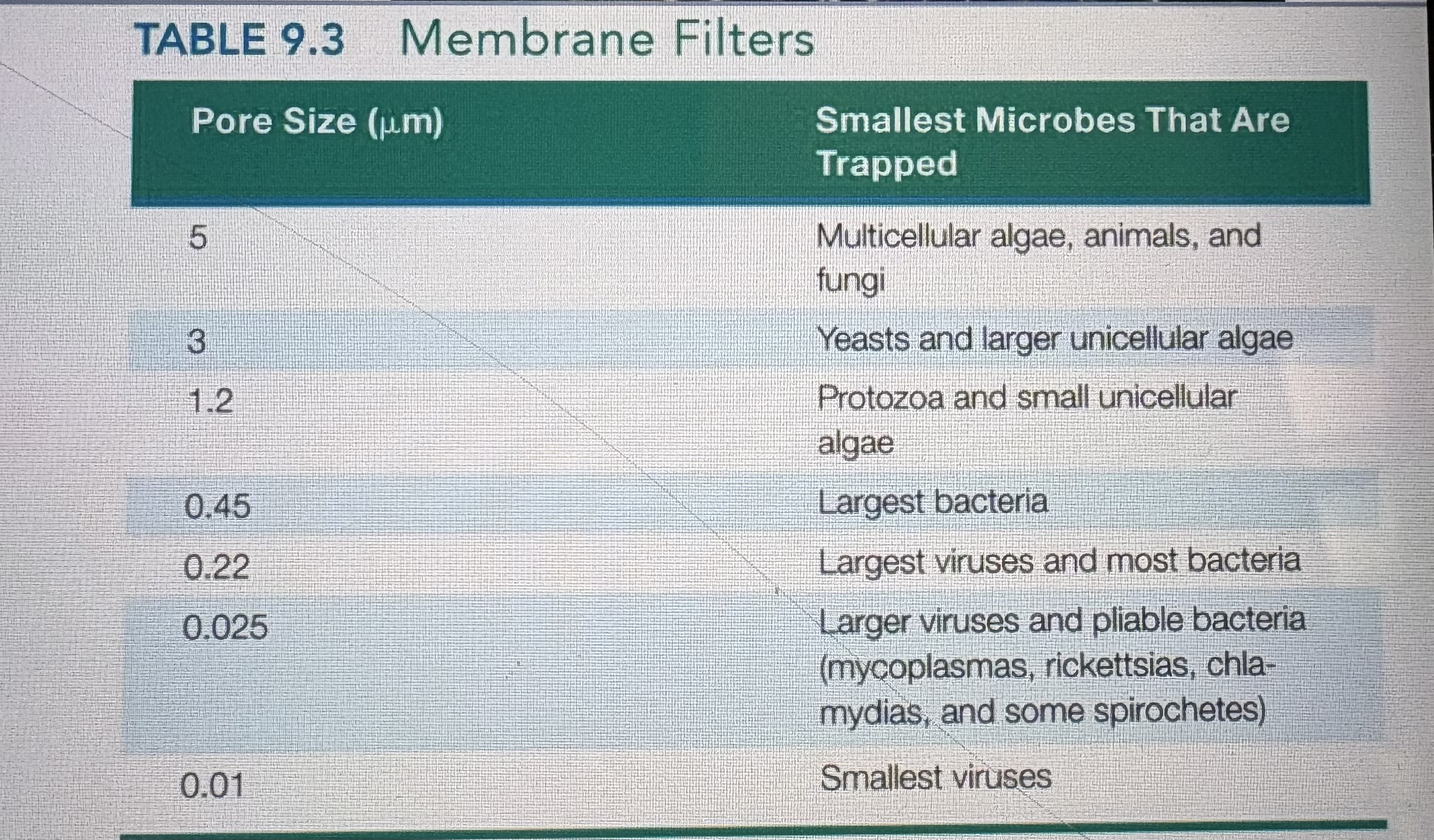
What is Filtration
only allows small particles through
sieves made of small particulate or membranes with specific pore sizes
high-efficieny particulate air (HEPA) filters for air
True or False: Radiation is very efficient at sterilizing
True
What is Ionizing radiation and what does it do
creates ions and radicals
denatures proteins and DNA, deep penetration
Sterilizes and slows decomposition/over-ripening
Electron beams, gamma rays, X-Rays
What is Non-ionizing radiation and what does it do
includes UV and microwaves
UV light causes DNA dimerization, kinks structure and kills cells
low penetration
Can the same chemical method be used in all situations
No, chemical methods are situation dependent
they are affected by time, temperature, pH, concentration etc.
high concentrations are typically used as disinfectants, low concentrations are used as antiseptics
Antimicrobial drugs are a chemical method
What do Phenols do
phenols and phenolics contain phenol
denature proteins, disrupt membranes
broad spectrum and long lasting, may cause skin irritation
What do Alcohols do
They kill most microbes, not spores
used at 70-90%, denature proteins and disrupt membranes
isopropanol (better) or ethanol
What do Halogens do
Iodine, chlorine, bromine, fluorine
many uses as disinfectants and antiseptics
Denature Proteins, effective against some spores
What do Oxidizing Agents do
Release toxic oxygen radicals (hyper reactive) and oxidize enzymes
peroxides, ozone, peracetic acid
What do Surfactants do
decrease surface tension, aid washing
detergents include quats, antimicrobial, not sporacidal
Benzalkonium chloride (Zephiran) and cetylpyridinium chloride (Cepacol
Soaps and Detergents
What do Heavy Metals do
Bind sulfur in cystine (amino acid) denaturing proteins
Arsenic, zinc, mercury, silver copper
What do Aldehydes do
have terminal CHO groups
crosslink (fix) proteins and nucleic acids, stopping function
Glutaraldehyde and formaldehyde
What do Gaseous Agents do
allow bulk and thorough decontamination
ethylene oxide, propylene oxide, cause crosslinking
highly explosive, poisonous, and carcinogenic
What do Enzymes that target microbial structures do
lysozyme digests peptidoglycan, prionzyme breaks prions
When it comes to the activity level of germicides, what is typically safer for humans
lower activity usually means safer for humans, but it can also mean less effective

True or false: different pathogen classes have the same average susceptibility
False, different pathogen classes have different average susceptibility
What causes different pathogen classes to have different susceptibility and how should you treat it
affected by site/accessibility, germicide reactivity, concentration and treatment line
Target the hardest to get rid of, rest will die in the process

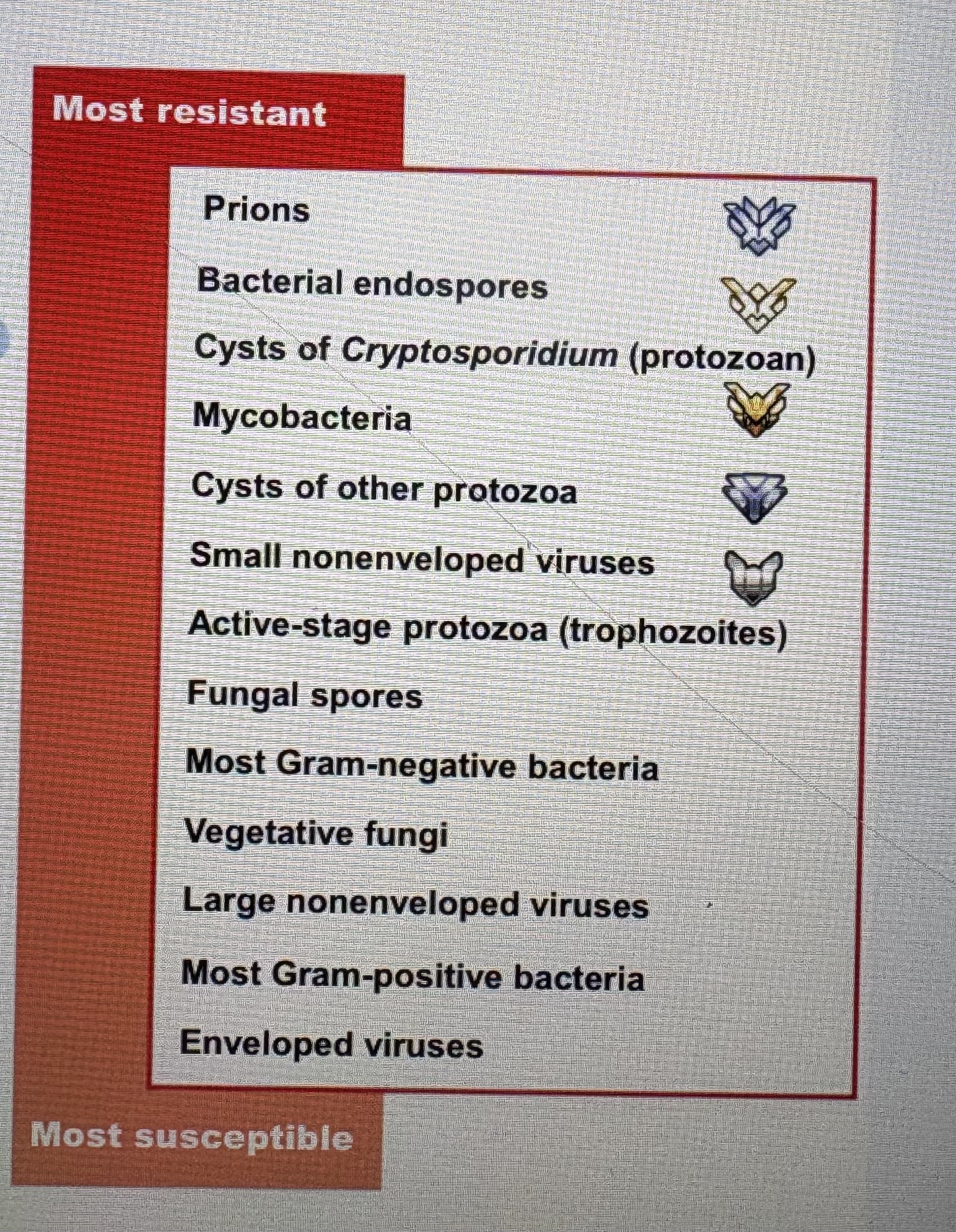
Why are viruses pretty susceptible
membrane envelope

Why are Potozoans more resistant
they may form highly resistant cysts

Why are Mycobacteria More resistant
mycolic acid cell wall resists disinfectants

Why are Endospores more resistant
Survive extreme conditions, requires autoclaving

Why are Prions very resistant
misfolded proteins, require extreme methods
What are the methods used to determine efficacy (capacity of an antimicrobial agent) of antimicrobials
phenol coefficient
use-dilution test
Kelsey-Sykes Capacity Test
In-Use Test
What is a Phenol Coefficient
relative to phenol
1= as effective, 2 = 2x, no longer common (stronger than phenol), less than 1 means less effective
What is a Use-Dilution Test
coat cylinders with standard strains, dip in diluted disinfectant, see what dilution required for sterilization
US standard, considered outdated and flawed
What is a Kelsey-Sykes Capacity Test
standard strain added to concentration to be used, test for growth at different exposure times
EU standard, measures “real use” conditions
What is an In-Use Test
swab environment before and after application
most representative of a real-world application, least controlled
True or False: Microbes Compete with each other
True
How do microbes compete with each other
They release antibiotics that attack others
semisynthetic antimicrobials are modified for effectiveness
synthetic drugs are completely human-made, rare

What are the characteristics of bacterial cell walls
made of peptidoglycan
NAG NAM with peptide crosslinks
What do cell walls do and what organisms have them
They resist osmotic pressure
found in bacteria, archae, and fungi
What do Beta Lactams do and what antimicrobials fall into this category
disrupt NAG/NAM crosslinkage
penicillins (methicillin, penicillin G), cephalosporins - affect gram-positive and some gram-negative bacteria

What do Non-beta lactams do and what antimicrobials fall into this category
affect cell wall in other ways
Vancomycin (Gram + bacteria) and Bacitracin - affect gram positive and gram negative bacteria
What do Mycolic Acid inhibitors do and what antimicrobials fall into this category
used against mycobacterium to inhibit mycolic acid
Isoniazid, often takes months or years - affects mycobacteria

What are the structures of ribosomes in prokaryotes
70S (30S subunit and 50S subunit)
Eukaryotes have a different ribosome structure
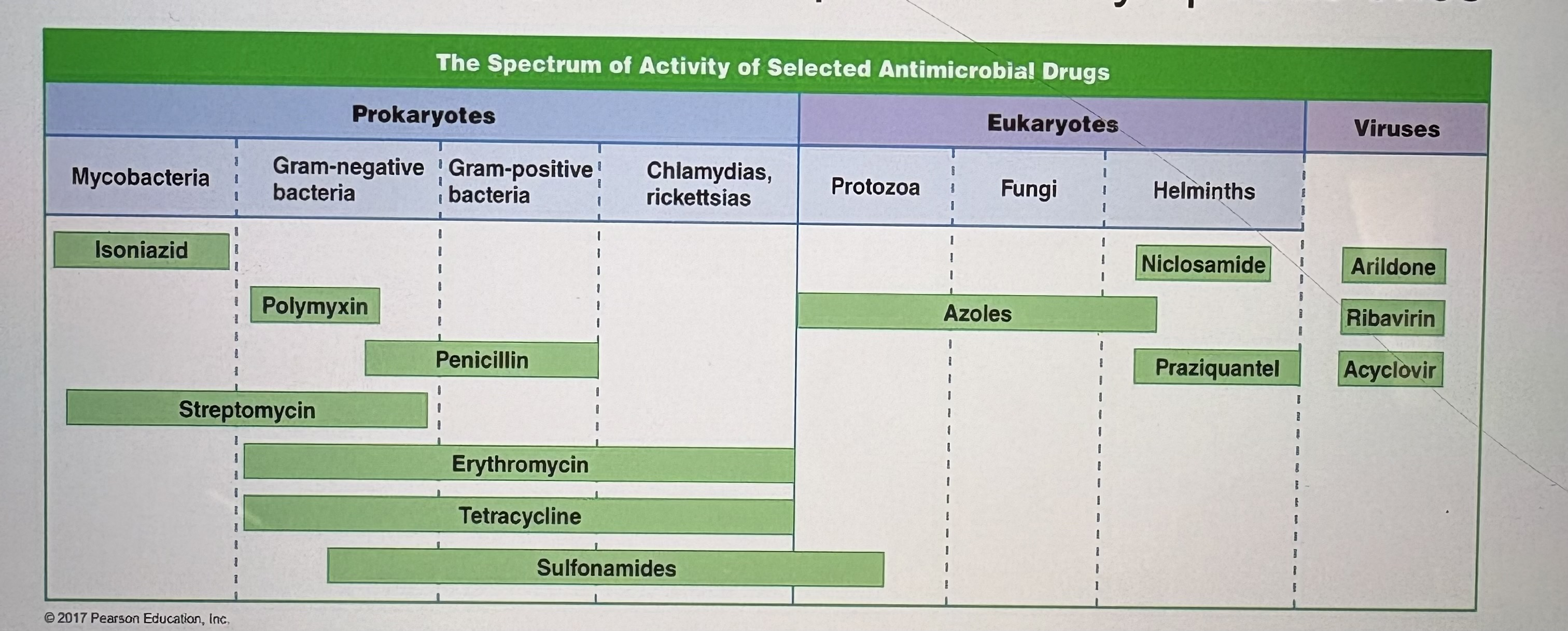
What antimicrobials target the 50S subunit of a prokaryotic ribosome
Chloramphenicol - tergets gram positive and gram negative bacteria
lincosamines - target mostly gram positive bacteria
streptogramins - target gram positive bacteria
macrolides (erythromycin) - targets gram negative, gram positive and chlamydia prokaryotes)

What antimicrobials target the 30S subunit of a prokaryotic ribosome
tetracycline (affecsts gram negative, gram positive, and chlamydia prokaryotes) and aminoglycosides (targets mycobacteria and gram negative bacteria)
(streptomycin and gentamicin)
What antimicrobial blocks ribosome assembly
Oxazolidinones (linezolid) - targets most gram positive bacteria
Describe Polyenes
target cell membranes of fungi and protozoa
nystatin and amphotericin B bind ergisterol (steroid) in membrane, form pores that lyse cells
affects cholesterol in human cells to lesser extent
Describe Azoles and allylamines
cell membrane inhibitor
prevent ergosterol synthesis
Fluconazole and terbinafine, safer in humans
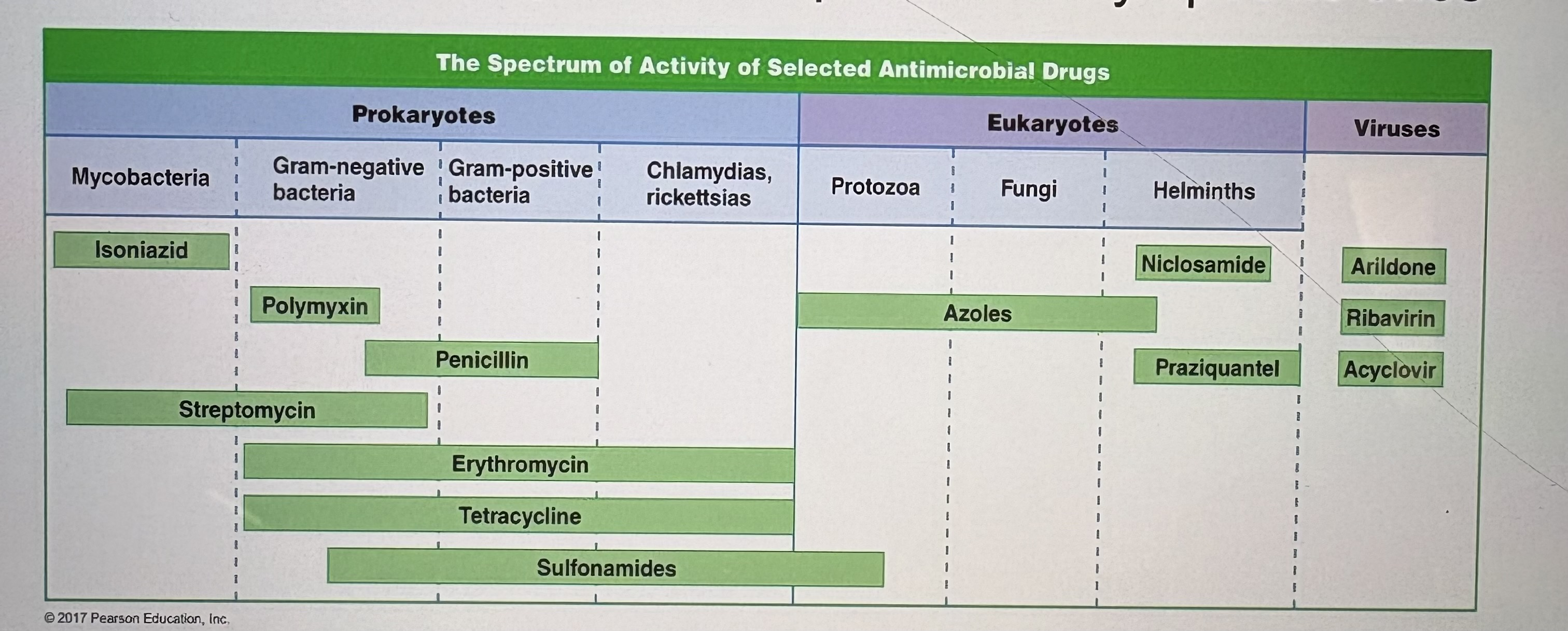
Describe Polymyxin B
cell membrane inhibitor
targets Gram negative, especially Pseudomonas
kidney toxicity
Describe Pyrazinamide
targets mycobacterium tuberculosis
disrupts transport
Bacteria make their own Flic acid (Vitamin B9), where do humans get it from?
their diet
Describe Sulfonamides (sulfa)
drugs competitively inhibit nucleotide synthesis
Antimetabolite
broad spectrum ( gram positive, gram negative, chlamydias, protozoa)

Describe Trimethoprim
works similarly to sulfa (allows no creation of folic acid)
antimetabolite
broad spectrum ( gram positive, gram negative, chlamydias, protozoa)
What incorporates into DNA/RNA
Nucleotide analogs
viral DNA polymerase has poor error correction
Azidothymidine (AZT) treats HIV
Describe DNA gyrase/ topoisomerase inhibitors in prokaryotes
Quinolones and fluoroquinolones (Cirprofloxacin)
prevents coiling/uncoiling
Falls under Nucleic Acid Synthesis in the antimicrobials graph
target gram negative and positive bacteria
Describe RNA polymerase Inhibitors
Rifampin
used against Mycobacterium
falls under Nucleic Acid Synthesis in the antimicrobials graph
What is the spectrum of action in antimicrobials
the number of kinds of pathogens affected
broad spectrum him many; narrow spectrum only specific ones
What do efficacy tests do
determine relative strength of antibiotics
can be species specific and concentration dependent
What is the Kirby Bauer disk diffusion method
discs soaked in antibiotic, diffuse out, give different zone of inhibition
left image

What is an E-test
strip with gradient of antibiotic, growth meets at minimum inhibitory concentration
right image

What is MIC
minimum concentration of growth inhibition
What is MBC
Minimum bactericidal concentration
try to grow MIC test
concentrations further distinguished as bactericidal bacteriostatic
bacterial survivors may develop resistance
True or False: Bacteria that survive treatment are least susceptible to it
True
Regrowth of bacteria after a treatment menas the new population is more ______
resistant
What does it mean if resistant superbugs cause superinfections
it will be harder to treat
can be side-effect or broad-spectrum treatment, drugs of last resort are running out
Where are resistance genes found
In chromosomes or R plasmids
What is intrinsic resistance
mechanisms doesnt target them
What is Acquired Resistance
alter biology to be unaffected, mutation or HGT
What are the three main mechanisms of resistance
Alter drugs target
inactivate drug
remove drug from cell
efflux pump
reduced permeability
what are Agricultural practices that promote resistance
antimicrobials in animal feed select fro resistant bacteria in animal GI tract that spreads to manure
Meat may become contaminated with resistant microbes from slaughtered cows that were fed antimicrobials
manure contaminated water and manure based fertilizers introduces resistant bacteria to food chain
What are clinical practices that promote resistance
unregulated antibiotic use in developing countries
noncompliance with prescription dosing and inappropriate prescriptions
healthcare setting is the perfect place for resistant microbes due to pathogens, transmission opportunities, and drugs
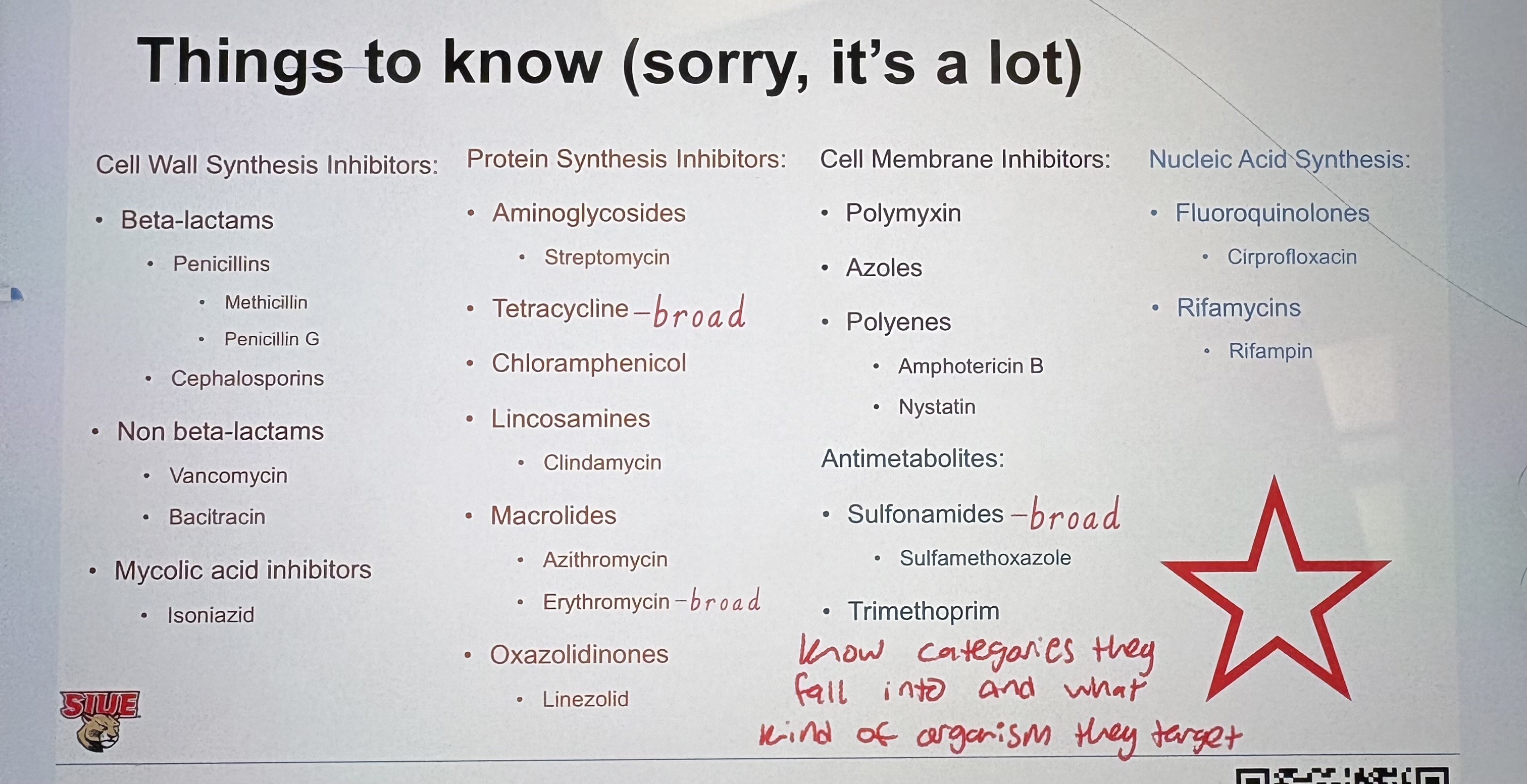
KNOW THIS CHART
KNOW THIS CHART

What is the Human microbiome project
ran 2007-2016
found ~10,000 microbial species in/on human body
~5:1 microbes to human cells
> 1,500 pathogens
What is a commensal host-microbe interaction
benefits one
What is a Mutualistic host-microbe interaction
benefits both
What composes the microbiome
nonpathogenic microbes
What type of microbes persist throughout life in the microbiome
resistant microbes
most are commensal - feed on dead skin and waste
some are mutualistic - aid in nutrition, immunity, etc
What type of microbes are temporary n the microbiome
Transient microbes
hours/days/months, outcompeted or eliminated
How are nonpathogenic microbes acquired
acquired at birth from contact, air, food, etc
What does the microbiota include
opportunistic pathogens
interactions can change to parasitic
Introduced to new area
Immune suppression
Loss of competition
Does all contamination (exposure) lead to disease
no
nonpathogenic residents or pathogenic transients
What is infection
invasion and colonization by pathogen