Exam 3 Lecture 3 (LAST!)
 Call Kai
 Learn
 Practice Test
 Spaced Repetition
 Match
 Flashcards
 Knowt Play
1/113

There's no tags or description
Looks like no tags are added yet.
114 Terms
Can patient care for self? rehab floor, convalescent home with rehab floor
Can they live independently, or do they have help at home?
Do they need assistive devices?
Are there steps, stairs, or other barriers to recovering at home? no throw rugs
Assess learning needs and get a medication history. 6 P's, know when to report, if pt has CKD then do not give NSAIDS
Assess pain, gait, bending ability, listen for crepitus (popping and cracking in joints) when they bend.
Check strength and skin
Check neurovascular status (if someone has ant kind of injury we always check this often because bone moving can cause break in vein/vessel and cause hemorrhage. 6 P's
Assessment After Injury (MSK)
Muscles and bones change
- Kyphosis (hump of spine)
- Scoliosis
- Disc degeneration (discs have shock absorption)
- Flexibility diminishes (hip/knee replacement)
- Osteoporosis (sponge bone)
- Muscle loss
Hand function
- Reduced due to degenerative changes
-- Rheumatoid arthritis (p. 1078-1082)
-- Osteoarthritis (p. 1122-1124)
aging effects on MSK
X-rays: cheaper, lots of info on bones
CT Scan: quick easy
MRI: long, claustrophobic, noises
Arthrography: picture
Bone densitometry: osteoporosis!!!!!!! most important diagnostic study
Bone scans: how bones are doing
Arthroscopy
Arthrocentesis
Electromyography
Biopsy
Lab studies
Diagnostic Studies (MSK)
Causes:
- Excessive bending, reaching, pushing, and/or lifting
- Moving improperly
- Weak core muscles
- Degenerative disc disease (cant do anything about this)
- Compensation for pain in the lower extremities (limping because pain in knee/foot/etc.)
low back pain
neck pain can cause pain/weakness in the arms
Acute or Chronic
Injury
Anything make pain better or worse?
Assess gait and posture
Loss of strength or sensation
- Sciatica (pain down the leg) or radiculopathy
- Cauda equina Syndrome (the nerves are impinged and you lose function of the bowel)
Assessing Low Back Pain
Short-term pain medications
- Anti-convulsant (gabapentin) (nerve pain)
- Muscle relaxants (relax muscle bc nerve constantly firing)
- NSAIDs (not good for pt with CKD)
Exercise and PT
- Core exercises and walking, if tolerated well
- Stretching
Avoid bending, twisting, pushing, and reaching
Low Back Pain Treatment
Good posture
Proper lifting techniques (lift with legs, legs shoulder width apart)
Body mechanics
Stress relief
Self care
Weight loss
Low Back Pain Education

Prevalence
- Most prevalent bone disease in the world
- Causes 1.5 million fractures every year
- More than 10 million Americans have it
-- 33.6 million have low bone mineral density (BMD)
-- Precursor to Osteoporosis
- 1 of 3 women and 1 of 5 men over 50 will have a fracture caused by this in their lives
- spongy
- breakdown from inside out
- lots of idiopathic fractures
- Peak bone mass happens between 18 and 25 years old
-- Low vitamin D levels
-- Low calcium in diet
-- Caffeine use
-- Smoking
-- Drinking soda
-- Alcohol consumption
osteoporosis
- Decrease in bone mass
- Deterioration of bone matrix
- Decrease in bone strength
- Starts after menopause in women, men get it later in life (bc men are big boned)
-- Calcitonin and estrogens decrease
-- PTH increases
Pathophysiology of osteoporosis
Small-framed women at highest risk
- Asian and Caucasian women
- Bariatric surgery patients (not absorbing)
- Immobility (bones need to move for strength)
Bone formation
- Reduced when not active
- Increased with resistance and impact exercises
Risk Factors of osteoporosis
- DEXA scan
- BMD studies
- Lab & X-ray studies
-- r/o other causes of bone loss
NEED TO KNOW BONE DENSITY TEST
Assessment and Diagnostics of osteoporosis
Medical management
- Diet, exercise, limit alcohol, quit smoking
Pharmacology
- See Table 36-1 p. 1138
- Bisphosphonates have severe GI effects (sit up for at least 30 minutes after taking drug bc it will erode the esophagus)
Fracture management
- Joint replacements, kyphoplasty (inject cement into fracture)
osteoporosis treatment
- Education about meds
- Discuss treatment plan
- Increased risk for subsequent fractures
- Pain management
-- High fiber diet
Osteoporosis Nursing management

Infected joint
Elderly have greatest risk
Single joint affected
Prompt treatment
- Can lead to sepsis and death
Pathophysiology of septic arthritis
Signs of infection
May not have wound or recent trauma
Assessment and Diagnostics
- Infection source
- Synovial fluid
- CT or MRI
Clinical Manifestations of septic arthritis
IV antibiotics***
- Broad spectrum until cultures come back
Aspiration to remove pressure
Immobilize
Pain medication
Progressive ROM exercises
Nursing Management
- Same as for osteomyelitis
BEFORE ANY AMBULATION GIVE PAIN MEDS 30-40 MINUTES BEFORE GETTING OUT OF BED
Medical Management of septic arthritis

Bone infection
- Causes inflammation, necrosis, and new bone formation
- Can be chronic
Causes
- Bloodstream infection
- Bone or joint surgery/open fracture
- Vascular insufficiency
IF IT CANT BE TREATED THEN WE HAVE TO AMPUTATE IT
LONG TERM IV ANTIBIOTICS (4-6 MONTHS) SO NEED PICC LINE
HOME CARE IS EXPENSIVE
MOST COMMONLY SEEN IN DIABETICS
ULCERS CAN LEAD TO OSTEOMYELITIS
INGROWN TOENAIL CAN LEAD TO AN UNDER KNEE AMPUTATION
osteomyelitis
Clinical Manifestations
- Constant, pulsating pain that gets worse with movement
- Chronic cases can have ulcer
Diagnosis
- X-rays, bone scan, MRI
Treatment
- Long-term IV antibiotics
- 6-12 weeks
- Surgical debridement
- Amputation
Nursing Management
- Education about treatment regimen (give antibiotics on time)
- Assess need for home health nurse
- Medication administration (how to give the meds themself)
- Equipment
- Importance of strict adherence to treatment
osteomyelitis treatment
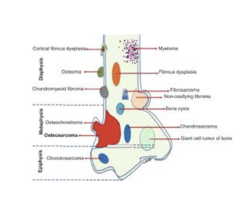
May be benign or malignant
Benign more common
- Osteochondroma is the most common
-- Ends of long bone
Malignant—Primary or Metastatic
- Primary are rare
-- Sarcoma or Multiple Myeloma
- Metastatic cancer
-- Osteosarcoma
-- Mets to lungs
Clinical Manifestations
- Localized bone pain
-- May have palpable mass
- Metastatic tumor
-- Primary cancer in body
-- Skull, spine, pelvis, femur, and humerus
--- Usually affects more than one
- Cancer invades and weakens bone
- You will learn more about this in oncology lecture
Nursing management
- Education about treatment plan
- ADLs and resources for assistance
- Medications and pain control
- What to look for and report to provider
- Stress compliance with treatment and follow-up
bone tumors

Noninflammatory degenerative joint issue
- Most common
- Primary or secondary
-- Primary has no history
-- Secondary has previous injury or inflammation
- Not systemic
- Starts in the 30s, peaks in the 60s
- Incidence increases with age
note Heberden's nodes in the picture: these show up due to repeated hand labor
osteoarthritis
Articular cartilage breaks down
- Damages bone over time
- Bone spurs
- Joint space narrows
- Septic arthritis can occur
Risk factors
- Older age
- Female
- Obesity
- Playing sports/hard labor
- Previous injury
Pathophysiology of osteoarthritis
Pain
Stiffness
- Usually <30 min in morning (chill for the first 30-45 minutes after waking up)
Functional impairment
Enlarged joint
Decreased ROM
Weight bearing joints (hips/knees)
Clinical Manifestations of osteoarthritis
X-ray
- Narrowing joint space
- Osteophyte formation (bone spurs)
- Dense, thickened subchondral bone
Medical Management
- Pain control
- Maintain mobility of joint
- Exercise and strength training
- Weight loss, if applicable
USE EXTERNAL NSAIDS LIKE VOLTAREN CREAM FOR JOINT PAIN... NO PO NSAIDS BC THEY ARE DAMAGING
Assessment and Diagnostics of osteoarthritis
NSAIDs are commonly used OTC (BAD)
-- Nephrotoxic
- Acetaminophen
- Topical analgesic agents (GOOD)
- Corticosteroid injections
- Gel injections in the joint
Arthroplasty for severe cases
Nursing management
- Pain management
- Optimal functioning
- Education
Pharmacologic Therapy of osteoarthritis

Autoimune disease
- Unknown origin
- 1-2% of the population affected
- Women 3x more than men
- Usually occurs between 30 and 60 years old
Risk Facstors
- Increased risk with age
- Family history
- Diet
- Geographic location
- Nulliparity (never having a baby or getting pregnant)
- Smoking
- Obesity
rheumatoid arthritis

Autoimmune reaction
- Breaks down collagen
- Destroys collagen
- Erodes bone
- Muscle fibers degenerate
- Tendons and ligaments lose elasticity
Nerves can be compressed
NOTE ON PICTURE:
SIDEWAYS FINGERS
SWAN NECK DEFORMITIES
Pathophysiology of rheumatoid arthritis
Diagnosed with a scoring system
- Joint involvement
- Serology
- Symptom duration
- Joints with synovitis (inflammation of the joints)
- Bony erosions on X-ray
Symptoms
- Morning stiffness for >1 hour (do the most you can and take rest periods)
- Spongy bone
- Fluid in joints
- Systemic disease (everywhere)
- Ulnar deviation and swan neck deformity (hand/fingers go out)
INCREASED C REACTIVE PROTEIN (CRP)
Clinical Manifestations of rheumatoid arthritis
Rheumatoid nodules
RF present in many (rheumatoid factor blood test)
Anti-CCP in 95%
Baseline labs and X-rays
MRI can detect small erosions
Assessment and Diagnostics of rheumatoid arthritis
Decrease pain, swelling, deformity
- Clinical remission
- Minimize disability
- Early and aggressive treatment
- DMARDs
- JAK inhibitors
- NSAIDs
methyltrexate: chemo drug that blows out the immune system and decreases blood production
Medical Management of Rheumatoid Arthritis
Focus on education about
Comorbities (these people will almost always have these)
Pain management
Fatigue (pain tires you out)
Maximal mobility
side effects of meds
Resources and support services
nursing management of rheumatoid arthritis

reserved for the most severe cases
Partial or total joint replacement
- Severe pain or loss of function
- Avascular necrosis in a joint (dead bone bc no blood flow to it: frequent neuro checks)
-- Knees and hips most common
Nursing Management
- Blood loss monitoring
- VTE/Infection Prevention
- Pain management
arthroplasty

Complications and Expectations
- Dislocation of prosthesis
- Flexing >90 degrees (BAD BAD BAD)
-- Pain
-- Shortening of extremity
-- Abnormal rotation
-- Restricted movement
-- Popping sensation (bone popping out of joint)
Excessive drainage
VTE
Infection (day 1 not worried if inflamed and red but DAY 2 BE CONCERNED.. especially if there is fever)
Pressure injury on heel
4-6 month recovery
hip arthoplasty
Complications and Expectations
- Watch for:
-- Excessive drainage
-- VTE
-- Infection
-- Pressure injury on heel
-- 4-6 month recovery
Ice or cold pack is applied
Check neurovascular status regularly (6 P's)**************
PT will get them up
May be discharged to rehab facility (if they can not take care of themselves)
Knee Arthroplasty
soft tissue injury produced by blunt force
Pain, swelling, and discoloration: ecchymosis
Contusion (bruise)
Pulled muscle injury to the musculotendinous unit
Pain, edema, muscle spasm, ecchymosis, and loss of function are on a continuum graded first, second, and third degree
Strain
injury to ligaments and supporting muscle fiber around a joint
Pain (may increase with motion), edema, tenderness; severity graded according to ligament damage and joint stability
CHECK 6 Ps
Sprain
articular surfaces of the joint are not in contact
A traumatic dislocation is an emergency with pain change in contour, axis, and length of the limb and loss of mobility
CHECK 6 Ps
Dislocation
partial or incomplete dislocation
Does not cause as much deformity as a complete dislocation
CHECK 6 Ps
Subluxation
RICE
- Rest
- Ice
- Compression (loosen if pt has compartment syndrome, it could make it worse)
- Elevation
Immobilize
Management of Soft Tissue Injuries
Closed or simple
- No break in the skin
Open or compound/complex
- Wound extends to the bone
- Grade I: 1 cm long clean wound
- Grade II: larger wound without extensive damage
- Grade III: highly contaminated, extensive soft tissue injury, may have amputation
Intra-articular
- Extends into the joint surface of a bone
Types of Fractures #1
Acute pain
Loss of function
Deformity
Shortening of the extremity
Crepitus
Local swelling and discoloration
Diagnosis by symptoms and radiography (xray/ct scan)
Patient usually reports an injury to the area
Manifestations of Fracture
Immobilize the body part (WE DO THIS. THIS IS IN OUR SCOPE... NOT MOVING THE BONE BACK IN PLACE)
Splinting: joints distal and proximal to the suspected fracture site must be supported and immobilized
Assess neurovascular status before and after splinting (check the 6 Ps before calling the provider)
Open fracture: cover with sterile dressing to prevent contamination
Do not attempt to reduce the fracture (not in our scope)
Emergency Management of Fracture
Fracture reduction: restoration of the fracture fragments to anatomic alignment and positioning
Closed
- Uses manipulation and manual traction
- Traction may be used (skin or skeletal)
Open
- Internal fixation devices hold bone fragment in position (metallic pins, wires, screws, plates) (NO CASTS!!!!! TAKE CARE OF THE WOUND)
Immobilization
- External (cast, splints) or external fixations
Medical Management of Fracture
Inadequate fracture immobilization
Inadequate blood supply to the fracture site or adjacent tissue
Multiple trauma (breaking a bone in multiple places)
Extensive bone loss
Infection
Poor adherence to prescribed restrictions
Malignancy
Certain medications (e.g., corticosteroids)
Age >40 years
Comorbidities (e.g., diabetes, rheumatoid arthritis)
Factors that Affect Fracture Healing
Early complications
- Shock (TREAT IMMEDIATELY)
- Fat embolism (going to lungs, quick onset of SOB, feel like you are dying, cant be cured, do a bronchoscopy to get some fat out of the lungs)
- Compartment syndrome
- VTE, PE
Delayed complications
- Delayed union, malunion, and nonunion (bone does not grow back together)
- Avascular necrosis of bone (if 6 Ps are not constantly being assessed)
- Complex regional pain syndrome (CRPS) (compression causes CRPS and it is forever)
- Heterotrophic ossification
Complications of Fractures
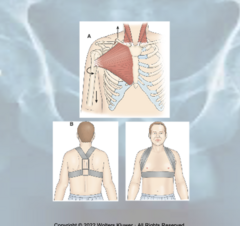
Clavicle
- Use of clavicular strap or sling
- Exercises for elbow, wrist, fingers asap
- Do not elevate arm above shoulder for approximately 6 weeks
Humeral neck and shaft fractures
- Slings and bracing
- Activity limitations until adequate period of immobilization
lower limb restriction: no weight bearing
Upper limb restriction: activity limitations
Rehabilitation Related to Specific Fractures #1 (thorax)

VERY IMPORTANT***
Elbow fractures
- Monitor regularly for neurovascular compromise and signs of compartment syndrome
- Potential for Volkmann contracture (arm stuck and cant move
- Active exercises and ROM are encouraged to prevent limitation of joint movement after immobilization and healing (4 to 6 weeks for nondisplaced, casted) or after internal fixation (about 1 week)
Radial, ulnar, wrist, and hand fractures
- Early functional rehabilitation exercises
- Active motion exercises of fingers and shoulder
Rehabilitation Related to Specific Fractures #2 (UE)
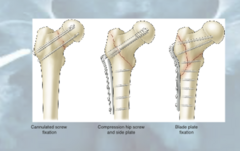
Pelvic fractures
- Management depends on type and extent of fracture and associated injuries
- Stable fractures are treated with a few days of bed rest and symptom management
- Early mobilization reduces problems related to immobility
Hip fracture
- Surgery is usually done to reduce and fixate the fracture
- Care is similar to that of a patient undergoing other orthopedic surgery or hip replacement surgery
Rehabilitation Related to Specific Fractures #3 (pelvis)
Femoral shaft fractures
- Lower leg, foot, and hip exercises to preserve muscle function and improve circulation
- Early ambulation stimulates healing
- Physical therapy, ambulation, and weight bearing are prescribed
-Active and passive knee exercises are begun as soon as possible to prevent restriction of knee movement
bone marrow comes from long bone... bone marrow is fat.... risk for fat embolism
Rehabilitation Related to Specific Fractures #4 (femur)
Before application
- General health assessment (CHECK THE 6 Ps)
- Emotional status
- Presenting signs and symptoms and condition of the area
Monitoring of neurovascular status and for potential complications (INFECTION)
Treat lacerations and abrasions before cast, brace, splint
Provide information about the purpose of treatment
Prepare patient for application by explaining procedure
compartment syndrome: bad pain after pain meds and cast = immediate trip to the OR
Assessment of the Patient with a Brace, Splint, or Cast #1
Assessing for neurovascular changes using "6 Ps"
- Pain
- Pallor
- Pulselessness
- Paresthesia
- Paralysis
- Poikilothermia
Monitoring and treating pain
- Describe exact site, character, and intensity of pain
- Treat with elevation, ice packs, and analgesics
Assessment of the Patient With a Brace, Splint, or Cast #2
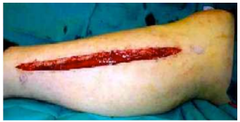
NEED TO KNOW
Acute Compartment Syndrome:
- Serious complication
- Occurs from increased pressure in a confined space
- Compromises blood flow (necrosis)
- Ischemia and irreversible damage can occur within hours
Clinical assessment of 5 Ps; pain is the early indicator
Treatment: Notify physician, cast may be removed, and emergent surgical fasciotomy may be necessary (remove the cast to decompress, infection risk bc it has to be left open
Potential Complications of the Patient with a Brace, Splint, or Cast #1
Pressure Injuries: caused by inappropriately applied cast
- Lower extremity sites most susceptible
- Patient reports painful "hotspot" and tightness
- Dx: May cut window in the cast for inspection and access
- Treatment: dressing applied over exposed skin
Disuse Syndrome: muscle atrophy and loss of strength
- Treatment: Isometric exercises, muscle setting exercises
-- draw the ABCs with your toe to promote movement and circulation
Potential Complications of the Patient with a Brace, Splint, or Cast #2
Impact of injury to physiologic functioning (ADL, IADL)
Activity, exercise, rest
Medications
Techniques for cast drying
Controlling of swelling and pain
Care of minor skin irritation
- Pad rough edges with tape or moleskin
- Blow with hair dryer to relieve itching
- Do not stick foreign objects into the cast
Education Needs of the Patient with a Cast, Brace, or Splint #1
Signs and symptoms to report:
- Persistent pain or swelling (cast too tight, pain doesnt go away with meds)
- Changes in sensation, movement, skin color, or temperature
- Signs of infection or pressure areas
Required follow-up care
- Cast removal and after care
Education Needs of the Patient with a Cast, Brace, or Splint #2

Used to manage open fractures with soft tissue damage
Provide support for complicated or comminuted fractures
Patient requires reassurance because of appearance of device
Discomfort is usually minimal, and early mobility may be anticipated with these devices
Elevate to reduce edema
Monitor for signs and symptoms of complications, including infection
Pin care
Patient education
External Fixator Devices
Health history and presence of concomitant problems
Pain
VS, respiratory status, LOC, and signs and symptoms of shock
Affected extremity including frequent neurovascular assessment
Bowel and bladder elimination; bowel sounds, I&O
Skin condition
Anxiety and coping
Assessment of the Patient with Fracture of the Hip
Hemorrhage
Peripheral neurovascular dysfunction
VTE
Pulmonary complications
Skin breakdown
Loss of bladder control (cant get to bathroom in enough time)
Delayed: infection, nonunion, AVN
Collaborative Problems and Potential Complications for the Patient with a Fracture of the Hip
Major goals include:
- Relief of pain
- Achievement of a pain-free, functional, and stable hip
- Healed wound
- Maintenance of normal urinary elimination pattern
- Use of effective coping mechanisms
- Remains oriented and participates in decision making
- Absence of complications
Planning and Goals for the Patient with Fracture of the Hip
Fracture: clavicle, wrist, ankle, metatarsal stress
Dislocations: shoulder, elbow
Sprains: wrist, ankle
Knee: sprain, strain, and meniscal tears
Common Sports-Related Injuries
Use of proper equipment; running shoes for runners, wrist guards for skaters, and so on
Effective training and conditioning specific for the person and the sport
Stretching
Hydration
Proper nutrition
Prevention of Sports-Related Injuries
Nursing ranked top 10 occupations most involved
Common injuries include
- Strains, sprains, tears
- Cuts, lacerations, contusions, bruises
Prevention measures may include:
- Safe patient handling training and proper use of equipment
- Correct use of body mechanics
Occupation-Related Injuries
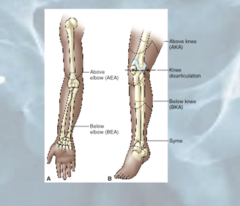
May be congenital or traumatic or caused by conditions such as progressive peripheral vascular disease, infection, malignant tumor, trauma
Performed to control pain or disease process, improve function, and improve quality of life
Health care team needs to communicate a positive attitude to facilitate patient acceptance and participation in rehabilitation
use compression on the stump to stop the bleeding and model it into prosthesis
phantom pain... TREAT THE PAIN BC IT IS REAL EVEN IF THEIR LIMB ISNT THERE
Amputation
use next place that has a pulse*****
Neurovascular and functional status of affected extremity or residual limb and of unaffected extremity
Signs and symptoms of infection
Nutritional status
Concurrent health problems
Psychological status, grief, and coping
Assessment of the Patient with an Amputation
Postoperative hemorrhage
Infection
Skin breakdown
Phantom limb pain
Joint contracture
DO NOT MOVE THE STUMP AROUND
Collaborative Problems and Potential Complications of the Patient with an Amputation
Major goals include:
- Relief of pain
- Wound healing
- Acceptance of altered body image
- Resolution of grieving process
- Independence in self-care
- Restoration of physical mobility
- Absence of complications
DO ADLS AS MUCH AS POSSIBLE
Planning and Goals for the Patient with an Amputation
Relieving pain
- Administer analgesic or other medications as prescribed
- Changing position
- Putting a light sandbag on residual limb
- Alternative methods of pain relief: distraction, TENS unit
Promoting wound healing
- Handle limb gently
- Residual limb shaping
Resolving grief and enhancing body image
- Encourage expression of feelings
- Create an accepting, supportive atmosphere
- Provide support and listen
- Encourage patient to look at, feel, and care for the residual limb
- Help patient set realistic goals
- Help patient resume self-care and independence
- Referral to counselors and support groups
therapeutic communication
Promoting independent self-care
- Encourage active participation in care
- Continue support in rehabilitation facility or at home
- Focus on safety and mobility
Assisting the patient to achieve physical mobility
- Proper positioning of limb; avoid abduction, external rotation and flexion
- Turn frequently; prone positioning if possible
- Use of assistive devices
- ROM exercises
- Muscle‐strengthening exercises
- "Preprosthetic care"; proper bandaging, massage, and "toughening" of the residual limb
Nursing Interventions for the Patient with an Amputation
Pelvic Exam
beginning at age 21 annually
Pap Smears
every three years from 21-64 (more frequent if results are abnormal)
- Colposcopy if abnormal cells are found

Breast Exam
BSE monthly, provider annually
diagnostics/screenings
STI screening
Mammogram
annually 40+
Endometrial Biopsy
test for uterine cancer only if symptoms (thickened uterine lining, post-menopausal bleeding)
- Altered estrogen production associated with menopause are responsible for many changes
-- Decreased circulating estrogen and other sex steroids
-- Breast and genital atrophy
-- Decreased bone mass
-- Increased rate of atherosclerosis
Effects of Aging on Reproductive Systems (Women)

permanent physiologic cessation of menses associated with declining ovarian function
clinical manifestations
psychological considerations
medical management: HRT; risks and benefits
bleeding after menopause
menopause

premenarche, perimenopause, menopause, low estrogen levels
pregnancy or oral contraceptives
poor hygiene
tight garments and synthetic clothing
frequent douching
antibiotics
allergies
diabetes
intercourse with infected partner, oral genital contact, HIV
Risk Factors for Vulvovaginal Infections
The most common sexually transmitted disease among sexually active young people
Vaccine (age 11/12)
Treatment of genital warts
Associated with cervical dysplasia and cervical cancer; need annual Pap smears
Human Papillomavirus (HPV)
a recurrent lifelong viral infection
an STD that also may be transmitted by contact and that may be transmitted when the carrier is symptomatic
causes painful itching and burning herpetic lesions
no cure
antiviral agents acyclovir, valacyclovir, and famciclovir can suppress symptoms
recurrences may be associated with stress, sunburn, dental work, inadequate rest, and inadequate nutrition
risk for infants delivered vaginally to become infected; therefore, cesarean delivery may be performed
Herpes type 2 Infection (genital herpes)
25% living with HIV are women
Counseled about safer sex and informed about the dangers of unprotected sex
Because there is a risk of perinatal transmission, decisions to conceive or to use contraception must be based on education, accurate information, and care
Pregnant women are advised to have an HIV test. The use of antiretroviral agents by pregnant women significantly decreases perinatal transmission of HIV infection
HIV

Inflammatory condition of the pelvic cavity that may begin with cervicitis and involve the uterus (endometritis), fallopian tubes (salpingitis), ovaries (oophoritis), pelvic peritoneum, or pelvic vascular system
Risk factors - multiple sexual partners, sex without condoms, history of STIs
Gonorrheal and chlamydial organisms are common causes
Short- and long-term consequences can occur
- Ectopic pregnancy, peritonitis, abscess, infertility, adhesions.
symptoms:
- Vaginal discharge
- Dyspareunia (painful sex)
- Lower abdominal pelvic pain, and tenderness that occurs after menses that may increase with voiding or with defecation
Other symptoms if progresses
- Fever, general malaise, anorexia, nausea, headache, and possibly vomiting
Pelvic examination—intense tenderness may be noted on palpation of the uterus or movement of the cervix (cervical motion tenderness)
Pelvic Inflammatory Disease (PID)

broad spectrum antibiotics
treat sexual partner to prevent reinfection
analgesics for pain relief
adequate rest and nutrition
patient education
PID treatment

fistula - risk for infection
uterine prolapse - pushes into vaginal canal

fibroids - can occur anywhere, genetic
ovarian cysts - hormonal imbalance/old follicle; burst: pain/pressure; PCOS: obese, diabetes, etc.

Benign lesions with endometrial tissue migrate in the pelvic cavity outside the uterus.
Symptoms - pain, depression, infertility
Treatment
- Pharmacological - analgesics, hormonal therapy
- Surgery - Laparoscopy, laser surgery, hysterectomy
SEVERE MENSTRUAL PAIN
Endometriosis
Testosterone levels decline in men as they age
Physical, psychologic, sexual manifestations are gradual
- Increased prostate size
- Decreased sperm production, scrotal muscle tone, size and firmness of testicles
- Erectile and sexual dysfunction may occur
Effects of Aging on Reproductive Systems (Men)
prostate specific antigen (PSA)
screening starts at age 50
>4 indicates prostate cancer, BPH, prostatitis and needs to be further evaluated
early prostate cancer antigen (EPCA-2)
specific to prostate cancer
>30 is highly suggestive of prostate cancer
transrectal ultrasound (TRUS)
contraindicated in patients with latex allergy

prostate biopsy
confirms cancer


The inability to achieve or maintain an erect penis
Psychogenic (anxiety, depression, body dysmorphia) and physical causes (CV, diabetes, liver failure, etc.)
Treatment
- Treat underlying cause
- Pharm - sildenafil (viagra) - contraindicated in pt taking nitrates and having cardiac arrhythmias
- Penile implant or vacuum
Erectile Dysfunction
Inflammation of the prostate gland usually caused by infectious agents, urethral stricture, or BPH.
Symptoms - fever, dysuria, frequency, urgency, nocturia, pain with ejaculation (TREAT WITH ANTIBIOTICS)
Management - antibiotics, tamsulosin, analgesics, sitz baths
Education - medications, avoid sexual activity, seek treatment for symptoms of UTI early, follow up is necessary for 6 months - 1 year, avoid sitting for long periods of time.
Prostatitis

Hypertrophy or enlargement of the prostate gland
- Patho not well understood
- Occurs >40, 90% of men over 85 will be affected.
Symptoms - urinary frequency, urgency, nocturia, hesitancy, incomplete bladder emptying, dribbling, urinary retention (could cause bursting bladder), recurrent UTIs.
- Generalized symptoms - fatigue, nausea, anorexia, pelvic discomfort
- Complications - kidney failure
Medical management - catheterization for inability to void
- Tamsulosin (alpha adrenergic blockers: to relax to help urine flow), finasteride (5 alpha reductase inhibitor to decrease size of prostate)
- Surgery
Benign Prostatic Hyperplasia (BPH)
an infection of the epididymis, which usually spreads from an infected urethra, bladder, or prostate
Symptoms - develops slowly over 1-2 days - low grade fever, chills, heaviness, swelling, and pain in affected testicle, pain in lower abdomen and pelvic, urethral discharge, blood in semen, pain with sex and ejaculation.
Diagnosis - urinalysis, cbc, urethral culture, STI screening, rule out testicular torsion
Treatment - antibiotics, local anesthetic, reduced physical activity, ice packs, nsaids, sitz baths, scrotal elevation, avoidance of sexual stimulation.
Epididymitis

rotation of the testis, which twists the blood vessels in the spermatic cord and therefore impedes the arterial and venous supply to the testicle and surrounding structures in the scrotum
Symptoms - sudden pain in the testicle, nausea, lightheadedness, swelling of the scrotum, an elevated testis, and a thickened spermatic cord.
Diagnosis - physical exam and ultrasound
Treatment - emergency surgery within 6 hours of symptom onset
E M E R G E N C Y
testicular torsion
Rare, occurs between 15 and 35 years old, high survival rate
Risk factors - undescended testicles, family history, personal history, Caucasian, HIV-positive
Symptoms - gradual symptom onset, painless mass, lump, or enlargement, heaviness in scrotum or lower abdomen, backache, abdominal pain, weight loss, general weakness.
Screening - testicular self exam monthly starting in adolescence. Annual exam by clinician.
Diagnosis - exam, u/s, tumor markers, biopsy to confirm.
Treatment - orchiectomy, sperm banking, radiation, chemo
Testicular Cancer

A collection of fluid located between the visceral and parietal layers of the tunica vaginalis of the testis. This condition is the most common cause of scrotal swelling
Physical examination, an easily transilluminated (penlight --> illuminate --> hydrocele), painless, extra testicular mass is found
- Ultrasonography is recommended for large hydroceles to differentiate them from testicular tumors (Chapple et al., 2020).
Treatment - none unless large, then needle aspiration
Hydrocele

is an abnormal dilation of the pampiniform venous plexus and the internal spermatic vein in the scrotum (the network of veins from the testis and the epididymis, which constitute part of the spermatic cord).
Symptoms - usually asymptomatic, but scrotal pain, tenderness, heaviness, and infertility are possible
- Feels like worms in scrotum
Treatment - scrotal support, surgery
Varicocele
most common procedure on women
Surgical removal of the uterus to treat cancer, dysfunctional uterine bleeding, endometriosis, nonmalignant growths, persistent pain, pelvic relaxation and prolapse, and previous injury to the uterus
Total hysterectomy (uterus, cervix) - (laparoscopic/vaginal)
Radical hysterectomy (only for cancer, uterus, vagina, ovaries, fallopian tubes, lymph nodes, tissue) - (most invasive - not laparoscopic)
Types of approaches
- Laparoscopic
- Vaginal
- Abdominal (open) - risk for infection
Hysterectomy **
stop anticoagulants (when is the last time you took it? hysterectomies have a high risk of hemorrhage, any NSAIDS (aspirin, ibuprofen, naproxen))
pregnancy test (all females need one before surgery but especially for hysterectomy)
prophylactic antibiotics (nurse will pull the meds but most likely wont give them, that is someone elses job)
VTE risk assessed (blood clot risk)
pre operative management (hysterectomy)
1. prevent and monitor for hemorrhage
- perineal pads, check incisions, monitor vital signs, CBC
2. prevent and monitor for infection
- CBC, temp, check incisions, administer antibiotics
3. prevent and monitor for DVT
- ted hose, ambulation, SCD
4. assess and treat bladder dysfunction
- foley care, bladder scans, in and out cath
(if there is not pee after 4-6hrs be concerned)
5. pain: prior to ambulation, PO prior to discharge, give pain meds before ambulation
post op management (hysterectomy)