Brunetti - Adrenal Hormone Disorders and Therapeutics
 Call Kai
 Learn
Learn Practice Test
 Spaced Repetition
 Match
Match Flashcards
 Knowt Play
1/84

Earn XP
Description and Tags
GO OVER OBJECTIVES
Name | Mastery | Learn | Test | Matching | Spaced | Call with Kai | Chat |
|---|
No analytics yet
Send a link to your students to track their progress
85 Terms
Lecture Objectives
•Understand the physiology, pathophysiology and pharmacology related to adrenal hormones
•Comprehend the mechanism of action of drugs used to manage adrenal disease
•Classify adrenal disorders based on patient presentation
•Develop individualized treatment plan based on patient presentation for adrenal disorders
Be familiar with potential adverse consequences of treatments
Which hormone is this?
responsible for protein/fat catabolism,
gluconeogenesis to INC blood glucose
DEC PG for anti-inflammation
INC bone resorp, DEC bone form
has a HT effect where there isn’t enough in your body
cortisol
Which hormone is this?
stim Na+ reabsorption and K+ excretion
important for electrolyte balance
aldosterone
SEQ Feedback system of HPA Axis
H: hypothalamus releases CRH
P: anterior pituitary gland releases ACTH
A: adrenal gland releases CRH to stimulate cortisol and steroids
cortisol and steroid levels suppress CRH and ACTH release
What is the difference between primary adrenal insufficiency (PAI) and secondary adrenal insufficiency (SAI)?
Primary: adrenal gland can’t release cortisol/steroids (low cortisol)
Secondary: anterior pituitary gland can’t release ACTH, then there isn’t enough cortisol/steroids being made (low cortisol AND low ACTH)
what is a common cause for SAI?
excess exogenous corticosteroids → body stops making endogenous cortisol (overcompensated)→ atrophy
Describe the risk factors for PAI (Addison’s)
women
30-50yrs
most cases related to autoimmunity
LIFE THREATENING
What are the causes of PAI?
autoimmune
infection (tuberculosis adrenalitis)
tumor
infiltration (hemochromatosis)
adrenal hemorrhage
genetic: congenital adrenal hypoplasia, ACTH resistance syndromes
drugs that inhibit synthesis (ketoconazole) or INC metabolism of cortisol (phenytoin) — CYP P450 drugs
pt presents with wt loss, hypotension, hypovolemia, fatigue, reduced muscle strength, hyperpigmentation, mild hyponatremia, hyperkalemia, increased SCr, hypocalcemia. What might this patient have and what is the first line treatment?
PAI; hydrocortisone (steroids), get labs before giving steroids but don’t have to confirm
What is the diagnostic of choice for PAI?
corticotropin (CRH) stimulation test to measure peak cortisol 30-60mins post-dose. If <18 mcg/mL, there is PAI
What levels do you also need to check when diagnosing PAI?
baseline ACTH, renin, and aldosterone
ACTH 2x ULN in PAI
renin and aldosterone low in PAI
T/F: In pts with PAI, there are low levels of ACTH
false;
secondary: low ACTH
Primary: normal ACTH
what are the causes of SAI?
exogenous corticosteroids
> 7.5mg/d prenisone for more than 3 weeks are at greater risk
tumors, radiation, autoimmune
what are some facts about SAI?
more common than PAI, takes up to a year for HPA axis to recover (AP gland damaged)
pt presents with wt loss, hypotension, hypovolemia, fatigue, and reduced muscle strength, but NO hyperpigmentation and mineralocorticoid secretion is preserved. What does the patient have?
SAI; volume depletion and electrolyte abnormalities not common since AP gland isn’t damaged.
Follow-up test after one CRH stimulation test to differentiate SAI vs. PAI?
Test: Repeat CRH stimulation test OR Insulin Tolerance Test (ITT / insulin-induced hypoglycemia)
ITT Mechanism: Rapid glucose drop → triggers ACTH & cortisol rise
Diagnostic cut-off: Peak cortisol <500 nmol/L confirms SAI
What hormone levels should be low in SAI?
cortisol, DHEA, ACTH
After confirming pt has SAI, what other tests should you do?
have CT or MRI of the brain to rule out a pituitary tumor or pituitary atrophy.
if pt is at risk for glucocorticoid induced adrenal insufficiency, what treatment does this require?
≥ 3-4 wks of therapy at dose above the physiologic daily equivalent
Physiologic daily equivalents: hydrocortisone 15–25 mg, prednisone/prednisolone 4–6 mg, methylprednisolone 3–5 mg, dexamethasone 0.25–0.5 mg
What is not required for patients tapering glucocorticoids?
routine endocrinology referral
what is recommended against in glucocorticoid induced AI ?
fludrocortisone bc the mineralcorticoid axis intact
pt has glucocorticoid-induced adrenal insufficiency. What should you still give during adrenal crisis?
adrenal crisis management is unchanged: parental glucocorticoids plus fluid resuscitation FIRST LINE
SEQ diagnosis of adrenal insufficiency
pt presents w S&S of AI
order basic metabolic panel and measurement of 8am serum cortisol level
if LOW cortisol, normal to high K+, low to normal Na+: perform CST to measure basal ACTh level before IV ACTH, THEN measure cortisol after 30-60mins after admin
low cortisol/high ACTH: PAI (then measure 21-hydroxylase antibodies, perform computed tomography of adrenal gland)
low cortisol/low ACTH: SAI
What is the first line therapy for confirmed adrenal insufficiency?
hydrocortisone > cortisone acetate > prednisolone
what should you avoid as treatment for confirmed adrenal insufficiency?
dexamethasone
what is something to consider with corticosteroid dosing?
highest dose (15-25mg/d) of hydrocortisone or cortisone acetate should be given in the morning at awakening. Prednisolone can be an alternative but has increased glucocorticoid potency so only smaller doses are necessary (3-5m/d QD or BID)
All patients with confirmed aldosterone deficiency should receive what drug? What should you beware of?
low starting dose of fludrocortisone.
May cause ADE relating to mineralocorticoid excess (HT, hypokalemia, cardiac failure), need to monitor serum K+ and BP. ADD an antihypertensive if BP is uncontrolled
DONT GIVE IN GLUCOCORTICOID INDUCED AI (SAI)
What is the first line treatment for PAI pts that are pregnant? what should you avoid at all costs?
higher dose of hydrocortisone to prevent adrenal crisis. NO DEXAMETHASONE
The agent of choice for the immediate treatment of acute adrenal insufficiency is
Hydrocortisone 100mg IV
How does the duration of action influence treatment?
Fraction of drug bound to plasma protein
Affinity of drug for binding plasma proteins
Lipophilicity of the drug- decreases metabolism
Affinity of drug for glucocorticoid receptor
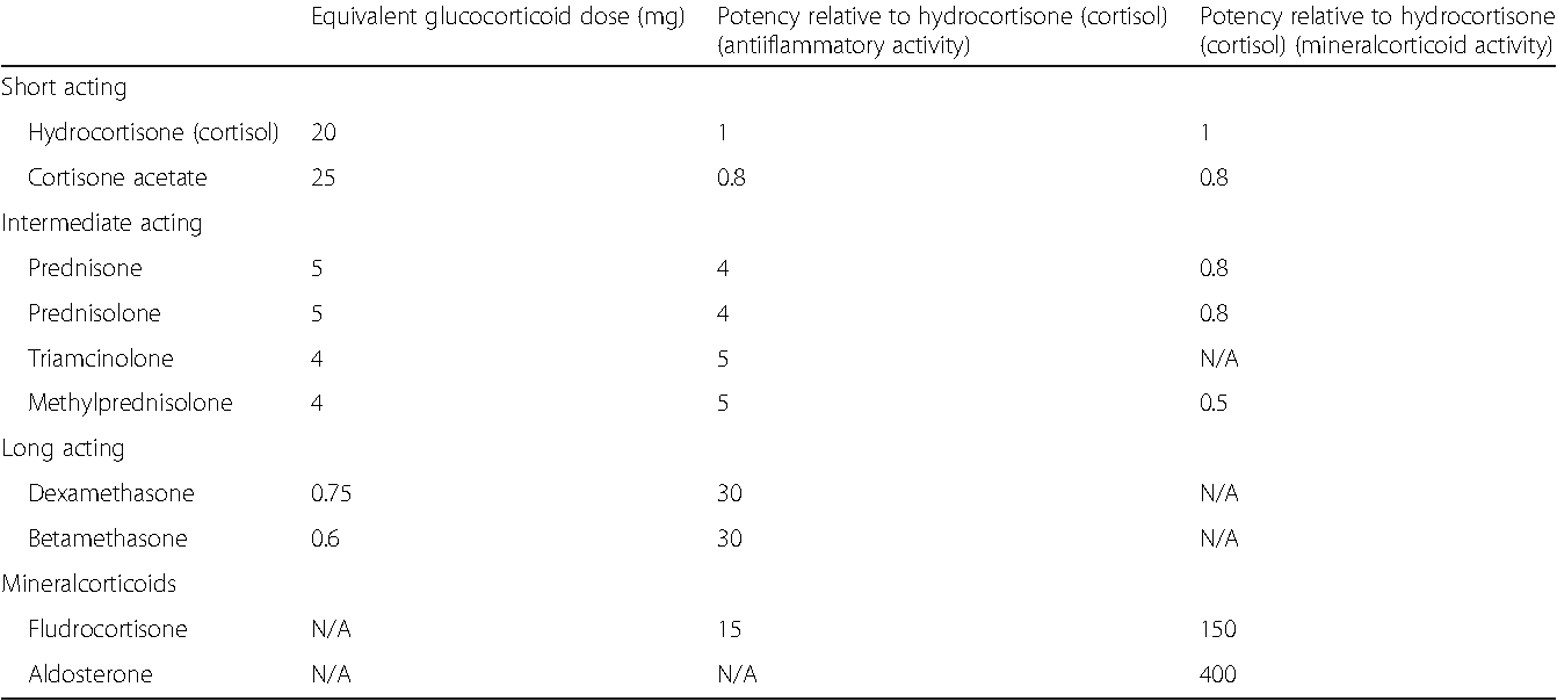
Describe the relative potency of glucocorticoid analogs
short acting: hydrocortisone, cortisone acetate
intermediate: prednisone, prednisolone, methylprednisolone
mineralcorticoids: fludrocortisone (150x more than hydrocortisone), aldosterone 400x
“HOT CUTE PHARMACISTS MAKE FREAKING ALOT”
How do you taper steroids?
as the steroid dose approaches 20-30mg level, the taper should be slowed to allow HPA axis to recover. if you’re still not producing cortisol they will prolong the taper
When tapering long term steroid therapy, at which of the following steroid doses should the taper be slowed and the HPA axis integrity assessed?
hydrocortisone 40mg/d CHECK BRUNETTI SLIDES ON MONDAY

When should DHEA Replacement be considered in adrenal insufficiency?
Given for 6 months in women with PAI if they have low libido, depressive sympoms, and/or low energy levels. DISCONTINUE if there is no beneficial effect at 6 months
pt with PAI/SAI presents with signficant hypotension or shock, low glucose, low sodium, and high potassium. They also have blunted response to catecholamines. What does this patient have?
adrenal crisis. commence glucocorticoids.
What are some factors that may lead to adrenal crisis?
lack of adjustment of corticosteroids in pts with previous diagnosis
GI infection and fever
using ketoconazole or phenytoin
pt is confirmed to be in an adrenal crisis. What is the first line treatment?
100mg hydrocortisone IV stat, then 200mg/d as continuous infusion or q6h for 24h. Followed by appropriate fluid resuscitation then vasopressors
pt is confirmed to be in an adrenal crisis. What are alternative treatments?
isotonic saline or D5 isotonic saline: rapid infusion of 1000mL within first hour then continuous IV (guided by pt needs)
if pt is suspected to have adrenal crisis, what do you give them?
100mg of hydrocortisone then fluid resuscitation
after a pt is treated for adrenal crisis, when should you resume fludrocortisone treatment?
hydrocortisone dose is less than 50mg/d
Administration of glucocorticoids, synthetic ACTh, or medroxyprogesterone can cause what condition?
exogenous cushing syndrome due to excess cortisol
a pituitary tumor producing excess ACTH (80% of cases), ectopic ACTH producing tumor, or a CRH producing tumor leads to what condition?
ACTH dependent cushing syndrome (most likely of endogenous cs)
adrenal lesions producing cortisol, adrenal adenoma, adrenocorticoid carcinoma, primary pigmented nodular adrenal disease, or ACTH independent macronodular adrenocortical hyperplasia leads to what condition?
ACTH independent cushing sydnrome (less likely than endogenous)
pt presents with depression, central obesity, moon facies, thick neck, fat abdomen, thin extremities, atrophy of skin, osteoporosis, muscle wasting and weakness, easy bruising, and diabetes. The patient also has high cortisol levels. What does this pt have?
cushing syndrome
a female pt presents with androgen excess, virilization, acne, menstrual irrgularity, increased mineralocorticoid effect (HT and hypokalemic alkalosis). What condition do they have?
cushing syndrome (females)
a child has stunted growth and has abnormally high cortisol levels. What condition do they have?
cushing syndrome (children)
adult pts who will be taking long term glucocorticoids should be warned about which of the following?
osteoporosis and glaucoma with chronic therapy
pt is suspected to have cushing’s syndrome. What diagnostic tests do you give them?
urinary free cortisol test
low dose dexmethasone suppression test

pt suspected of cushing’s syndrome has initial diagnostic testing done shows to have undetectable plasma ACTH and high dose dexamethasone suppression. What is their condition?
adrenal tumor
pt suspected of cushing’s syndrome has initial diagnostic testing done shows to have elevated plasma ACTH and no dexamethasone suppression. What is their condition?
ectopic ACTH syndrome
pt suspected of cushing’s syndrome has initial diagnostic testing done shows to have normal to elevated plasma ACTH and dexamethasone suppression <50% below basline. What is their condition?
cushing’s disease
a female pt taking oral contraceptives is suspected of having cushing’s syndrome. What should they before they are tested?
discontinue oral contraceptives 6 wks before test. Use urine free cortisol testing only.
pregnant pt is suspected of cushing syndrome. What should you consider when they are being tested?
cortisol is elevated by 3 fold. Only values greater than 3-fold increase is diagnostic of cushings
what might cause a false positive in dexamethasone suppression testing?
oral contraceptives
anticonvulsants: carbamazepine, phenytoin, phenobarbital induce metabolism of dexamethasone
What is the first line treatment for cushing syndrome?
resection of tumor (if applicable) and check serum Na, free thyroxine, cortisol, and prolactin levels
pt with cushing syndrome is NOT a surgical candidate. What should you give instead?
cabergoline or pasireotide
pt with cushing syndrome and diabetes/glucose intolerance is NOT a surgical candidate. What should you give instead?
mifepristone (glucocorticoid antagonist)
What is the 2nd line of treatment for cushing syndrome after transsphenoidal selective adenomectomy (TSS) with or wo radiotherapy?
steroidogenesis inhibitors (etomidate, ketoconazole, metapyrone, mitotane)
KEMM
pt is confirmed to have cushing syndrome due to ectopic ACTH syndrome. What can you give them?
nondrug: surgery (first-line), chemotherapy, irradiation
drug: metyrapone, ketoconazole
pt is confirmed to have cushing syndrome due to pituitary dependent problems. What can you give them?
nondrug: surgery, irradiation
drug: mitotane, metyrapone, mifepristone, cabergoline, pasireotide
“MISS MOANING MYRTLE CANT PEE”
pt is confirmed to have cushing syndrome due to have an adrenal adenoma. What can you give them?
nondrug: surgery, postoperative replacement
drug: ketoconazole
pt is confirmed to have cushing syndrome due to have an adrenal carcinoma. What can you give them?
nondrug: surgery
drug: mitotane
why is etomidate very rarely used for cushing syndrome?
only used for cases with sepsis or severe psychosis: has a quick onset and requires ICU monitoring
ketoconazole is given to cushing syndrome patients with ectopic ACTH syndrome or adrenal adenoma. What are its disadvantages?
quick onset, GI side fx, hepatic tox, male hypogonadisum, DDIs
metatyrapone is give to cushing syndrome pts with Ectopic ACTH syndrome or pituitary dependent problems. What are its disadvantages?
causes GI side fx, hirsutism, hypokalemia
mitotane is given to cushing syndrome pts with adrenal carcinoma or pituitary dependent problems. It has a slow onset and long half life. What are its disadvantages?
teratogenic, GI and CNS side fx, increased LFTs, DEC WBC, DEC T4
0.5-7mg/wk cabergoline is given to cushing syndrome patients that are not surgical candidates. What are its disadvantages?
asthenia, GI, dizziness
SC BID pasireotide is given to pts with cushing syndrome that are not surgical candidates. When is it most successful? What are its disadvantages?
SUCCESSFUL WHEN UFC < 2 fold normal
ADE: INC QTc, cholelithiasis, hyperglycemia
When should mifepristone (glucocorticoid antagonist) be given as pharmacological treatment for cushing syndrome?
diabetic/glucose interolant pts that are not surgical candidates or who have persistent disease after TSS. DO NOT GIVE IN PREGNANT PTS
when should pituitary directed medical treatments (caergoline, pasireotide) be given?
to pts who are not surgical candidates or who have persistant disease after TSS
What are newer pharmacotherapies for cushing syndrome?
osilodrostat: when surgery doesn’t work. more potent than metyrapone/ketoconazole but causes adrenal insuff/fatigue, edema
levoketoconazole: given for endogenous hypercortisolemia when surgery doesn’t work . req hepatic and QTc monitoring
relacorilant: avoids anti-progestin fx (unlike mifepristone)
“LIVING ON RAGE”
What leads to aldosterone hypofunction?
primary deficit in synthesis
secondary: reduced ang II
addison’s
destruction of zona glomerulosa
salt wasting, volume depletion, hyperkal, acidosis
What leads to aldosterone hyperfunction?
bilateral zona glomerulosa adrenal hyperplasia
aldosterone producing adenoma
positive Na+ balance, volume expansion, suppression renin, K+ wasting, hypokalemia, CV dysfunction
What is the most common cause of secondary HT? IMPORTANT
primary hyperaldosteronism
secondary hyperaldosteronism can occur secondary to
Renal artery stenosis
Heart failure
Cirrhosis
Excessive intake of potassium
Oral contraceptive use (drospirenone containing)
Menses
pt presents symptoms of HT, hypokalemia, hypernatremia, fatigue, muscle weakness, HA, and numbness. What might they have?
hyperaldosteronism
When can you suspect primary aldosteronism?
sustained BP >150/100mmHg 3 different times, resistant to at least 3 meds
controlled BP <140/90mmHg on >4 meds
HT PLUS: hypokal, adrenal incidentaloma, sleep apnea, family ho early oneset HT, cerebrovascular event at young age
first degree relative with primary aldosteronism
What is the first line treatment for pt with unilateral primary aldosteronism(PA)?
laparoscopic adrenalectomy
What is the treatment for a pt with PA but cannot undergo surgery?
spironolactone
ARR-positive patient is unwilling or unable to undergo further investigations, what is the treatment?
spironolactone (MR antag)
when should you do genetic testing for familial hyperaldosteronism type I (FH-I)?
in pts with diagnosis <20 yrs and family history OR pts with stroke under 40 yrs
When should you test for familial hyperaldosteronism type III (FH-III)?
in very young pts with PA, test for germline mutations in KCNJ5
pt has PA due to bilateral adrenal disease. What is the first line treatment? What should you monitor?
sprinolactone 100-400mg daily PO (eplerenone 25-50mg daily PO as alternative)
monitor serum K+, may cause menstrual irreg and breast tenderness in women and gynecomastia in men.
What is the significance of the 2025 primary aldosteronism guidelines?
universal screening: test for aldosterone, renin, K+ in all pts with HT
renin guided titration of MR antags: unsuppressed renin and BP/K+ control
When should you give fludrocortisone?
all patients with confirmed aldosterone deficiency