Orthotics Final
 Call Kai
 Learn
Learn Practice Test
 Spaced Repetition
 Match
Match Flashcards
 Knowt Play
1/45

Earn XP
Description and Tags
AFOS, KAFOs, HKAFOs, TLSOs
Name | Mastery | Learn | Test | Matching | Spaced | Call with Kai | Chat |
|---|
No analytics yet
Send a link to your students to track their progress
46 Terms
dynamic AFOs
increase subtalar and midfoot stability while allowing some talocrural mobility
ex. SMOs, hinged AFOs
supramalleolar orthosis (SMO)
provide proprioceptive input and support to subtalar and midfoot joints

rigid ankle (solid) AFO
constrain motion at talocrural, subtalar, and forefoot joints
struggle to support the medial-longitudinal arch

patellar tendon bearing AFO
transfers weight bearing to patellar tendon to offload foot
pretty rare (way easier to be fully NWB)

assisting AFOs
dynamic AFOs that provide some energy return and/or assist in active control
posterior leaf spring AFO
assists with eccentric DF at heel rocker and eccentric PF at ankle rocker
minimal support in transverse or frontal planes

side strut AFO
over-the-counter assisting AFO
lighter and slimmer appearance increases patient compliance

dorsiflexion assist AFO
mechanical hinge offers more aggressive DF/tibial advancement assist
good for pts with strong knee hyperextension bias
*requires >=5 degrees of passive DF to use

Klenzak hinge
has posterior channel with spring for DF assist
double action (dual channel) hinge
has posterior channel with spring for DF assist, anterior channel with stop to limit PF
articulating thermoplastic AFOs
made of rigid plastic to increase stability, but hinged to allow mobility
trim lines and joint type determine balance of stability and mobility
overlap joint
most stable AFO joint, sacrifices some mobility
rarely used

Oklahoma joint
allows for pt-driven mobility, but limits ROM
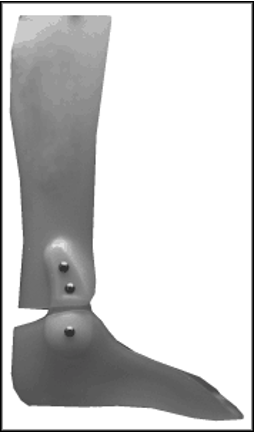
Tamarack joint
has rubber ROM stop that allows for some energy return
very adjustable

intrepid dynamic exoskeletal orthosis (IDEO)
patellar tendon bearing AFO with a posterior leaf
offers increased energy absorption and return
used for high-level athletes and high-demand occupations

Craig-Scott orthosis
KAFO with a posterior offset hinge
moves axis of rotation posterior to ground reaction force to allow some quad activation while preventing knee flexion

conventional KAFOs
made of metal double uprights and leather straps
Pros: durable, easily adjusted
Cons: heavy, pressure concentrated under straps, only one shoe option
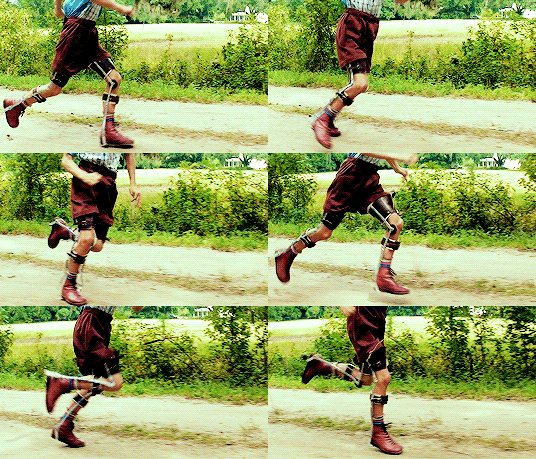
thermoplastic KAFOs
made custom for pt’s unique anatomy
Pros: lighter, total contact offers better control and pressure distribution
Cons: bad with obesity, fluctuating limb size, impaired sensation

HKAFOs
offer pelvic stabilization
hinged for sagittal motion, prevent frontal motion (ABD/ADD)

robotic assisted exoskeletons
Pros: very motivating, can match/supplement patient effort (trace mm activation can trigger exoskeleton movement)
Cons: bulky, very specific height requirements

rehabilitation knee orthoses
protect knee from excessive loads/ROM during tissue healing
intended to be temporary!

functional knee orthoses
protect knee from loads in specific direction(s)
address permanent mechanical problems —> long-term use
intended to be task-specific (ex. sports, not grocery shopping)

valgus loading functional knee orthosis
applies valgus load to offload medial compartment
used for medial compartment OA

lateral buttressing functional knee orthosis
applies force in medial direction to promote appropriate tracking
research does not show kinematic changes but supports Sx relief

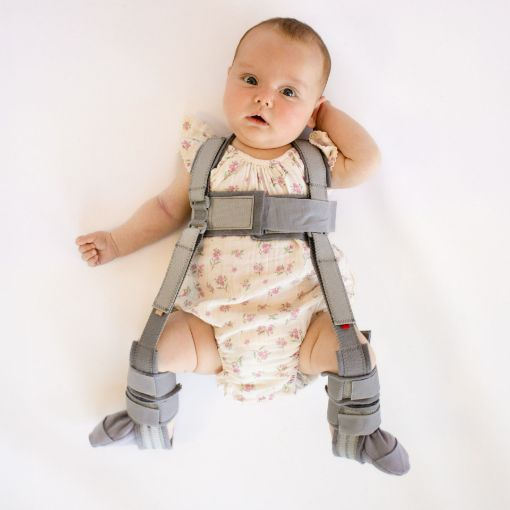
Pavlik harness
used for early intervention tx of developmental hip dysplasia (0-6 months)
holds hips in maximum congruency (120 degrees flex, 40 degrees ABD)
hip abduction orthosis
used for later tx of developmental hip dysplasia (>6 mo)
prefabricated, but very adjustable
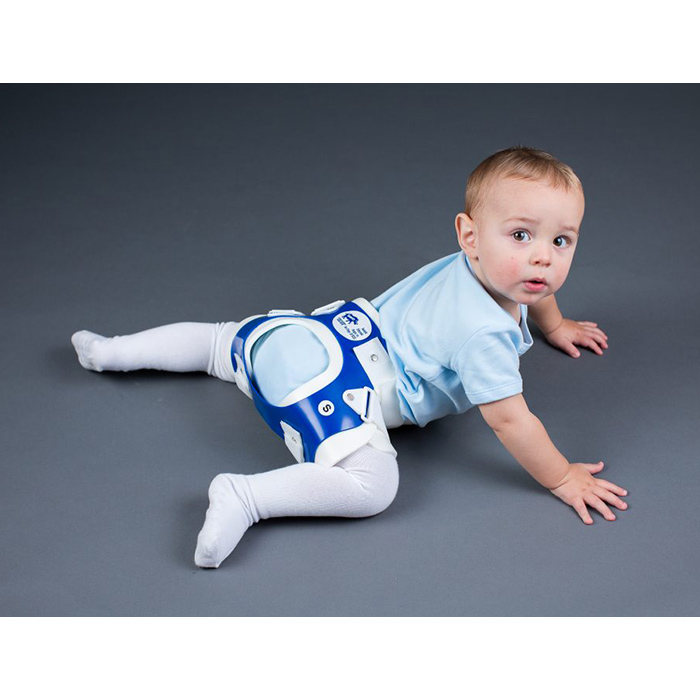
Scottish Rite brace
used to tx LCPD
maintains 45 degrees hip ABD while allowing flex/exten
typically worn as night brace

SI belt
provides external support for pelvic ring

thoracolumbar corset
provides support and security to abdomen and lumbar spine
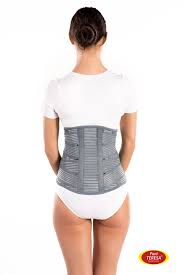
chairback orthosis
TLSO
offers sagittal plane control (decreases flex/exten)
rigid plastic shell with adjustable elastic straps

Knight orthosis
TLSO
offers sagittal and frontal plane control (broad bands offer lateral support)

Williams orthosis
TLSO
offers sagittal and frontal plane control
primarily limits exten and encourages posterior pelvic tile
lateral bars prevent side bending

Jewett brace
TLSO
offers sagittal plane control
primarily limits flexion
allows some side-bending

CASH brace
TLSO
offers sagittal plane control
primarily limits flexion
lighter than Jewett brace = better for long-term use (ex. non-surgical candidates)
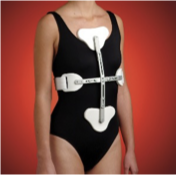
thermoplastic TLSOs
typically used for older/osteoporotic women or s/p kyphoplasty
Pros: total contact = better control and distribution of pressure
Cons: harder to don/doff, significantly impairs mobility and balance

Rainey flexion jacket
thermoplastic TLSO
prevents flexion
(I can’t find a picture of it anywhere. Kinda confused, tbh)
Boston overlap brace
thermoplastic TLSO
supports lumbar exten
single piece is easier to don, but only works for slimmer pts

soft cervical collar
offers no true support or limitation of motion
more for comfort

rigid reinforced cervical collars
offer sagittal plane control
very effective, need tight fit under mandible to control upper cervical motion
ex. Philadelphia collar, Aspen collar
Philadelphia collar
rigid reinforced collar to control sagittal plane cervical motions
lighter, but harder to clean

Aspen collar
rigid reinforced collar to control sagittal plane cervical motions
heavier, but removable pads are easier to clean
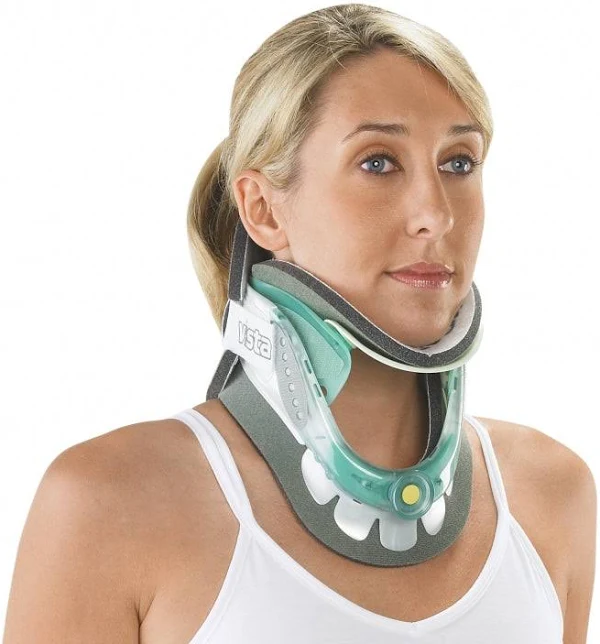
Minerva orthosis
a sterno-occipitomandibular immobilizer (CTSO)
stabilizes C4 to cranium to limit upper cervical motion

cervical halo
provides absolute restriction of cervical motion
used for high-level and severe cervical fxs
can add spacers to create traction
risk of infection, pressure under yoke
HIGH FALL RISK

Milwaukee brace
over-the-counter scoliosis brace
longest superior-inferior lever arm (mandible to pubis)
rare now b/c custom is easy

Boston brace
rigid thermoplastic TLSO for scoliosis management
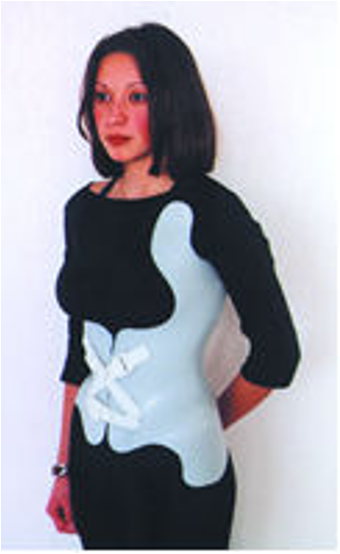
ground reaction AFO
promotes knee and hip extension in stance phase
