Sea Turtle Rescue and Rehabilitation: Veterinary Material
 Call Kai
 Learn
 Practice Test
 Spaced Repetition
 Match
 Flashcards
 Knowt Play
1/253

There's no tags or description
Looks like no tags are added yet.
254 Terms
What is the environmental threat of cold stunning?
A condition in sea turtles caused by prolonged exposure to cold water, resulting in reduced metabolism, lethargy, impaired swimming, and potentially death if exposure continues.

What is the environmental threat of infectious and parasitic diseases?
Illnesses in sea turtles caused by pathogens (bacteria, viruses, fungi) or parasites that can affect organ function, weaken the immune system, and potentially lead to death.

What is the environmental threat of chronic debilitation syndrome?
A condition in sea turtles characterized by prolonged weakness, severe weight loss, lethargy, anemia, and often excessive barnacle growth, associated with poor health and malnutrition.

What are the three main anthropogenic impact threats?
1. By-catch in fisheries
2. Boat collisions
3. Marine pollution

What are the three main ways that sea turtles tend to be found/recovered when sick or injured?
1. Adrift at sea (floating on the surface/unable to dive)
2. Stranding on beach (unable to fight waves to get back to ocean)
3. By-catch in fishing gear
What is the appropriate field response to a live stranded turtle AFTER an initial assessment?
Immediate transport to the closest rescue center for diagnostic evaluation
What is the appropriate FIRST action in field response to a live stranded turtle?
Initial assessment- Visual evaluation for external injuries which should be supported
Why must careful manipulation/handling be down during the transportation of emaciated turtles?
They are prone to pathological avulsions (tendon/ligaments dislocating bone), dislocations, and other traumas
What are the four critical parameters to check during the initial assessment of a found sea turtle?
1. Evaluation of airway and respiration
2. Heart rate detection and measurement
3. Careful inspection of any apparent injuries that require immediate first aid
4. Measurement of body temperature
What is the order of treatment when there are multiple sea turtles needing medical attention?
Reverse Triage- A method of prioritizing treatment for animals with the highest chances of survival, rather than treating the most severely injured or ill animals first.
WHY? Prioritize the greatest number of successful recoveries!
What is the purpose of checking airway and respiration?
To confirm breathing and identify possible respiratory injuries
How is breathing in turtles visually/auditorily assessed?
Watching for movement and listening for evidence of breathing
What is aspiration?
Water or other material entering the airways or lungs
What position should be used for turtles with suspected aspiration?
Resuscitation position- the rear (caudal) body is elevated

Why is resuscitation position used on turtles with suspected aspiration?
To help drain aspirated water from the airways
What can bubbles during carapace wound irrigation (saline solution) indicate?
Possible penetration into the lungs
What are the two ways of measuring heart rate in turtles?
Doppler and ultrasound
Where is the doppler probe positions to assess heart rate?
NOTE: 2 possible positions
Between the neck and shoulder or the prfemoral area with the probe directed towards the kidneys
What sheltering conditions should be done for a turtle found in environmental conditions
Move the turtle to a sheltered area to protect it from cold temps
What sheltering conditions should be done for a turtle found in environmental conditions >27°C (80°F)?
Provide shade or move the turtle away from direct sunlight to prevent overheating
What temperature should be maintained during initial field response? (in reference to stranding temperature)
Maintaining temperature within 2-3°C (4-5°F) of the stranding
temperature (avoid wide temp fluctuations/additional body stress)
What kind handling can be down to calm the turtle?
HINT: Handling of the head
Covering the head with a towel or slight pressure on neck area
What transportation conditions should be used for a sea turtle?
HINT: Container Size, Towels and moisture levels
Appropriately sized counter with foam padding and towels. Cover the carapace with the wet towel and/or regularly soak the shell and appendages with water (ocean temp)

What is the first step/procedure in the diagnostic workup of a sea turtle upon admission to the rescue center?
Physical examination
What are three important safety rules for sea turtle handling to ensure the protection of humans and other turtles?
1. Always wear gloves when handling living animals, carcasses, tissues, or fluids
2. Wash skin and clothes after handling the turtles to avoid contamination
3. Disinfect all surfaces and objects in contact with the animal
What is the main general goal in sea turtle patient care?
Patient stablization
What following steps should be done after initial evaluation and stabilization for finding the appropriate therapeutic plan?
NOTE: Not all illnesses are physically visable
In-depth physical examination and diagnostic evaluation (including: blood analysis [hematology, biochemistry, blood glucose], swabs for microbiology, ultrasound, and radiology
What information should be included on medical records during initial sea turtle admission/stabilization/initial tests?
-Notes of physical examinations, diagnostic test results, daily feeding and behavioral observations, administered medications
-Examination form to record biological data
-Digital images to document specific lesions or injuries
What general information can be found on recovered sea turtle data forms?
Species identification, sex (if known), date of recovery, recovery location/GPS coordinates, general health and physical condition, existing identification tags and new tagging information, body measurements, and body weight
What are two primary reasons for checking the weight of recently admitted sea turtles?
NOTE: For treatment and an indicator
1. Indicator of hydration and nutritional status
2. Correct drug dosages and proper diet
What are the symptoms associated with body condition score 1?
Emaciated: sunken eyes, poor muscle tone and athrophy, loss of inguinal fat and a concave plastron

What are the symptoms associated with body condition score 2?
Thin: Slightly sunken eyes, reduced muscle mass, little fat around the inguinal region (soft-tissue in front of hind limbs), and a slightly concave plastron

What are the symptoms associated with body condition score 3?
Normal: Eyes appear normal, good muscle tone, adequate fat reserves, and a relatively flat plastron

What are the symptoms associated with body condition score 4?
Robust: Well-developed musculature, fuller body appearance, substantial fat reserves, and a slightly rounded plastron

What are the symptoms associated with body condition score 5?
Obese: Excessive fat deposits, very full body appearance, prominent fat around the inguinal region, and a convex or bulging plastron

What can CCL (curved carapace length) help tell about a sea turtle?
Age estimation
What is the visual indication of a mature male in sea turtles?
NOTE: Only able to be externally examined in adults
The tail extends beyond the carapace
What is the visual indication of a mature female in sea turtles?
NOTE: Only able to be externally examined in adults
The cloacal opening is closer to the plastron, with tail being at/shorter than the carapace
What three types of physical examinations should be done on a rescued sea turtle?
1. In-water visual assessment
2. Out-of-water visual assessment
3. Hands-on physical examination
What information can be assessed during out-of-water visual assessments?
Health evaluations: Responsiveness, activity level, body condition, respiratory rate/sounds, location and severity of external wounds/anomalies, presence of fishing gear entanglement/ingestion, quality and location of epibiota (organisms on shell [barnacles])
Other general: Species identification, sex determination (for adults), and size class determination
What are some visual cues during out-of-water assessment that indicate a sea turtle requiring treatment/care?
Lethargy, inability to raise the head, head tilt, tremors, and hyper-responsiveness to external stimuli
What information can be assessed during in-water visual assessments?
Diving ability (foraging ability), buoyancy, respiration, vision, feeding, defecation, flipper movement, and swimming
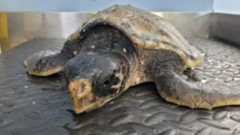
What are the signs of a healthy turtle during in-water visual assessment?
Very active in the water that attempts to swim away and resists being handled.
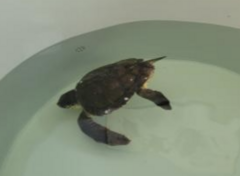
What is mentation evaluation?
Evaluates a turtle's level of awareness, alertness, and responsiveness to external stimuli
What is an alert mentation sea turtle status?
Awake, aware of its surroundings, and responsive to external stimuli
What is an depressed mentation sea turtle status?
Reduced activity and responsiveness; reacts more slowly or weakly than expected
What is an stuporous mentation sea turtle status?
Severely reduced responsiveness; responds only to strong or repeated stimuli
What is an comatose mentation sea turtle status?
Unconscious and unresponsive to external stimuli
What is deeper tank placement and when should it be used on a turtle?
Active turtles are placed in deeper tanks because they have sufficient strength and coordination to swim normally. This should ideally be done prior to release to check swimming, diving, and feeding behaviors

What is freshwater treatment in sea turtles (~4-6 hrs)?
NOTE: Not longer than 24 hrs without blood tests, PCV
Dehydrated turtles and those heavily covered in ectoparasites or epibiota may be placed in freshwater to kill epibiota and loosen barnacles. It can also rehydrate mildly dehydrated patients
What are ectoparasites in sea turtles?
Parasites that live on the outside of the turtle's body: leeches, parasitic copepods, and parasitic mites
NOTE: Parasitic organisms that benefit from the host turtle's expense
What are epibiotas in sea turtles?
Organisms that grow or attach to the turtle's external surfaces: barnacles, algae, tubeworms, etc
NOTE: Not necessarily parasitic (only when in high number blocking turtles eating/mobility), only using the turtle as a surface to live on
What is the standardized physical examination approach for sea turtles?
HINT: Direction of examination
Begins at the head and progresses caudally (towards the tail)
What is a symmetry assessment and which structures of the turtle are examined for this?
Comparing the left and right sides of the body to identify abnormalities, swelling, deformities, or injuries
Structures: Head, eyes, tympani (external ear structures), nostrils, and rhamphothecae (keratinized beak coverings)
What are the Tympani on a sea turtle?
Visible external ear membranes of sea turtles
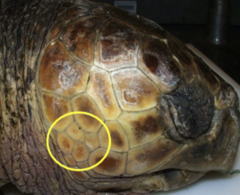
What are the rhamphothecae on a sea turtle?
Keratinized coverings of the upper and lower beak

Hands-on physical examination: Head
What is an ocular examination and what all should be checked?
Assessment of the eyes to identify abnormalities, injuries, or signs of illness
1. Eye position- check whether both eyes are positioned symmetrically and normally within the head
2. Eye movement- evaluate whether the eyes move normally and respond to visual stimuli
3. Excessive tearing (epiphora):- Excess clear fluid or tears around the eyes, potentially indicating irritation, inflammation, or infection
4. Eye abnormalities- look for swelling, discharge, cloudiness, injuries, and sunken appearance

Hands-on physical examination: Head
What is an ear/hearing examination and what all should be checked?
NOTE: Sea turtle ear anatomy has a middle and inner ear but lack external ears
Evaluates the turtle's response to auditory stimuli and potential abnormalities affecting hearing
Middle ear- Involved in transmitting sound vibrations
Inner ear- Responsible for hearing and balance
External ear- Sea turtles lack visible external ear structures like the ears of mammals

Hands-on physical examination: Head
What is an nares/olfaction (smell) examination and what all should be checked?
Evaluation of the external openings of the nasal passages (nostrils) and olfaction assessment to observe the turtle's ability to locate food and demonstrate normal foraging behavior
1. Nare symmetry- check whether both nostrils have a similar appearance and size
2. Nasal discharge: look for abnormal fluid or mucus coming from the nostrils
3. Traumatic wounds: check for injuries around the nostrils

Hands-on physical examination: Head
What is a nasal discharge assessment and cytology purpose?
Evaluate the color and consistency of nasal discharge to identify potential abnormalities
Clear and watery: may indicate irritation or increased secretions
Thick or cloudy: may suggest inflammation or inflection
Discolored: may indicate abnormal secretions
Cytology: Microscopic examination of cells and microorganisms collected from nasal discharge to help identify inflammation or infection

Hands-on physical examination: Head
What is a rhamphothecae (keratinous beak) examination and what all should be checked?
Rhamphothecae: hard, keratinized coverings that form the upper and lower beak of a sea turtle
1. bacterial infections: may cause inflammation, abnormal tissue, or damage to the beak
2. fungal infections: may cause lesions or abnormal tissue changes
3. traumatic injuries: cracks, fractures, abrasions, damages
4. abnormal growth: irregular beak shape/excessive growth

Hands-on physical examination: Head
What is an oral examination and what all should be checked?
Inspection of the mouth and oral cavity for abnormalities, injuries, and signs of infection
1. Mucous membrane color (normal: pale pink)-
Abnormal color may indicate changes in circulation/oxygenation
2. Oral plaques- abnormal patches/deposits on oral surfaces may be associated with infection/inflammation
3. Ulcerations- open sores or damaged area of the oral surfaces may be associated with infection/trauma/other diseases
4. Abnormal oder- unusual/foul smell from the mouth may indicate infection, tissue damage, or retrained foreign material
5. Fishing hooks and fishing line- check for hooks/line lodged
6. Proximal esophagus (upper portion of esophagus)
7. Mouth-opening resistance-should generally resist having their mouths opened

Hands-on physical examination: Cervical Region
What is assess during examination of the cervical region and what abnormalities can be found?
Assessment of skin condition and abnormalities through inspection and deep palpations
Abnormalities: esophageal foreign bodies; edema, muscle atrophy, emphysema; lacerations and fishing line entanglement; fibropapillomas
Hands-on physical examination: Cervical Region
What is an edema?
Swelling caused by fluid accumulation
Hands-on physical examination: Cervical Region
What is an emphysema in the cervical region?
Abnormal air accumulation beneath the skin
Hands-on physical examination: Cardiovascular System
What factors influence sea turtle heart rate?
Body size, activity, temperature, and behavior
Hands-on physical examination: Cardiovascular System
What is the normal heart rate of a conscious sea turtle at 24°C?
Approximately 30-60 beats per minute
Hands-on physical examination: Cardiovascular System
What heart rate is considered critically low in the provided notes?
Less than 1 beat per minute; requires medical intervention
Hands-on physical examination: Cardiovascular System
What factors influence respiratory rate?
Temperature and activity rate
Hands-on physical examination: Cardiovascular System
What abnormal respiratory sounds should be monitored?
Gurgling, wheezing, and stertor (low-pitched snorting/snoring)
Hands-on physical examination: Cardiovascular System
What can gurgling, wheezing, and stertor indicate?
Possible tracheal obstruction or respiratory tract disease
Hands-on physical examination: Cardiovascular System
What is stertor?
Noisy breathing associated with upper respiratory tract obstruction
Hands-on physical examination: Cardiovascular System
What may repeated mouth opening indicate?
Respiratory distress or difficulty breathing
Hands-on physical examination: Skin
What injuries or abnormalities should be assessed on the skin?
Vessel strikes, fishing gear entanglements, marine debris injuries, and shark bites
Hands-on physical examination: Claws
What should be examined on sea turtle claws?
Evidence of trauma or infection
Hands-on physical examination: Shell
What abnormalities should be assessed during shell examination?
Abnormal keratinization, changes in firmness or pliability, and deformities
Hands-on physical examination: Shell
Why must emaciated sea turtles be handled carefully?
Their weakened connective tissues can make plastron bones mobile and sharp, increasing the risk of cardiac puncture or other trauma
Hands-on physical examination: Epibiotas
Approximately how many epidbiota species have been reported on loggerhead shells?
More than 150 species
Hands-on physical examination: Epibiotas
What can excessive epibiota indicate in sea turtles?
possible debilitation or poor health
Hands-on physical examination: Prefemoral palpation
How is joint and muscle function assessed?
By palpating the front and hind flippers
Hands-on physical examination: Prefemoral palpation
What muscle characteristics are expected in healthy sea turtles?
Taut muscles and resistance to movement
Hands-on physical examination: Prefemoral palpation
What do flaccid muscles with little or no resistance indicate?
Possible neurological disease or sever generalized weakness
Hands-on physical examination: Prefemoral palpation
What is muscle atrophy?
Loss or wasting of muscle tissue
Hands-on physical examination: Prefemoral palpation
What is muscle hypertrophy?
Enlargement of muscle tissues. This could be in response to injuries, exertion, or diseases
Hands-on physical examination: Cloaca and tail
What can a digital examination of the cloaca reveal?
Feces, urates, foreign material, impactions, strictures (inflammations) and other abnormalities
Hands-on physical examination: Cloaca and tail
What is a cloacal prolapse?
Protrusion of tissue through the cloacal opening
Hands-on physical examination: Cloaca and tail
What conditions may be associated with cloacal prolapse?
Being out of water or intestinal impaction or obstruction
Hands-on physical examination: Temperature
What does cloacal temperature represent?
The turtle's recent environmental temperature
Hands-on physical examination: Temperature
Where can a digital laser thermometer be directed to estimate core body temperature?
The inguinal region (angled towards hind limb)
Hands-on physical examination: Temperature
How quickly should body temperature be gradually corrected?
Approximately 2-3°C (4-5°F) per day
Hands-on physical examination: Temperature
What methods may be used for temperature correction?
Warm fluids, warm baths, and intensive care units
Hands-on physical examination: Resuscitation and Stabilization
What parameters should be monitoring during stabiliization
Temperature, heart rate, respiratory function, hydration, and responsiveness
When is resuscitation most often necessary in sea turtles?
When drowning is suspected
When should ventilation be preformed?
When the turtle is apneic (not breathing) and stable enough for conscious endotracheal intubation
What does apnea mean?
Temporary or sustained cessation of breathing
What can be attempted if a turtle cannot be intubated?
Elevate the caudal body and preform repeated, gentle, rhythmic extension and flexion of the forelimbs to mimic normal respiratory movement (this motion shifts the shoulder and internal organs to alter the pressure inside the shell, forcing air in and out of the lungs)
Why are forelimbs extended and flexed during attempted ventilation?
To help mimic the turtle's normal respiratory pattern
How should an intubated turtle be positioned to help drain airway fluid?
Head downward with the caudal (rear) end elevated
What is the average ventilation rate in sea turtles?
One breath per minute
Which administration routes are generally used in more stable patients?
Subcutaneous (SC- under the skin) and intracelomic (IC- into the body cavity)