Tutorial GIT II
 Call Kai
 Learn
 Practice Test
 Spaced Repetition
 Match
 Flashcards
 Knowt Play
1/90

There's no tags or description
Looks like no tags are added yet.
91 Terms
A 25-year-old female presents to her GP with bloating and abdominal pain, a 3-week history of intermittent diarrhoea and weight loss that is worse after eating, and she has eliminated certain foods from her diet. Hb is 9 g/dL with low serum ferritin. What are the three broad problems on the differential list?
• Likely GI pathology • Malabsorption • Iron deficiency anaemia
A 25-year-old female has 3 weeks of intermittent diarrhoea, weight loss worse after eating, Hb 9 g/dL and low ferritin. What are the three specific differential diagnoses?
• Coeliac disease • IBD • GI infection
A 25-year-old female has diarrhoea and weight loss worse after eating, Hb 9 g/dL and low ferritin. Which 3 negatives in her history make GI infection less likely?
• No nausea • No vomiting • No recent travel
What are the three groups of investigations for suspected coeliac disease?
• Blood tests (FBC, iron studies, B12/folate) • Serology and other tests (antibodies, HLA typing, stool, inflammatory markers) • Endoscopy + duodenal biopsy
What is the FBC looking for in suspected coeliac disease?
• Anaemia • Signs of infection
Which four blood tests besides serology are listed for suspected coeliac disease?
• FBC • Iron studies • Vitamin B12 • Folate
What are the four antibody/genetic tests for coeliac disease?
• IgA anti-TTG antibodies • +/- IgG anti-TTG • Anti-EMA antibodies • HLA DQ2/DQ8
Besides antibodies and HLA typing, which two other non-invasive investigations are listed for suspected coeliac disease?
• Stool samples • ESR/CRP
Which investigation gives the histological diagnosis in suspected coeliac disease?
Endoscopy + duodenal biopsy

What are the two histological features of normal small bowel villi that are labelled on the image?
• Minimal intraepithelial lymphocytes • No inflammatory cells in the lamina propria


What are the four histological features of coeliac disease on duodenal biopsy?
• Villous atrophy • Intraepithelial lymphocytes • Inflammatory cells in the lamina propria • Crypt hyperplasia (can also occur) Mnemonic: "VICI" = Villous atrophy, Intraepithelial lymphocytes, Crypt hyperplasia, Inflammatory cells in lamina propria

What is the pathogenesis of coeliac disease?
Immune-mediated disorder triggered by dietary gluten in genetically susceptible patients
Which three grains contain the gluten that triggers coeliac disease?
• Wheat • Rye • Barley Mnemonic: "BRW" = Barley, Rye, Wheat
What percentage of coeliac patients are HLA DQ2?
90%
What percentage of coeliac patients are HLA DQ8?
5% Mnemonic: DQ2 = 90% (big group), DQ8 = 5% (small group)
How do HLA DQ2/DQ8 trigger the immune response in coeliac disease?
They are expressed on antigen-presenting cells, which bind gluten peptides and trigger the immune response
What are the two parts of coeliac disease treatment?
• Lifelong gluten-free diet • Lifelong follow-up
How long does it take the small intestinal mucosa to heal on a gluten-free diet?
6–24 months (sometimes minimal damage persists)
What two associated conditions is lifelong coeliac follow-up specifically listed as monitoring for?
• Osteoporosis • Thyroid disease
A coeliac patient diagnosed at 25 has symptoms that never fully resolve despite good compliance with treatment, and in her 60s she presents to ED with acute severe abdominal pain. What two coeliac-related conditions does this raise?
• Refractory coeliac disease (RCD) • Enteropathy-associated T-cell lymphoma (EATL)
How is refractory coeliac disease defined?
Persistent and recurrent malabsorptive symptoms/signs despite adherence to a gluten-free diet for >12 months
What are the two types of refractory coeliac disease?
• RCD I – lymphocytes remain polyclonal • RCD II – clonal abnormality and changed phenotype Mnemonic: "Type II = Trouble" (clonal, poor outlook, EATL)
Which type of refractory coeliac disease has a poor outlook and can develop EATL?
RCD II
What are the four key features of enteropathy-associated T-cell lymphoma (EATL)?
• Develops in the jejunum or ileum • Most commonly in RCD • Associated with abdominal pain and intestinal perforation • Poor prognosis
What are the five complications of coeliac disease?
• Osteoporosis • Neurologic • Ulcerative jejunoileitis • Autoimmune thyroid disease • Small bowel adenocarcinoma Mnemonic: "ONUTS" = Osteoporosis, Neurologic, Ulcerative jejunoileitis, Thyroid, Small bowel adenocarcinoma
A 68-year-old asymptomatic male with hypertension on an ACE inhibitor has a positive Bowel Screen stool test. What is the next step?
Referral for colonoscopy for further investigation
What age range does bowel screening target?
57 to 71
What are the three categories of colonic polyp diagnoses?
• Non-neoplastic • Miscellaneous • Neoplastic
What are the three groups of non-neoplastic colonic polyps?
• Epithelial • Non-epithelial • Hamartomas
What are the two non-neoplastic epithelial colonic polyps?
• Hyperplastic • Inflammatory
What is the non-neoplastic non-epithelial colonic polyp?
Lymphoid
What are the three hamartomatous colonic polyps?
• Juvenile • Retention • Peutz-Jegher Mnemonic: "JRP" = Just Really Pretty
What is the miscellaneous cause of a colonic polyp?
Rectal prolapse
What are the three neoplastic epithelial colonic polyps?
• Adenomas • Neuroendocrine • Carcinoma
What are the five neoplastic non-epithelial colonic polyps?
• GIST • Lymphoma • Melanoma • Lipoma • Vascular Mnemonic: "GLLMV" = Get Lost Little Mucosal Villains
What are the two main groups of most common colonic polyps?
• Adenomatous • Hyperplastic
What are the three types of adenomatous polyp?
• Tubular adenoma • Tubulovillous adenoma • Villous adenoma
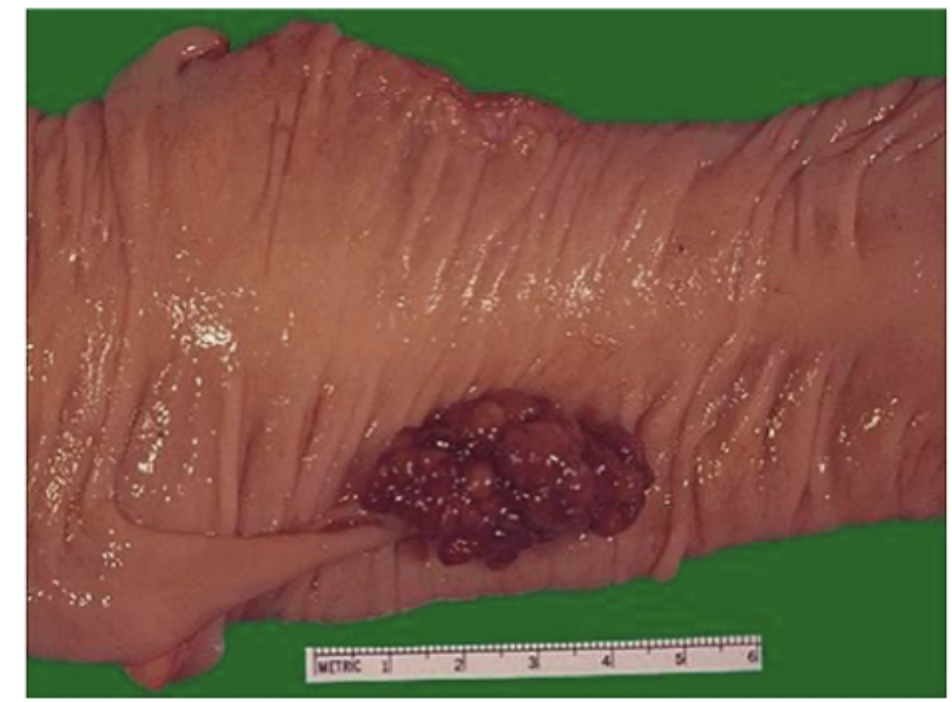
What is the macroscopic shape of tubular and tubulovillous adenomas?
Pedunculated
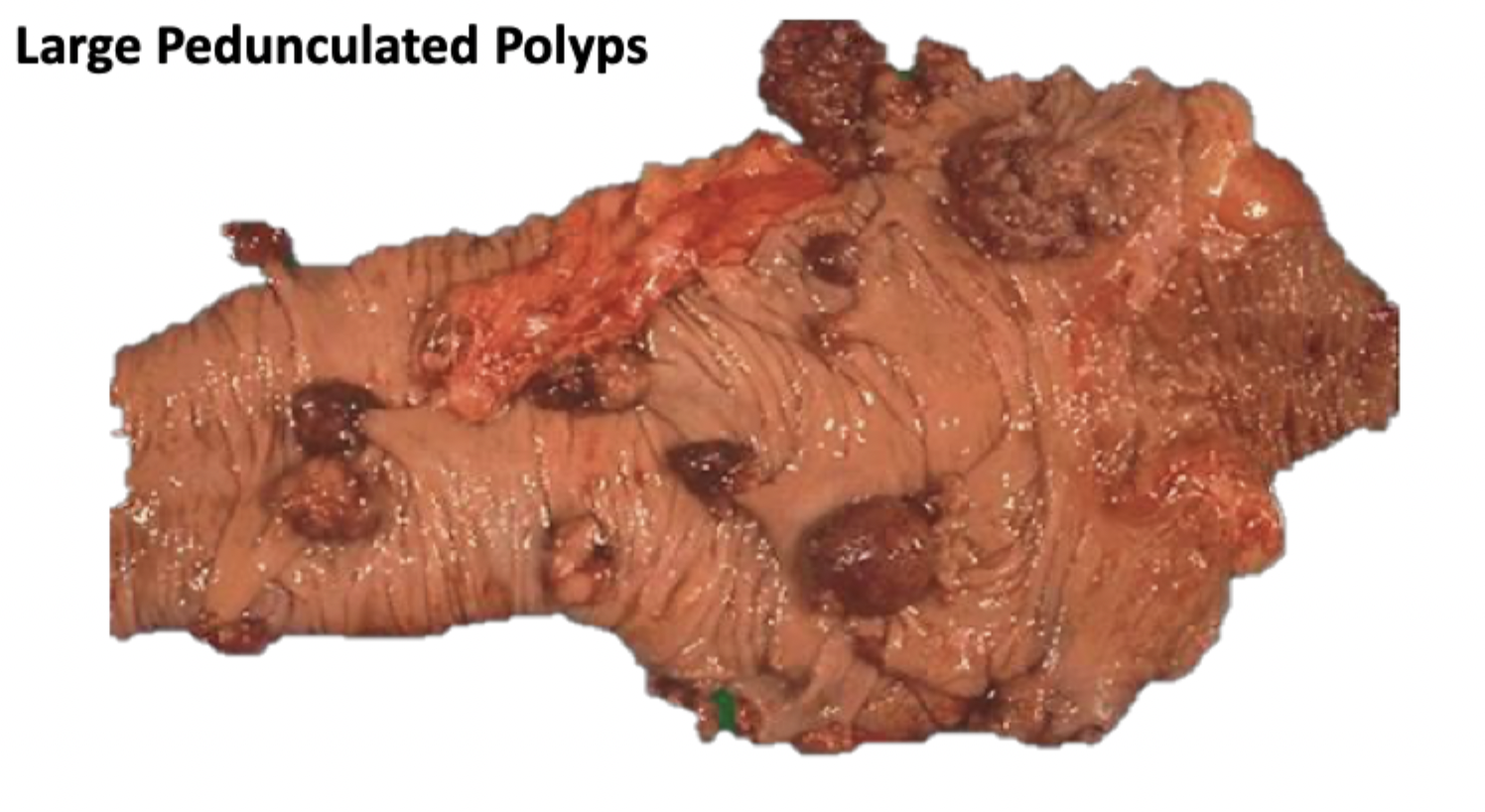
What is the macroscopic shape and size of a villous adenoma?
Sessile and may be large
What is the macroscopic shape and size of a hyperplastic polyp?
Sessile, usually <5 mm Mnemonic: "Tubular on a stalk; Villous and Hyperplastic sit flat"
What is the sequence of stages in the adenoma–carcinoma progression diagram?
• Hyperproliferation • Adenomatous polyps (small → large) • Severe dysplasia (precancerous polyp) • Adenocarcinoma • Invasive cancer

In the adenoma–carcinoma progression diagram, which stages are benign and which are malignant?
• Benign: hyperproliferation and adenomatous polyps • Malignant: adenocarcinoma and invasive cancer

What two features identify a hyperplastic polyp on histology?
• Saw-tooth/star-shaped appearance • Abundant goblet cells
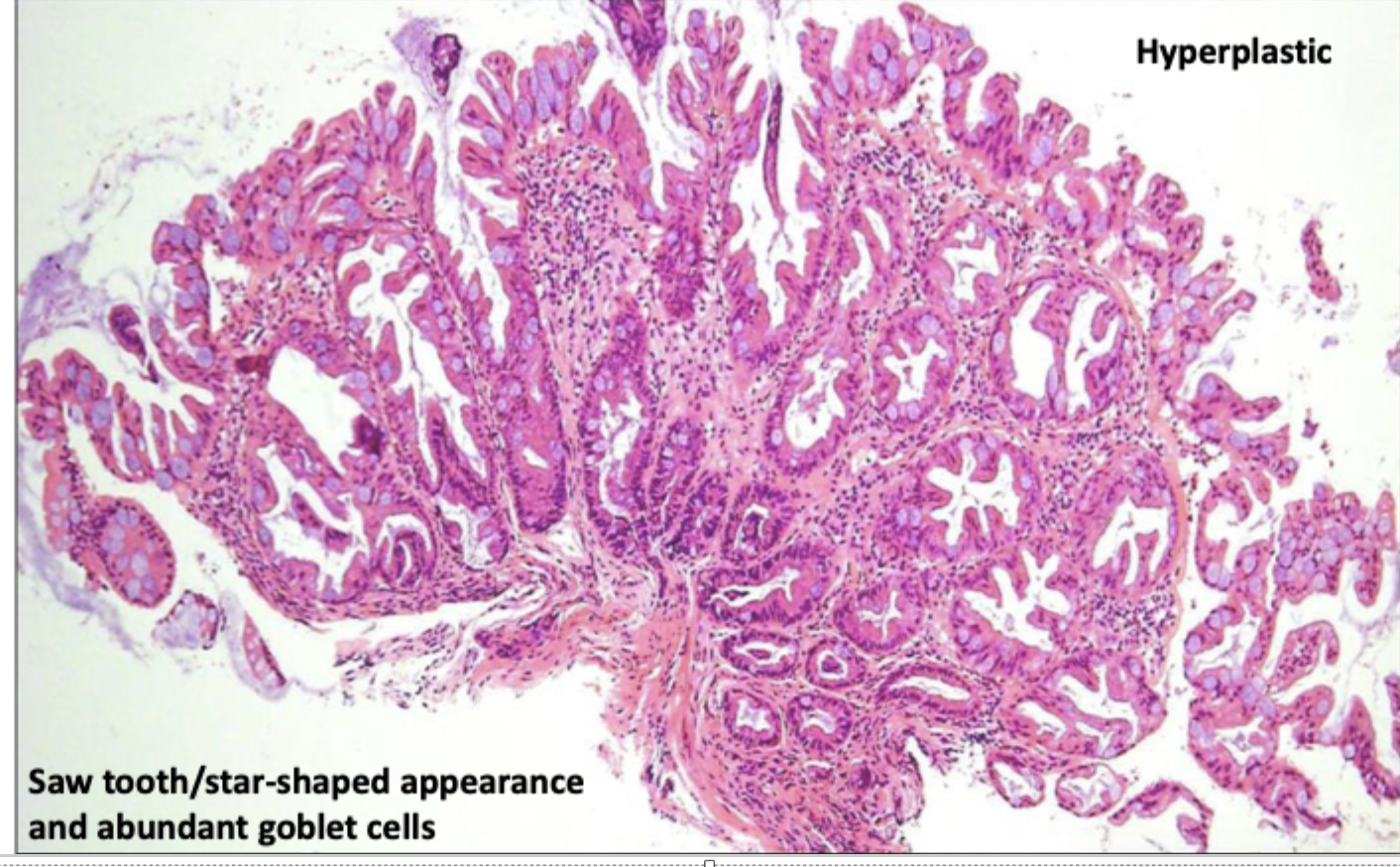

A low-power histology image shows a polyp on a stalk with a branching glandular and villous architecture. What is it?
Pedunculated polyp with tubulovillous patterns

What are the two main features to comment on in a pathology report on a colonic polyp?
• Dysplasia • Carcinoma
What should be commented on regarding dysplasia in a polyp pathology report?
• Low vs high grade • If present – margins of excision
What should be commented on if carcinoma is present in a polyp?
• Depth of invasion
• LVI (lymphovascular invasion)
• Margins of excision
What are the four complications of colonic polyps?
• Chronic bleeding • Malignant transformation • Intestinal obstruction • Villous adenomas – excessive mucous secretion & hypokalaemia Mnemonic: "BOMH" = Bleeding, Obstruction, Malignancy, Hypokalaemia

Which type of colonic polyp causes excessive mucous secretion and hypokalaemia?
Villous adenoma
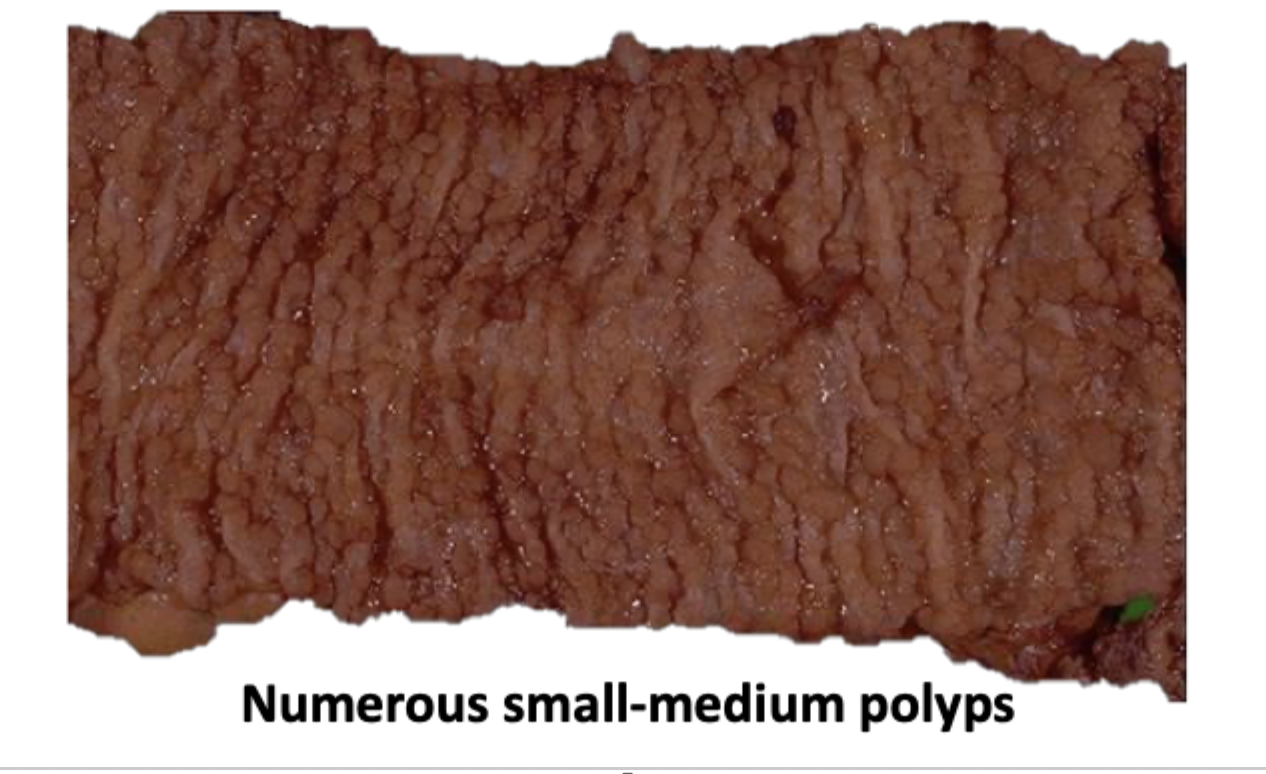
A 26-year-old woman with a family history of colonic polyps at a young age attends colonoscopy, which shows numerous small–medium polyps. What is the likely diagnosis?
Familial adenomatous polyposis (FAP)
What is the inheritance pattern and genetic cause of FAP?
Autosomal dominant – mutations in the APC gene on chromosome 5 Mnemonic
Aoife carney has 5 people in her family

How many polyps are present in FAP, and where?
Hundreds/thousands of adenomatous polyps throughout the colon
At what age do polyps begin in FAP?
Around age 16
What percentage of FAP patients have polyps by age 36?
95%
What is the prevalence of FAP?
1 in 10,000
What is the sex ratio of FAP?
Equal M:F ratio
What are the five extracolonic features that can occur in FAP?
• Polyps in the gastric fundus and duodenum • Osteomas • Dental anomalies • Congenital hypertrophy of retinal pigment epithelium (CHRPE) • Desmoid tumours Mnemonic: "PODCD" – "Polyps, Osteomas, Dental, CHRPE, Desmoids"
What is the outcome of FAP without prophylactic colectomy?
Colon cancer is inevitable
When is prophylactic colectomy usually done in FAP, and what three factors influence timing?
• Usually late teens – 30s • Influenced by symptoms • Interval increase in polyps • Cancer
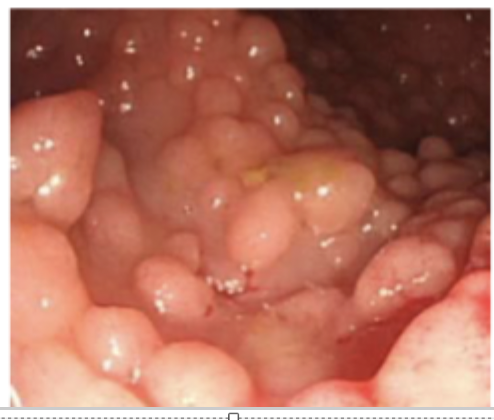
What are the four elements of diagnosing FAP?
• Clinical findings • Positive family history • At least 100 colonic polyps seen at colonoscopy • Molecular genetic testing
How many colonic polyps must be seen at colonoscopy to diagnose FAP?
At least 100
What are the three inherited colonic cancer syndromes covered?
• FAP • HNPCC (Lynch syndrome) • MYH-associated polyposis
What is the other name for hereditary non-polyposis colorectal cancer syndrome (HNPCC)?
Lynch syndrome
Which type of genes and which two named genes are affected in HNPCC (Lynch syndrome)?
• Mismatch repair genes • MLH1 and MSH2 Mnemonic: "Lynch MisMatch" – MLH1 & MSH2
What is the lifetime risk of colorectal cancer in HNPCC (Lynch syndrome)?
80%
What surveillance is recommended in HNPCC (Lynch syndrome)?
Annual colonoscopy
What is the genetic cause of MYH-associated polyposis?
Germline inactivation of the base excision repair gene (MYH)
What is the colorectal cancer risk in a patient carrying two inactive MYH alleles?
100% risk of CRC by 60 years
What are the four stages of colonic mucosa in the CIN (APC) pathway?
• Normal colon • Mucosa at risk • Adenomas • Carcinoma

What is the "first hit" in the CIN (APC) pathway, and which gene is involved?
Germline (inherited) or somatic (acquired) mutation of cancer suppressor genes – APC at 5q21
What is the "second hit" in the CIN (APC) pathway, and what is affected?
Methylation abnormalities and inactivation of the normal alleles – APC/β-catenin
Which protooncogene mutation occurs in the CIN pathway during adenoma formation?
K-RAS at 12p12
Which changes drive the progression from large adenoma to carcinoma in the CIN pathway?
• Homozygous loss of additional cancer suppressor genes – p53 at 17p13, LOH at 18q21 (SMAD2 and 4) • Overexpression of COX-2
What changes occur at the carcinoma stage of the CIN pathway?
• Additional mutations and gross chromosomal alterations • Telomerase, many genes Mnemonic for CIN order: "A KRAS P53" – APC → K-RAS → p53/SMAD
What are the three stages of colonic mucosa in the MSI pathway?
• Normal colon • Sessile serrated adenoma • Carcinoma
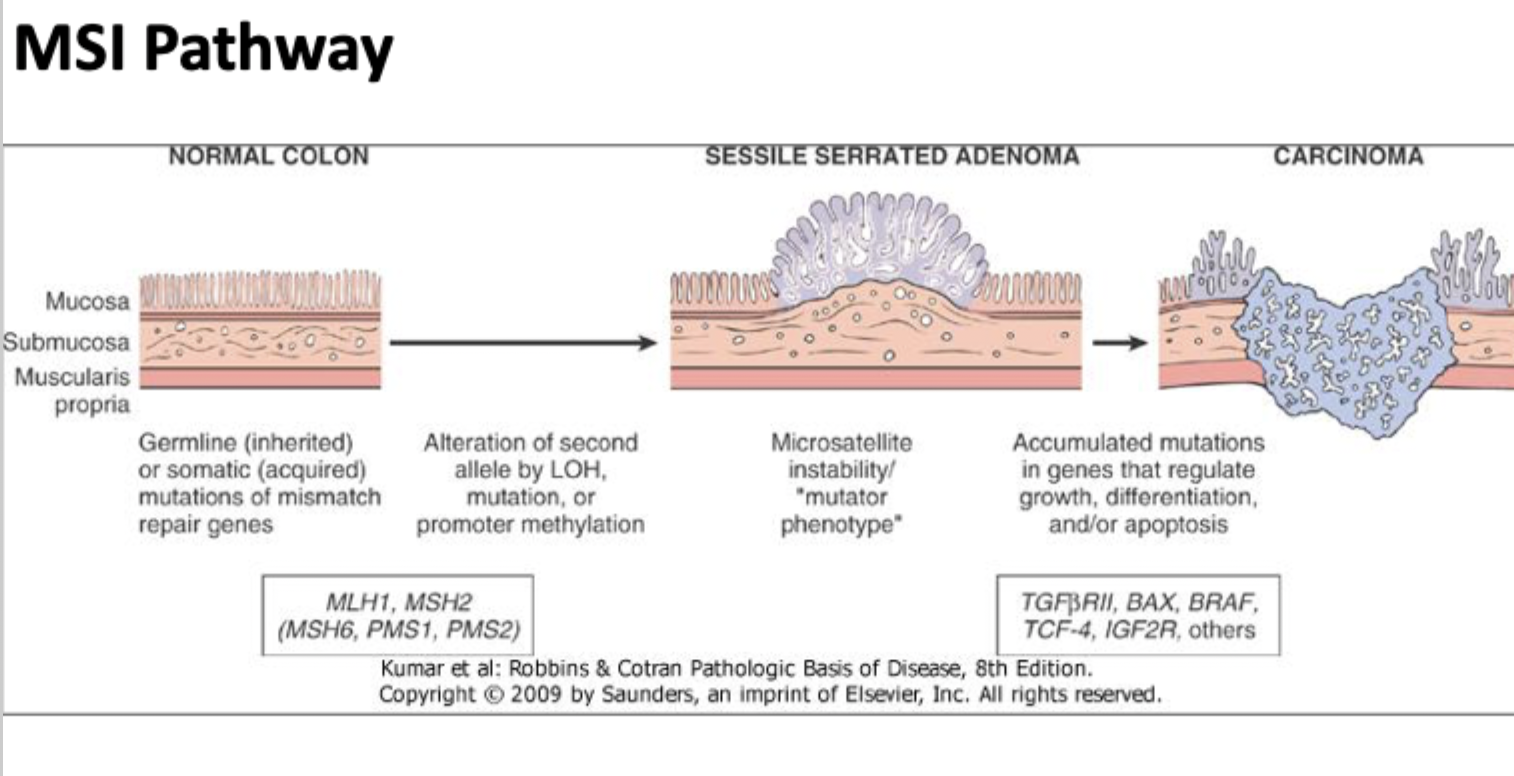
What is the initiating event in the MSI pathway, and which genes are involved?
Germline (inherited) or somatic (acquired) mutation of mismatch repair genes – MLH1, MSH2 (MSH6, PMS1, PMS2)
How is the second mismatch repair allele altered in the MSI pathway?
By LOH, mutation or promoter methylation
What is the result of loss of mismatch repair in the MSI pathway?
Microsatellite instability – "mutator phenotype"
What accumulates to cause carcinoma in the MSI pathway, and which genes are named?
Accumulated mutations in genes that regulate growth, differentiation and/or apoptosis – TGFβRII, BAX, BRAF, TCF-4, IGF2R, others
Which precursor polyp is associated with the MSI pathway, as opposed to the adenoma in the CIN pathway?
Sessile serrated adenoma
A 60-year-old female presents to her GP with frank PR bleeding, altered bowel habit for 2 months and occasional crampy abdominal pain lasting a few hours. What is the management pathway?
Referral for colonoscopy, then resection

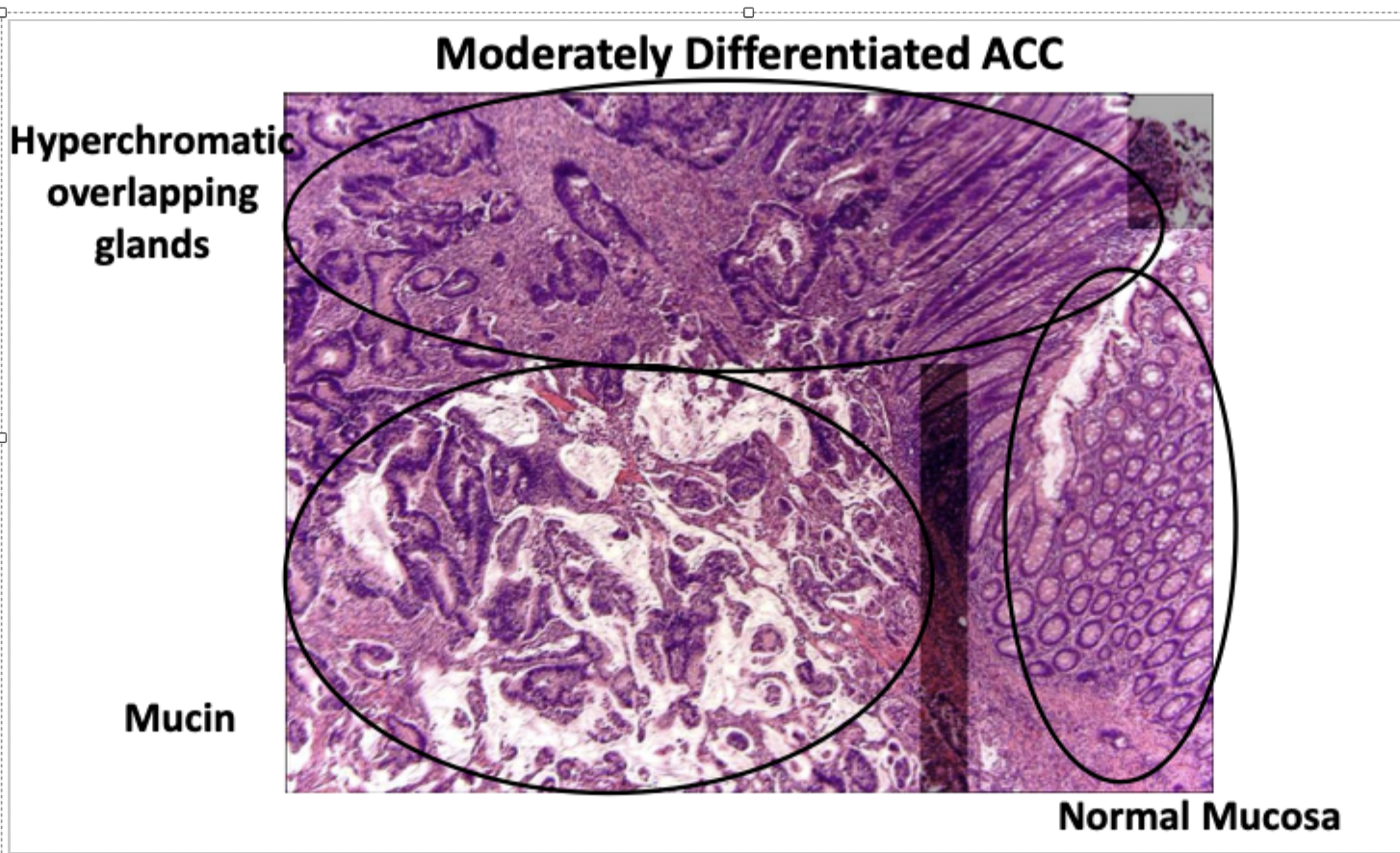
What are the three labelled features on the histology of a moderately differentiated colonic adenocarcinoma?
• Hyperchromatic overlapping glands • Mucin • Normal mucosa (adjacent)
What are the five macroscopic features to report on a colorectal tumour?
• Site of tumour • Maximum tumour diameter • Distance to nearest resection margin • Evidence of perforation • Rectal – above or below peritoneal reflection Mnemonic: "SMDPR" – Site, Max diameter, Distance to margin, Perforation, Reflection
What are the eight microscopic features to report on a colorectal tumour?
• Histology type • Grade • Depth of invasion • Degree of response to neoadjuvant therapy • Involvement of surgical margins • Rectal – distance (mm) to nearest circumferential resection margin • Background abnormalities • TNM
What are the three typical features of a left-sided colonic tumour?
• Alternating bowel habit • Crampy abdominal pain • PR bleeding
What are the three typical features of a right-sided colonic tumour?
• Iron deficiency anaemia
• Mass in RIF (right iliac fossa)
• Present later (wider lumen)
Mnemonic: "Right = Roomy" – wide lumen, so it presents late with anaemia and a mass
Why do right-sided colonic tumours present later?
The right colon has a wider lumen
Which gene mutation is tested in colorectal cancer to predict response to EGFR inhibitors?
KRAS
What are the two EGFR inhibitors whose response is predicted by KRAS testing in CRC?
• Cetuximab • Panitumumab
Which colorectal cancers respond to EGFR inhibitors?
Wild-type KRAS
What proportion of colorectal cancers have KRAS mutations, and how do they respond to EGFR inhibitors?
30–50% of CRC – do not respond Mnemonic: "Wild = Wins; Mutant = Miss