Lymphatic system practical
 Call Kai
 Learn
 Practice Test
 Spaced Repetition
 Match
 Flashcards
 Knowt Play
1/85

There's no tags or description
Looks like no tags are added yet.
Name | Mastery | Learn | Test | Matching | Spaced | Call with Kai | Chat |
|---|
No analytics yet
Send a link to your students to track their progress
86 Terms
What is the lymphatic system?
a vital network of tissues, organs, and vessels that maintains fluid balance, absorbs dietary fats, and defends the body against infections and diseases.
What are the basic components of the lymphatic system?
lymph fluid, a network of lymphatic vessels, lymph nodes, primary and secondary lymphoid organs, and specialized lymphoid tissue
Describe the formation of a lymph.
Capillary Leakage
Interstitial Fluid Accumulation
Absorption into Lymphatics
Becoming Lymph
What is Capillary Leakage?
As the heart pumps blood through arteries and tiny blood capillaries, blood plasma naturally leaks out through thin capillary walls into surrounding body tissues
What is Interstitial Fluid Accumulation?
This escaped fluid—containing water, oxygen, glucose, amino acids, and nutrients—bathes the cells and becomes known as interstitial fluid (or extracellular fluid)
What is Absorption into Lymphatics?
The body's microscopic lymphatic capillaries absorb this excess interstitial fluid along with waste products, cellular debris, proteins, and pathogens
What is becoming a lymph?
Once this interstitial fluid enters the lymphatic capillaries, its name changes to lymph. (In the gastrointestinal tract, fat-rich lymph is called chyle.) [1, 2]
What are the steps of the flow of a lymph?
Lymphatic Capillaries
Collecting Vessels
Lymph Nodes
Lymphatic Trunks
Collecting Ducts
Return to Bloodstream
What happens in Lymphatic Capillaries
Tiny, dead-end vessels absorb the initial fluid in the tissues.
What happens in Collecting Vessels
Capillaries merge into larger lymphatic collecting vessels. These vessels contain one-way valves that prevent backflow.
What happens in Lymph Nodes
As lymph travels through the vessels, it passes through bean-shaped lymph nodes (located in the armpits, groin, neck, and abdomen). Here, immune cells (macrophages and lymphocytes) filter out bacteria, viruses, and waste products.
What happens in Lymphatic Trunks?
Filtered lymph exits the nodes and flows into larger lymphatic trunks
What happens in Collecting Ducts?
The trunks empty into two main ducts in the upper chest:
Right Lymphatic Duct: Drains lymph from the upper right side of the body (right arm, right side of the head and thorax) into the right subclavian vein.
Thoracic Duct: The larger duct; drains lymph from the rest of the body (left side of the head/neck, left arm, abdomen, and both legs) into the left subclavian vein
What happens in Return to Bloodstream?
The ducts empty the cleansed lymph back into the large veins near the heart, restoring blood volume and pressure
What are the primary organs of the lymphatic system?
Bone Marrow
Thymus
What are the functions of the primary organs of the lymphatic system?
Lymphocyte Generation
Antigen Independence
Export to Circulation
What is lymphocyte generation?
They generate billions of precursor immune cells daily
What is Antigen Independence?
These sites support lymphocyte maturation before they ever encounter foreign invaders or antigens (unlike secondary organs like the Spleen or Lymph Nodes)
What is export to circulation?
Once mature, naive B and T cells leave the bone marrow and thymus and travel via the bloodstream to secondary lymphoid organs to wait for immune activation.
What does bone marrow do in the lymphatic system?
Serves as the birthplace for all hematopoietic stem cells.
Produces red blood cells, platelets, and white blood cells.
Acts as the site where B-lymphocytes (B cells) differentiate and mature
What does the thymus do in the lymphatic system?
Located in the upper chest (mediastinum) behind the sternum.
Receives immature T-cell precursors from the bone marrow.
Manages the maturation, positive selection, and negative selection of T-lymphocytes (T cells).
What are the secondary lymphatic organs?
Lymph nodes
Spleen
Mucosa-associated lymphoid tissue (MALT)
Tonsils and adenoids
Peyer's patches
What are the main function of the secondary organs?
Antigen Trapping and Filtering
Lymphocyte Activation
Effector and Memory Cell Generation
What is Antigen Trapping and Filtering?
They capture foreign particles, microbes, and debris from circulating lymph or blood
What is Lymphocyte Activation?
They bring naïve T and B cells into close contact with antigen-presenting cells (like dendritic cells) to trigger immune proliferation.
what is Effector and Memory Cell Generation?
Activated lymphocytes multiply in germinal centers to form plasma cells and memory cells that provide long-term immunity
What do lymph nodes do in the lymphatic system?
Small, bean-shaped organs positioned along lymphatic vessels that filter lymph fluid and trap pathogens.
What does the spleen do in the lymphatic system?
A large organ that filters blood, traps blood-borne pathogens, and manages red blood cells and white blood cells.
What does the Mucosa-associated lymphoid tissue (MALT) do in the lymphatic system
Unencapsulated immune tissue located near the epithelial linings of the digestive, respiratory, and urogenital tracts.
What do Tonsils and adenoids do in the lymphatic system?
Clusters of lymphoid tissue in the throat and nasopharynx that catch airborne and food-borne pathogens.
What do Peyer's patches do in the lymphatic system?
Organized lymphoid follicles in the small intestine that monitor gut bacteria and foreign substances.
What are the 3 lines of defense for the body?
First Line of Defense: Physical and Chemical Barriers
Second Line of Defense: Innate, Non-Specific Responses
Third Line of Defense: Adaptive, Specific Immunity
What is involved in the first line of defense Physical and Chemical Barriers?
Skin: Acts as a tough outer wall that blocks pathogens
Mucous membranes: Trap invaders in the nose, throat, and breathing passages.
Chemical fluids: Saliva, tears, sweat, and stomach acid kill or wash away microbes before they can cause harm
What is involved in the second line of defense Innate, Non-Specific Responses?
Phagocytes: White blood cells like macrophages and neutrophils swallow and destroy foreign invaders.
Inflammation: Blood vessels swell and leak fluid into tissue to bring white blood cells quickly to the site of infection.
Fever: Raises body temperature to slow down or stop the growth of pathogens.
What is involved in the 3rd line of defense Adaptive, Specific Immunity?
T cells: Destroy infected body cells or help coordinate the overall immune response.
B cells: Produce specialized, Y-shaped proteins called antibodies that lock onto and neutralize specific antigens
Memory cells: Remain in the body long-term so the immune system can react much faster if the same germ attacks again
What is immunity?
the body's ability to recognize, defend against, and remember specific foreign substances or pathogens (such as bacteria, viruses, toxins, and foreign tissues). Unlike innate immunity—which acts as a general, non-specific barrier—specific resistance is characterized by two defining features:
Specificity: The ability to target a particular foreign molecule (antigen).
Memory: The ability to "remember" a previously encountered antigen to mount a faster and more intense counterattack during future exposures.
How do B cells arise?
Share same birthplace in bone marrow, b cells stay in bone marrow
B Cells (Bone Marrow):
Pre-B cells remain in the red bone marrow to undergo maturation.
During this phase, they develop unique antigen-binding proteins called B-cell receptors (BCRs) on their surfaces.
They undergo a rigorous vetting process called negative selection. If an immature B cell reacts strongly against the body's own healthy tissues, it is destroyed (clonal deletion) or neutralized. This step ensures the immune system achieves self-tolerance so it won't attack itself
How do T cells arise?
Share same birthplace in bone marrow, exits to the thymus
Pre-T cells exit the bone marrow via the bloodstream and migrate to the thymus, an immune organ located in the chest. This migration is why they are named "T cells".
Inside the thymus, they develop T-cell receptors (TCRs) and surface markers (like CD4 or CD8).
T cells undergo a strict two-step educational process:
Positive Selection: Checks if the T cell can successfully recognize the body's own major histocompatibility complex (MHC) molecules. If it can't, it is eliminated.
Negative Selection: Checks if the T cell binds too tightly to self-antigens. If it does, it is systematically destroyed to prevent autoimmune diseases.
What is an antigen?
any molecule—usually a protein, peptide, or polysaccharide—that the body's immune system recognizes as foreign or potentially harmful, prompting an immune response
What are antigens made of?
Composition: Antigens can be made of proteins, polysaccharides, lipids, or nucleic acids.
Where do antigens come from?
They can come from external sources (such as bacteria, viruses, fungi, pollen, or toxins) or form internally (such as abnormal or mutated cancer cells or mistaken "autoantigens" in autoimmune diseases).
What are epitopes?
The specific regions or fragments on an antigen that actually bind to an immune receptor are called epitopes.
What is Cell-mediated immunity?
Cell-mediated immunity is an adaptive immune response that defends the body against intracellular pathogens (such as viruses and certain bacteria), fungi, and cancer cells through the direct action of T lymphocytes rather than antibodies
Watch a vid on this!!
What is Antibody-mediated immunity (AMI)?
Antibody-mediated immunity (AMI)—also known as the humoral immune response—is an adaptive defense system that uses free-floating Y-shaped proteins called antibodies (immunoglobulins) to target and eliminate extracellular pathogens (like bacteria, viruses, and toxins) found in the blood, lymph, and bodily fluids
Watch a video on this!!
What are the 5 main classes of antibodies?
IgG (Immunoglobulin G)
IgM (Immunoglobulin M)
IgA (Immunoglobulin A)
IgD (Immunoglobulin D)
IgE (Immunoglobulin E)
What is IgG (Immunoglobulin G)
Abundance: Makes up 70–75% of serum antibodies.
Location: Blood and extracellular fluid.
Function: Binds bacteria and toxins, triggers opsonization, fixes complement, and is the only antibody that crosses the placenta to protect newborns
What is IgM (Immunoglobulin M)?
Structure: A pentamer made of five basic units with 10 binding sites.
Location: Blood and lymph.
Function: The first antibody produced by B cells during an initial pathogen invasion; highly effective at clumping (agglutination) and activating the complement system
What is IgA (Immunoglobulin A)?
Structure: A monomer in blood, but a dimer when secreted.
Location: Mucosal secretions (saliva, tears, nasal discharge, bowel fluid) and breast milk.
Function: Protects the gastrointestinal, respiratory, and urogenital tracts from ingested and inhaled pathogens
What is IgD (Immunoglobulin D)?
Location: Found primarily on the surface of B cells.
Function: Acts as an antigen receptor to help activate and mature B cells.
What is IgE (Immunoglobulin E)?
Location: Bound to the surface of mast cells and basophils in skin, lungs, and mucous membranes.
Function: Triggers the release of histamine and inflammatory chemicals to fight parasitic worms and mediate allergic reactions
How do vaccines work?
trains your immune system to recognize and fight off harmful germs—such as viruses or bacteria—without exposing you to the dangers of a full-blown illness. A vaccine introduces an antigen (a weakened germ, a dead germ, a piece of a germ, or genetic instructions like mRNA) into your body. Your immune system's white blood cells recognize the antigen as a foreign invader. After the threat is handled, your body creates memory cells. These cells keep a "wanted poster" of the germ. If you encounter the real germ later, your memory cells recognize it immediately and mount a fast, powerful defense before you can get sick

What are these?
Lymphatic capillaries

What is this?
Lymphatic vessels

What is this?
Lymphatic trunk

What is this?
Right lymphatic duct

What is this?
Left lymphatic duct

What is this?
cisterna chyli

What is this?
bone marrow


What is this?
Thymus
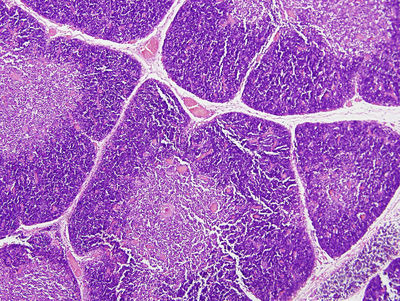
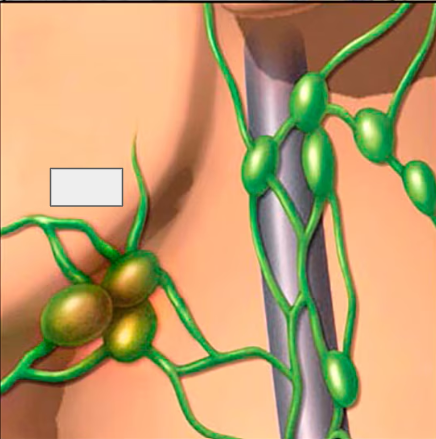
What is this?
Lymph nodes

What are these?
submandibular nodes

What are these?
cervical nodes

What are these?
axillary nodes

What are these?
intestinal nodes
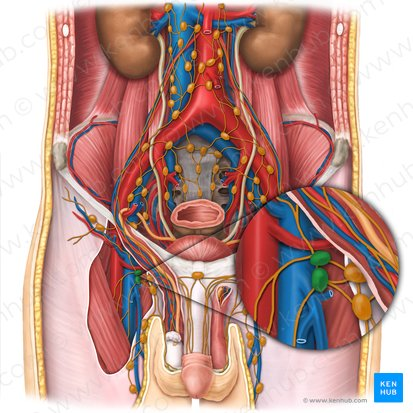
What is this?
ingunial nodes

What is this structure called on a lymph node?
capsule of lymph node

What is this on a lymph node?
trabeculae of lymph node


What are these in a lymph node?
reticular fibers lymph node

What is this in a lymph node?
hilum of lymph node


What are these?
afferent lymphatic vessels

What are these?
efferent lymphatic vessels

What is this?
cortex
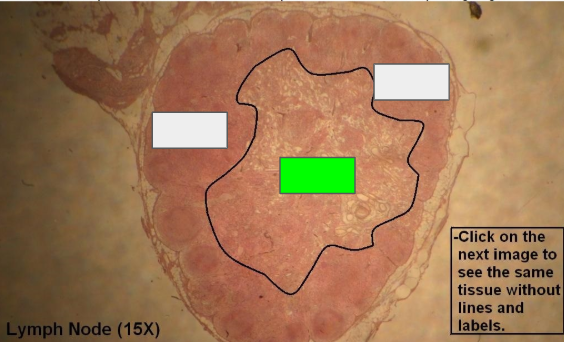
What is this?
medulla

What is this?
lymphatic nodule

What is this?
germinal center of lymph nodes

What is this?
cortical sinus of lymphnode

What is this?
medullary cord
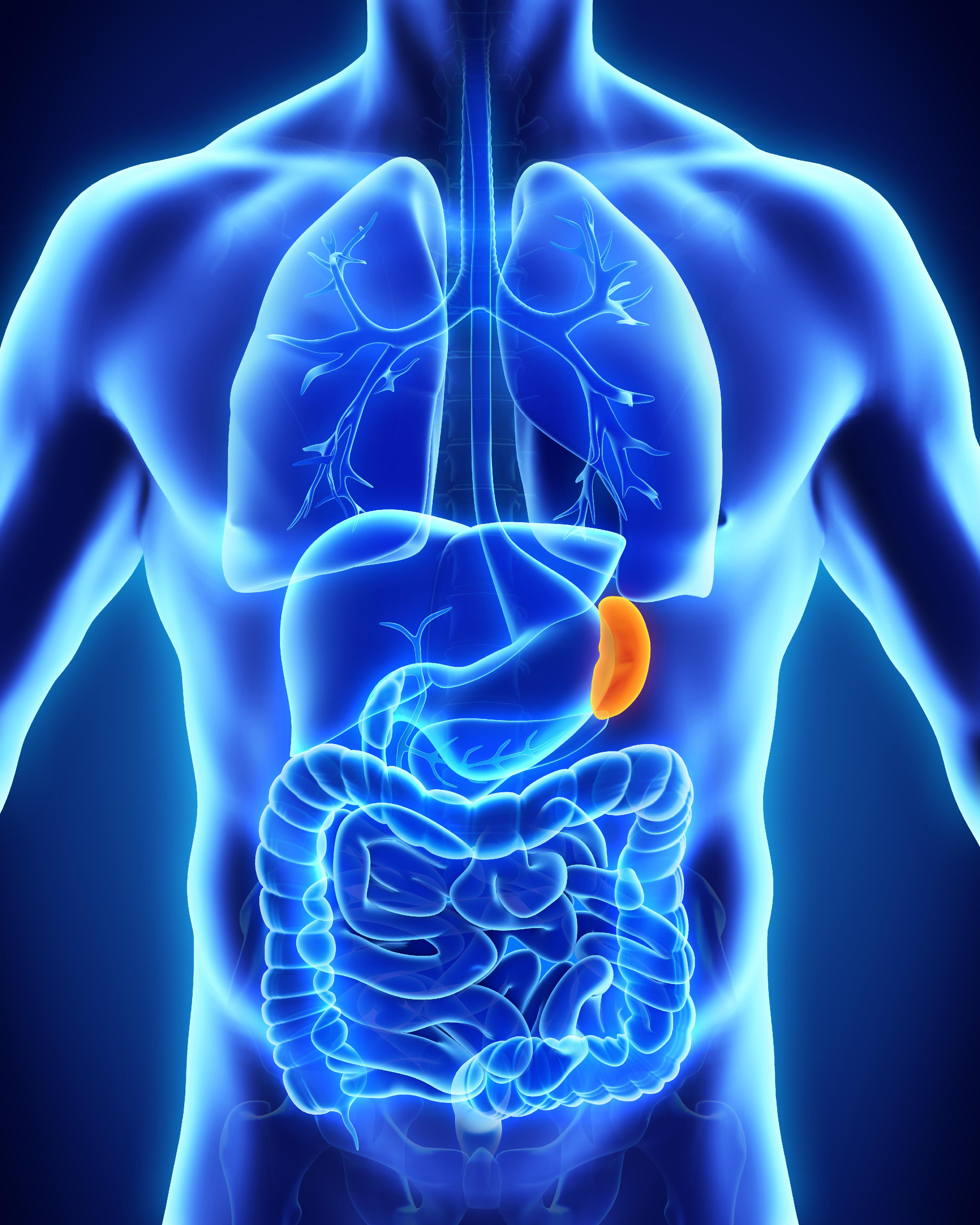
What is this?
Spleen


What is this?
Red pulp

What is this?
White pulp

What are these?
Tonsils

What is this?
palatine tonsils

What is this?
pharyngeal (adenoids)
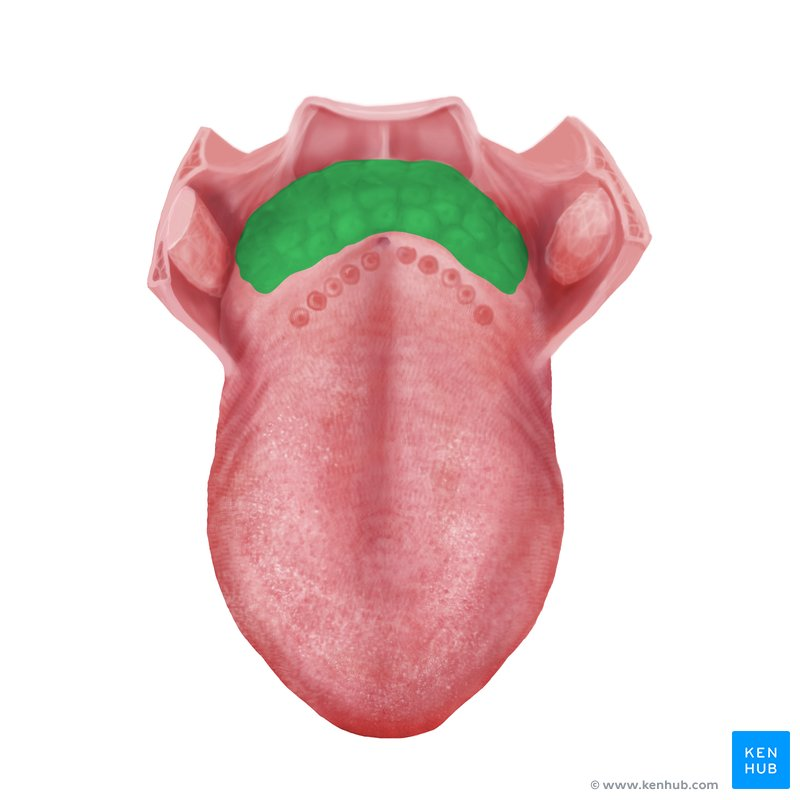
What is this?
lingual tonsils

What are these?
peyer's patches

What is this?
the appendix