Importance of biodiversity
 Call Kai
 Learn
 Practice Test
 Spaced Repetition
 Match
 Flashcards
 Knowt Play
1/53

There's no tags or description
Looks like no tags are added yet.
54 Terms
define ecosystem
An ecosystem is a specific habitat and the organisms that live and interact within it.
define biomes
Biomes are large geographically defined regions with similar climate and vegetation, encompassing multiple ecosystems
what’s the difference between ecosystems and biomes
Scale: Biomes cover vast geographic areas like deserts or tundras. Ecosystems can be any size, ranging from a tiny drop of water to an entire forest.
Composition: A single biome contains many different ecosystems.
Focus: Biomes focus on climate and plant types. Ecosystems focus on how living (biotic) and non-living (abiotic) parts interact and share energy.
what does ES stand for
ecosystem services
What is ES
the direct and indirect contributions that ecosystems provide for human wellbeing and quality of life
what are the 4 categories of ES
provisioning
Regulating
Supporting
Cultural
define the ES category provisioning and give examples
Provisioning | Products and goods that humans obtain from ecosystems | Food, raw materials e.g timber, medicine, fresh water
|
define the ES category regulating and give examples
Regulating | Services nature provides that regulate the environment | Air quality, carbon sequestration and storage
|
define the ES category supporting and give examples
Supporting | The underpinning services that enables all other services to function | Habitat provision, pollination, nutrient cycling and soil maintenance
|
Define the ES category cultural and give examples
Cultural | Non-material benefits of nature for humans | Education, religious and spiritual value, tourism
|
Explain how the ES atmospheric regulation and hydrological cycle help the environment and what category are they in
Atmospheric regulation | Regulating | Atmosphere is regulated by many abiotic and biotic processes which cancel each other out creating a dynamic equilibrium. For example concentrations of carbon dioxide and oxygen are largely regulated by photosynthesis and aerobic respiration.
|
Hydrological cycle | Regulating | Evapotranspiration from vegetation creates large amounts of water vapour which forms clouds and helps to regulate temperatures for humans and animals and allows the water cycle to function
|
Explain how the ES Biogeochemical cycle and soil maintenance help the environment and what category are they in
Biogeochemical cycles | Supporting | Living organisms are involved in many of the biogeochemical cycles. For example, the carbon, nitrogen and phosphate cycles Many of these re done by microbes such as bacteria and fungi. Without these waste products wold build up and important nutrient recourses would be depleted.
|
Soil maintenance | Supporting |
|
Explain how the ES Biogeochemical cycle and soil maintenance help the environment and what category are they in
Soil maintenance | Supporting | Soil is vital for the growth and survival of of almost all plants, providing support, water, and nutrients. Soil also regulates the water cycle, producing even more river flow, and reducing flooding. The processes involves in the breakdown and decomposition of dead organic matter involves invertebrate's animals, fungi, and bacteria. The organic matter and humus produced help hold the soil together, while decomposition produces organic acids which aid the weathering and breakdown of rocks, helping to produce more soil and release more nutrients.
|
Food provision | Provisioning | All heterotrophs rely on other organisms as a source of energy and nutrients.
|
why is genetic diversity important
Species with less diverse population are more susceptible to be killed off by diseases because they are too similarly similar in genetics.
Being able to adapt to their environment.
Why is having high genetic diversity good
higher adaptive capacity
Greater potential for long-term survival
Higher resilience to stressors such as environmental changes, diseases, pests
why is having a low genetic diversity bad
smaller, more isolated populations
Lower resilience to stressors, such as environmental changes, diseases, pests
More vulnerable to extinctions
What does CWRs stand for
crop wild relative species
What is CWRs
The research for new characteristics that can be bred into commercial crops focuses on wild plants of the same species or close relatives.
What are the different characteristics of CWRs
Disease resistant
Salt-tolerant
Resistance to drought
High yield
Improved taste or appearance
Nutrient uptake
what are examples of CWRs for the characteristics: disease resistance and salt tolerant
Disease resistance | Sugar cane has been protected from sugar cane mosaic virus by cross-breeding with a wild sugar cane variety in Indonesia |
Salt-tolerance | The introduction of salt-tolerant characteristics from wild varieties of rice and barley has led to the breeding of commercially cultivated varieties that can grow in saline soil |
What are examples of CWRs for the characteristics: resistance to drought and high yield
Resistance to drought | Varieties of cacao, the source of chocolate, that are more drought-tolerant have been developed by cross-breeding with wild plants from the Amazon Rainforest |
High yield | Oil palm yields have been increased by 25% by cross-breeding with wild varieties found in central Africa |
what are examples of CWRs for the characteristics: improved taste or appearance and nutrient uptake
Improved taste or appearance | More attractive, sweeter pineapples with yellower flesh have been produced by selective breeding since the 1990s |
Nutrient uptake | Breeding programs with wild wheat are increasing nutrient uptake efficiency by forming better associations between the wheat plants and the mycorrhizal fungi |
Define endemic
a disease or species that is regularly found and stays at a steady, predictable level in a specific place or group. They are native to a specific area
what are examples of biological controls used to manage agriculture pests
Bacillus thuringiensis (Bt) is a bacterium used to control insect crop pests; it produces proteins that are toxic to insects.
Encarsia formosa is a parasitic wasp that feeds on whitefly. It is released into greenhouses to control pests feeding on tomato plants.
how is the Encarsia Formosa used to control whitefly pests
The female lay their eggs inside the white fly larvae, effectively killing the larvae after the parasitic wasp emerges from the larvae, or the adult eat them.
Why is biological pest control preferable to man-made, chemical insecticide and pesticides
Biological pesticides only kills specific pests and can be managed as a predator, they’re also renewable and non-toxic to the natural environment if released in the wild.
On the otherhand chemical insecticides + pesticides kills many different species of pests if it’s accidentally released in the wild, causing damage to food chains and potentially killing species of insects.
what are examples of species that have been used by humans for their medicinal properties
poppies
Cinchona tree
Pacific yew trees
Mexican yam
Tropical marine sponges
Shark blood antibodies
Shark liver lipids
What is the medical substance in poppies and cinchona trees and what are they used to treat
Poppies | Opium | Painkillers (morphine, codeine) |
Cinchona tree | Quinine | Malaria protection |
What is the medical substance in pacific yew trees and Mexican yam and what are they used to treat
Pacific yew trees | Taxol | Cancer treatment |
Mexican yam | Diosgenin | Cortisone anti-inflammatory drug, contraceptive pill |
What is the medical substance in tropical marine sponges and shark blood antibodies and what are they used to treat
Tropical marine sponges | AZT | HIV/AIDS |
Shark blood antibodies | Alkylglycerols & polyunsaturated fatty acids | Cancer suppression/treatment |
What is the medical substance in shark liver lipids and what are they used to treat
Shark liver lipids | AD 114 | Lung fibrosis treatment |
What is an example of how medical use of species can cause issues in natural systems
the African clawed frog
Which medicinal purpose was the African clawed frog used for
Pregnancy tests - a women urine will be injected into the frogs skin, if the frog start to ovulate due to the presence of certain hormones in the urine, this would mean the women is pregnant.
How did the African clawed frogs cause ecological issue
Many types of amphibians became infected with the fungus (chytrid) which the African clawed frogs are immune to, therefore other species have faced danger in being extinct and threatened.
what are examples of physiological research
hippos
Marsupials such as kangaroos
Marine sponges
Dolphins
how has hippos help with physiological research
Hippos secrete a red-coloured glandular secretion known as "hippo sweat" contains microscopic structures that scatter light, protecting the hefty mammals from sun burn. It is being used to develop treatment of burns.
How has Kangaroos help with physiological research
Marsupials such as kangaroos give birth to their young at a very early stage of development. Scientists are able to study kangaroo babies to better understand developmental problems in unborn or premature human babies.
What’s the differences between physiological research and medicine from nature
Physiological - examines species adaptation and evolution to better understand human health
Medicines from nature - directly harvesting or extracting to treat diseases
How has marine sponges help with physiological research
Marine sponges
| So the sponges are used as a treatment to stop rejection for organ transplants | transplant surgery grafts |
How has dolphins help with physiological research
Dolphins
| Enabled the development of new ultrasound scanners that give better 3D images for medical diagnosis | ultrasound scanners |
Why is biodiversity important
for medicine
Food
Atmospheric gas e.g oxygen
Pollination of plants
Resources e.g wood
what are the resources we get from nature
Wood: used in the manufacture of buildings, tools & furniture.
Fibres: cotton, wool, paper, silk & rayon are used for clothing, upholstery and printed resources.
Oils: vegetable & animal oils are used in foods, lubricants and soaps.
Fuels: wood, charcoal, alcohol and vegetable oil are key energy sources for heating, transport and industry.
Food: plants, animals, algae and fungi are essential food sources in human diets and are fundamental to health and wellbeing.
What characteristics will food species need to have to make them suitable future food sources
Non-toxic
Nutritional value e.g proteins
High yield, easy to cultivate and grown in big numbers
Range of tolerance e.g resistant to drought, pests, heat
Cope with potentially lower soil fertility
Easy to harvest + transport
what’s an example of a crop species that may become very important in future diets
Amaranth
Lots of proteins with all nine essential amino acid. It’s also a good source of vitamins and antioxidants
Drought-resistant
None is wasted, all is edible
Easy to grow
Define Biomimicry
the use of nature and the adaptations of species to inform humans design of manufactured items
what are examples of biomimicry
Shark skin → infection control
Bird wings → airplane design
Humpback whale flippers → ship design
Termite mounds → architecture
Plant burrs → Velcro (adhesion)
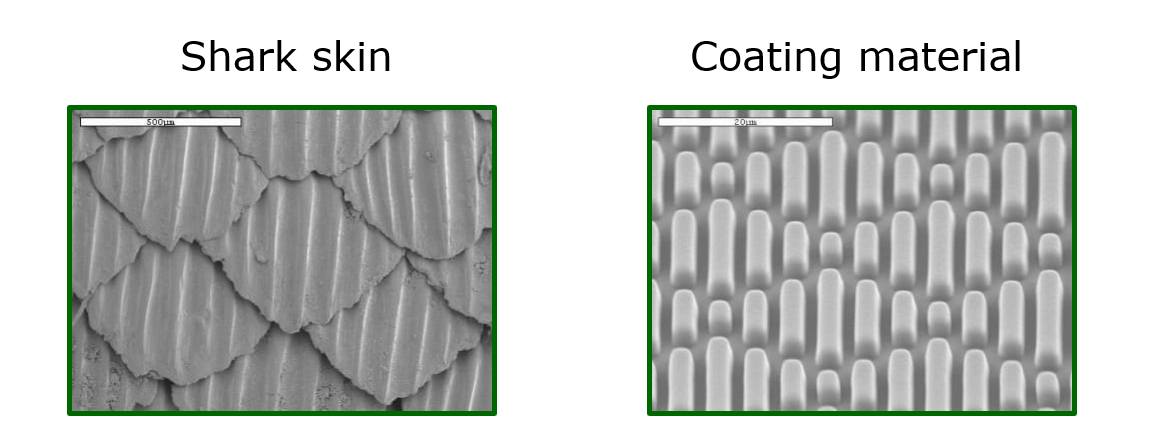
explain the link of the biomimicry sharkskin to control infections
Bacteria do not stick easily to shark skin due to dermal denticles with evenly spaced ridges that inhibit bacteria or other organisms from attaching and growing. A coating material that imitates shark skin is used in hospital operating theatres to help control bacterial infections.
explain the link of the biomimicry bird wings to help with airplane design
the splayed wingtip feathers of soaring birds reduce wind turbulence and drag. Copying the feather structures have improved aircraft wing designs to help increase fuel efficiency

Explain the link of the biomimicry humpback whale flippers to help with ship design
Humpback whale flippers have tubercles on their flippers that channel water flow, increasing hydrodynamic efficiency. By applying this, the new rudder design allows ship to turn in tighter circles. The aerogenerator blades can start rotate at lower wind speeds than other designs, so they can generate electricity more easily.

Explain the link of the biomimicry plants burrs to help make velcro (adhesion)
the seeds of some plants have burrs with hooks that can stick to the fur of passing animals and aid seed dispersal. This was copied in the development of Velcro

What is an example of biomimicry in the news
Shark skin was also used to help re-design swimsuits for professional athletes to make swimmers more aerodynamic.
These ‘supersuits’ were so effective that over 100 world records were broken.
As a result, it was felt these suits gave swimmers an unfair advantage compared to past athletes so the suits were banned.

Explain how the ES food provisioning and interspecies relationships and interdependence help the environment and what category are they
Food provision | Provisioning | All heterotrophs rely on other organisms as a source of energy and nutrients.
|
Interspecies relationships & interdependence | Supporting | No species can live in ecological isolation because their survival relies on other species for a range of recourses and ecological services.
|
Explain how the ES pollination and seed dispersal help the environment and what category are they
Pollination | Supporting |
|
Seed dispersal | Supporting | Seed dispersal by animals is more advantageous than wind seed dispersal, since the animals live in the habitat where the plant is grown so they are more likely to carry the seeds to locations where they can survive. Seeds may be dropped as faecal material, passed on by animals, which acts as a fertiliser. The seeds of many plant species are stimulated to germinate by their passage through the intestines of animals.
|
Explain how the ES habitat provision help the environment and what category are they
Habitat provision | Supporting | One species may provide habitats for another species:
|