LARC 34103-001 - HISTORY LANDSCAPE ARCH I_Unit 4
 Call Kai
 Learn
 Practice Test
 Spaced Repetition
 Match
 Flashcards
 Knowt Play
1/3

There's no tags or description
Looks like no tags are added yet.
4 Terms
Summary of Imperial Garden Traditions Culminating in the Qing Dynasty (1644-1911)
•Large, walled enclosures restricted for imperial use, built in or near capital cities, but also at distant resorts
•Idealized natural landscape aesthetic, including mountains, lakes, and islands
•Native and exotic plants and animals, along with diverse architecture and gardens, representing extent of imperial domain
•Architectural elements including podiums, palaces, temples, and artificial vernacular elements for ceremonies and leisure (sacred and secular)
•Excessive garden-building efforts seen as an indicator corruption, debauchery, and a sign of the removal of the mandate of heaven
•Fulfilled many functions in addition to retreat/leisure, including expressions of religious authority, political power, societal status, etc.
Bishu Shanzhuang (Mountain Hamlet for the Escape from Summer Heat – also Chengde Mountain Resort)
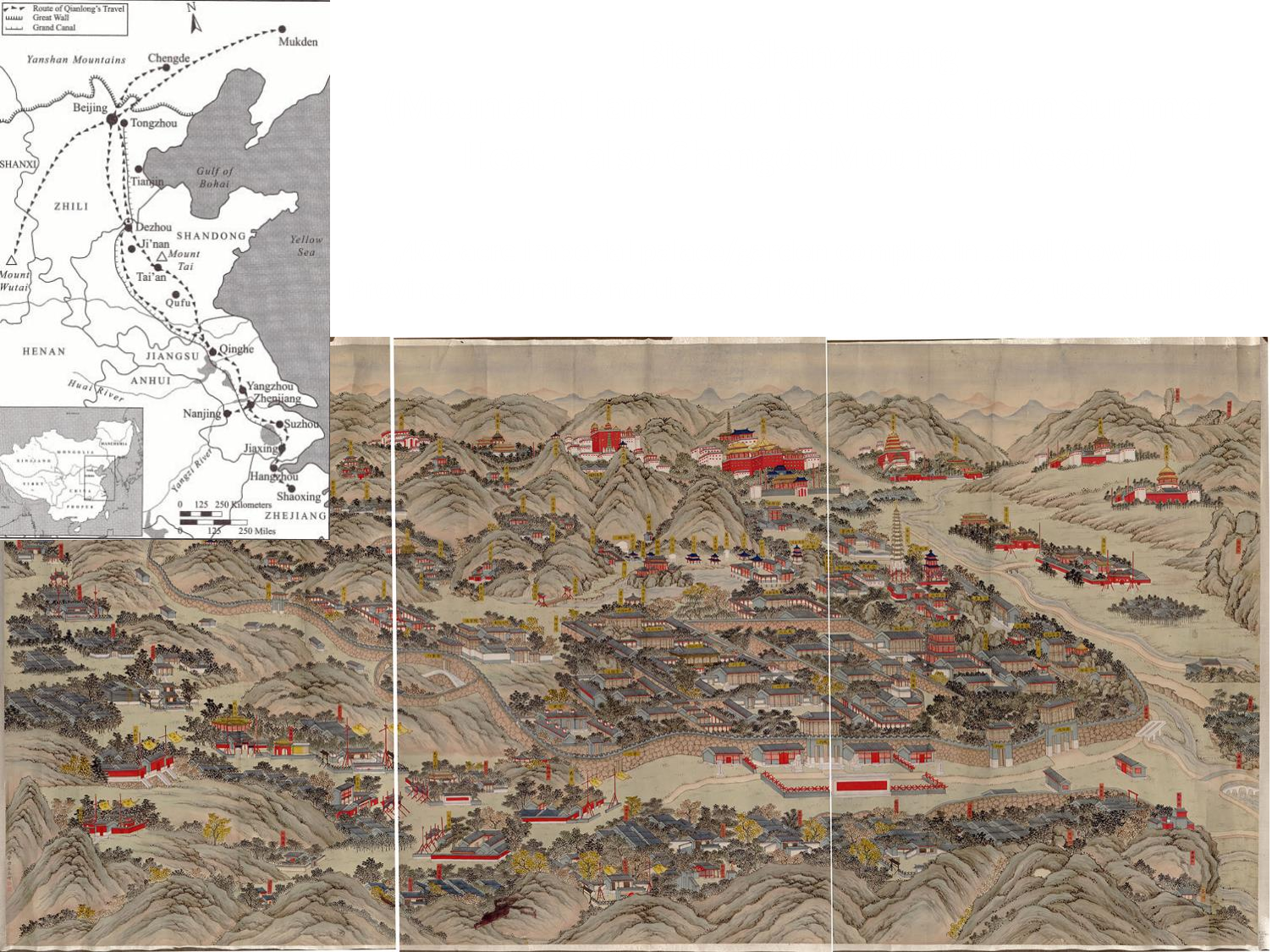

Retreat/resort from Beijing, design wise very similar to beijing
The palace was modeled after the Forbidden City
In the lake area: The central area containing nine lakes and islands, with the landscape and gardens modeled on Jiangnan, the cultural trendsetting region south of the Yangtze River. Imitating famous scholar gardens
1,400-acre imperial palace/garden complex in Jehol (now Hebei) Province, 140 miles northeast of Beijing – 1703-1792, used until 1861
Bulk of the landscape is already mountains, little to no need for artificial mountains.
Imperial Gardens or Old Summer Palace Comprised of Three Gardens
Yuanming Yuan – Garden of Perfect Brightness
Changchun Yuan – Garden of Eternal Spring
Qichun Yuan – Elegant Spring Garden

place for massive imperial family, palace for them. This becomes their world, large population of people living away from the capital
Unit 4 timeline