Art History Rome Exam 1
 Call Kai
 Learn
 Practice Test
 Spaced Repetition
 Match
 Flashcards
 Knowt Play
1/110

There's no tags or description
Looks like no tags are added yet.
Name | Mastery | Learn | Test | Matching | Spaced | Call with Kai | Chat |
|---|
No analytics yet
Send a link to your students to track their progress
111 Terms
Romulus-Ancient Rome
mythological founder of Rome, 8th century BCE
Julius Caesar-Ancient Rome
dictator at the end of the Roman Republic; 1st century BCE
Augustus-Ancient Rome
first Roman emperor;1st century BCE-1st century CE
Flavian Emperors-Ancient Rome
Vespasian, Titus, Domitian, 1st century CE
Trajan-Ancient Rome
emperor (1);2nd century CE
Hadrian-Ancient Rome
emperor (2);2nd century CE
Constantine-Ancient Rome
emperor;4th century CE
Vitruvius-Ancient Rome
architect and writer on architectural theory; 1st century BCE
Apollodorus of Damascus- Ancient Rome
architect and engineer;2nd century CE
Cosmati-Medieval
family of artists and craftsmen active in Rome, particularly in the 12th-13th centuries
Martin V Colonna- Renaissance
pope, 1417-1431
Paul II Barbo-Renaissance
pope, 1464-1471
Sixtus IV Della Rovere-Renaissance
pope, 1471-1484
Julius II Della Rovere-Renaissance
pope, 1503-1513
Leo X Medici-Renaissance
pope, 1513-1521
Paul III Farnese-Renaissance
pope, 1534-1549
Leon Battista Alberti-Renaissance
architect and author of De Re Aedificatoria, 1404-1472
Bramante (Renaissance)
architect, 1444-1514
Michelangelo (Renaissance)
artist, architect, sculptor, and Renaissance master, 1475-1564
Raphael (Renaissance)
painter and later architect, 1483-1520
Reformation
visual art created in Europe during the 16th and 17th centuries in response to the Protestant Reformation and the Catholic Counter-Reformation.
1517
Counter-Reformation
emerged as the Roman Catholic Church's visual and ideological response to the Protestant Reformation. Mandated and shaped largely by the Council of Trent
1545-1563
Council of Trent
19th ecumenical council of the Roman Catholic Church, held in Trent, Northern Italy, to address the Protestant Reformation and enact internal reforms (1545–1563)
Ancient Rome
Eras→ kingdom, republic, and empire
Development and acceptance of Christianity
313 CE- Edict of Milan and legalization/toleration of Christianity
Medievial
approx. late/6th/early 7th century CE to the mid 1300s
Renaissance
approx. 1400s to the late 1500s (late 1520s onwards last part is more correct to define as Mannerism)
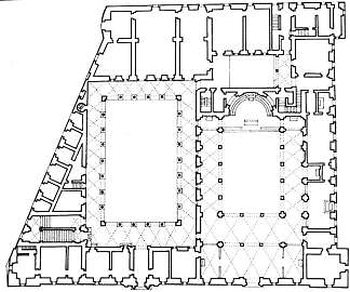
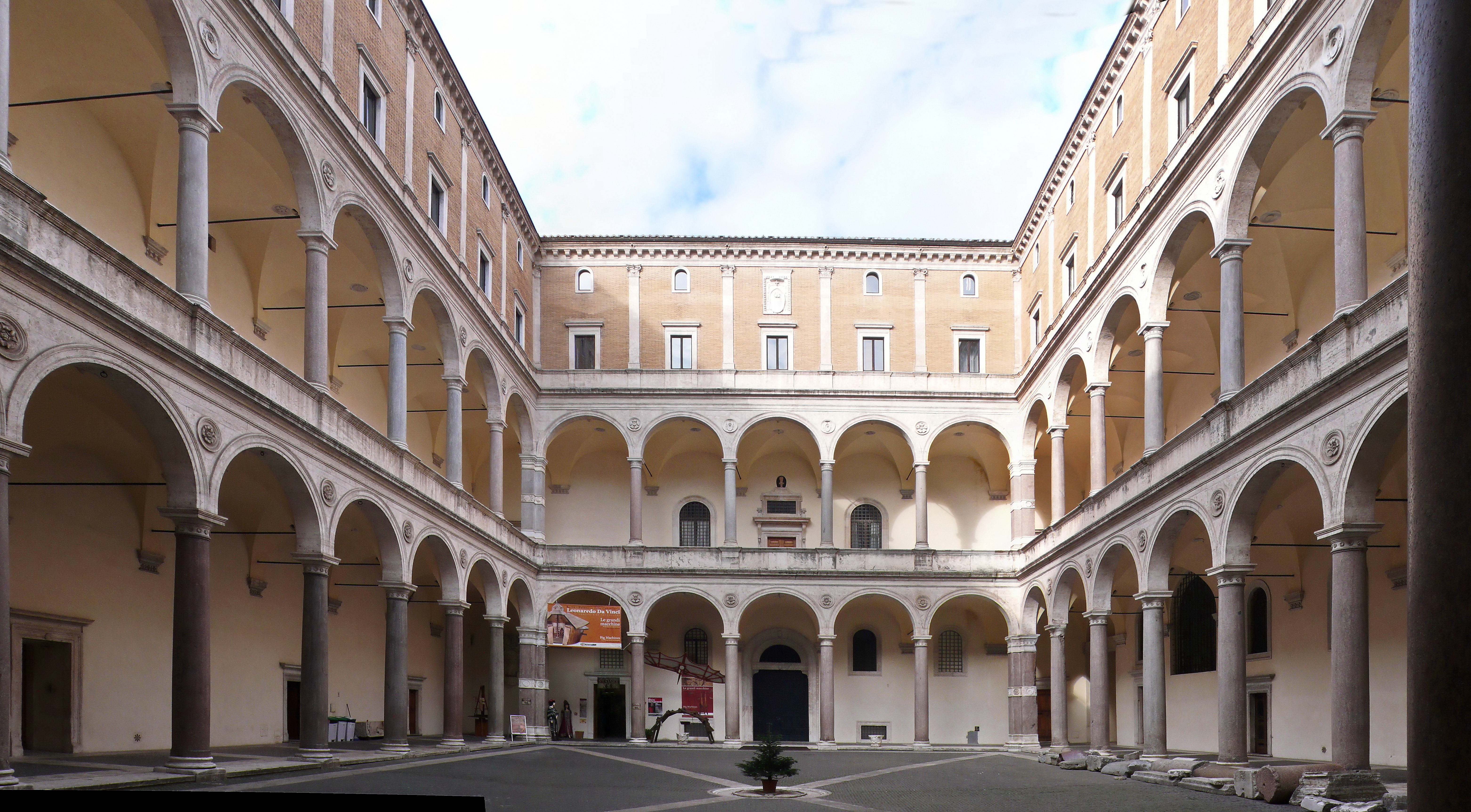
Palazzo della Cancelleria
15th-16th century
patron→ cardinal Raffaele Riario
travertine, marble and spolia facade
-monumental bridge between the Renaissance and antiquity, widely celebrated as the first palace in Rome built entirely ex novo (from the ground up) in the High Renaissance style.
Palazzo della Cancelleria Plan
Palazzo della Cancelleria Facade

Palazzo della Cancelleria Courtyard
Palazzo Venezia
15th century
Patron: Pope Paul II
Leon Battista Alberti is associated with the building, although his precise role is uncertain.
Travertine limestone, brick, and wood
maintained its medieval-Renaissance fortress appearance; its architectural footprint and structural layout underwent massive transformations in the late 19th, 20th, and 21st centuries to accommodate modern urban planning, national politics, and subways
Palazzo Venezia Plan

Palazzo Venezia Courtyard

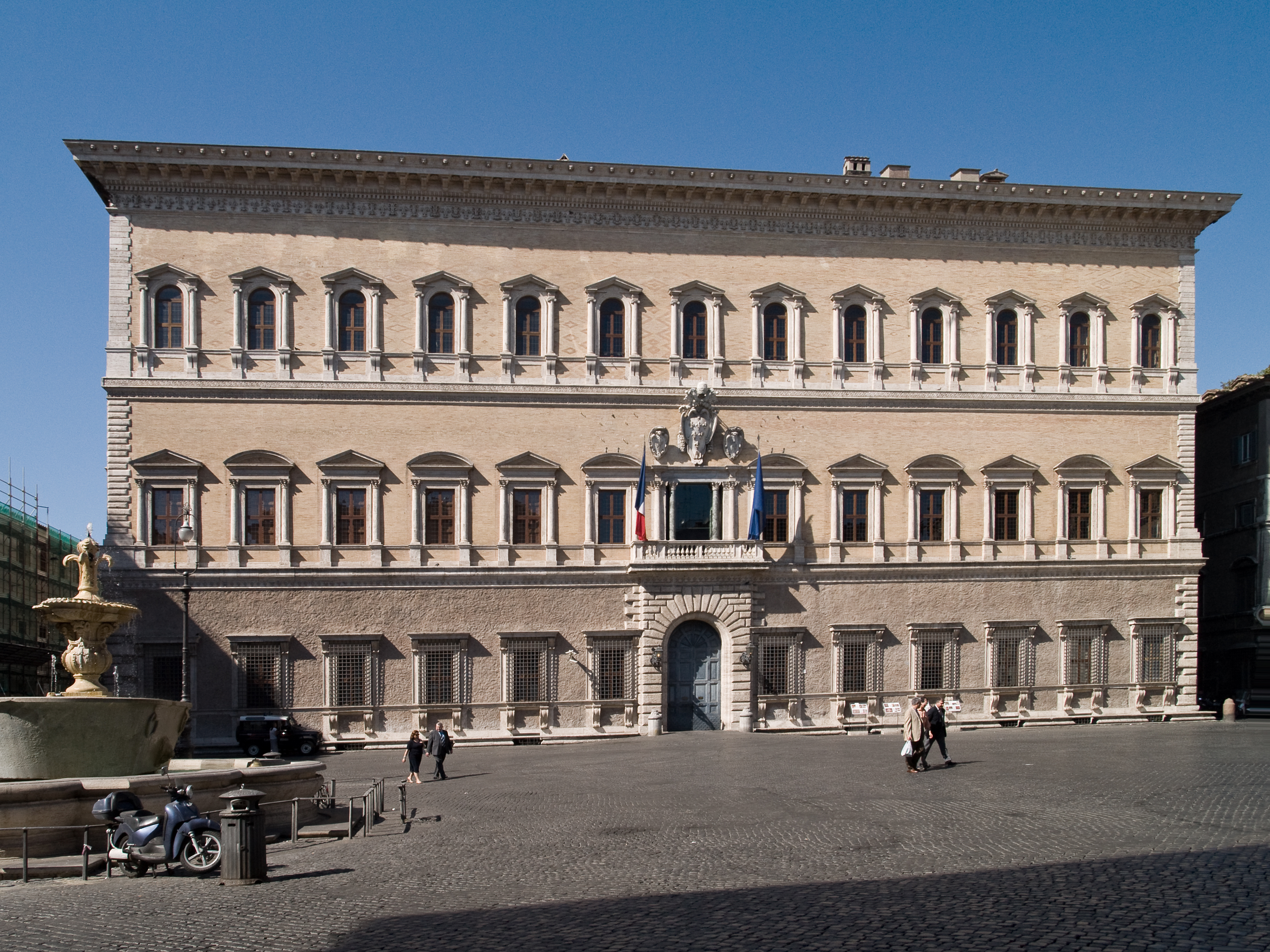
Piazza and Palazzo Farnese
16th century
architects -Antonio da Sangallo the Younger, Michelangelo, Giacomo della Porta
Patron: Cardinal Alessandro Farnese, who was elected pope as Paul III in 1534
travertine limestone, brick, and ancient Egyptian granite
direct material manifestation of how Renaissance patrons weaponized the ancient Roman past to legitimize their own contemporary power
Piazza and Palazzo Farnese Facade
Palazzo Farnese Plan

Piazza Farnese

Via Guilia definition
Commissioned by Pope Julius II Della Rovere
Designed/planned by Donato Bramante
one of the earliest and most radical examples of deliberate urban planning, modernization, and political propaganda in Renaissance Rome
via giulia

ponte sisto definition
Built 1473–1479
Architect: Baccio Pontelli
Commissioned by Pope Sixtus IV Della Rovere
Volcanic tuff, travertine limestone, and Carrara marble
Monumental catalyst for the development and physical movement of people, goods, and water through Renaissance Rome. By bridging the Tiber River for the first time since antiquity, it broke a major geographic bottleneck and permanently altered the city’s economic, religious, and political landscape.
Ponte sisto

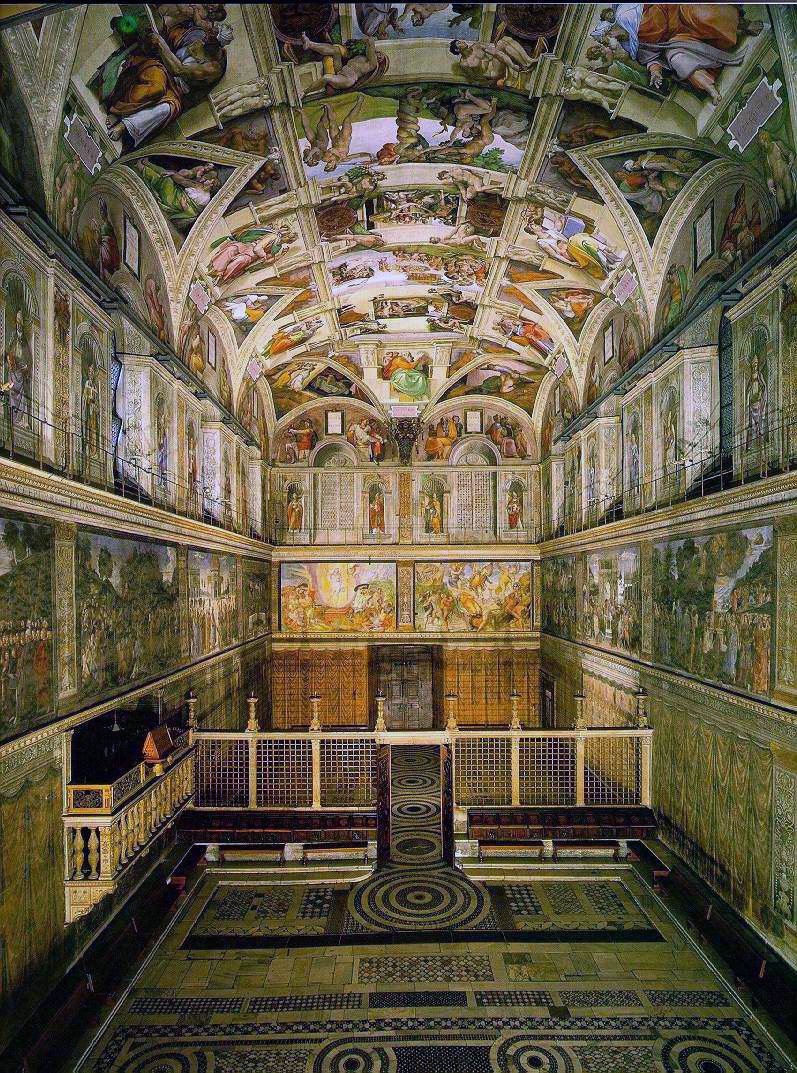
Sistine Chapel Definition
Built: 1473–1481
Architect: Baccio Pontelli
Patron: Pope Sixtus IV Della Rovere
Renaissance
During the reign of Sixtus IV: frescoes by Botticelli, Perugino, Ghirlandaio, and others, depicting the Life of Moses and the Life of Christ, with papal portraits above and frescoed drapery below.
Original ceiling: blue with gold stars.
These frescoes were completed in 1482.
Ceiling by Michelangelo, painted between 1508 and 1512, under Pope Julius II Della Rovere.
Between 1535 and 1541, Michelangelo painted The Last Judgment. The two popes associated with this project were Clement VII and Paul III Farnese; Paul III was the pope who commissioned and oversaw the completion of the project
Sistine Chapel Exterior

Sistine Chapel Fresco Life of Moses

Sistine Chapel Interior
Sistine Chapel life of Christ Fresco

Sistine Chapel Ceiling
Michaelangelo

Lateran Bapistry Definition
5th century CE
stands as the absolute blueprint and archetype for all monumental baptismal architecture across the Christian world.
Initially founded in the early 4th century by Emperor Constantine and radically reconstructed in the 5th century by Pope Sixtus III, this architectural marvel represents the literal material pivot point where Late Antique imperial opulence was refashioned into Early Christian and Medieval religious authority.
Its structure relies on a highly symbolic and strategic palette of imperial porphyry, green basalt, brick, and lead-tin bronze
Lateran Bapistry Interior

Lateran Bapistry Exterior

Lateran area in general
mirrors the broader urban development and modernization of the entire Lateran District. Located on the Caelian Hill right against the Aurelian Walls, the Lateran area was transformed from a peripheral, heavily militarized Roman boundary into the sprawling, monumental ground zero of worldwide Christian authority
Layered Timelines: The Baptistery acts as an architectural time capsule, seamlessly integrating Constantinian foundations, Medieval chapels/mosaics, Early Baroque facades, and Baroque fresco cycles.
Symbolic Materials: The interior centers around a rare green basalt immersion font and an octagonal ring of imperial red porphyry columns to signal the triumph of Christianity over pagan Rome.
The Lateran Shift: The area evolved from an elite Roman cavalry fort into the global headquarters of the papacy (Patriarchium) and the vital entry axis for southern agricultural trade.
Baroque Master Plan: Pope Sixtus V completely modernized the district, erasing the medieval ruins to erect a geometric square anchored by the monumental Lateran Obelisk and straight, connecting pilgrimage avenues
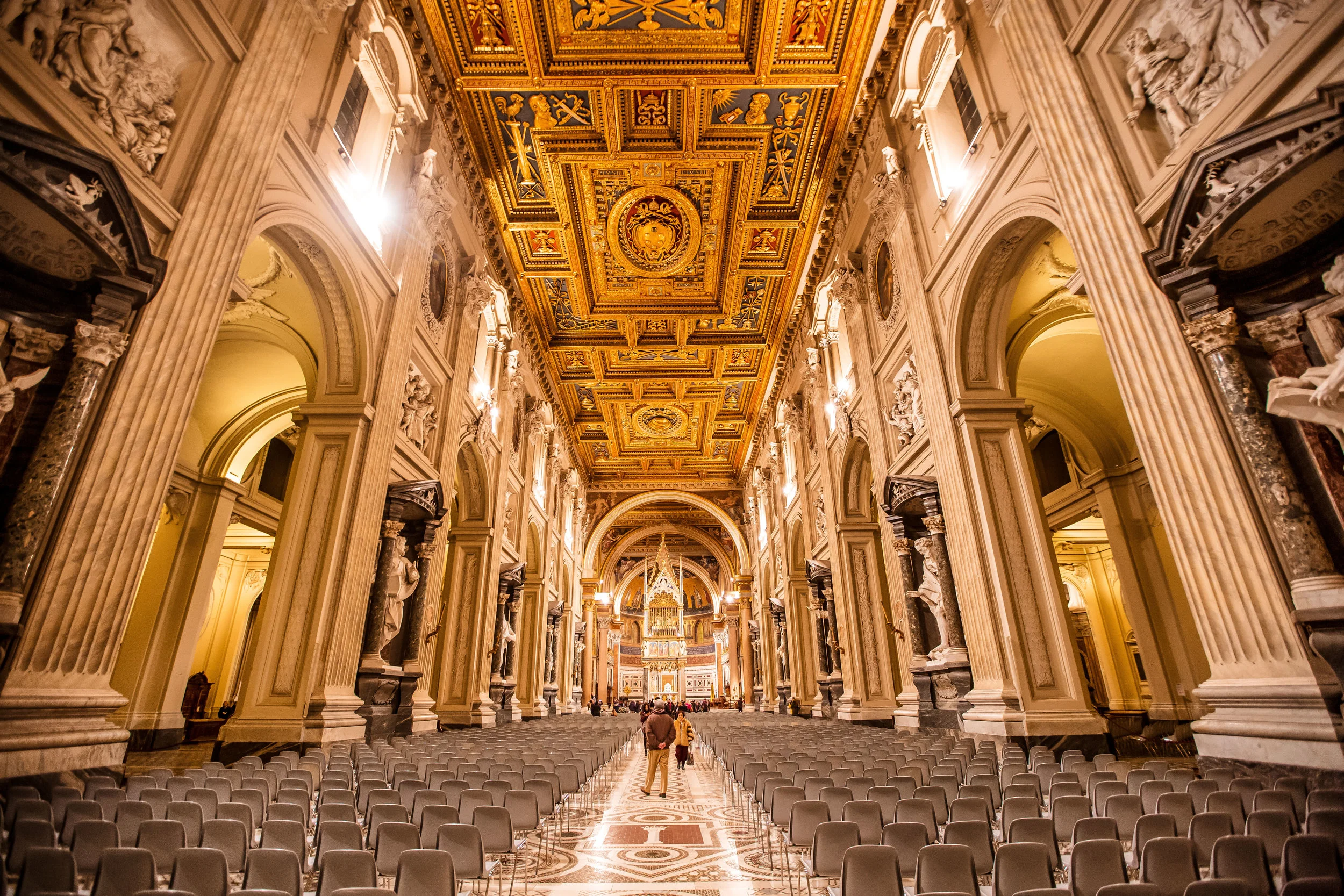
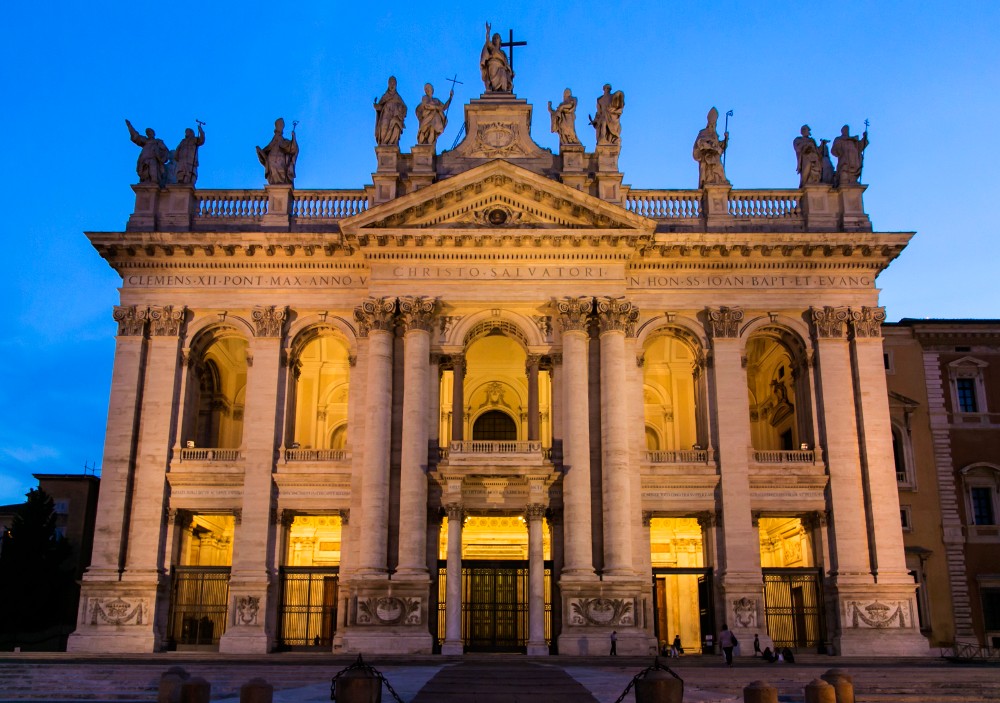
Cathedral of Saint John Lateran
originally 4th century CE, under constantine
Cathedral of Saint John Lateran Interior
Cathedral of Saint John Lateran Exterior
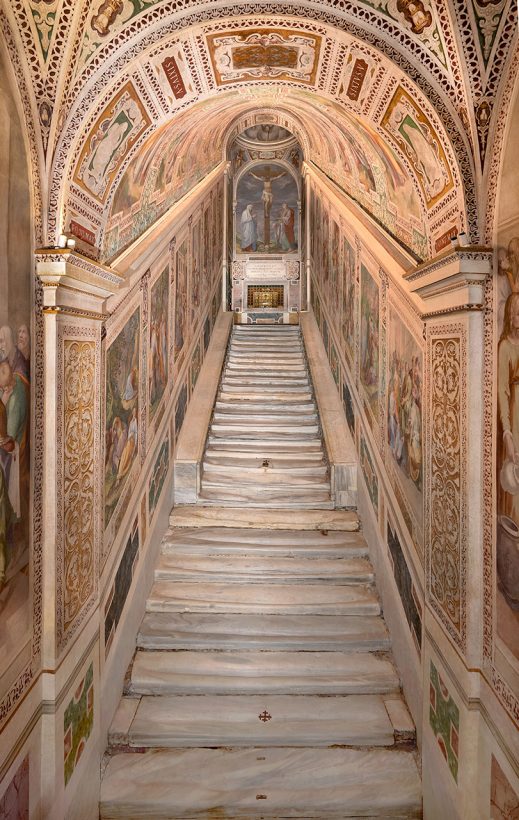
Scala Santa defintion
Holy Stairs) is a sanctuary in Rome, Italy, consisting of 28 white marble steps that—according to Christian tradition—were climbed by Jesus Christ during his trial in the praetorium of Pontius Pilate in Jerusalem before his crucifixion
Scala Santa
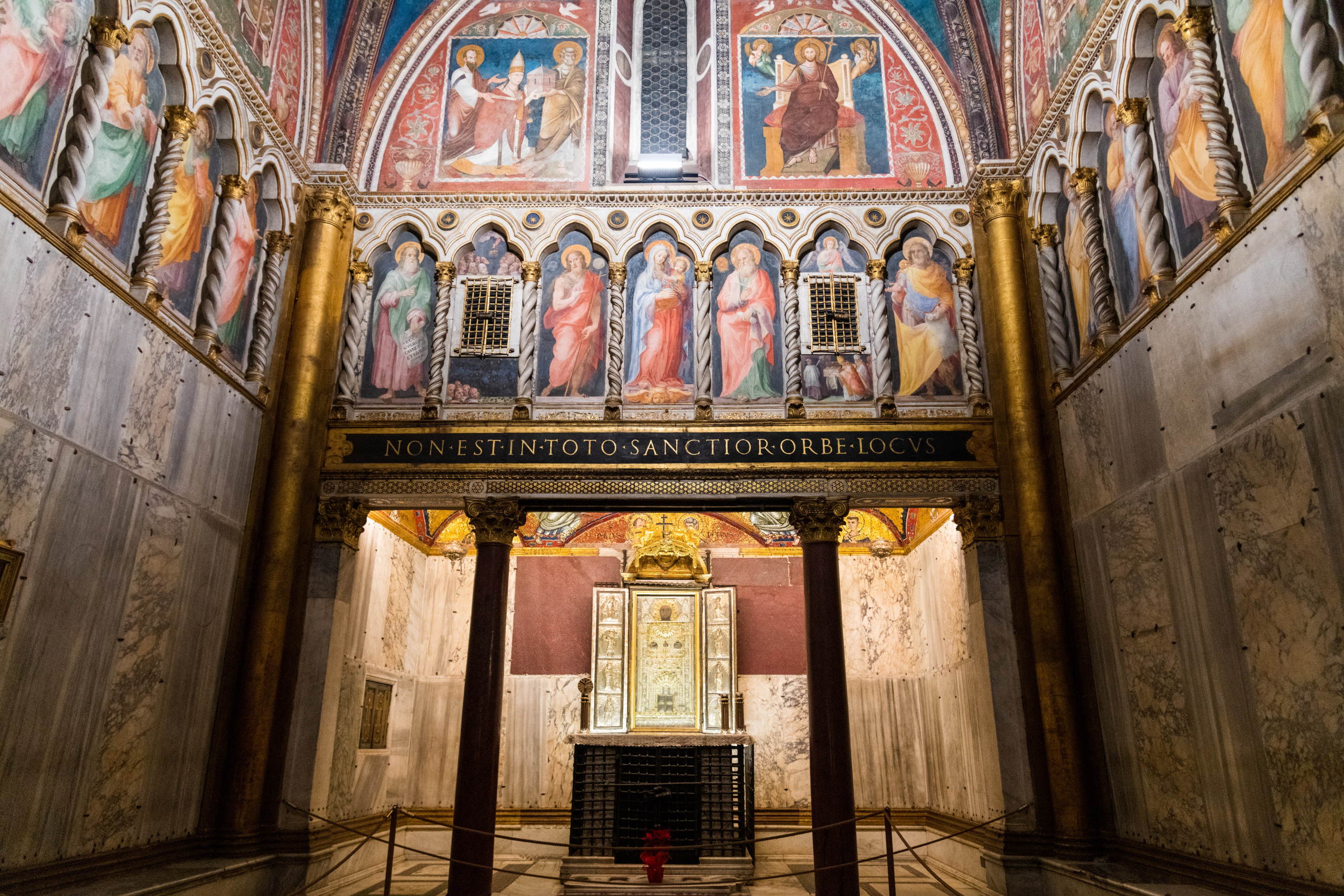
Sancta Sanctorum definition
is the historic private chapel of the popes, located at the top of the Holy Stairs near Rome's Lateran Basilica.
Core Significance
Sole Survivor: It is the only intact room remaining from the original medieval Lateran Palace.
Sacred Relics: It earned its name by housing Rome's most sacred relics, including the heads of Saints Peter and Paul.
Holy Icon: It houses the Acheiropoieta, a 5th-century icon of Christ traditionally believed to be "not made by human hands" but painted by Saint Luke and an angel.
Pilgrimage Goal: It remains one of Catholicism's most revered sanctuaries, visited by pilgrims who climb the Holy Stairs on their knees.
Sancta Sanctorum
San Clemente definiton
Top Level (12th Century AD): A functioning medieval Romanesque basilica featuring golden apse mosaics and Cosmatesque marble floors.
Middle Level (4th Century AD): An early Christian church buried in the 12th century, containing ancient frescoes and the tomb of Saint Cyril.
Bottom Level (1st–3rd Century AD): A complex of Ancient Roman buildings, including an industrial warehouse/mint and a pagan Mithraeum (a cavernous temple dedicated to the mystery cult of Mithras)
San Clemente Top Level

San Clemente Middle Level

San Clemente Bottom Level

Temple of Portunus
reupublican
Greek and Etruscan styles. It features a high Etruscan-style podium with a front staircase, alongside Greek-style Ionic columns. The columns along the sides are attached directly to the wall, a distinct Roman style known as pseudoperipteral.

Temple of Hercules Olivarius
republican
Oldest surviving marble building in Rome
It is a unique monopteros—a circular temple surrounded by a colonnade of 20 Corinthian columns. It was heavily inspired by classical Greek temple design, constructed almost entirely from expensive Greek Pentelic marble.

theatre of marcellus
late republican and early imperial
Started by Julius Caesar, it was completed by Emperor Augustus in 13 BCE and dedicated to his favorite nephew and son-in-law, Marcus Claudius Marcellus, who died young.
an ancient open-air theater in Rome that served as the primary architectural blueprint for the Colosseum

porticus of octavia
early imperial
an ancient Roman monumental complex located in the heart of Rome’s historic Jewish Ghetto
Built originally in the 2nd century BCE, it was completely rebuilt and expanded by Emperor Augustus between 27–23 BCE. He dedicated it to his beloved older sister
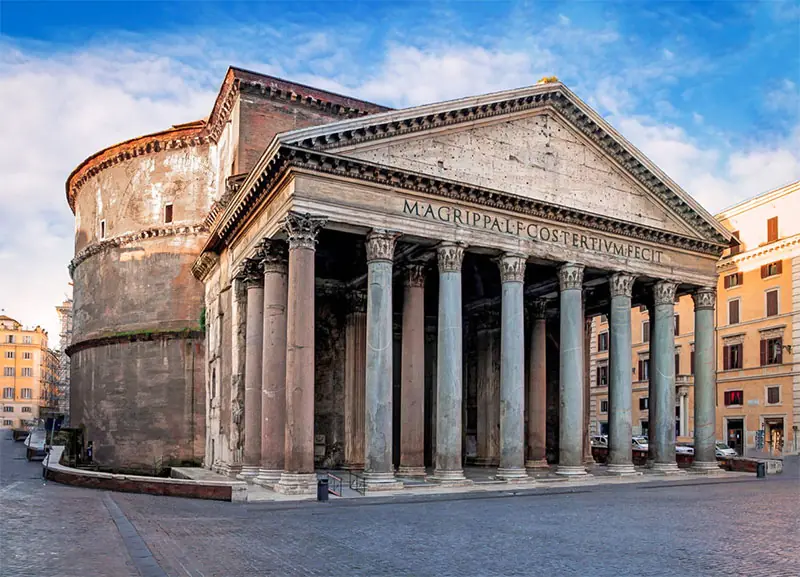
Pantheon Phase 1 definition
2nd century CE under hadrian
27 BC (Agrippa's Phase): Originally built as a rectangular/circular temple to all gods by Marcus Agrippa during the reign of Emperor Augustu
Pantheon Phase 2 definition
80 AD & 110 AD (Fire & Reconstruction Phases): The original building burned down in 80 AD, was rebuilt by Domitian, and then burned down a second time during a massive fire in 110 AD
Pantheon Phase 3 definition
118–125 AD (Hadrian’s Rebuilding Phase): Emperor Hadrian completely rebuilt the Pantheon into its current iconic domed structure, keeping Agrippa's original inscription on the facade
609 AD (Christianization Phase): Consecrated as a Christian church (Basilica of St. Mary and the Martyrs) by Pope Boniface IV
Pantheon Phase 4
17th Century & Renaissance/Modern Modifications: Pope Urban VIII removed bronze from the portico roof (1625), lightning struck the dome in 1747, and it became a royal burial site for Italian kings (such as Victor Emmanuel II in 1892
Pantheon Phase 1

Pantheon Phase 2

Pantheon Phase 3

Pantheon Phase 4
Circus Maximus definiton
Regal Period (6th c. BCE): Founded by Etruscan kings as a simple turf track for religious games and early political gathering.
Republican Period (509–27 BCE): Built up into a formal hippodrome layout, adding the spina (central barrier), turning posts, and wooden seating used by magistrates to win public favor.
Imperial Period (27 BCE–6th c. CE): Rebuilt in stone and concrete to hold 150,000+ spectators. It became the ultimate venue for "bread and circuses," featuring rigid class-segregated seating, Egyptian obelisks, and intense chariot-race rivalries before closing c. 550 CE.
Circus Maximus Regal Period
Circus Maximus Republican Period

Circus Maximus Imperial period
Basilica (past uses)
Law Courts: The apse at the end of the building housed a raised tribunal where magistrates presided over legal trials. [1, 2]
Commerce and Business: Merchants, bankers, and traders used the vast interior hall for financial transactions, contracts, and market activities. [1, 2]
Public Assemblies: Citizens gathered for civic meetings, public discussions, and governmental administrative tasks. [1, 2]
General Shelter: The wide covered halls and colonnaded side aisles provided a protected public space away from the sun or rain. [1]
Imperial Audiences: Under the later Roman Empire, some basilicas served as grand audience halls or throne rooms for rulers and officials
Apollodorus of Damascus definition
an architect and engineer from Roman Syria, who flourished during the 2nd century AD. As an architect he authored several technical treatises, and his massive architectural output gained him immense popularity during his time
Tuscan
The simplest and solid-looking order, adapted from Etruscan models. It features an unfluted shaft, a plain capital and base, and a heavy, robust appearance (roughly 7 diameters high)

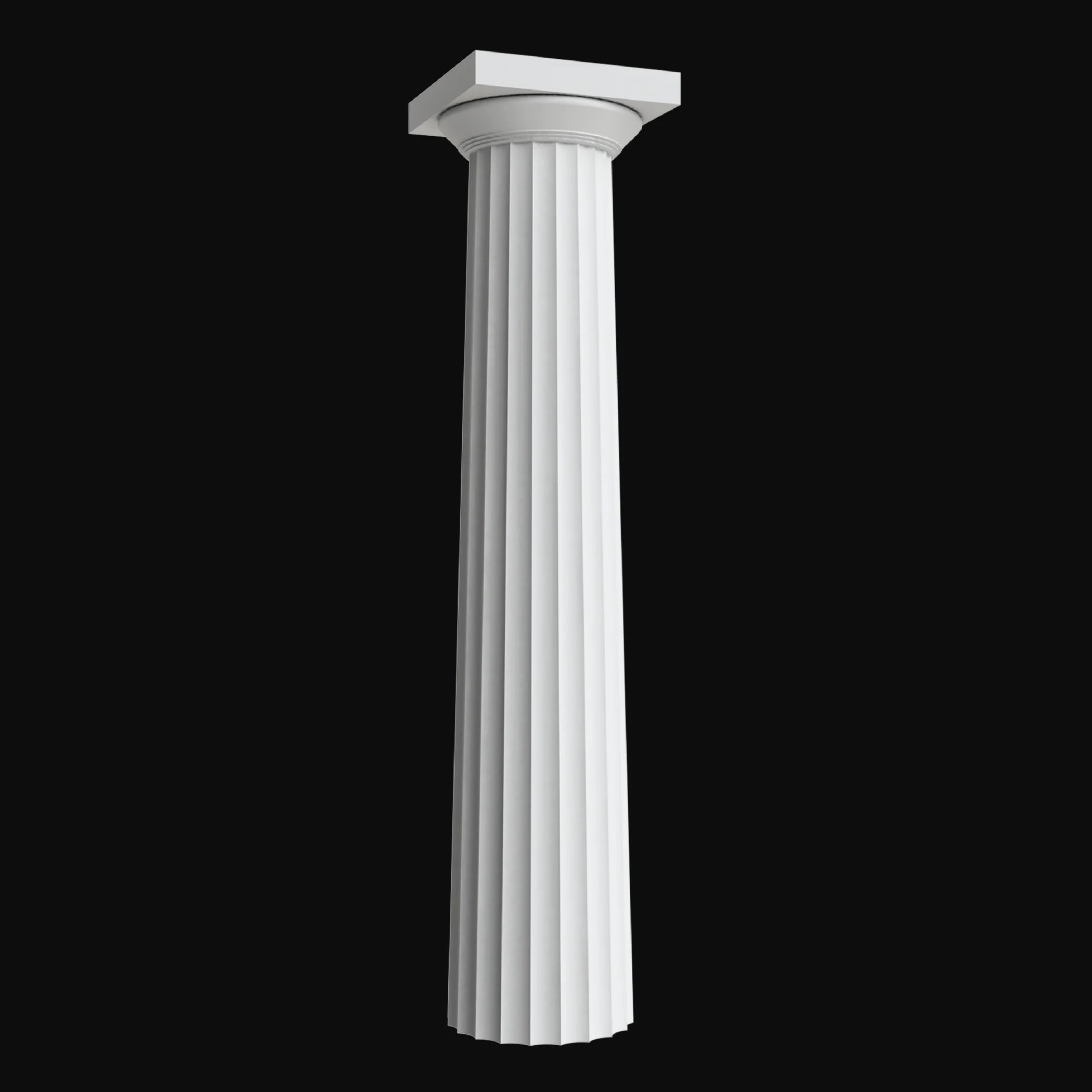
Doric
base and sometimes an unfluted or smoother shaft. It is characterized by a plain, cushion-like capital (echinus and abacus) and a frieze decorated with alternating triglyphs and metope
Ionic
It is easily recognized by its capital featuring twin spiral scrolls (volutes) and a base with convex moldings. The column is typically about 9 diameters high

Corinthian
The most ornate and slender of the traditional orders (about 10 diameters high). Its distinct capital is carved with two staggered rows of acanthus leaves topped with small scrolls

Composite
The most elaborate and decorative hybrid order. It merges the large corner volutes of the Ionic capital with the sprawling acanthus leaves of the Corinthian capita

Tiber Island
republican
is historically significant as Rome’s only natural urban island in the Tiber River, celebrated for over two millennia as a center of healing, ancient mythology, and continuous medical care
Temple of Aesculapius definition
1785–1792 by the architects Antonio Asprucci and Mario Asprucci (with artist Cristoforo Unterperger), as a romantic landscape feature
Built in the Ionic order with a prostyle colonnade, a triangular tympanum with stucco reliefs
Temple of Aesculapius

Main building materials
a combination of revolutionary engineering composites, local stones, and imported luxury finishe
Roman Concrete
Fired Red Brick
Travertine Limestone:
Tuff (Tufa)
Marble Veneers and Columns:
Timber and Terracotta:
Main building techniques
Opus Quadratum: The oldest method, using large, squared blocks of stone (like tuff or travertine) stacked in regular horizontal courses without mortar. They relied on sheer weight and metal iron clamps for stability.
Opus Incertum: Developed as concrete became popular. Builders placed small, irregular, undressed stones into a thick concrete core, creating an uneven and random surface appearance.
Opus Reticulatum: A highly organized evolution of opus incertum. Diamond-shaped tufa stones were driven into a concrete core, creating a crisp, diagonal grid network that looked like a fishnet.
Opus Testaceum (or Latericium): The dominant technique of the Empire. It involved facing concrete walls with triangular or thin rectangular fired bricks, which bonded tightly to the core and provided maximum strength.
Opus Mixtum: A late-imperial technique that combined alternating bands of brick rows with layers of squared stone blocks (opus vittatum) to save on costs and create visual variety.
The True Arch and Vault: A monumental engine
Medusas head Capitoline Museum
Bernini
1644 and 1648
white marble
Palazzo dei conservatori

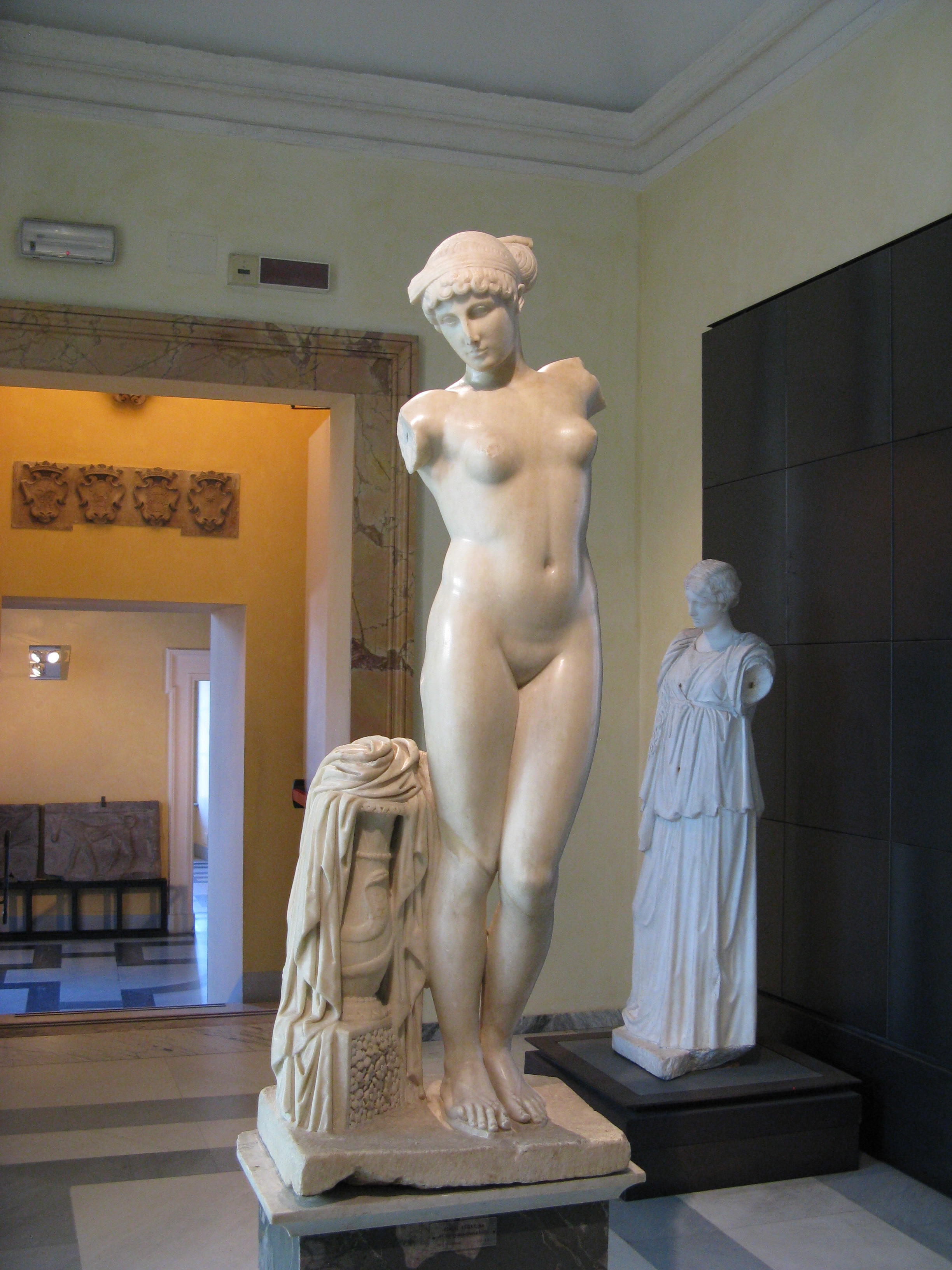
Venus of the Esquiline , Capitoline Museum
unknown sculptor, it is a 1st century CE copy
Constantine Statue Face

Constantine statue hand

Constantine orignal..? Capitoline Museum

Hall of emperors Capitoline Museums
This grand room displays a chronological gallery of 67 ancient Roman portraits
Hadrianic and Antonine Stylization: Highlights Hadrian and Marcus Aureliu
The "Fonseca Bust’
Flavian Realism:
Julio-Claudian Classical Idealism:
Hall of philosophers Capitoline Museums
Conceived alongside the imperial gallery, this room houses 79 busts and herms depicting the intellectual icons of antiquity, including Greek and Roman poets, philosophers, rhetoricians, and men of letters
homer, socrates, epicurus andd metrodorus, literary giants
Masterpieces Capitoline Museums
Bust of Commodus as Hercules:
The Capitoline Brutus:
The Colossus of Constantine:
Bust of Medusa by Bernini:
Spinarium
Marcius (or Martius). According to the tale, he ran barefoot across 70 kilometers from Vitorchiano to Rome to deliver an urgent warning about an invading Etruscan army, only stopping to remove the agonizing thorn after his crucial mission was completed.\
Pope Sixtus IV donated it to the Roman people alongside the iconic Capitoline She-Wolf
Dated to the 1st century BC, it is an eclectic masterpiece. It seamlessly blends a highly realistic Hellenistic body posture (3rd–2nd century BC style) with a head sculpted in a classical Greek severe style (5th century BC style)

Capitoline Brutus
In the 16th century, antiquarians linked the sculpture to Lucius Junius Brutus, the legendary founder and first consul of the Roman Republic, based on perceived stylistic resemblances to coin profiles minted by Marcus Junius Brutus.
Typically dated to the late 4th to early 3rd century BCE (with some scholarship suggesting a later Hellenistic or Republican period
