Lesson 9: Seed Plants
 Call Kai
 Learn
 Practice Test
 Spaced Repetition
 Match
 Flashcards
 Knowt Play
1/75

There's no tags or description
Looks like no tags are added yet.
76 Terms
what are the two types of seed plants
gymnosperms and angiosperms
what did gymnosperms and angiosperms evolve from
spore bearing plants known as progymnosperms
flowering plants=
angiosperms
the most recently evolved plants are ___
angiosperms
success of seed plants is due to evolution of the
seed
what does a seed do for a plant embryo
protects and provides food
seeds allow for
dormancy
dormancy allows
the “clock to be stopped” to survive harsh periods before germinating
later development of ____ enhanced seed dispersal
fruits
lots of coevolution happens with seed plants and ____
animals
evolution of ___ is also an important development
pollen
pollen allowed for the dispersal of ____ to no longer rely on ____
dispersal of sperm to no longer rely on water
within seeds embryo is protected by ____
integument
what is integument
an extra layer of two of sporophyte, hardens into seed coat
seeds contain a ___ supply for the embryo
food
a seed is a “___”
baby plant in a box with its lunch
seed plants produce two kinds of ____
gametophytes
male gametophytes are also known as
micro gametophytes
female gametophytes are also known as
mega gametophytes
male gametophytes -
sperm cells within pollen grains
how are male gametophytes dispersed
by wind or a pollinator
pollen is basically __ for plants
sperm
does pollen need water to be transported
no
plants often have both ____
male and female gametophytes
female gametophyte
egg develops within an ovule
what are female gametophytes enclosed within in angiosperms
diploid sporophyte tissue (part of the flowers in flowering plants)
what does extant mean
alive today
what are the five phyla of extant (alive today) seed plants
coniferophyta, cycadophyta, gnetophyta, ginkophyta, anthophyta
gymnosperms are plants with ___ seeds
naked
what are the four living groups of gymnosperms
coniferophyta, cycadophyta, gnetophyta, ginkophyta
gymnosperms have separate ___
male and female gametes
gymnosperms = pollination by ___
wind
gymnosperm lack ___ of the angiosperms
flowers and fruits
all have ____ exposed on a scale (pinecone)
ovule
what phylum are conifers
coniferophyta
what species are included in coniferophyta
pines, spruces, firs, cedars, and others
most familiar gymnosperm phylum
coniferophyta
what phylum are cycads
Cycadophyta
slow-growing gymnosperms of tropical and subtropical regions
cycadophyta
female cones can weigh 45 kg (100 lbs)
cycadophyta
cycad sporophytes resemble
palm trees
palm trees are
angiosperms
what are the only gymnosperms with vessels elements (xylem)
gnetophytes
what phylum are gnetophytes
Gnetophyta
gnetophytes have vessel elements however only angiosperms contain true _____
xylem
true or false gnetophytes are unusual and species usually in separate places from one another
true
what phylum are Ginkophytes under
Ginkgophyta
how many living species of Ginkgophyta remain
1
what is the one remaining species of Ginkgophyta
ginkgo biloba
Ginkgophyta have what type of sperm
flagellated sperm
what phylum of gymnosperms exhibit dioecious
ginkgophytes
what does dioecious mean
male and female reproductive structures form on different trees
angiosperms=
flowering plants
angiosperms can be divided into
monocots and dicots
how are monocots and dicots grouped
grouped by the number of cotyledons, or seed leaves, that the embryonic seedling has within its seed
how many cotyledons do monocots have
1
how many cotyledons do dicots have
2
monocots and dicots can be differentiated
according to a number of
features
do monocots produce true wood
no (grasses, palms, corn, herbaceous (stems die back each year))
do dicots produce true wood
yes
dicots exhibit ___ growth
secondary
(dicots) all plants have primary growth at the
apical meristems (tips of roots and shoots)
secondary growth deals with
expanding girth and creating wood
wood is _____
proliferating xylem
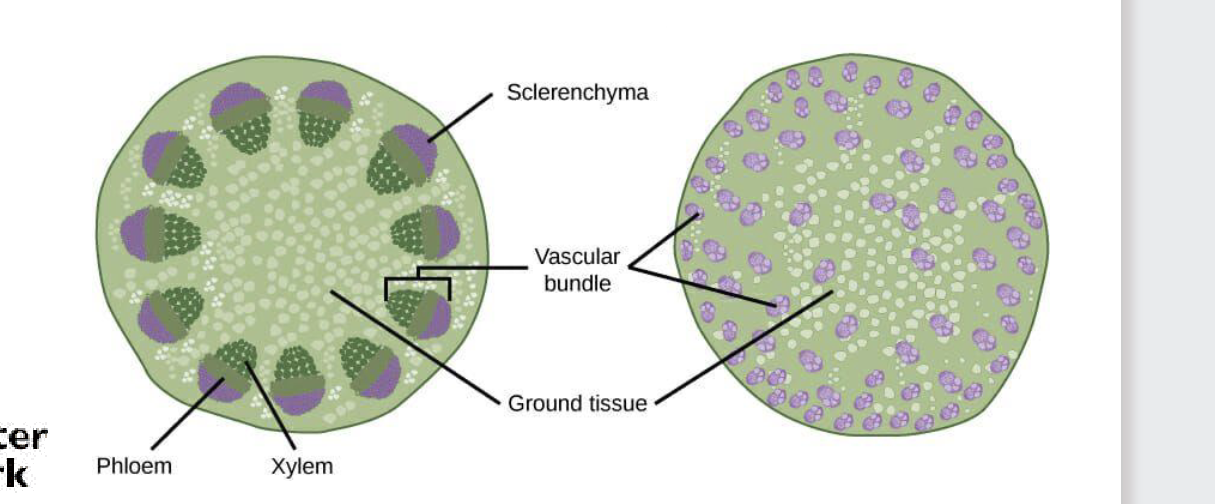
which is a dicot
the left one
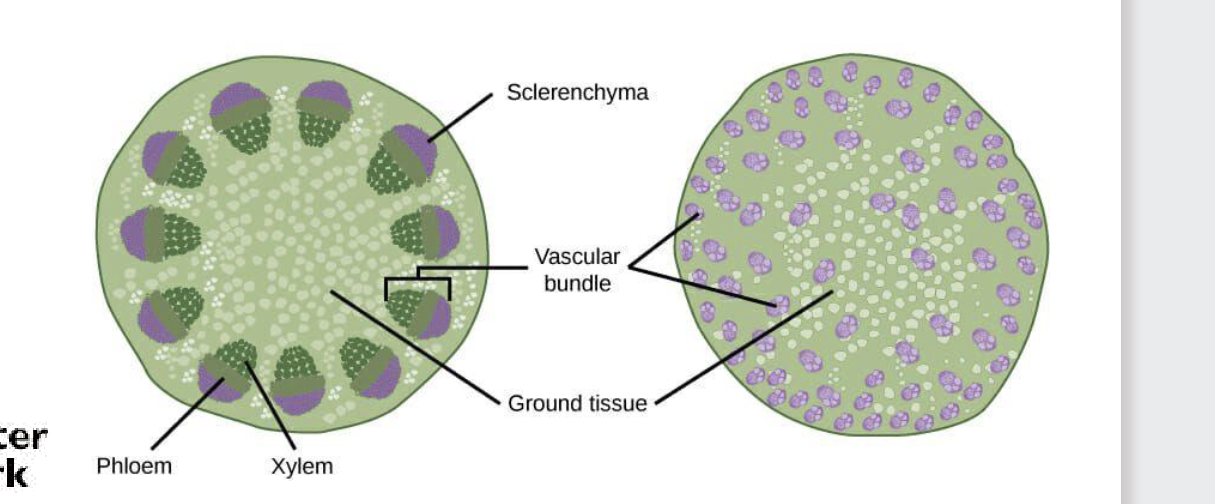
which is a monocot
the right one
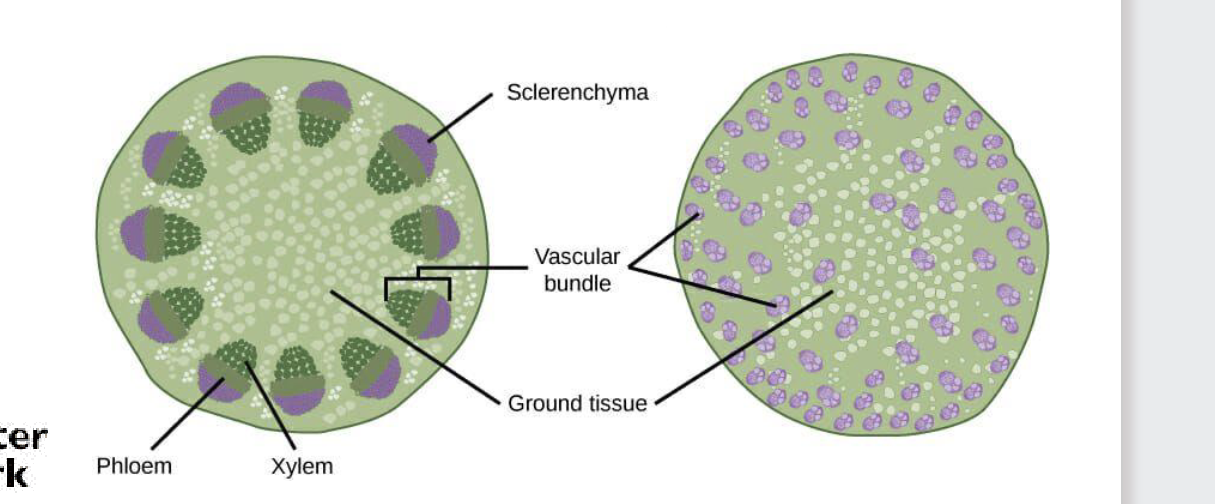
what difference between dicots and monocots does this image display
arrangement of xylem and phloem in STEMS
____ usually have parallel veins on leaves
monocots
_____ usually have netlike veins on leaves
dicots
_____ has vascular bundles complexly arranged in their stems
monocots
____ has vascular bundles usually arranged in a ring in their stems
dicots
____ has fibrous root systems
monocots
__ usually has a tap root present in their root systems
dicots
__ usually has floral parts in multiples of three
monocots
__ usually has floral parts in multiples of four or five
dicots
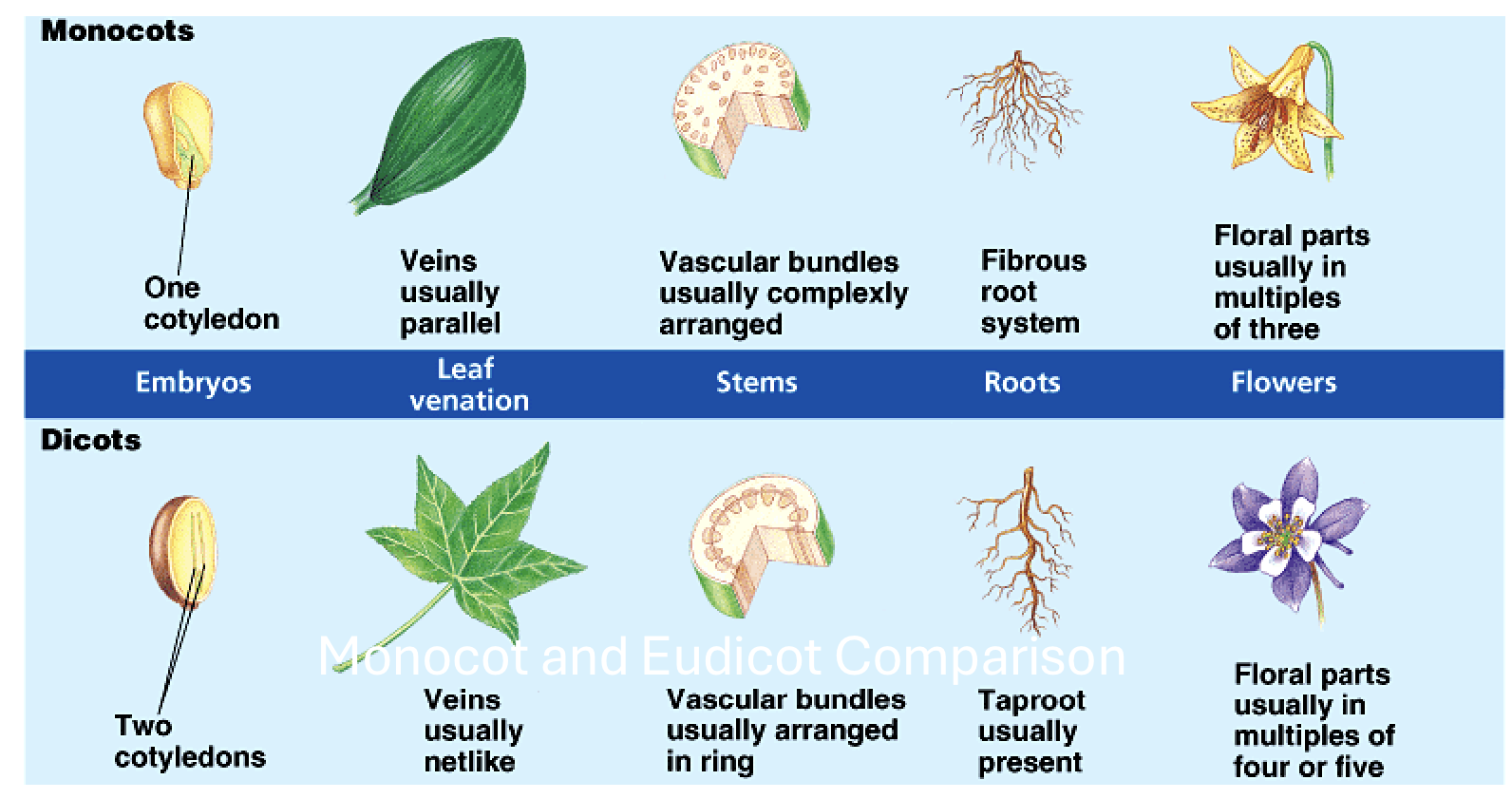
memorize this chart