VIS 20 MIDTERM prehistory-
 Call Kai
 Learn
Learn Practice Test
 Spaced Repetition
 Match
Match Flashcards
 Knowt Play
1/43

There's no tags or description
Looks like no tags are added yet.
Name | Mastery | Learn | Test | Matching | Spaced | Call with Kai | Chat |
|---|
No analytics yet
Send a link to your students to track their progress
44 Terms

Hall of the Bulls, ca. 16,000-14,000 BCE (1-5)
prehistory
located in Lascaux, France
twisted perspective/composite view (can see horns even though we are viewing bull from side)
no continuity or sense of unity in paintings (animals overlap), painted in dim light, probably for mystical/ritualistic purposes
used primitive brushes (likely reeds with frayed ends, branches, reindeer hide)
paints made of water saliva mixed with grinded pigment (manganese, ochre)

Fat/pregnant well fed horse
prehistory
animals were often depicted big like this
handprint is possible signature
gauges in rocks, spears possibly thrown
ritualistic hunting, to gain power over these animals
only painted these large, dominant animals
art for magical purposes

Ziggurat, Ur, ca. 2100 BCE (1-11)
Ancient Near East, Sumer
Ziggurat = serian word that means mountain, verb that means to build on high—>they were trying to build closer to heavens
Temple on top made of fired brick inside was sundried (to preserve fuel). mortar was this oily, tar-like substance (name?)
made for moon god (patron god of Ur)
Sumerians believed that the gods tell them what the gods want
Ziggurat supposedly built because the ruler heard what the god wanted, built to please gods

Statues of Gudea, ca. 2100 BCE
Ancient Near East, Sumer
very compact, made by pounding stones against each other
woolen hat, clasped hands in prayer, big eyes + unibrow, shaved head represents purity
Sumerian writing engraved on his clothing. on his lap are ground plan of temple to god of Ranesh (one of Mesopotamia’s city-state)
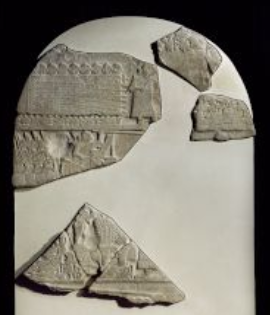
Victory Stele of Eannatum (Stele of the Vultures), ca. 2600-2500
Ancient Near East, Sumer
Stele = stone tablet with inscriptions
had multiple registers (like comic book layers)
made of limestone (not native, took effort to bring it)
at least 4 steele were put up after the water war (Umma–Lagash war) ended, and they were put at the borders
elaborate “keep out” sign
Made out of multiple registers
ruler is larger (hierarchic scale), leading his soldiers (showing most characteristic part of each body)
wearing goatskins, holding weapon/scepter, leading huge army that is holding spears/shields and are depicted trampling their enemies
on another part of the stele, vultures are taking decapitated enemy heads
fertility god is depicted very big (mace, holding fancy net with all his enemies that he's going to beat with the mace)

Stele with law code of Hammurabi, ca.1780 BCE (1-17)
Ancient near East, Babylon
Depicts law code (full of knowledge on how different peoples dealth with issues, consolidated all into one)
criminal law based on levels (elite > commoner > slave)
top of relief scene is Hammurabi and god (Shamash)
god is seated bc he’s more impotant, on a platform with 3 bumps which represents a mountain (deduced that it’s a meeting between ruler and god on a mountain)
Hammurabi’s hand on mouth is a sign of respect
god giving Hammurabi rod with rope around it (measuring tools, representing the right to judge people’s actions)
essentially Hammaurabi is saying his power to judge is god-given
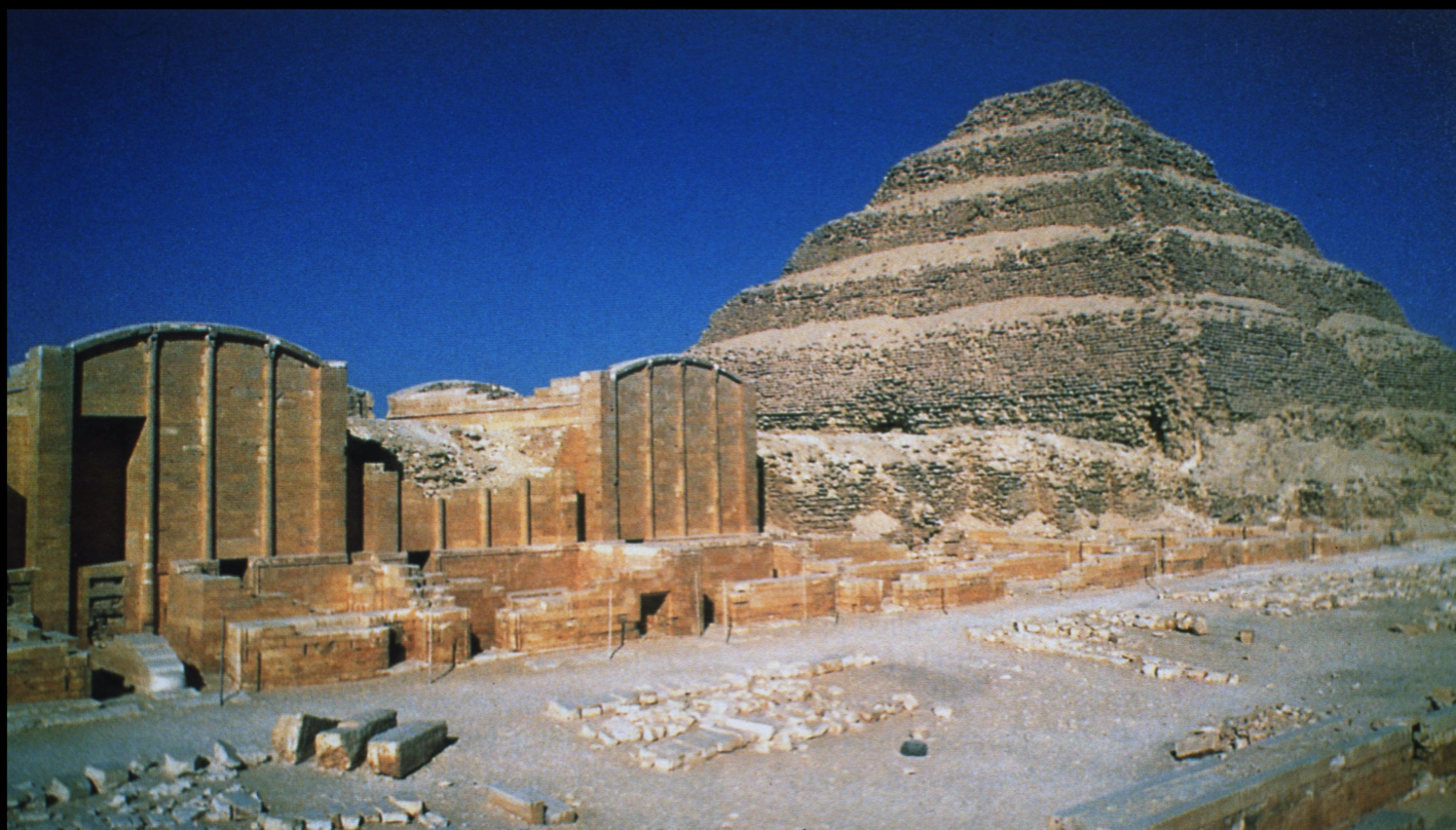
Stepped Pyramid, funerary complex of Djoser, by Imhotep, Saqqara ca. 2630-2611 (1-25
Egypt
Step pyramid (steps called mastabas)
Built in phases, originally 4 steps, top 2 added later
courtyard in front to represent Djoser’s authority even in death
Surrounded by a 35 ft wall w/ many fake entrances
Built out of stone, to last
Columns reinforced by walls, imitation of bundle of reeds that would be used to reinforce mudbrick walls
Body under pyramid, organs in south tomb
Kings had tomb in upper and lower Egypt→represent influence
Kings present themselves to the people as a god→divine kingship
In a room to the side of the pyramid, there was a statue of Djoser (his backup body)
Courtyard mimicking ones Djoser used to affirm his power while he lived→built so he can still reaffirm his power even in death

Khafre enthroned, Gizeh, ca. 2520-2494 (1-28)
Egypt
Imported diorite
Made by pounding stones together
1 of 23 statues
Arms are paws
Complex headpiece worn only by rulers (made by linen) + royal false beard
Originally a protective cobra over his head
Behind his head is a hawk (represents Horus, son of Re→KhofRE→he is supposedly a god) divine kingship

Menkaure and Khamerernebty(?), Gizeh, ca. 2490-2472 (1-29)
Egypt
figures compact, frontal, idealized, following Egyptian conventions for royal sculpture
Menkaure’s left foot advances, signifying motion symbolically rather than showing natural weight shift
Queen’s embrace introduces affection while both figures remain formal/controlled
His queen is same size→she’s considered a goddess
Block of stone on the back that the figures are attached to (makes it durable)
Egyptians had problem with lice, so they’d chop off all their hair and wear wigs (the queen is wearing a wig)

Ti watching a hippopotamus hunt, Saqqara, ca. 2450- 2350 (1-30)
Ridges are supposed to by papyrus, on the top are flora/fauna
Ti→very formal, stiff, composite view, hierarchical scale
His workers are like children, but are very active…one of them has correct perspective
Thebes→Amon is god
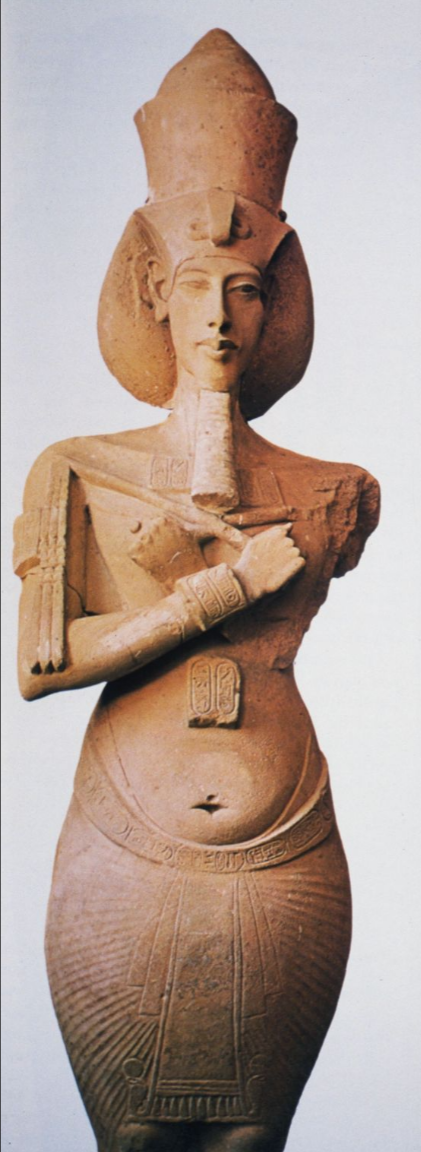
Akhenaton, Karnak, ca. 1353-1335 (1-35
slim, curvy figure, thin upperbody
tried to erase former gods so they’d only worship Aton
Declared a heretic (his statues were smashed as a result, but very recognizable because of his curvy figure)

Akhenaton, Nefertiti and three daughters, Tell el-Amarna, ca. 1353-35
Sun giving light (symbol of god)
Akhenaton Misshapen head? result of interfamilial marriage?
Curvy body
This art is much more casual (doesn’t seem frozen like Ti, for example)
Could be more accurate to true bodily shape (we can see toes)

Last Judgment of Hu-Nefer, ca. 1290-1275
Afterlife was a journey (very complicated)
Scrolls placed so the soul could reference
Heart has a record of life experiences, must be lighter than feather (hieroglyph meaning truth/justice)
In the depiction, he passes and is led by Horus to the god of the afterlife

Kouros, ca. 600 BCE (2-16)
Ancient Greece, Archaic period
These type of statues found at temples or cemeteries as gravemarkers
Long hair, beaded/patterned, nude, archaic smile
Carved from marble from island
“Simplified geometric forms” by artist
Eye is surface level (no indication of socket)
Gift for goddess?
Statue follows the Egyptian grid/canon of proportions
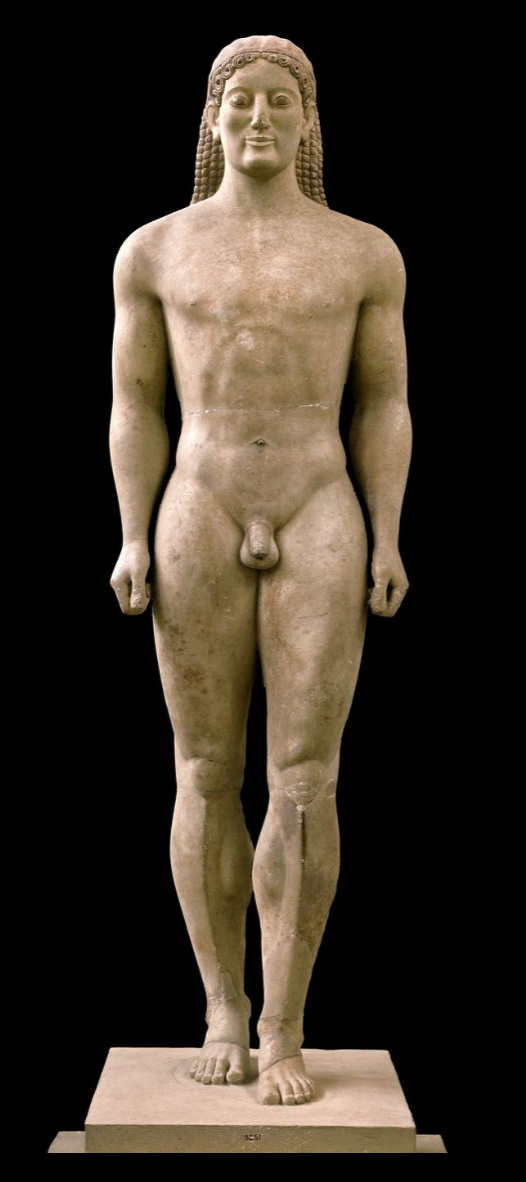
Kroisos, from Anavysos, ca. 530 (2-17)
Ancient Greece, Archaic period
Inscription: “Stay and mourn at the tomb of dead Kroisos, whom furious Ares destroyed one day, as he fought in the foremost ranks”
Died in battle, and was a leader
6 ft 4 in
More natural, less geometric and more lifelike
Archaic smile (all statues from this period smiled similarly in this period)-->died a good death at his peak?

“Kore from Chios” from Acropolis, ca. 510
Ancient Greece, Archaic period
Not from chios
Gift to goddess/offering; always dressed, smaller in scale
Women not treated equally, job was only to bear children, couldn’t even go out (exceptions for funerals and festivals)
Arm was carved separately and mounted
Wearing linen, left hand gathered clothing (makes sense because in the instances when they were seen, they were heavily dressed)
Men are nude but women aren’t→ heroic nudity (their nudity elevates them in some way)
Women weren’t as evolved as men according to the Greeks, clothing is a sign of her inferiority and need to be controlled

Zeus (or Poseidon?), from the sea off Cape Artemision, ca. 460-450
Greece, classical period
Lost-Wax method: carve out figure in clay, then cover in the hollow with wax, then cover the wax over with clay
Fire it, then the clay hardens and the wax melts. Then, with the follow, the molten bronze will be melted in and the head will be formed
Bronze is forgiving (can be easily melded together)
body extends dramatically into surrounding space, showing new freedom made possible by bronze
Combines highly naturalistic, active body, with calm, controlled expression — a key Classical ideal
Originally held a weapon in his right hand
heroically nude

Discobolos by Myron, ca. 450 (Roman copy) (2-32)
Roman marble copy (original was made of bronze)
Athlete in middle of action, creating more dynamic body
original was bronze which allowed greater freedom in extending limbs through space, marble needs more support
Effortless face despite intense physical action (characteristic of Classical Greece)
Made to honor the winner of the discus event in the Olympics?

Doryphoros (Spear Bearer) by Polykleitos, ca. 450-440 (Roman copy) (2-35)
Greece, Classical period
Supposedly, he had a mathematical system called canon of creating a perfect male figure
Very relaxed, weight is counter balanced (contrapposto)
Triumphant in war was interpreted as the gods approving of their culture and values, so maybe that’s why their art becomes more confident

Athenian Acropolis, rebuilt after Persian sack of 480 BCE (2-36)
Greece, Classical Period
Athens, raised rocky outcrop
Housed temple (with the columns going all around exterior
Built for the gods as a place of gathering and sacrifice and rituals
Meeting point between heaven/earth
During persian war, they completely sacked the acropolis area
Greeks left those desecrated areas as memorials (to remember the acts of war)
New king peracles 30 years after this convinces Greeks out of keeping it as a war memorial, then chooses to restore acropolis

Parthenon, 447-432 (2-1, 37-41)
Greece, Classical Period, Athens Acropolis
4:9 Ratio (greeks saw beauty in math)
surrounded by Doric columns, but had ionic Freize inside
No straight lines in the temple→possibly to correct for optical distortion, or maybe trying to make it little more organic
Statue of Athena (probably ivory and gold) used to look at front door, now lost
Usually temples are east/west so rising sun shines on statue


Parthenon, 447-432 (2-1, 37-41)
part of