Pacing Modes and Codes
 Call Kai
 Learn
 Practice Test
 Spaced Repetition
 Match
 Flashcards
 Knowt Play
1/19

There's no tags or description
Looks like no tags are added yet.
20 Terms
The NBG Code
3-5 letter system used to classify how a cardiac pacemaker paces, senses, and responds to heart activity
Position I
Chambers Paced
O = none
A = atrium
V = ventricle
D = dual
Position II
Chambers Sensed
O = none
A = atrium
V = ventricle
D = dual
Position III
Response to sensing
O = none
T = triggered
I = inhibited
D = dual
A pacemaker with dual response to sensing will inhibit output pulse if it sense an intrinsic event in the same chamber, but will trigger output pulse in the ventricle if it senses an intrinsic event in the atrium
Position IV
Rate Modulation (R)
Involves one or more sensors (accelerometer, piezoelectric crystal, etc)
Automatically adjusts the pacing rate to keep pace with the patient’s metabolic demand
The code does not tell you what sort of rate modulation system is in place
VOO
Ventricular pacing, no sensing, no response

VVI
Ventricular pacing, ventricular sensing, inhibited response

AOO
Atrial pacing, no sensing, no response

AAI
Atrial pacing, atrial sensing, inhibited response

VDD
Ventricular pacing, dual sensing, dual response

DOO
Dual pacing, no sensing, no response
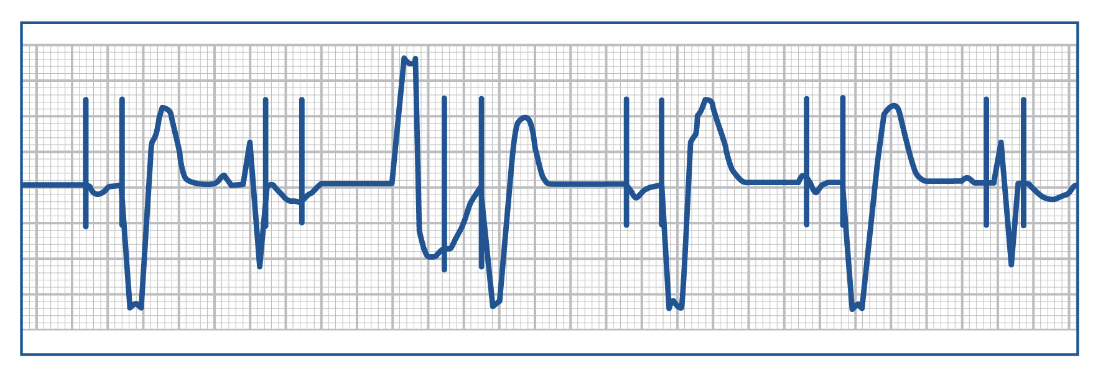
DDI
Dual pacing, dual sensing, inhibited response
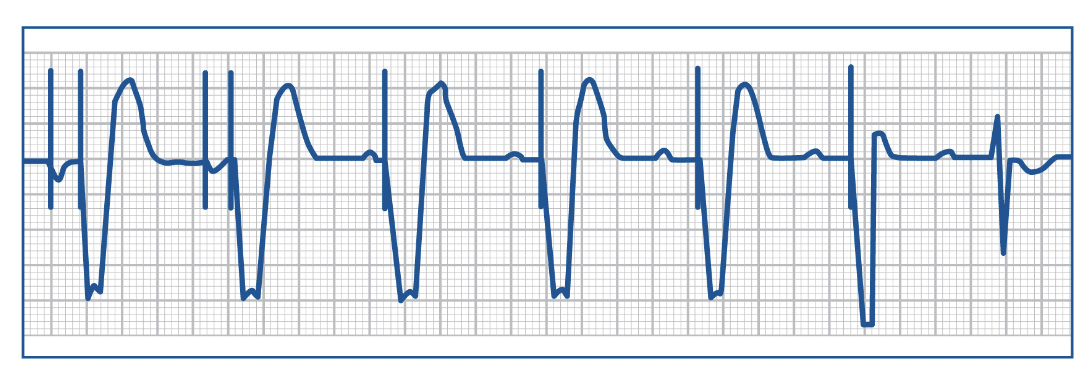
DDD
Dual pacing, dual sensing, dual response
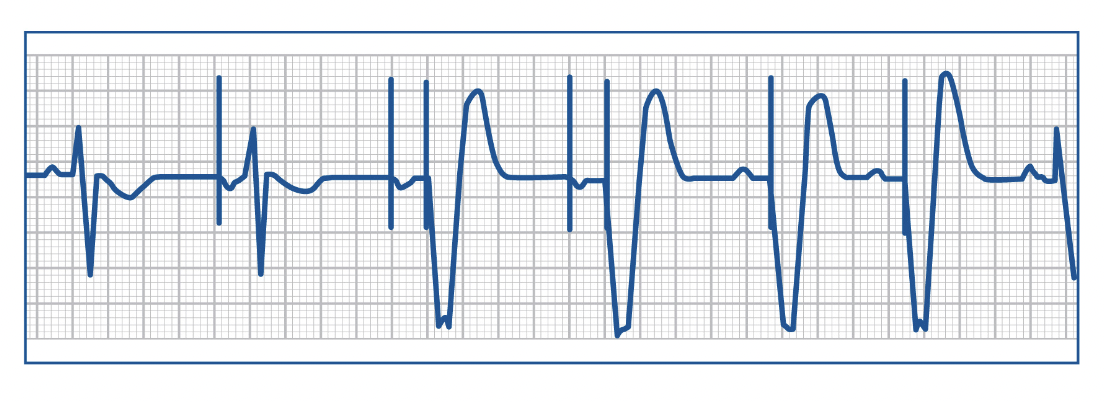
Rate Responsive Pacing
Introduced in 1988 and now almost a “standard feature” in pacemakers
Increases the pacing rate in response to perceived patient need
Attempts to mimic the behavior of the healthy heart (which changes rate in response to patient need)
Can cause rate variations on the paced ECG (above-base-rate pacing)
AAIR
Atrial pacing, atrial sensing, inhibited response, rate modulation
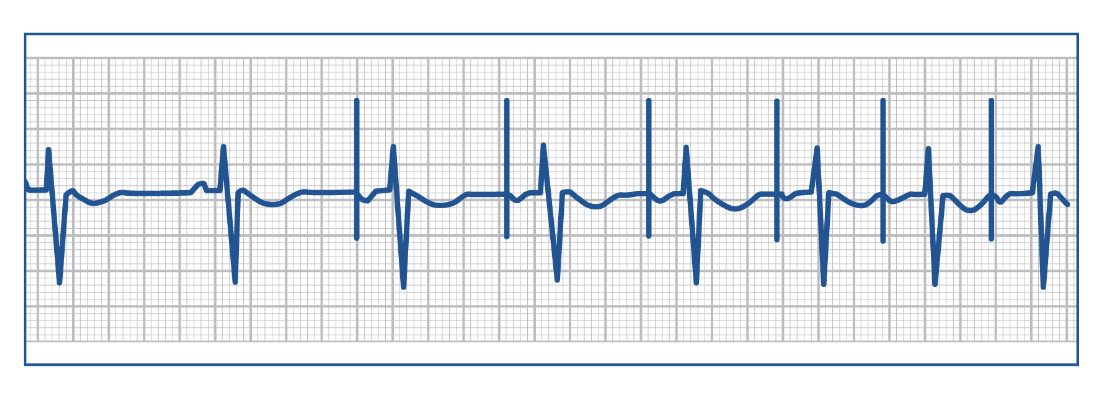
VVIR
Ventricular pacing, ventricular sensing, inhibited response, rate modulation
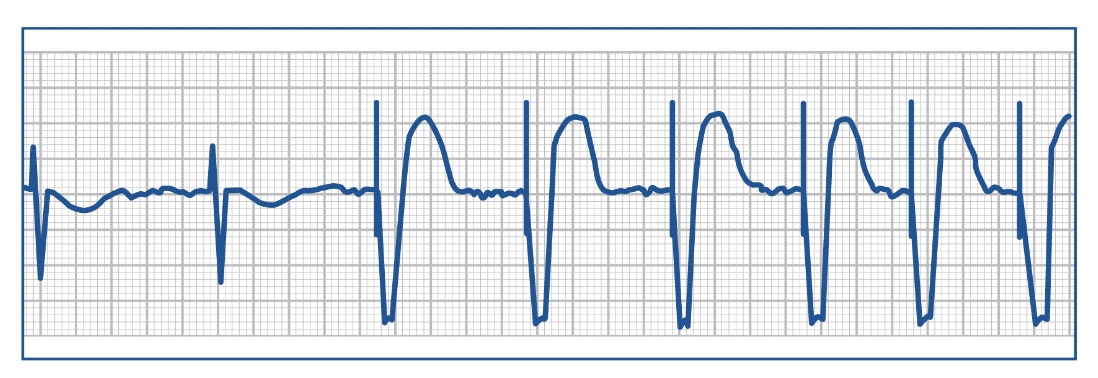
DDDR
Dual pacing, dual sensing, dual response, rate modulation

Mode Selection
Pacemakers are labeled with the highest level mode of which they are capable; however, most offer the clinician many mode choices
Mode considerations
The patient’s underlying rhythm and overall cardiac condition
The likelihood of disease progression, that is, new rhythm disorders
Benefits of 1:1 AV synchrony for the patient
Patient’s overall condition and life expectancy
Cost, implant difficulty
Why VVI?
VVI mode offers certain advantages
Ventricular pacing support
Ease of implant (one lead)
Easy to follow (one pacing spike)
Cost-effective therapy
And one important disadvantage
Loss of AV synchrony
Dual Chamber Pacing
Maintains 1:1 AV synchrony
Every atrial beat has a corresponding ventricular beat
Allows for “atrial kick” to contribute to ventricular filling
Mimics the behavior of the healthy heart
May prevent “pacemaker syndrome”
ASK: IS AV SYNCHRONY POSSIBLE FOR THIS PATIENT?
Dual-Chamber Drawbacks
More hardware (to implant)
More difficult to follow (two spikes, more complicated ECGs)