microbio exam 3
 Call Kai
 Learn
 Practice Test
 Spaced Repetition
 Match
 Flashcards
 Knowt Play
1/137

There's no tags or description
Looks like no tags are added yet.
138 Terms
10
There are __ times more microbes per body than cells in the body
resident microflora
normal microbes that are always present
transient microflora
microbes that are not usually there
opportunists
microbes that can cause disease if conditions are right
ex.
immunocompromised
unusual body locations
disturbances of normal flora
T
T/F: Some microbes can only use a particular portal

mucous membranes
common site of infection
epithelial cells
exposed to environment
mucus-glycoprotein
only parasitic organisms can penetrate thru:
loose association
adhesion
invasion

skin
epidermis
apocrine gland
sebaceous gland
transient
resident
often gram + (resistant to drying)
straphylococcus
propionibacterium
mouth
>400 species, 12 billion organisms
saliva
lysozyme
lactoperoxidase
teeth
plaque- mixed culture biofilm
dental plaque
continual coating of teeth with microbes- first step in decay
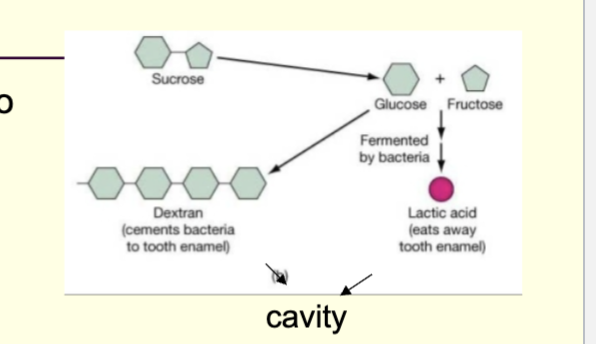
dental caries
cavities
caused by gram + bacteria
dissolution of enamel and more due to combination of sugar and bacteria
cariogenic
lactic acid forming bacteria that use sucrose and break it down to glucose, which is then fermented to make lactic acid which destroys enamel
infectious disease
treatment- removal of decay and fillings
prevention- brushing, floosing, limit sugar
vaccine in development
sealants
flouride
flouride
hardens tooth enamel

periodontal disease
bacteria trapped in gingival crevices
chronic infection, pockets of inflammation
gum inflammation, erosion of ligaments and bones that support teeth
major cause of tooth loss
>80% of teens and adults
tartar
tartar
plaque + calcium (aka calculus)
bleeding of gums
must be removed by dentist
gingivitis
mildest form of periodontal disease
only gums
trench mouth
severe form of periodontal disease
young people
smoking increases risk
periodontitis
permanent damage to bone
meth mouth
methamphetamine abuse
dry mouth, poor oral hygiene, teeth grinding
exposure, adherence, invasion, colonization and growth, toxicity or invasiveness, tissue damage, disease
steps to pathogenesis
adherence
ability to attach at specific places, not just flushed away
specific interactions with epithelial cells
may be selective
receptors on cells (Opa with CD66 - gonorrhea)
slime layer/capsule - secreted by bacteria
fimbriae
pili
examples of capsule/slime layer
pathogenic E. coli - capsule promotes adherence to brush border of intestinal microbilli
streptococcus mutans - dextran slime layer promotes binding to tooth surfaces
examples of adherence proteins
streptococcus pyogenes - M protein on the cell binds to receptors on respiratory mucosa
Neisseria gonorrhoeae - Opa protein on the cell binds to CD66 receptors on epithelium
examples of fimbriae (pili)
Neisseria gonorrhoeae - pili facilitate binding to epithelium
Salmonella species - type I fimbriae facilitate binding to epithelium of small intestine
Pathogenic E. coli - fimbrial colonization factor antigens (CFAs) facilitate binding to epithelium of small intestine
exotoxins
types:
cytolytic
AB toxins
superantigens
chemical properties:
proteins, excreted by certain gram + or - bacteria; generally heat-labile
mode of action/symptoms:
specific, usually binds to specific cell receptors or structures: either cytotoxin, enterotoxin, or neurotoxin with defined, specific action on cells or tissues
toxicity:
often highly toxic, sometimes fatal
immunogenciity response:
highly immunogenic; stimulate the production of neutralizing antibody (antitoxin)
endotoxins
do exotoxins or endotoxins produce fever in host?
exotoxins
are exotoxins or endotoxins more toxic?
enzymes that are exotoxins
hyaluronidase
streptokinase
lipases
proteases
nuclease
collagenase
coagulase
cytolytic toxins
type of exotoxin
cell lysis (damage cell membranes)
hemolysins - BAP
Lecithinase / Phospholipase
target phosphatidylcholine
streptolysin
target sterols
leukocidins
pore forming
target WBCs
ex. staphylococcus alpha toxin
pore forming
penetrate host cell membrane and make it no longer specific
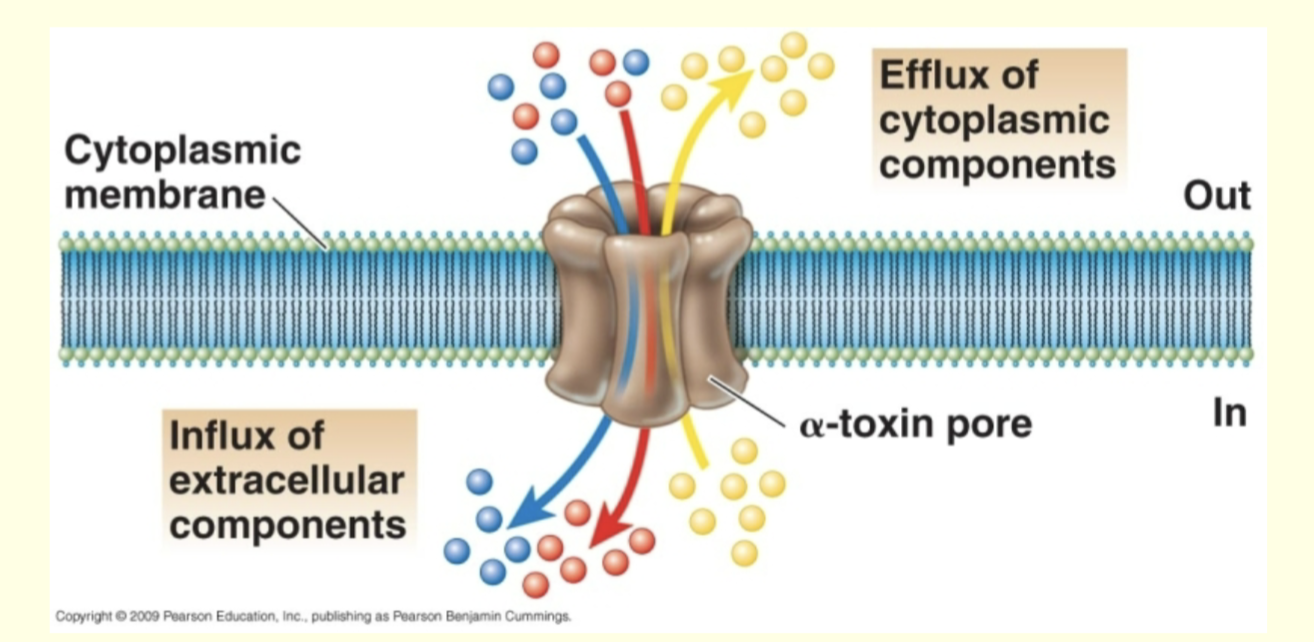
AB; B; A
____ exotoxins have two subunits. The _ subunit binds host cell surface protein (receptor) and the _ subunit transfers across cell membrane
examples of AB exotoxins
protein synthesis inhibitor
Diptheria toxin blocks activity of EF-2
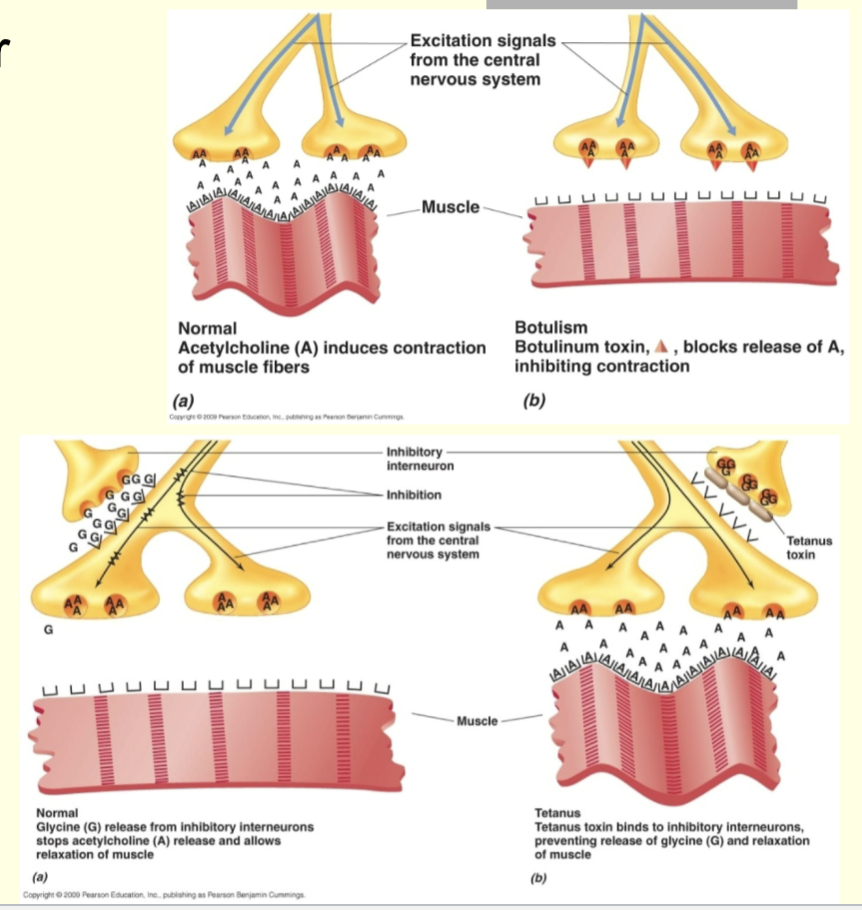
block NT release
botulinum toxin = total relaxation
flaccid paralysis (blocks Ach)
tetanus toxin = total contraction
pastic paralysis
cholera enterotoxin
AB exotoxin
affects small intestine
affects normal balance in gut
water in lumen of gut goes out

endotoxins
chemical properties:
toxic lipopolysaccharides (LPS)
component of gram negative cell wall (outer membrane)
induce host cells to release pyrogens (fever causing proteins)
mode of action/symptoms:
general, fever, diarrhea, vomiting
toxicity:
weakly toxic, rarely fatal
immunogeneticity response:
relatively poor immunogen; immune response not sufficient to neutralize ion
innate immunity
non-specific
‘born with’
encompasses innate defenses (physical and chemical barriers)
doesn’t require previous exposure
species immunity
all members of a species are ‘born with’ this type of immunity
ex. humans do not get infected with canine distemper
acquired/adaptive immunity
specific immunity
naturally or artificially acquired
active or passive
antibodies
antigen
something the body recognizes as foreign and mounts an immune response to
also called immunogen
protein
can be polysaccharide, glycoprotein, nucleoprotein
usually on surface of microorganisms and cells
epitope
area on antigen where antibodies bind
also called antigenic determinant
4-6 aas
can also be sugars or other molecules
TCR can only recognize ___ that have been presented by APC
antiodies- recognize soluble __

antibody
protein produced in response to an antigen
active acquired immunity
own production of antibodies
passive acquired immunity
ready-made antibodies introduced
acquired, active, artificial
what type of immunity?
injection of a person with a vaccine that induces protective immunity in that individual
acquired, passive, natural
what type of immunity?
some antibodies cross the placenta
innate
what type of immunity?
humans don’t get canine parvovirus
acquired, active, natural
what type of immunity?
once you have had the mumps you don’t get it again
innate defenses
physical barriers
chemical barriers
cellular defenses
inflammation
fever
molecular defenses
skin
what is the body’s first line of defense?
serum
plasma w/o clotting factors (what’s left after clotting)

B cells
antibody production
stay in bone marrow
T cells
develop in thymus
cell-mediated immunity
lymph
like blood but no RBCs
get rid of waste
lymph nodes
high concentration of WBCs
interactions with microbes and antigens
site of where T & B cells fight
filter foreign materials out of lymph
thymus
maturation of T-cells (lymphocytes)
spleen
largest lymphatic organ
contains phagocytes
other organs can compensate for loss of this organ
tonsils
aggregation of lymphocytes
phagocyte
engulfs and destroys
can be an APC
includes macrophage, monocyte, neutrophil, and dendritic cell
mobile
contain lysosomes which have bacteriocidal enzymes
neutrophil
phagocytic
‘first' on the scene’
live only a day or two
high # in blood count suggests infection
AKA PML (polymorphonuclear leukocyte)
nonspecific
inflammatory cell attracted to site by chemokines (ILs)
macrophage
‘big eater’
can be fixed or wandering
live for months
also involved with specific defenses
inflammatory cell attracted to site by chemokines from neutrophils
release cytokines that cause inflammation
interleukins (IL) and tumor necrosis factor (TNF)
chemotaxis, adherence and ingestion, digestion
steps of phagocytosis
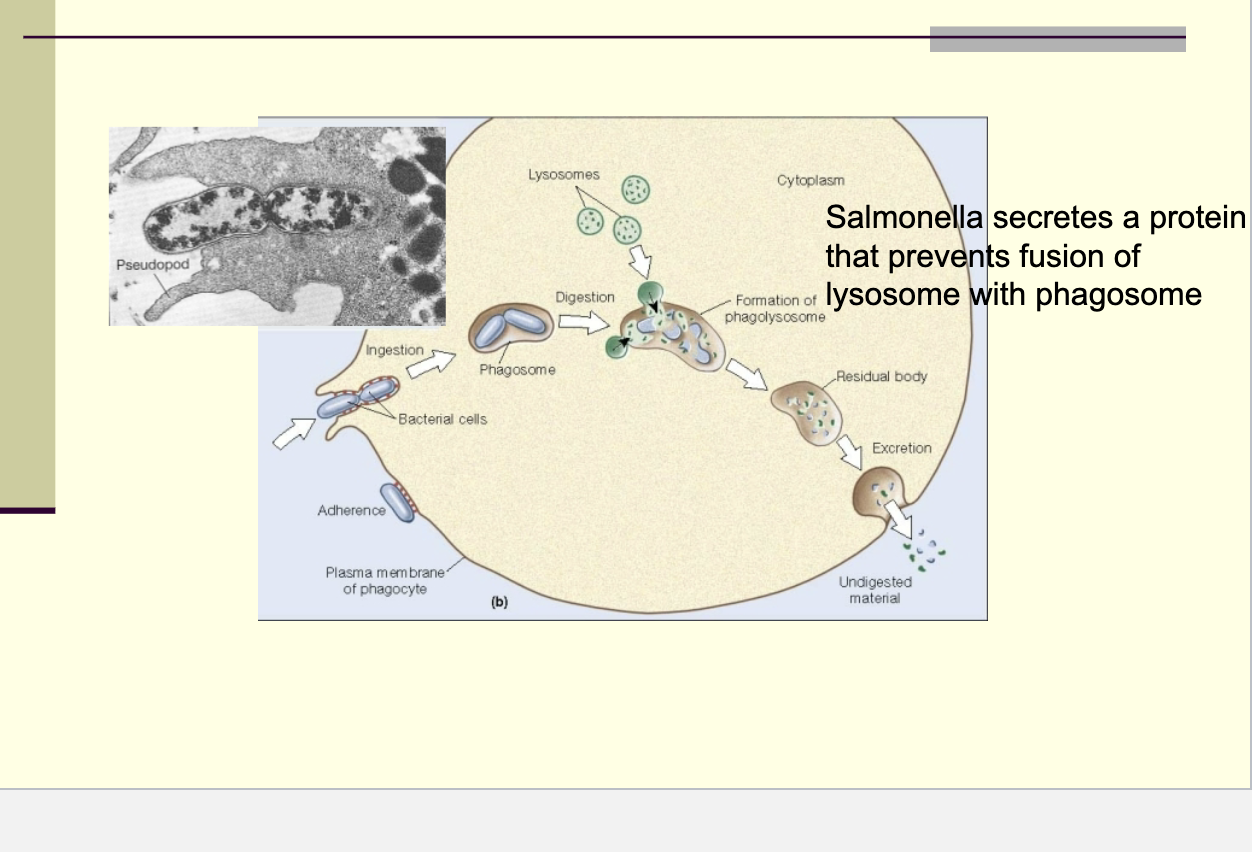
Salmonella; lysosome; phagosome; toxic oxygen; adherence
some microbes like ___ have evolved to specifically resist phagocytosis), for instance, by secreting a protein that prevents fusion of ____ with ___. other organisms use compounds to neutralize ___ or capsules to prevent ____
pyogenic
pus forming
leukocidins
kill leukocytes
ex. S. aureus and S. pyogenes
inflammation
nonspecific
can be induced by innate and adaptive immune responses
4 cardinal signs
redness (rubor) - aka erythema
swelling (tumor) - aka edema
pain (dolor)
fever (calor)
short; kill; clear; repair; histamine; dilation; edema; pus
an acute inflammatory response is ____-term and has 3 steps:
___ invaders
___ debris
___ tissue
___ is released, which causes:
vaso__ = increased blood flow
__ = fluids accumulate
__ = accumulation of dead cells, microbes and tissue debris
systemic; septic shock
___ inflammation is when it is no longer localized. this can lead to ______, including high fever, massive efflux of fluids, and loss of blood pressure and volume

chronic; granulomas
___ inflammation is when there is no clear winner between an invader and the host. the host defense system attempts to confine the invader.
formation of ___
fever
>100.5 degree F
body’s thermostat gets reset in response to pathogen- pyrogens released
benefits
slows growth of pathogens
microbial toxins may be inactivated
increases immune response
patients feel ill
antipyretics
fever reducing drugs

interferon
infection by one virus prevented infection by a second virus (for a short time)
host protein responsible called ____ - interferes with viral replication
synthetic (recombinant) ____ available as treatment- not a cure
many types
complement system
nonspecific immunity
set of proteins produced by liver and released to circulatory system
can be triggered by specific immune system or directly by pathogen
cascade of reactions leading to defensive effects
enhances phagocytosis
lyse microorganisms
occurs very rapidly
innate
interferons and the complement system is a part of ___ immunity
pathogen associated molecular patterns
PAMP
pattern recognition molecules
PRM
T
T/F: macrophages are nonspecific, but can become specific
T
T/F: Each T cell and B cell is specific for a specific antigen
APCs; T; MHC; TCR; B
___ present antigens to __-cells. The ___ on the APC interacts with ___. The T cells can activate other T cells or __ cells
adaptive
heterogeneity, specificity, memory, self vs non-self (tolerance) are requirements of which immune system?
clonal selection theory
heterogeneity, specificity, and memory
before birth, there’s an array of T & B cells, but not enough to fight off an infection yet
delay
natural exposure
memory cells produced so next time pathogen appears, you can immediately fight it off

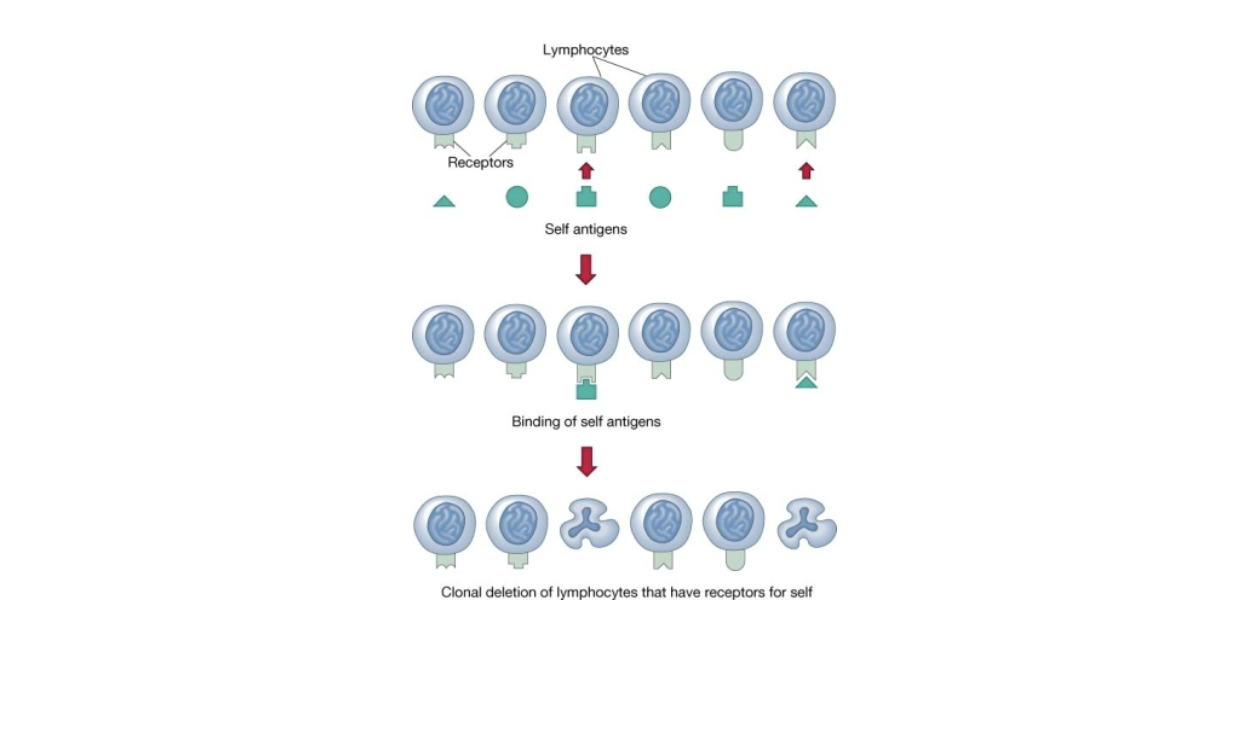
clonal deletion theory
tolerance
prevent autoimmunity
T-cell receptor (TCR)
each T cell has thousands of same ___
membrane spanning proteins
2 proteins (alpha and beta)
variable and constant regions
recognize antigens bound to MHC of APC

MHC
human leukocyte antigens (HLA)
first discovered as cause of transplantation rejection
class I
all nucelated cells
class ii
only APCs
MF, dendritic, and B cells


types of T cells
helper (TH)
cytotoxic
memory
cytotoxic T cell
MHC class I
any nucleated cell infected with something
CD8 co-receptor
direct interaction
release granules that kill cells displaying MHC I and specific antigen

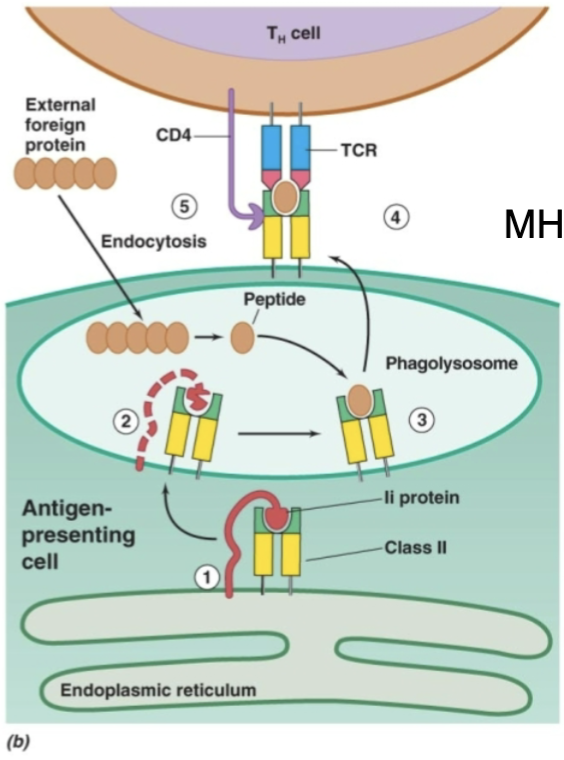
helper T cell
MHC class II
APC
CD4
causes plasma cells to produce more antibodies
TH1 cells
MF activation, increased phagocytosis and inflammation
cell-mediated
transplantation rejection

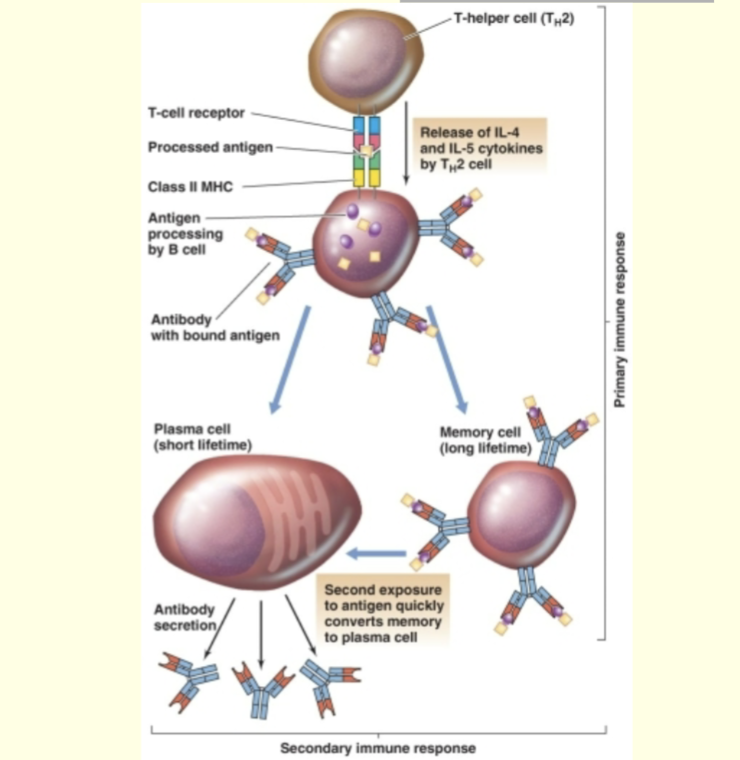
TH2 cells
B cell activation and antibody production
humoral
Tc; TH1; TH2
whereas __ and __ result in the killing of cells themselves, ___ stimulates B cell activation

antibodies
immunoglobins (Ig)
soluble proteins
found in serum and some other body fluids (milk, gastric secretions)
antiserum
5 classes of Ig
IgG ~80%
IgM
IgA
IgD
IgE
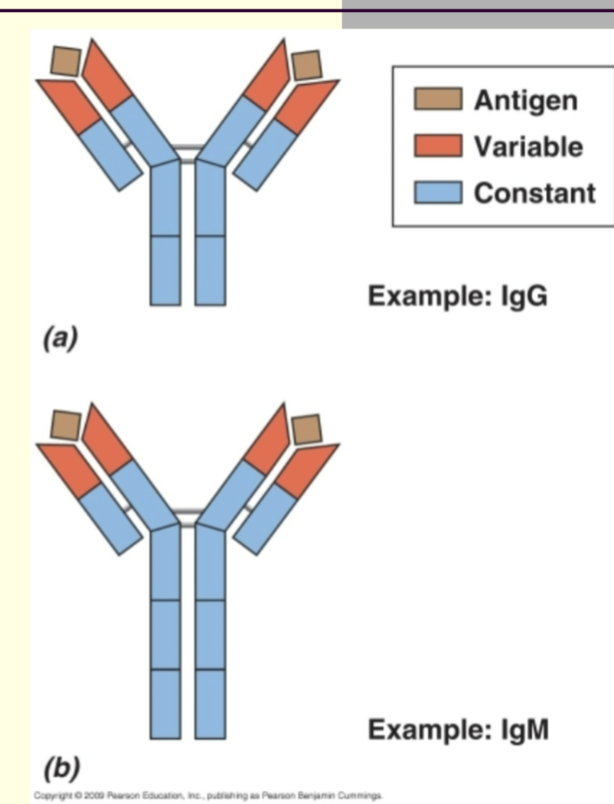
constant; variable
antibodies have ___ and ___ regions
IgG
smallest
most abundant
4 polypeptide chains
heavy & light
covalent disulfide bonds
2 antigen binding sites (identical)
variable and constant domains
non-covalent interaction with antigen
extracellular fluid; blood and lymph
only ab that can cross placenta
IgM
pentamer; largest
joining chain
10 identical Ag binding sites
first ab to appear after immunization or in response to bacterial infection
strong complement activator
relatively low affinity but high avidity (synergistic strength)
blood and lymph, monomer is B cell surface receptor

IgA
second largest
important circulating antibody; major secretory antibody
secretions (saliva, colostrum, cellular and blood fluids)
monomer in blood and dimer in secretions
5-15g of IgA in mucosal secretions each day

IgE
largest single-unit (monomer) ab
involved in allergic reactions and parasite immunity
blood and lymph
binds to mast cells and eosinophilss
IgD
ab
immature B cell membranes
function not well understand
high in autoimmune diseases
3; 4
IgG, IgA, and IgD have __ constant domains while IgM and IgE have __

primary response
when a B cell first finds its antigen
IgM produced

secondary response
memory cells quickly respond to antigen
IgG produced
2-3
the immune system fully is developed at __ yrs
F
T/F: cell mediated immunity increases with age
active; passive
immune memory is in effect for ___ immunity, but there is no immune memory for ____ immunity
T
T/F: passive immunity develops immediately, while active immunity develops over a period of weeks
F
T/F: active immunity cannot be maintained and decays rapidly while passive immunity can be maintained via stimulation of memory cells (i.e. booster immunization)