Art Hist 318 Midterm
 Call Kai
 Learn
 Practice Test
 Spaced Repetition
 Match
 Flashcards
 Knowt Play
1/70

There's no tags or description
Looks like no tags are added yet.
71 Terms

Title: Reliquary Portrait of Sainte Foy
Building and City: Treasury of Sainte Foy, Conques, France
Medium: hammered gold and gems over wooden core
Date: ca. 900, renovated ca. 1000, later additions
Significance of the work: Connected the physical, tangible to the divine, contained the skull of Sainte Foy.
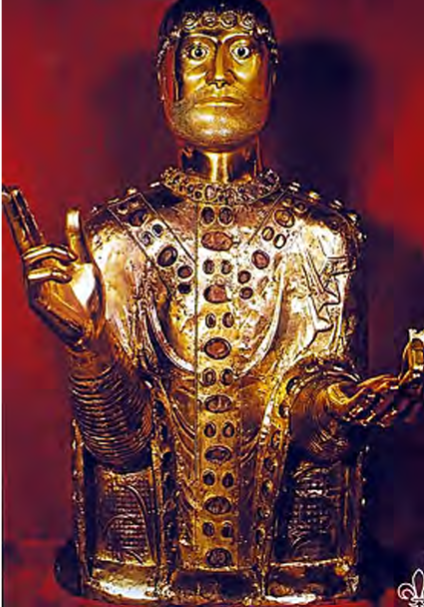
Title: Portrait Reliquary of Saint-Baudime
Building and City: Abbey of Saint-Nectaire, Auvergne, France
Medium: Silver and silver gilt over a wooden core, inlaid with precious gems, enamel eyes
Date: ca. 1150
Significance of the work:sacred container and visible, life-sized physical representation designed to house and protect a holy relic—
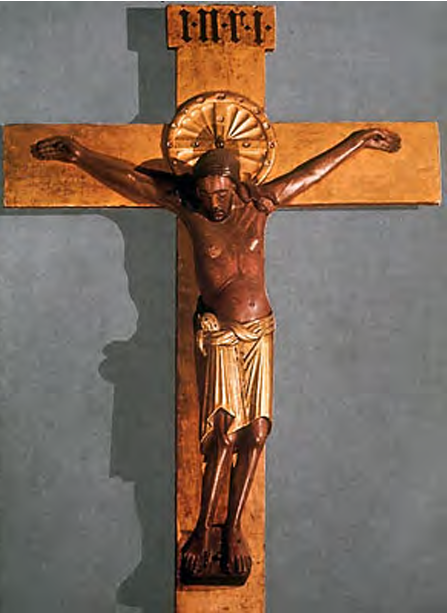
Title: Gero Cross
Building and City: Cologne Cathedral, Germany
Medium: walnut wood and polychrome
Date: ca. 970 (Ottonian)
Significance of the work: oldest surviving Western depiction of a dead, suffering Christ on the cross, It reflects a 10th-century theological shift that emphasized Jesus’s human vulnerability, physical agony, and redemptive death rather than just his divine triumph
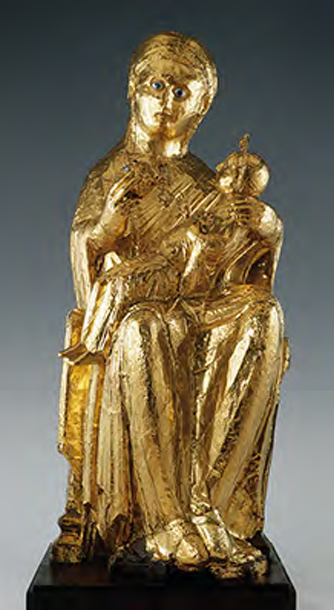
Title: Essen Madonna
Building and City: Essen Cathedral Treasury, Germany
Medium: gold foil over wooden core with enamel eyes
Date: ca. 975-1000
Significance of the work: oldest known freestanding, full-length sculpture of the Virgin Mary. Apple in hand represents her as the “New Eve”. While the original Eve brought sin into the world via the forbidden fruit, Mary brings salvation by bearing Christ.

Title: Morgan Madonna (Sedes Sapientiae)
Building and City: Auvergne, France
Medium: walnut wood carving
Date: ca. 1150-1200
Significance of the work: Incarnation—the moment God took human form in Jesus Christ. Rather than being portrayed with the soft, maternal warmth of later Renaissance art, Mary is depicted as rigid, frontal, and emotionless. Her body acts literally and symbolically as the throne upon which Christ sits

Title: Santo Domingo de Silos Cloister: Journey to Emmaus
Building and City: Silos, Spain
Medium: pier sculpture
Date: ca. 1125
Significance of the work: depicts the risen Jesus as a taller figure stepping out of the architectural frame, wearing the distinct attributes of a medieval pilgrim, highlighting how Christ walks incognito among travelers.

Title: Cathedral of Santiago de Compostela (ground plan)
Building and City: Galicia, Spain.
Architect: Bernard the Elder
Date: 1075-1150
Significance of the work: Latin cross, accommodated large flows of medieval pilgrims, channeling movement directly to the shrine and relics of Saint James
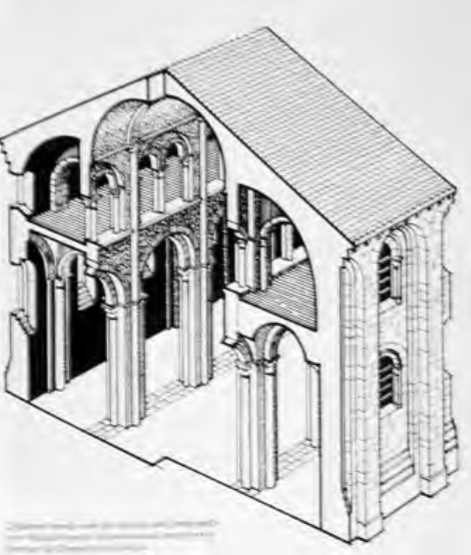
Title: Cathedral of Santiago de Compostela (perspective cross-section of nave)
Building and City: Galicia, Spain
Medium: Architectural perspective cross-section drawing
Date: 1075-1150
Significance of the work: the side aisles match up perfectly with the transept aisles and loop directly into an ambulatory wrapping behind the high altar. This permitted thousands of pilgrims to enter, walk to the crypt of Saint James, and exit without ever interrupting the formal liturgical services occurring in the central nave

Title: Cathedral of Santiago de Compostela: Interior of Nave
Building and City: Galicia, Spain
Medium: Stone Masonry
Date: 1075-1150
Significance of the work: the side aisles match up perfectly with the transept aisles and loop directly into an ambulatory wrapping behind the high altar. This permitted thousands of pilgrims to enter, walk to the crypt of Saint James, and exit without ever interrupting the formal liturgical services occurring in the central nave

Title: St-Sernin: Aerial view from the southeast
Building and City: Toulouse, France
Patron: Funded by Count William IV of Toulouse
Date: 1060-1119
Significance of the work: Pilgrimage church built in honor of St. Saturninus, 1st bishop of Toulouse

Title: St-Sernin (ground plan)
Building and City: Toulouse, France
Medium: Architectural construction drawing
Date: 1060-1119
Significance of the work: The plan features a double-aisled nave and a continuous walkway that allowed thousands of medieval pilgrims to view the saints' relics without disrupting ongoing religious services in the central nave

Title: St-Sernin: Interior view to the east
Location: Toulouse, France
Medium: Brick and stone masonry
Date: 1060-1119
Significance of the work: Designed to accommodate massive crowds of medieval pilgrims while directing their focus toward the sacred high altar

Title: St.-Sernin: Tympanum of Porte deMiegeville depicting the Ascension of Christ
Location: Toulouse, France
Medium: high relief stone carving
Date: ca. 1080-1119
Significance of the work: Ascension of Christ and promise of return

Title: St.-Sernin: Ambulatory relief of Christ
Location: Toulouse, France
Medium: Marble relief
Date: 1060-1119
Significance of the work: Shows Christ’s divine glory as the ruler and judge of heaven and earth

Title: Abbey Church of Sainte Foy: Exterior view of choir and radiating chapels
Location: Conques, France
Medium: yellow limestone and stone masonry
Date: ca. 1050-1130
Significance of the work: Radiating chapels housed specific holy relics and shrines. Windows floor the choir and the main altar with physical sunlight, representing Divine Light.

Title: Abbey Church Sainte Foy (ground plan)
Location: Conques, France
Medium: Architectural construction drawing
Date: ca. 1050-1130
Significance of the work: Latin cross facade; the plan allowed large crowds of pilgrims to enter and view saintly shrines (especially the reliquary of Sainte Foy) without disturbing monastic services

Title: Abbey Church of Sainte Foy: Interior view of the nave to the east
Location: Conques, France
Medium: stone masonry
Date: ca. 1050-1130
Significance of the work: allowed large crowds of pilgrims to enter and view saintly shrines (especially the reliquary of Sainte Foy) without disturbing monastic services

Title: Benedictine Abbey of Cluny (III): Computer reconstruction model
Location: Cluny, France
Medium: Computer reconstruction model
Date: 1086-1130
Significance of the work: monumental third church of the motherhouse of the Cluniac order and the largest Christian church in the Western world for nearly 400 years
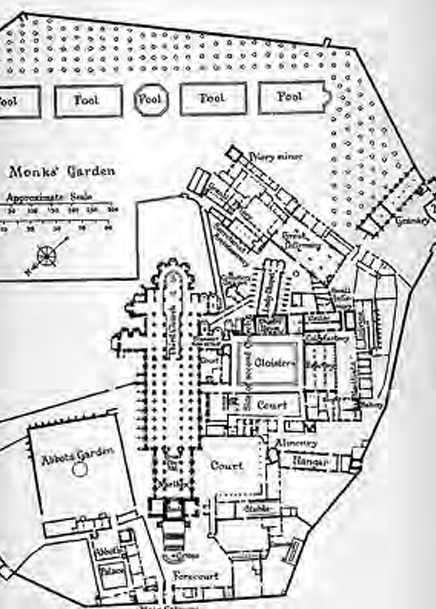
Title: Benedictine Abbey of Cluny (III): Ground plan
Location: Cluny, France
Medium: Architectural drawing
Date: 1086-1130
Significance of the work: Design symbolized the supreme power, wealth, and spiritual ambition of the Cluniac order

Title: Benedictine Abbey of Cluny (III): Remains looking east, including bases of western towers in the foreground and surviving southeast transept tower
Location: Cluny, France
Medium: Stone and brick masonry
Date: 1086-1130
Significance of the work: The towers were built to physically and symbolically project prayers closer to God.

Title: Benedictine Abbey of Cluny (III): Interior of southeastern transept tower
Location: Cluny, France
Medium: Brick and stone masonry
Date: 1086-1130
Significance of the work: The towers were built to physically and symbolically project prayers closer to God.

Title: Ambulatory capital: Fall of Adam and Eve
Location: Benedictine Abbey of Cluny (III), France
Medium: High-relief stone carving
Date: ca. 1086-1130
Significance of the work: represents sin, human vulnerability, and the ultimate need for divine redemption. Pilgrims walking past it were meant to reflect on their own fallen state before approaching the holy center of the church

Title: Ambulatory capital: Rivers of Paradise
Location: Benedictine Abbey of Cluny (III), France
Medium: High-relief stone carving
Date: ca. 1086-1130
Significance of the work: symbolizes spiritual nourishment of the Church, the spread of the Gospels, and the manifestation of Earthly Paradise

Title: Ambulatory capital: Third tone of monastic plain chant
Location: Benedictine Abbey of Cluny (III), France
Medium: High-relief stone carving
Date: ca. 1088-1130
Significance of the work: Latin inscription meaning “The third [tone] strikes/leaps, and depicts Christ rising again”

Title: Cluniac Priory of Berzé-la-Ville: Apse fresco of Christ in Majesty and Traditio Legis
Location: Berzé-la-Ville, France
Medium: fresco secco (fresco applied on dry lime plaster)
Date: 1103-1109
Significance of the work: Affirms the supreme, divine authority of the Papacy and the Cluniac order's absolute independence from secular rulers during the 12th-century church reforms.

Title: Cluniac Priory of Berzé-la-Ville: Detail of fresco of Martyrdom of St. Vincent of Saragossa
Location: Berzé-la-Ville, France
Medium: Fresco
Date: 1103-1109
Significance of the work: symbolizes that faith and spiritual strength can overcome any earthly power or cruelty, serving as an inspiring example of bravery for the monks.
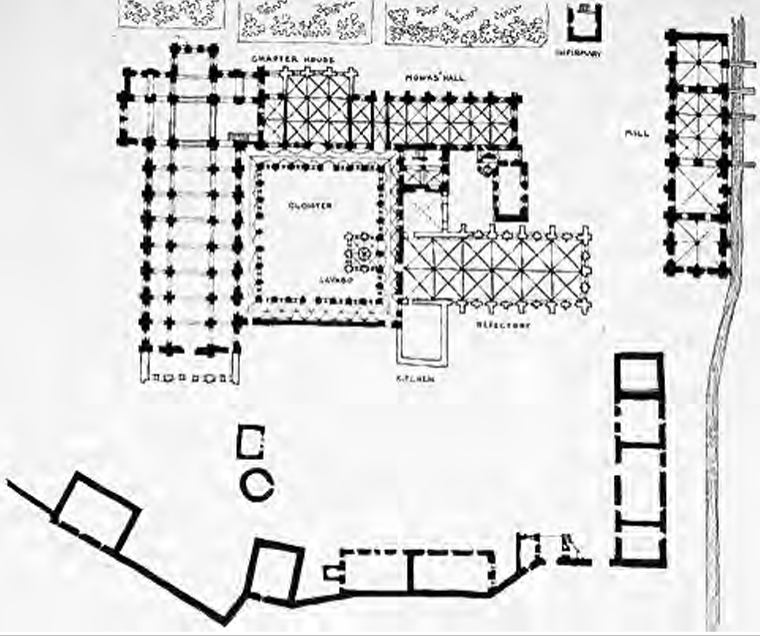
Title: Fontenay Abbey (ground plan)
Location: Burgundy, France
Medium: Architectural drawing
Date: 1139-1147
Significance of the work: Cistercian monastery plan, providing a pure look at how monastic life was geometrically organized. The plan divides the space into rigorous zones centered around a large open cloister:
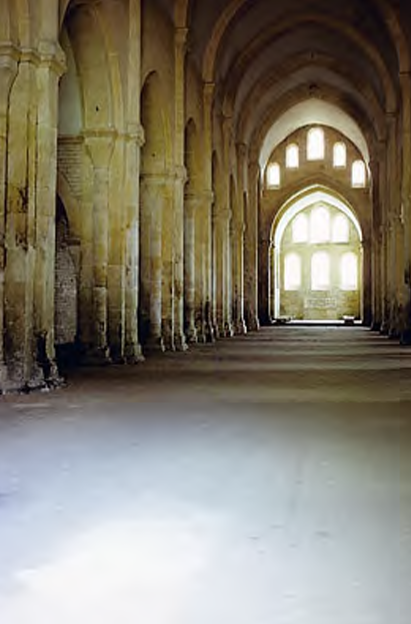
Title: Fontenay Abbey Church: Interior to east
Location: Burgundy, France
Medium: Stone masonry
Date: 1139-1147
Significance of the work: Architecture was intentionally toned down without decoration to allow for undisturbed spiritual reflection

Title: Fontenay Abbey: Cloister
Location: Burgundy, France
Medium: Local limestone
Date: 1139-1147
Significance of the work: architectural and spiritual heart of the monastery; embodies the strict, unadorned aesthetic mandated by Saint Bernard of Clairvaux.

Title: Cîteaux Moralia in Job, Fol. 4v: Historiated initial with Man slaying a dragon
Location: Dijon, Bibliothèque Municipale MS 168
Medium: ink and pigment on parchment
Date: 1111
Significance of the work: acts as a visual metaphor for the theological battle between good and evil, while operating as a functional letter of text

Title: Cîteaux Moralia in Job, Fol. 41r: Initial I with monks chopping down a tree
Location: Dijon, Bibliothèque Municipale MS 168
Medium: ink and pigment on parchment
Date: 1111
Significance of the work: This blind, reckless labor symbolizes how a person can succumb to a slip of the mind, acting without foresight and causing spiritual or physical ruin to themselves and others.

Title: Cîteaux Moralia in Job, Fol. 66r: Initial H with ape and jongleurs
Location: Dijon, Bibliothèque Municipale MS 168
Medium: ink and pigment on parchment
Date: 1111
Significance of the work: Cistercian artist contrasts the chaos and physical distortion of the worldly performer with the stable, ordered, and rigorous life required of a monk. Jesters were heavily criticized by medieval theologians. They were viewed as agents of vanity and worldly distraction. Because they contorted their bodies to perform, they were seen as physically defacing the human form

Title: Benedictine Abbey of St-Pierre: General view of south porch
Location: Moissac, France
Medium: stone
Date: ca. 1115-1131
Significance of the work: physically and psychologically prepared a visitor transitioning from the public medieval town square into the sacred, enclosed space of the monastic church

Title: Benedictine Abbey of St-Pierre: South portal
Location: Moissac, France
Medium: stone with high relief carvings
Date: ca. 1115-1131
Significance of the work: Portal to the divine inside of the church

Title: Benedictine Abbey of St-Pierre: Tympanum of Christ in Majesty with the twenty-four Elders
Location: Moissac (Languedoc), France
Medium: high-relief stone carving
Date: 1115-1131
Significance of the work: Christ in Majesty. 24 Elders of the Apocalypse. Each elder is crowned and holds a small stringed instrument in one hand and a chalice or vessel containing the prayers of the saints in the other.12 Tribes of Israel (representing the Old Covenant and the Hebrew prophets) combined with the 12 Apostles (representing the New Covenant and the Christian Church).
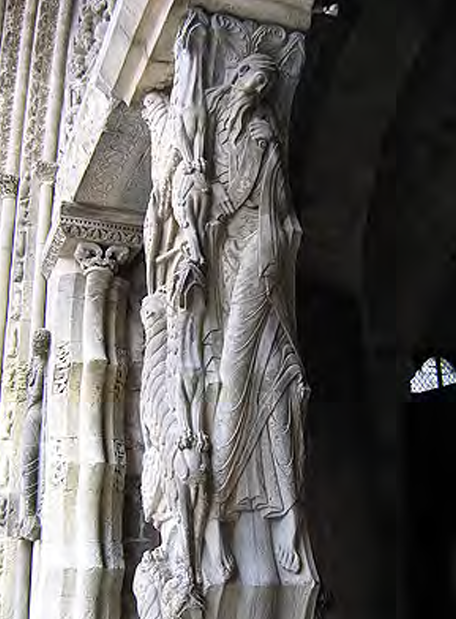
Title: Benedictine Abbey of St-Pierre: Trumeau with interlaced Lions and the Prophet Jeremiah
Location: Moissac, France
Medium: high-relief stone carving
Date: 1115-1131
Significance of the work: symbolic guardians of the church's entrance.

Title: Benedictine Abbey of St-Pierre: Left jamb showing Parable of Dives and Lazaras (upper zone of arcade and in frieze) and personifications of Avarice (lower left) and Lust or "Luxuria" (lower right)
Location: Moissac (Languedoc), France
Medium: high-relief stone carving
Date: 1115-1131
Significance of the work: served as a transitional warning zone. Before stepping into the sacred, clean interior of the abbey, pilgrims and locals were forced to confront their own earthly behavior

Title: Benedictine Abbey of St-Pierre: Right jamb showing Flight into Egypt and Presentation in the Temple (frieze) and Adoration of Magi (upper zone of arcade), Annunciation and Visitation (lower zone)
Location: Moissac, France
Medium: high-relief stone carving
Date: 1115-1131
Significance of the work: an intricate narrative cycle focused on the Infancy of Christ and his incarnation

Title: Abbey of St. Mary Magdalene: Central west portal
Location: Vézelay (Burgundy), France
Medium: high-relief stone carving
Date: ca. 1120
Significance of the work: symbolic gateway to divine experience,

Title: Abbey of St. Mary Magdalene: Tympanum of the Commission of the Apostles
Location: Vézelay (Burgundy), France
Medium: high-relief stone carving
Date: ca. 1120
Significance of the work: Christ in glory. Those who have not yet received the Gospel are often shown with physical deformities or engaging in pagan rituals to represent the distorting effects of sin. The overarching meaning is that no matter how bizarre or distant a people might seem, salvation is globally universal.
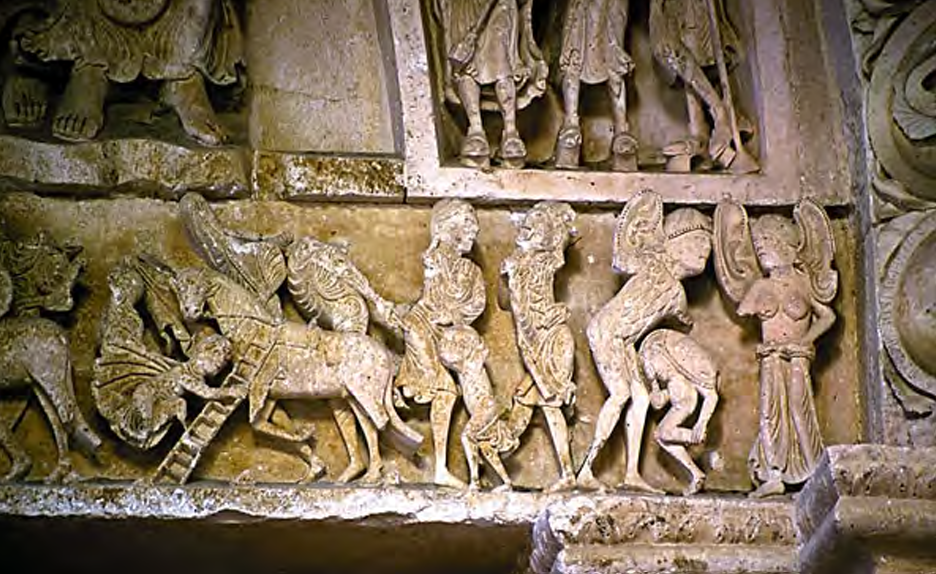
Title: Abbey of St. Mary Magdalene: Tympanum of the Commission of the Apostles, detail of lintel showing family of Panotii
Location: Vézelay (Burgundy), France
Medium: high-relief stone carving
Date: ca. 1120
Significance of the work: By portraying the Panotii as physically grotesque, misshapen, or non-fully human, the sculpture visualizes a state of spiritual ignorance.
The Gift of Hearing: Ironically, the defining physical attribute of the Panotii—their massive ears—underscores their potential to hear the Word of God. Despite their structural oddity, they are placed within the scope of divine redemption.

Title: Cathedral of St-Lazare: Tympanum of the Last Judgement
Location: Autun, France
Artist: Made by or for Gislebertus
Date: 1125-1146
Significance of the work: intentionally designed to evoke strong feelings of awe, moral reevaluation, and fear of damnation, urging visitors to repent and live pious lives

Title: Cathedral of St-Lazare: Tympanum of the Last Judgement detail of Psychostasis (Weighing of Souls)
Location: Autun, France
Artist: Made by or for Gislebertus
Date: 1125-1146
Significance of the work: inspire both fear and awe, warning viewers that their earthly actions had permanent consequences in the afterlife.

Title: Cathedral of St-Lazare: Tympanum of the Last Judgement, lintel with Resurrection of the Blessed (left) and the Resurrection of the Damned (right)
Location: Autun, France
Artist: Made by or for Gislebertus
Date: 1125-1146
Significance of the work: Illustrates the eternal agony of damnation and the unforgiving reality of sin compared to salvation, grace, and divine mercy.

Title: Abbey of Sainte-Foy: Tympanum of the Last Judgement
Location: Conques, France
Medium: high-relief stone carving
Date: ca. 1130-1140
Significance of the work: stark reminder of mortality and the consequences of sin before they entered the sacred space.
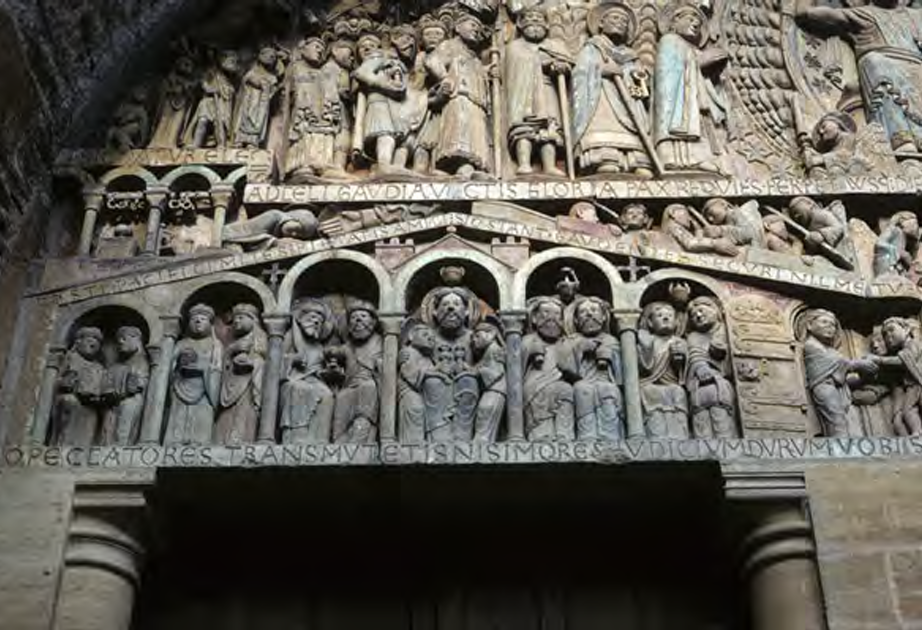
Title: Abbey of Sainte-Foy: Tympanum of the Last Judgement detail of The Blessed
Location: Conques, France
Medium: high-relief stone carving
Date: ca. 1130-1140
Significance of the work: salvation, grace, and divine mercy.

Title: Abbey of Sainte-Foy: Tympanum of the Last Judgement detail of The Damned
Location: Conques, France
Medium: high-relief stone carving
Date: ca. 1130-1140
Significance of the work: consequences of sin

Title: Abbey of La Daurade: Cloister Capital with Saint John the Evangelist approaching empty tomb
Location: Toulouse, France
Medium: stone relief
Date: ca. 1100
Significance of the work: a visual, three-dimensional narrative aid for Benedictine monks as they walked the cloister walkways. The cloister was a space for prayer, reading, and contemplative pacing. Depicts a moment of revelation.

Title: Benedictine Abbey of St-Michel-deCuxa: Cloister capital with double-bodied bears devouring men
Location: Codalet, France
Medium: high-relief stone carving
Date: ca. 1140
Significance of the work: confronts monks with ideas about sin, hell, and the devil swallowing the human soul, forcing them to contemplate their own moral behavior and mortality, and seek salvation through Christ
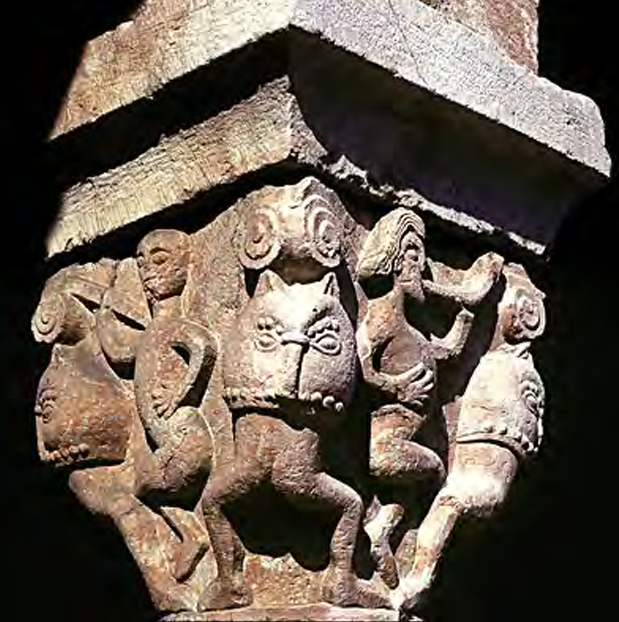
Title: Benedictine Abbey of St-Michel-deCuxa: Cloister capital showing naked dancers and Hell-mouths devouring naked men
Location: Codalet, France
Medium: high-relief stone carving
Date: ca. 1140
Significance of the work: confronts monks with ideas about sin, hell, and the devil swallowing the human soul, forcing them to contemplate their own moral behavior and mortality, and seek salvation through Christ

Title: Benedictine Abbey of St-Michel-deCuxa: Cloister capital with naked monks squatting like apes
Location: Codalet, France
Medium: high-relief stone carving
Date: ca. 1140
Significance of the work: confronts monks with ideas that sin and unruly passions strip away divine grace, reducing rational man to the level of unthinking animals, forcing them to contemplate their own moral behavior and mortality, and seek salvation through Christ
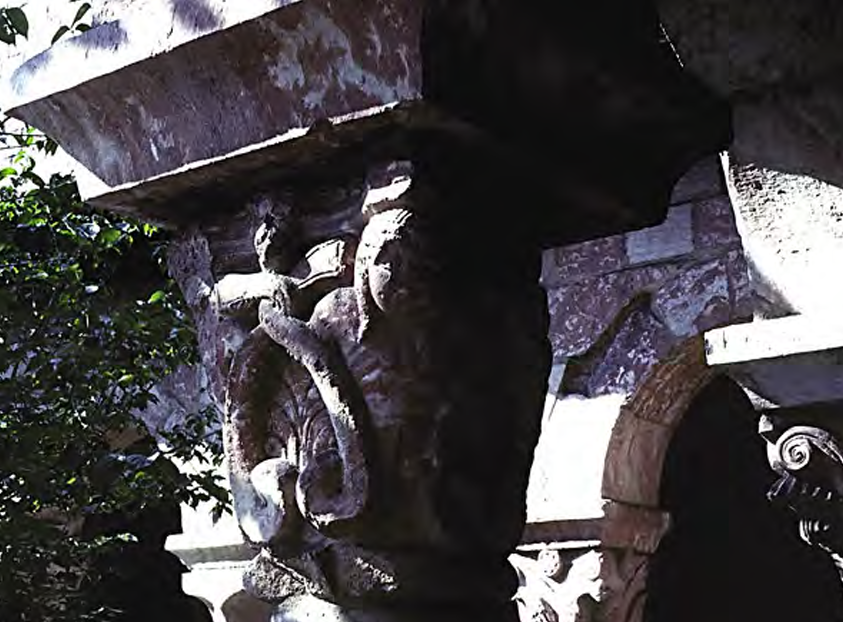
Title: Benedictine Abbey of St-Michel-deCuxa: Cloister capital with a siren
Location: Codalet, France
Medium: high-relief stone carving
Date: ca. 1140
Significance of the work: confronts monks with ideas about the dangers of worldly temptation, bodily lust, and the spiritual traps of women, forcing them to contemplate their own moral behavior and mortality, and seek salvation through Christ

Title: Benedictine Abbey of St-Michel-deCuxa: Cloister capital with double-bodied lions threatening men
Location: Codalet, France
Medium: high-relief stone carving
Date: ca. 1140
Significance of the work: confronts monks with ideas about the mouth of Hell and the devouring nature of sin, forcing them to contemplate their own moral behavior and mortality, and seek salvation through Christ

Title: Portrait Head of Frederick II Barbarossa
Location: Stiftskirche Cappenberg, Germany
Medium: gilded cast bronze and niello
Date: 1155-1160
Significance of the work: represents Saint John but has physical features of Barbarossa, signaling that Barbarossa enjoyed a uniquely intimate, direct relationship with the divine

Title: Bayeux Tapestry: Harold takes oath of fealty to William on the Relics of Bayeux Cathedral
Location: From Canterbury (?), England
Medium: woolen embroidery on linen
Date: ca. 1066-1082
Significance of the work: moral and political justification for the Norman Conquest of Englan

Title: Bayeux Tapestry: Astrologers announce to Harold the appearance of the comet
Location: From Canterbury (?), England
Medium: woolen embroidery on linen
Date: ca. 1066-1082
Significance of the work: Divine retribution of Harold, using the comet to create fear of famine, war, or the death of a monarch as punishment for Harold breaking an oath and taking the crown for himself.

Title: Bayeux Tapestry: Harold killed at Battle of Hastings
Location: Canterbury (?), England
Medium: woolen embroidery on linen
Date: ca. 1066-1082
Significance of the work: his violent death at Hastings was a form of divine retribution and legitimizing William’s takeover of the English crown.

Title: Castle Rising (plan)
Location: Norfolk, England
Medium: Architectural drawing
Date: ca. 1140
Significance of the work: rigid spatial hierarchy: guests entered via the forebuilding vestibule, waited in a waiting room, progressed to the great hall, and finally—if privileged enough—entered the private great chamber or chapel.

Title: Castle Rising: View from the southeast
Location: Norfolk, England
Medium: stone masonry
Date: ca. 1140
Significance of the work: represents a shift where military function and socio-political meaning were intertwined. The structure was designed not just to withstand siege, but to aggressively declare the immense wealth, royal connections, and lordly authority of its builder

Title: Tomb plaque of Geoffrey of Anjou
Location: Cathedral of Saint-Julien, Le Mans, France
Medium: Limoges champlevé enamel and gilded copper
Date: ca. 1158
Significance of the work: shows Geoffrey as a noble warrior-count and marks the foundation of the royal Plantagenet dynasty

Title: Saint Isarn
Location: Abbey of Saint-Victor, Marseilles, France
Medium: marble low relief
Date: ca. 1050
Significance of the work: visually represents the "crushing" weight of death and original sin on the physical human body. At the same time, because his head and feet break through the borders, it symbolizes that the soul and the memory of a saintly life cannot be fully contained or bound by the grave

Title: Rudolf von Schwaben
Location: Merseburg Cathedral, Germany
Medium: cast bronze tomb effigy
Date: ca. 1080-1100
Significance of the work: bridge between individual portraiture and theological ideas about the physical, resurrected body, portraying a formal, idealized vessel rather than a decaying corpse. Tip toes make him stand tall, reinforcing his vitality, eternal power, and active authority as a king
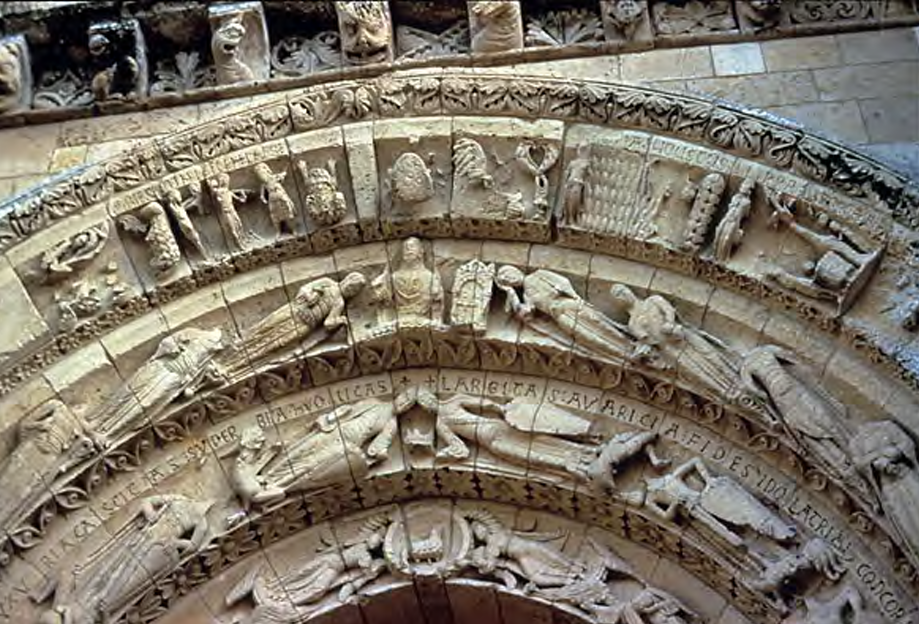
Title: Saint-Pierre-de-la-Tour: Archivolts of the west central portal with knights as virtues trampling vices
Location: Aulnay, France
Medium:
Date: ca. 1140-1150
Significance of the work: the path to Salvation and spiritual vigilance

Title: Temple Church: Interior of rotunda
Location: London, England
Medium:
Date: ca. 1160-85 (rotunda) and 1240 (choir)
Significance of the work: Directs eyes upwards towards heaven

Title: Temple Church: Tomb effigy of Gilbert Marshall
Location: London, England
Medium: marble
Date: died 1241
Significance of the work: represents a high-ranking medieval knight. Its crossed legs long sparked the myth that the subject was a Crusader,

Title: Autun Cathedral: North transept portal (formerly), Eve and the serpent
Location: Autun, France
Medium: High-relief stone carving
Date: ca. 1130
Significance of the work: itself. This implies that she is not just a victim of temptation, but has become an agent of it. Her movements subtly evoke a serpentine fluidity, symbolizing how sin can subtly weave its way into humanity
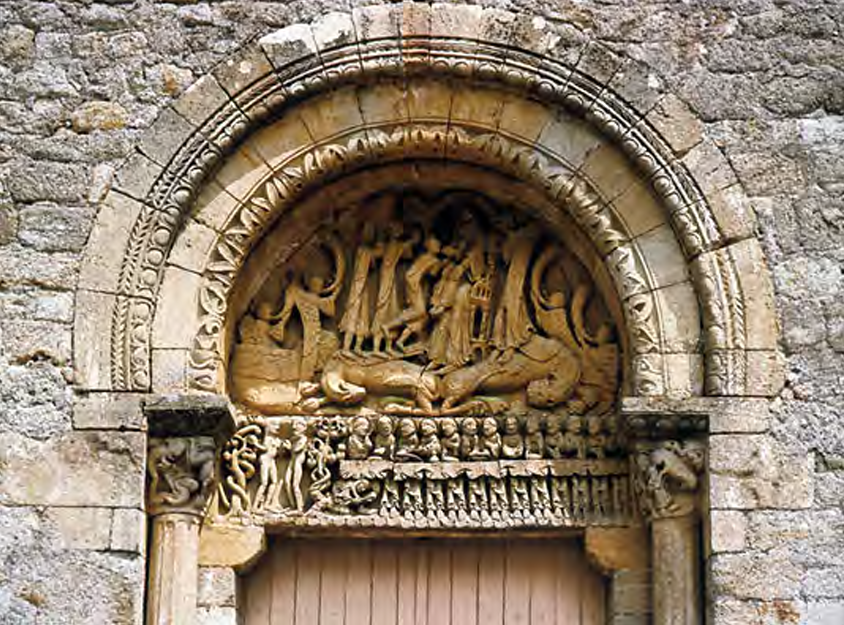
Title: Church of Sainte-Madeleine: Tympanum showing Adoration of the Magi with Mary trampling beasts and lintel with Fall and Feast at the House of Simon
Location: Neuilly-en-Donjon, France
Medium: high-relief stone carving
Date: ca. 1125-1150
Significance of the work: what was lost through the pride and disobedience of Eve is restored through the humility and deep penance of Mary Magdalene. Because this church is dedicated to the Magdalene, it reminds entering worshipers that forgiveness is universally available through genuine repentance

Title: Benedictine Abbey Church of SainteMarie: Legend of Theophilus
Location: Souillac, France
Medium: high-relief stone carving
Date: ca. 1140-1150
Significance of the work: infinite mercy of God achieved through the intercession of the Virgin Mary

Title: Senlis Cathedral: West portal with Death, Assumption and Coronation of the Virgin
Location: Senlis, France
Medium: High-relief stone carving
Date: ca. 1170
Significance of the work: merges the narrative of Mary’s death (Dormition) and bodily transport to heaven (Assumption) on the lintels with her heavenly enthronement and crowning by Christ on the tympanum

Title: Cathedral of St-Etienne: Cloister capital showing Salome dancing and carrying the head of John the Baptist to Herodias
Location: Toulouse, France
Medium: High-relief stone carving
Date: ca. 1140
Significance of the work: Salome’s dance was the embodiment of using lust for deception.

Title: Cathedral of St-Etienne: Cloister capital showing Herod with Salome
Location: Toulouse, France
Medium: high-relief stone carving
Date: ca. 1140
Significance of the work: Distracted by lust