Health Services Foundations
 Call Kai
 Learn
Learn Practice Test
 Spaced Repetition
 Match
Match Flashcards
1/43

There's no tags or description
Looks like no tags are added yet.
Name | Mastery | Learn | Test | Matching | Spaced | Call with Kai | Chat |
|---|
No analytics yet
Send a link to your students to track their progress
44 Terms
Nervous System
An interacting network of neurons that conveys electrochemical information throughout the body

Respiratory System
Keeps blood constantly supplied with oxygen and removes carbon dioxide.

Skeletal System
Gives shape and support to the body; protects organs; produces red blood cells.

Muscular System
enables movement of the body and internal organs

Circulatory System
Transports oxygen, waste, nutrients, hormones, heat, etc... around the body

Immune System
The cells and tissues that recognize and attack foreign substances in the body
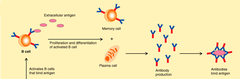
Lymphatic System
the network of vessels through which lymph drains from the tissues into the blood.

Reproductive System
Reproduce offspring- produce male sex cells (sperm) and female sex cells (oocytes)

Digestive System
Breaks down food into smaller molecules. Absorbs these nutrients into the body.

Urinary System
regulates and removes the amount of water and waste material in the blood

Integumentary System
the organ system that forms a protective covering on the outside of the body

Endocrine System
Controls body functions using chemicals messengers called hormones.

Heart
Pumps blood throughout the body

Spleen
Produces blood cells, destroys damaged blood cells, stores blood cells
Kidney
Filters waste from the blood like urea, water, salt and proteins.

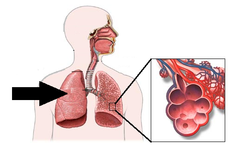
Lung
An organ found in air-breathing vertebrates that exchanges oxygen and carbon dioxide with the blood
Stomach
large muscular sac that continues the mechanical and chemical digestion of food

Liver
organ that makes bile to break down fats; also filters poisons and drugs out of the blood

Brain
The mass of nerve tissue that is the main control center of the nervous system

Skin
Largest organ of the body

Anatomical Position
erect, feet forward, arms at side with palms facing forward, head facing forward

Adduction
Movement toward the midline of the body
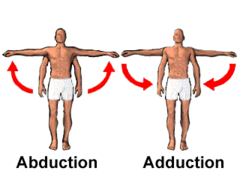
Abduction
Movement away from the midline of the body

Flexion
Decreases the angle of a joint

Extension
Increasing the angle between two bones

Supination
movement that turns the palm up

Pronation
Turning the palm downward

Anterior
Located towards the front of the body

Posterior
Toward the back

Medial
Toward the midline of the body

Lateral
Away from the midline of the body

Proximal
Closer to the origin of the body part or the point of attachment of a limb to the body trunk

Distal
Farther from the origin of a body part or the point of attachment of a limb to the body trunk

Saggital
Lengthwise cut that divides the body into right and left portions

Transverse
Divides body into upper and lower parts

Tendon
Connects muscle to bone

Ligament
Connects bone to bone

Epithelial Tissue
A body tissue that covers the surfaces of the body, inside and out

Connective Tissue
tissue that connects, supports, binds, or separates other tissues or organs

Nerve Tissue
Carries messages between the brain and the rest of the body

Muscle Tissue
A body tissue that contracts or shortens, making body parts move.

Skeletal Muscle
Voluntary
A muscle that is attached to the bones of the skeleton and provides the force that moves the bones.

Smooth Muscle
Involuntary muscle found inside many internal organs of the body

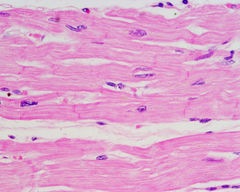
Cardiac Muscle
Involuntary muscle tissue found only in the heart.